
Monitoring police radio communications offers insight into local emergency response, public safety trends, and real-time community events. Whether you're a journalist, first responder enthusiast, or simply curious about what happens in your area, listening to police radio can be both informative and educational. However, doing it effectively requires the right tools, knowledge of legality, and responsible practices. This guide walks you through everything you need to know—from choosing a scanner to understanding digital systems and staying within legal boundaries.
Understanding Police Radio Systems
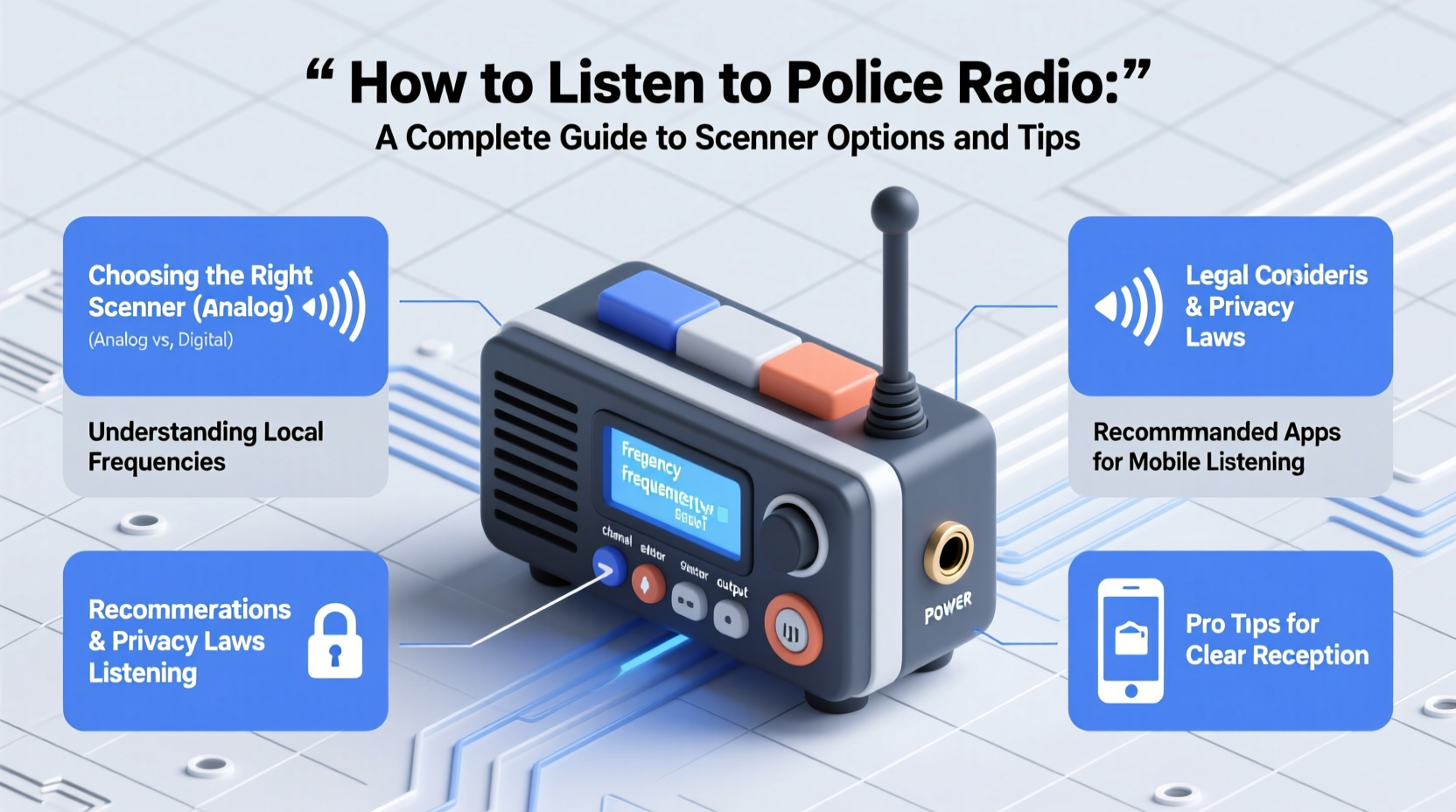
Police departments across the U.S. and other countries use radio systems to coordinate responses among officers, dispatchers, fire departments, and EMS. These systems have evolved significantly over the past two decades. While older analog FM transmissions were easy to intercept with basic scanners, most agencies now use encrypted or digitally trunked networks, which require more advanced equipment and technical understanding.
There are three main types of radio systems:
- Analog FM: The oldest form, still used in some rural areas. Easily monitored with entry-level scanners.
- Trunked Analog: Uses multiple channels dynamically assigned by a control channel. Requires a trunk-tracking scanner.
- P25 Digital (Phase I & II): Most common today. Offers clearer audio and efficient bandwidth use but needs a digital-capable scanner.
Additionally, some jurisdictions use encryption—especially during high-risk operations—which prevents public monitoring entirely. Encryption is legal under federal law as long as the agency follows proper procedures, though its use remains controversial among transparency advocates.
Choosing the Right Scanner Equipment
Selecting a scanner depends on your location, budget, and technical comfort level. Here’s a breakdown of available options:
| Scanner Type | Best For | Pros | Cons |
|---|---|---|---|
| Basic Handheld (Analog) | Rural areas with analog signals | Affordable, portable, simple setup | Can't decode digital or trunked systems |
| Trunk-Tracking Scanner | Urban/suburban areas with trunked systems | Follows dynamic channel assignments | More expensive, steeper learning curve |
| Digital P25-Compatible Scanner | Modern police departments using digital voice | Clear audio, supports Phase I/II | Higher cost, may need firmware updates |
| Software-Defined Radio (SDR) | Tech-savvy users wanting flexibility | Highly customizable, wide frequency range | Requires computer, complex setup |
| Online Streaming (e.g., Broadcastify) | Anyone avoiding hardware | Free access, no equipment needed | Depends on third-party feeds, potential delays |
Popular models include the Uniden SDS100, Whistler TRX-1, and Bearcat BC355. If you're new, consider starting with a mid-tier trunking scanner that supports P25 decoding.
“With the shift to digital and trunked systems, listeners need to invest in capable hardware or rely on reliable online streams.” — James Reed, Communications Technology Analyst
Step-by-Step Guide to Getting Started
Follow these steps to begin monitoring police radio traffic legally and effectively:
- Research Your Local Systems: Visit the RadioReference.com database and search for your city or county. Look up frequencies, modulation types, and whether encryption is used.
- Select a Compatible Scanner: Based on your research, choose a model that supports your area’s system (e.g., P25 Phase II + trunking).
- Program the Scanner: Use software like Unitrunker or manufacturer apps to input local talkgroups. Many modern scanners sync via Wi-Fi or USB.
- Test Reception: Place the scanner near a window or higher floor. Add an external antenna if signal is weak.
- Monitor Responsibly: Avoid sharing real-time operational details on social media. Never interfere with official communications.
- Stay Updated: Police frequencies change. Subscribe to local forums or update alerts to stay current.
Legal and Ethical Considerations
It is generally legal to listen to unencrypted police radio broadcasts in the United States under Title 47 U.S.C. § 301. However, there are important exceptions:
- Using scanner information to commit a crime is illegal and punishable under state and federal laws.
- Some states restrict scanner use in vehicles unless operated by licensed personnel.
- Recording and redistributing sensitive audio without consent may violate privacy laws.
Ethically, listeners should avoid spreading panic or misinformation. For example, hearing a report about a \"man with a knife\" doesn’t mean there’s an active threat—it could be a resolved situation. Always verify with official sources before acting or sharing.
In Canada, Australia, and parts of Europe, scanner laws vary. In some regions, possession of scanning devices requires licensing. Always check your country’s telecommunications regulations before purchasing or operating a scanner.
Alternative: Listening Online Without Hardware
If buying a scanner isn’t feasible, you can stream live police radio online. Websites like Broadcastify.com host thousands of user-uploaded feeds from around the world.
To get started:
- Visit Broadcastify and search for your region.
- Filter by agency (police, fire, sheriff).
- Click play and listen directly through your browser or mobile app.
While convenient, online streaming has drawbacks: feeds can go offline unexpectedly, audio quality varies, and some areas are not covered. Additionally, heavy reliance on third-party streams raises concerns about sustainability and data privacy.
“We depend on volunteer contributors to keep critical feeds live. When one goes down, entire communities lose access.” — Sarah Lin, Broadcastify Community Moderator
FAQ
Can I listen to police radio on my smartphone?
Yes. Apps like Scanner Radio Pro pull data from Broadcastify streams, allowing you to monitor activity on iOS and Android devices. However, they don’t receive over-the-air signals—you need internet access.
Why can’t I hear anything even with a good scanner?
Your area may use encryption, or the system might be digital trunked without proper programming. Verify that your scanner supports P25 trunking and that talkgroups are correctly entered.
Is it legal to record police scanner audio?
In most cases, yes—unless the transmission is encrypted or involves private citizen information. Be cautious when publishing recordings, as they may contain sensitive details protected under privacy laws.
Checklist: Setting Up Your Police Radio Monitoring System
- ✅ Research local police frequencies and system type
- ✅ Choose a compatible scanner (analog, trunking, or P25-capable)
- ✅ Program frequencies or talkgroups using official databases
- ✅ Test reception and adjust antenna placement
- ✅ Review local laws regarding scanner use in vehicles or public spaces
- ✅ Set up alerts or favorite channels for quick access
- ✅ Explore online alternatives like Broadcastify as backup
Real Example: Monitoring During Severe Weather
In central Missouri, resident Mark T. used his Uniden BCD436HP to monitor county sheriff and highway patrol channels during a spring tornado outbreak. As storms approached, he heard early dispatches about road closures and rescue teams deploying. By cross-referencing scanner traffic with weather radar, he alerted neighbors to shelter earlier than local sirens indicated. His proactive approach, rooted in responsible monitoring, helped ensure everyone in his cul-de-sac stayed safe.
This case illustrates how scanner use, when combined with situational awareness and community care, can serve a valuable public role—without overstepping ethical lines.
Conclusion
Listening to police radio is more accessible than ever, but it demands technical awareness, legal compliance, and ethical responsibility. Whether you opt for a physical scanner or rely on online streams, the key is staying informed without compromising safety or privacy. With the right tools and mindset, you can gain a deeper understanding of public safety operations in your community.




 浙公网安备
33010002000092号
浙公网安备
33010002000092号 浙B2-20120091-4
Comments
No comments yet. Why don't you start the discussion?