
Camellia print short sleeve t-shirts combine botanical elegance with casual comfort, making them a standout choice in modern wardrobes. The intricate floral designs and soft color palettes elevate simple outfits, but their beauty is only as lasting as the care they receive. Without proper maintenance, vibrant prints can fade, fabrics may lose their softness, and seams might weaken over time. Preserving both the aesthetic and structural integrity of these garments requires more than just tossing them into the laundry. Understanding the materials, printing techniques, and environmental stressors involved allows wearers to extend the life of their favorite pieces significantly.
Understanding Camellia Print Fabric Composition
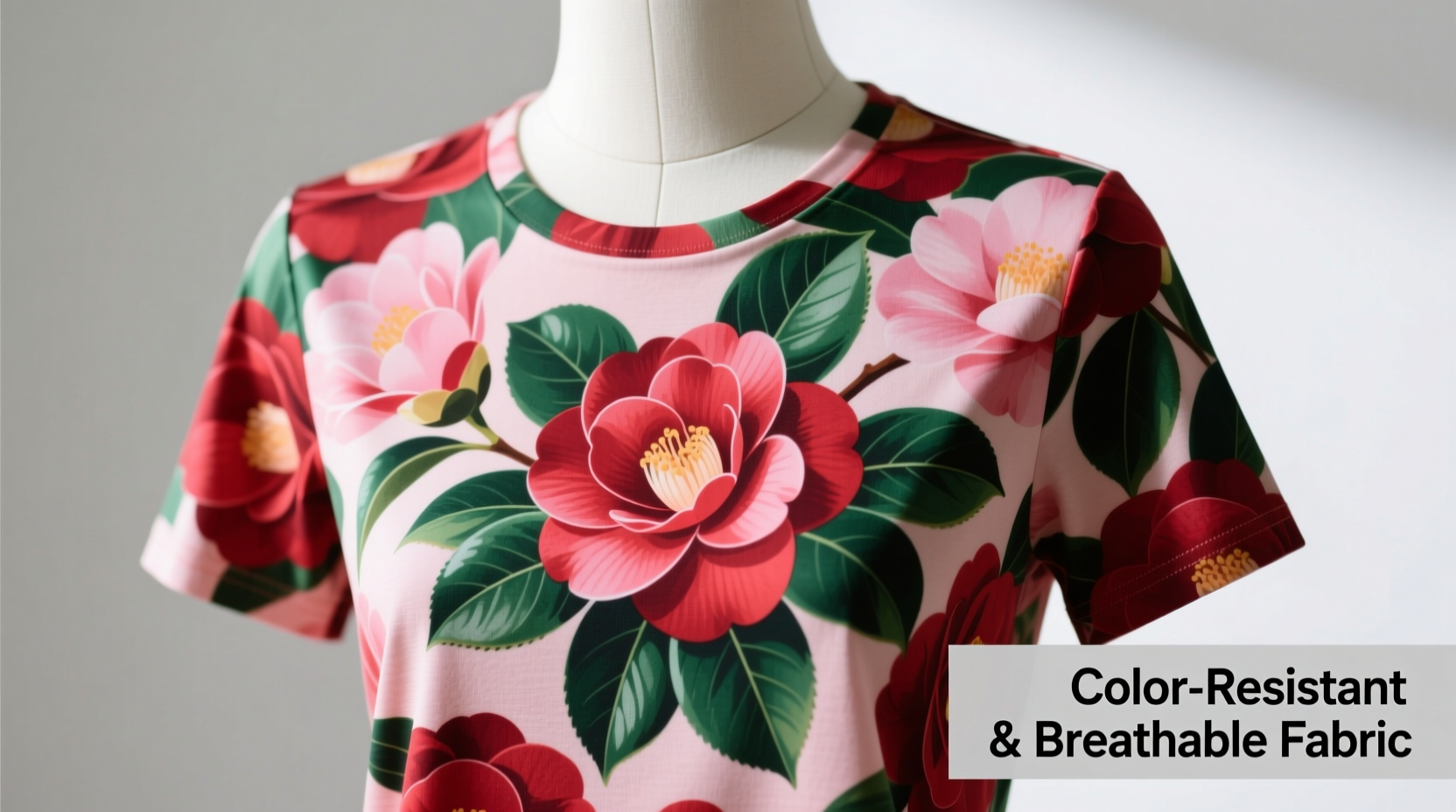
Most camellia print t-shirts are crafted from cotton or cotton-blend fabrics, chosen for their breathability and ability to hold detailed dye-sublimated or screen-printed patterns. The camellia motif—often rendered in soft pinks, deep reds, and creamy whites—relies on precise color layering during printing. These dyes bond with natural fibers differently than synthetic ones, meaning that moisture, heat, and friction can disrupt the chemical adhesion over time.
Fabric blends containing polyester may resist shrinking but increase susceptibility to pilling and static buildup. High-quality cotton, especially combed or ring-spun varieties, maintains softness longer and supports sharper print definition. Knowing your shirt’s fiber content, usually listed on the care tag, informs every decision from washing temperature to iron settings.
“Print longevity begins at the fiber level. Cotton holds dye better, but only if treated gently through its lifecycle.” — Dr. Lena Park, Textile Scientist at Advanced Apparel Research Lab
Washing Techniques to Preserve Color and Print Clarity
The first line of defense against fading and fabric degradation is correct washing. Even high-quality detergents can be damaging if used incorrectly. Always turn the t-shirt inside out before washing. This minimizes direct abrasion on the printed surface and protects the design from rubbing against other garments.
Use cold water (below 30°C / 86°F) to prevent dye migration and fiber stress. Hot water accelerates color leaching and can cause cotton to shrink or warp, distorting the print alignment. Choose a mild, color-safe detergent free from bleach and optical brighteners, which chemically alter dye molecules and create a false brightness that fades unevenly.
Opt for a delicate or hand-wash cycle on your machine. If washing by hand, gently agitate the water without twisting or wringing the fabric. Soaking for more than 30 minutes—even in mild detergent—can weaken dyes and fibers. After washing, rinse thoroughly with cold water until the runoff is clear.
Drying and Ironing: Avoiding Heat Damage
Heat is one of the most aggressive enemies of printed apparel. Tumble drying exposes fabric to sustained high temperatures, leading to color fading, shrinkage, and cracking of printed layers. Air drying is the safest method: lay the shirt flat on a clean towel or hang it on a padded hanger away from direct sunlight. UV rays break down organic dyes, particularly reds and pinks common in camellia prints, causing premature dullness.
If ironing is necessary, do so inside out using a low to medium heat setting. Never apply the iron directly over the printed area. For added protection, place a thin cotton cloth between the iron and the shirt. Steam should be used sparingly, as excessive moisture under heat can blur fine print details.
| Method | Effect on Camellia Print Tee | Recommendation |
|---|---|---|
| Tumble Dry (High Heat) | Fading, shrinkage, print cracking | Avoid |
| Air Dry (Indoor) | Minimal color loss, shape retention | Recommended |
| Sun Dry (Outdoor) | UV-induced fading, especially in pink/red hues | Limited exposure only |
| Iron Directly on Print | Print smudging, melting (if plastisol ink) | Never recommended |
Storage Practices for Long-Term Wearability
How you store your camellia print t-shirt between wears plays a crucial role in maintaining both color vibrancy and fabric resilience. Fold the shirt neatly along natural seams to avoid stretching the neckline or shoulders. If hanging, use wide, padded hangers to prevent shoulder bumps and deformation.
Store in a cool, dry closet away from windows or heat sources. Humidity encourages mildew, while dry air can make cotton brittle over time. Consider breathable cotton garment bags instead of plastic, which traps moisture and promotes odor development. Avoid cedar chests unless lined, as strong oils can transfer to fabric and affect print chemistry.
Step-by-Step Care Routine for Camellia Print Tees
To simplify long-term maintenance, follow this weekly care sequence:
- After Wearing: Inspect for stains or sweat marks. Treat spots immediately with a dab of cold water and mild detergent.
- Before Washing: Turn the shirt inside out and zip or button any closures to reduce snagging.
- Washing: Use cold water, gentle cycle, and color-safe detergent. Wash with like colors only.
- Rinsing: Ensure all soap residue is removed to prevent fiber stiffness and skin irritation.
- Drying: Lay flat or hang indoors, away from sunlight. Do not hang by the sleeves.
- Ironing (if needed): Use low heat, inside out, with a protective cloth over the print.
- Storing: Fold neatly or hang properly in a dry, ventilated space.
Common Mistakes That Ruin Print Longevity
- Using bleach or stain removers – Even small amounts degrade dyes and weaken fibers.
- Overloading the washing machine – Causes excessive friction and tangling, leading to pilling and print abrasion.
- Ignoring care labels – Some prints use specialty inks requiring specific pH levels or no-machine wash instructions.
- Wearing while applying perfumes or deodorants – Alcohol and aluminum compounds can react with dyes, causing discoloration.
Frequently Asked Questions
Can I machine wash my camellia print tee?
Yes, but only on a gentle cycle with cold water and inside out. Avoid harsh detergents and never wash with rough fabrics like denim or towels.
Why is my print peeling after a few washes?
This typically happens when plastisol ink wasn’t properly heat-set during manufacturing or when high heat (dryer/iron) was applied. It can also result from using enzymatic detergents that break down binder chemicals in the ink.
How often should I wash a printed t-shirt?
Only when necessary. Unlike undergarments, casual tees don’t require laundering after every wear unless soiled or sweaty. Overwashing accelerates wear. Air them out between uses instead.
Expert-Backed Checklist for Lasting Quality
- ✅ Do:
- – Wash inside out in cold water
- – Use mild, color-safe detergent
- – Air dry away from sunlight
- – Store folded or on padded hangers
- – Treat stains promptly with cold water
- ❌ Don’t:
- – Use bleach or fabric softener
- – Tumble dry on high heat
- – Iron directly on the print
- – Store damp or in plastic bags
- – Expose to prolonged UV light
Real-World Example: A Season-Long Test
Jessica, a lifestyle blogger based in Portland, conducted a six-month test comparing two identical camellia print t-shirts. One followed the full care protocol outlined above; the other was washed weekly with regular detergent in warm water and tumble dried. After 15 washes, the properly cared-for shirt retained 95% of its original color depth and showed no signs of pilling or print separation. The conventionally cleaned version had faded noticeably, developed small cracks in the pink petals, and felt coarser to the touch. This real-life comparison underscores how routine adjustments yield measurable results.
Conclusion: Care Today, Beauty Tomorrow
Maintaining the vibrant colors and fabric quality of camellia print short sleeve t-shirts doesn’t demand extraordinary effort—just consistent, informed habits. From mindful washing to intelligent storage, each step contributes to a longer, more beautiful lifespan for your garment. These shirts are more than casual wear; they’re wearable art that deserves thoughtful stewardship. By integrating these practices into your routine, you preserve not just appearance, but value and personal expression.




 浙公网安备
33010002000092号
浙公网安备
33010002000092号 浙B2-20120091-4
Comments
No comments yet. Why don't you start the discussion?