
Many city dwellers dream of cultivating a green oasis just outside their door—yet not all balconies receive natural sunlight. Whether blocked by high-rises, overshadowed by trees, or facing north in cooler climates, a sunless balcony doesn’t have to mean the end of gardening dreams. With modern indoor growing techniques, strategic plant selection, and smart lighting solutions, you can create a lush, productive garden even in complete shade. This guide reveals how to transform your dim outdoor space into a vibrant green retreat using proven indoor horticulture methods.
Understanding the Challenge: Why Sunlight Matters (and How to Replace It)
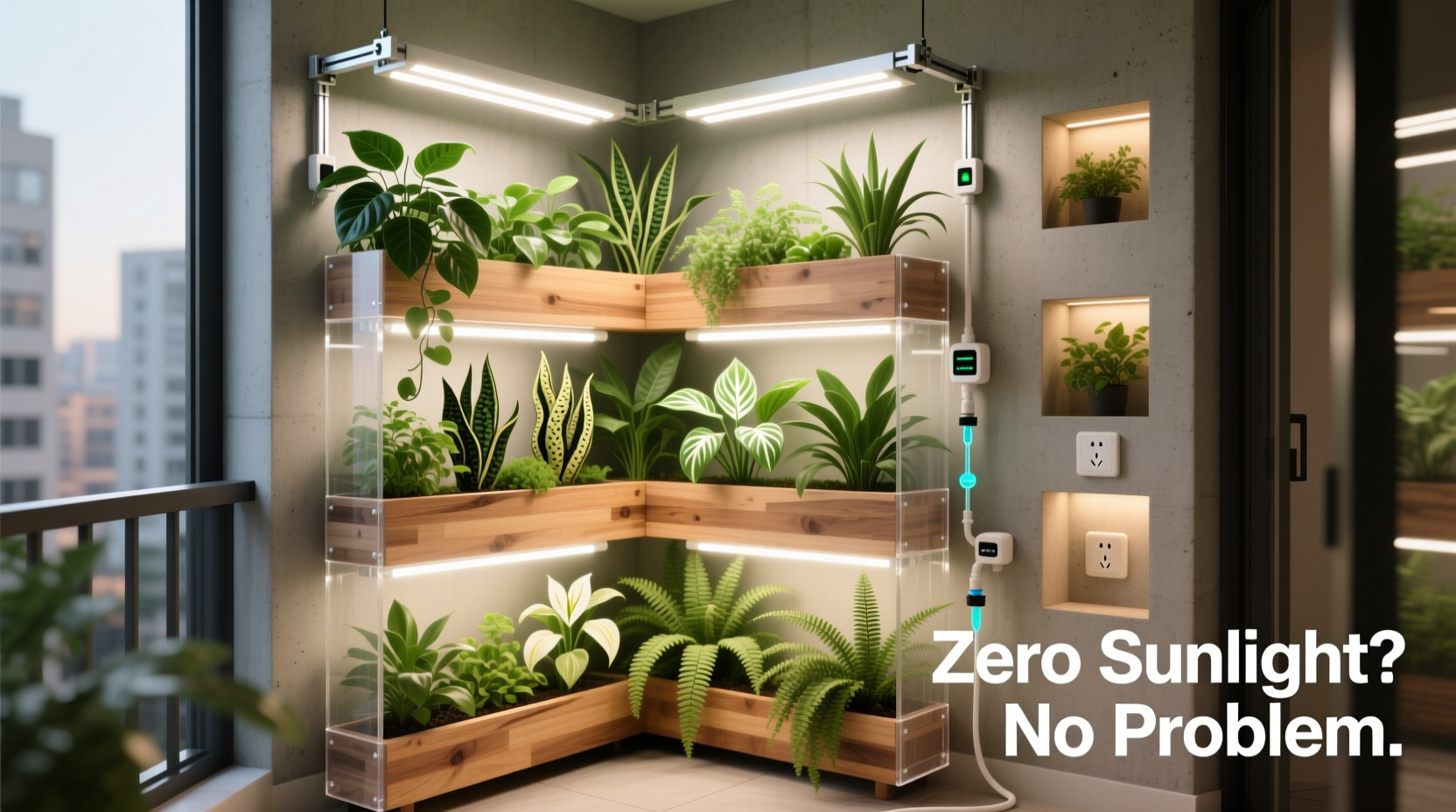
Natural sunlight provides the full spectrum of light that most plants need for photosynthesis—the process that fuels growth, flowering, and fruiting. Traditional gardening advice emphasizes at least 6 hours of direct sun daily, but this isn't feasible on shaded balconies. However, advances in artificial lighting and our understanding of plant physiology have opened new possibilities.
The key is replacing sunlight with grow lights that mimic its spectrum. Unlike standard household bulbs, full-spectrum LED grow lights emit wavelengths similar to daylight, particularly in the blue (vegetative growth) and red (flowering/fruiting) ranges. When combined with proper humidity, airflow, and watering, these lights allow many plants to thrive indoors—and on dark balconies too.
“Plants don’t need sunlight per se—they need specific wavelengths of light. With the right LEDs, you can replicate those conditions anywhere.” — Dr. Lena Torres, Urban Horticulturist, Green Cities Institute
Selecting Plants That Thrive in Low Light
The foundation of any successful no-sunlight garden is choosing species naturally adapted to low-light environments. These are typically understory plants from forest floors, which evolved to survive under dense tree canopies.
Some excellent choices include:
- Snake Plant (Sansevieria): Extremely hardy, requires minimal water, and purifies air.
- ZZ Plant (Zamioculcas zamiifolia): Tolerates near-darkness and irregular care.
- Pothos (Epipremnum aureum): Grows rapidly under artificial light and trails beautifully over railings.
- Peace Lily (Spathiphyllum): Flowers indoors with adequate moisture and indirect light simulation.
- Ferns (e.g., Boston Fern, Maidenhair): Prefer humid, shady conditions—ideal for enclosed balconies.
- Chinese Evergreen (Aglaonema): Colorful foliage and low maintenance.
Best Edible Plants for Zero-Sun Balconies
You don’t need sunlight to grow food. Several leafy greens and herbs adapt well to artificial lighting when given consistent care.
| Plant | Light Needs (Daily) | Growth Time | Notes |
|---|---|---|---|
| Lettuce (Looseleaf) | 12–14 hrs LED | 4–6 weeks | Harvest outer leaves; thrives under cool white LEDs |
| Spinach | 14 hrs LED | 6–8 weeks | Needs nutrient-rich soil; avoid overcrowding |
| Kale (Dwarf varieties) | 14–16 hrs LED | 6–7 weeks | Compact types like 'Dwarf Blue Curled' work best |
| Mint | 12–14 hrs LED | 6–8 weeks | Grow in containers to prevent spreading |
| Chives | 12 hrs LED | 4–5 weeks | Perennial; regrows after cutting |
Setting Up Artificial Lighting Systems
Since your balcony lacks sunlight, artificial lighting becomes the engine of your garden. The good news: today’s LED grow lights are energy-efficient, long-lasting, and designed specifically for plant growth.
Types of Grow Lights
- Full-Spectrum LED Panels: Best for overall growth; simulate daylight and support both vegetative and flowering stages.
- T5 Fluorescent Tubes: Affordable and effective for seedlings and leafy greens; less intense than LEDs.
- Clip-On LED Grow Lamps: Ideal for small spaces or individual pots; flexible positioning.
- Smart Grow Lights: Programmable timers and color spectrums via app control; great for busy urban gardeners.
Light Placement and Duration
Position lights 6–12 inches above plant tops. Too close risks burning; too far reduces efficiency. Use adjustable mounts or hanging systems to maintain optimal distance as plants grow.
Most leafy greens require 12–16 hours of light per day. A simple plug-in timer ensures consistency without manual effort.
Step-by-Step Guide: Building Your No-Sunlight Balcony Garden
Follow this practical sequence to set up a functional, attractive garden in total shade.
- Assess Your Space: Measure balcony dimensions, check weight limits, and identify power outlet access.
- Choose Containers: Use lightweight plastic, fiberglass, or fabric pots with drainage holes. Consider vertical planters to save floor space.
- Install Lighting: Mount LED panels overhead or use freestanding grow lamps. Ensure coverage across all plants.
- Select Soil Mix: Use high-quality potting mix with perlite or vermiculite for drainage. Avoid garden soil, which compacts easily.
- Plant Starter Seedlings or Cuttings: Begin with young plants rather than seeds for faster results. Pothos cuttings root easily in water first.
- Set a Light Schedule: Program timers for 12–16 hours of daily light, depending on plant type.
- Monitor Moisture: Water only when top inch of soil feels dry. Shaded areas evaporate slower, so overwatering is a common risk.
- Add Humidity (Optional): Group plants together or place a small tray of water nearby to boost moisture levels, especially for ferns.
- Fertilize Monthly: Use diluted liquid fertilizer every 4 weeks during active growth periods.
- Prune and Rotate: Trim leggy growth and rotate pots weekly for even light exposure.
Mini Case Study: Maria’s North-Facing Balcony Transformation
Maria lives in a 10th-floor apartment in downtown Toronto. Her balcony faces north and receives no direct sunlight year-round. Initially discouraged, she researched indoor growing methods and decided to convert the space into a micro-garden using LED lighting.
She installed a slim, 24-inch full-spectrum LED panel mounted to the ceiling railing, powered by a nearby outlet. She added three tiered shelves made of weather-resistant metal, holding pots of pothos, dwarf kale, and peace lilies. A programmable timer turns the lights on at 6 PM and off at 10 AM daily—avoiding peak electricity rates.
Within eight weeks, her kale was ready for harvesting, and the pothos vines cascaded down the sides, creating a living wall effect. “I get compliments from neighbors all the time,” she says. “They think it’s an indoor jungle—I just tell them my balcony found its own kind of sunshine.”
Avoiding Common Mistakes
Even with the right tools, beginners often stumble due to misconceptions about low-light gardening. Here’s what to avoid:
| Do’s | Don’ts |
|---|---|
| Use reflective surfaces (white walls, foil-backed boards) to maximize light efficiency | Place grow lights too far from plants, causing leggy, weak growth |
| Start small and scale up as you learn your system | Overwater—shaded pots dry slowly and stay moist longer |
| Label each plant with name and planting date | Use regular incandescent bulbs—they lack necessary light spectrum |
| Check for pests regularly (especially spider mites and fungus gnats) | Ignore ventilation—stagnant air encourages mold and disease |
| Group humidity-loving plants together | Expect fast fruiting—most fruiting plants (tomatoes, peppers) still struggle without strong light |
Essential Checklist for Your Zero-Sunlight Balcony Garden
- ☐ Measure balcony size and confirm weight capacity
- ☐ Identify access to electrical outlet (or use extension cord safely)
- ☐ Purchase full-spectrum LED grow light(s) with stand or mount
- ☐ Buy pots with drainage and quality potting mix
- ☐ Choose 3–5 low-light tolerant plants (e.g., pothos, snake plant, lettuce)
- ☐ Set up light timer for 12–16 hours daily
- ☐ Label all plants and track growth
- ☐ Check soil moisture twice weekly
- ☐ Fertilize monthly with balanced liquid feed
- ☐ Clean leaves gently to prevent dust buildup blocking light
FAQ: Common Questions About Shade-Only Balcony Gardening
Can I grow vegetables without any sunlight?
Yes, but with limitations. Leafy greens like lettuce, spinach, and kale grow well under consistent artificial light. Root crops (carrots, potatoes) and fruiting plants (tomatoes, cucumbers) require more intense light and are harder to produce successfully in low-energy setups.
Are grow lights expensive to run?
Modern LED grow lights are surprisingly efficient. A typical 30-watt panel running 14 hours a day uses about 0.42 kWh daily—roughly $0.07 per day at average electricity rates. Over a month, that’s around $2–$3 per light, making it affordable for small-scale gardening.
What if I don’t have an outdoor outlet?
If your balcony lacks power, consider solar-powered string grow lights (though less powerful), battery-operated clip lights with USB rechargeability, or extend a cord safely from an indoor outlet—ensure it’s rated for outdoor use and protected from rain.
Conclusion: Turn Darkness Into Growth
A balcony without sunlight isn’t a lost cause—it’s an invitation to rethink gardening. By embracing indoor techniques like full-spectrum lighting, careful plant selection, and controlled environments, you can cultivate beauty, freshness, and even homegrown food in the most unlikely of places. Urban constraints don’t define what’s possible; creativity and knowledge do.
Your garden doesn’t need the sun to shine as long as you’re willing to bring the light. Start small, stay consistent, and watch life emerge where you once saw only shadow.




 浙公网安备
33010002000092号
浙公网安备
33010002000092号 浙B2-20120091-4
Comments
No comments yet. Why don't you start the discussion?