
Starting a business begins with a spark—an idea that solves a problem, fills a gap, or improves an experience. But transforming that idea into a functioning, profitable venture requires more than inspiration. It demands clarity, planning, resilience, and action. This guide walks through the essential steps to build a business from the ground up, offering practical advice, structured frameworks, and real-world examples to help you move from concept to cash flow.
Clarify Your Idea and Validate the Need
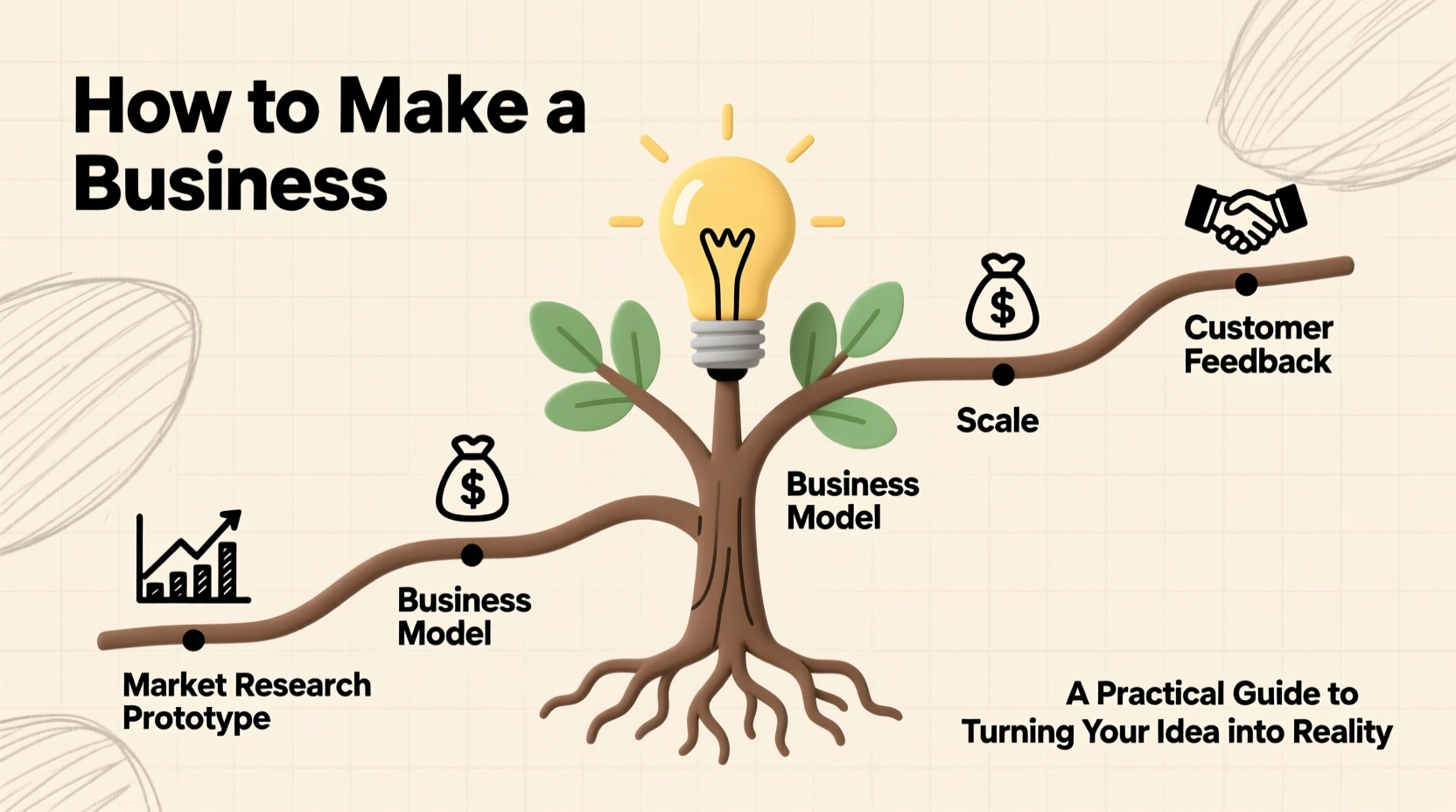
Every successful business starts with a clear understanding of what it offers and who it serves. Begin by articulating your idea in simple terms: What product or service are you providing? Who benefits from it? Why does it matter?
Next, test whether there’s actual demand. Too many entrepreneurs fall in love with their idea without confirming if anyone will pay for it. Conduct informal surveys, interview potential customers, or run low-cost ads to gauge interest before investing time and money.
Validation doesn’t mean achieving perfection—it means gathering enough evidence to justify moving forward. If five out of ten people express genuine interest or willingness to pre-pay, you may have traction.
Create a Lean Business Plan
A lean business plan is concise, focused, and actionable—typically no longer than one page. Unlike traditional 30-page documents, this format emphasizes key components needed to launch and iterate quickly.
| Section | Key Questions to Answer |
|---|---|
| Problem & Solution | What pain point do you solve? How does your product/service address it? |
| Target Market | Who exactly are your ideal customers? Where can you find them? |
| Revenue Model | How will you make money? (e.g., subscriptions, one-time sales, commissions) |
| Marketing Strategy | How will you reach customers? (e.g., social media, partnerships, SEO) |
| Cost Structure | What are your fixed and variable costs? (e.g., software, inventory, labor) |
| Milestones | What are your next 3–6 month goals? (e.g., prototype, first sale, website launch) |
This document isn’t set in stone. Revisit and revise it monthly as you learn more from customer feedback and market response.
Build Your Minimum Viable Product (MVP)
The MVP is the simplest version of your product that delivers core value. Its purpose isn't to be perfect but to get real users interacting with your idea so you can learn fast and cheap.
For example, if you're launching an app that connects local gardeners with homeowners, your MVP could be a simple Google Form and WhatsApp group. Once people start using it, observe how they communicate, what delays occur, and where confusion arises. These insights inform future development far better than assumptions ever could.
“We launched our meal-kit service with just three recipes, packed in reused boxes from a grocery store. Customers didn’t care about packaging—they cared about taste and convenience.” — Lena Patel, Founder of FreshRoots Meals
Focus on solving one specific problem exceptionally well. Avoid feature creep early on. Speed to market beats perfection when validating demand.
Step-by-Step Launch Timeline (First 90 Days)
Execution separates ideas from businesses. Follow this realistic timeline to organize your efforts:
- Week 1–2: Define your target customer and refine your value proposition.
- Week 3–4: Build your MVP and begin outreach to 10–20 potential users for feedback.
- Week 5–6: Finalize branding (name, logo, basic website) and set up legal structure (sole proprietorship, LLC, etc.).
- Week 7–8: Open a business bank account, establish bookkeeping (use tools like Wave or QuickBooks), and configure payment processing.
- Week 9–10: Soft launch to a small audience—friends, family, online communities—and collect testimonials.
- Week 11–12: Refine based on feedback, scale marketing efforts, and aim for first paying customers.
Legal and Financial Foundations
Operating without proper setup exposes you to risk. Even solopreneurs should consider these basics:
- Choose a business structure: Sole proprietorships are easy but offer no liability protection. An LLC provides personal asset protection and credibility.
- Register your business name: Check availability with your state and secure a domain name online.
- Get an EIN: Free from the IRS, this number allows you to open bank accounts and file taxes separately.
- Open a dedicated business bank account: Mixing personal and business finances creates accounting chaos and undermines professionalism.
- Understand tax obligations: Sales tax, self-employment tax, and quarterly filings vary by location and revenue model.
Consult a small business accountant or use platforms like Bench or Pilot for affordable bookkeeping support. Investing $100/month now can save thousands in penalties later.
Real Example: From Side Hustle to Full-Time Income
Jamal started a mobile car detailing service after noticing neighbors struggling to find time for car washes. He began with $200 worth of supplies, cleaned friends’ cars at cost, and asked for video reviews. Within two months, he had 15 repeat clients and booked weekend slots only.
He reinvested profits into a van wrap for branding and used Instagram to post before-and-after clips. By month six, he hired one part-time employee and moved operations to a shared garage space. Today, his company generates over $8,000/month and services commercial fleets.
His success wasn’t due to funding or innovation—it came from consistency, listening to clients, and incremental growth.
Essential Startup Checklist
Use this checklist to stay on track during your first three months:
- ✅ Clearly define your product and ideal customer
- ✅ Conduct at least 10 customer interviews
- ✅ Develop a one-page lean business plan
- ✅ Create a functional MVP or pilot service
- ✅ Choose and register your business entity
- ✅ Obtain EIN and open a business bank account
- ✅ Set up basic bookkeeping and invoicing system
- ✅ Launch website or landing page with contact form
- ✅ Acquire first five paying customers
- ✅ Collect feedback and adjust offering accordingly
Frequently Asked Questions
Do I need funding to start a business?
Not necessarily. Many businesses launch with less than $1,000 using bootstrapping methods. Focus on revenue-generating activities early—like selling pre-orders or offering services—rather than seeking investors upfront.
How long does it take to make a profit?
It varies widely. Service-based businesses often break even within 3–6 months. Product-based ventures may take 6–12 months due to inventory and production lead times. The key is managing cash flow carefully and keeping overhead low.
Can I start while keeping my full-time job?
Absolutely. Most founders begin part-time. Dedicate consistent hours each week—such as evenings or weekends—and treat your business like a second job. Transition full-time only once you have reliable income covering living expenses.
Keep Moving Forward
Building a business is less about having the perfect idea and more about persistent execution. Clarity comes through action, not endless planning. Start small, charge early, listen closely, and adapt quickly. Every sale, rejection, and review teaches you something textbooks cannot.
You don’t need permission to begin. You only need the courage to try, the discipline to follow through, and the humility to improve. Whether you’re launching a freelance service, opening a shop, or developing an app, the path from idea to reality is built step by step.




 浙公网安备
33010002000092号
浙公网安备
33010002000092号 浙B2-20120091-4
Comments
No comments yet. Why don't you start the discussion?