
Creating a homemade advent calendar is more than just a festive tradition—it’s an opportunity to personalize the holiday experience. Using mini Christmas gift boxes as the foundation, you can craft a charming countdown that blends creativity with anticipation. Whether intended as a keepsake for your own family or a thoughtful handmade gift, a DIY advent calendar made from small gift boxes offers endless customization while staying firmly within reach of beginner crafters.
The beauty of this approach lies in its simplicity and adaptability. Unlike pre-made calendars with fixed themes and contents, a box-based design allows you to tailor each day’s surprise—be it candy, handwritten notes, tiny toys, or tea sachets—to the recipient’s tastes. The tactile nature of opening a real box adds excitement that paper flaps or fabric pockets often lack. With minimal materials and a few hours of focused effort, you can produce a centerpiece that becomes part of annual celebrations for years to come.
Why choose mini gift boxes for your advent calendar?
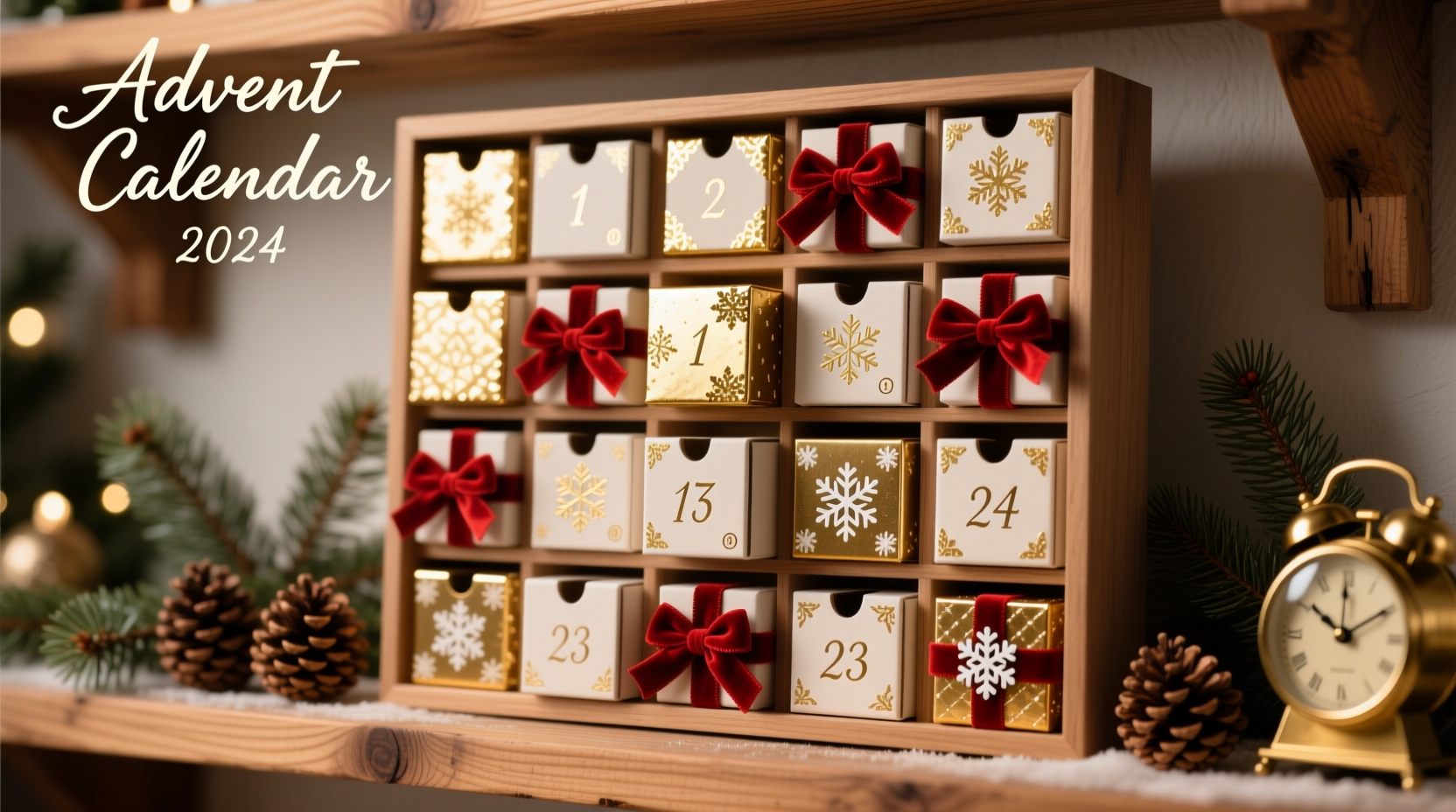
Mini gift boxes offer structural integrity, visual appeal, and versatility unmatched by other advent calendar formats. Their rigid form ensures durability during handling and storage, making them ideal for reuse across multiple seasons. Unlike cardboard calendars prone to tearing, these boxes withstand enthusiastic unwrapping—even by younger children.
Available in kraft paper, matte-finish cardstock, or decorative finishes like snowflake foil or red velvet texture, mini boxes provide a blank canvas for personalization. You can paint, stamp, or label them to match any color scheme or theme: rustic woodland, modern minimalist, vintage Scandinavian, or whimsical Santa’s workshop.
Another advantage is portion control. Each box naturally limits what fits inside, encouraging thoughtful selection of daily treats. This helps avoid overindulgence while preserving the sense of discovery. From a logistical standpoint, sourcing uniform mini boxes in bulk (typically 25–30 per pack) aligns perfectly with the 24-day countdown leading up to Christmas Eve.
Materials and tools needed
Before beginning assembly, gather all necessary supplies. Having everything on hand prevents interruptions and streamlines the creative process. Below is a comprehensive checklist tailored for crafting a polished, long-lasting advent calendar.
Essential Materials
- 24 identical mini gift boxes (minimum size: 2.5” x 2.5” x 1”) — ideally with flat tops for labeling
- Number stickers or printable number labels (1–24)
- Strong double-sided tape or glue dots
- Hot glue gun or craft glue (for permanent mounting)
- A backing board (e.g., foam core, plywood, or thick cardboard, approx. 24” x 36”)
- Ribbon, twine, or string (for hanging and decoration)
- Scissors or precision craft knife
- Ruler and pencil (for alignment)
- Optional: acrylic paint, stamps, washi tape, glitter, or calligraphy pens for embellishment
Optional Additions
- Small LED fairy lights to weave through the arrangement
- Mini clothespins or tags for rotating messages
- Clear cellophane inserts to turn boxes into see-through windows
- Magnetic sheets glued to backs for fridge display
“Handmade calendars create emotional connections. When someone sees 24 little boxes waiting, each tied to a memory or intention, it transforms anticipation into meaning.” — Laura Bennett, Seasonal Craft Educator and Author of *Festive at Home*
Step-by-step construction guide
Building your advent calendar follows a logical sequence: prepare the boxes, organize layout, attach securely, then decorate and fill. Follow this timeline for best results.
Day 1: Design & Prep (1–2 hours)
- Select a layout: Common arrangements include 4x6 grid (4 rows, 6 columns), staggered pyramid, or circular wreath shape. A grid is easiest for symmetry.
- Paint or decorate blank boxes: If desired, apply base colors or patterns. Let dry completely before handling.
- Label each box: Affix numbers 1–24 clearly on top or front. Use waterproof ink if near food items.
- Pre-fill non-perishables: Insert lasting gifts like tiny ornaments, coupons, or puzzles. Save chocolates and fresh items until final week.
Day 2: Assembly (2–3 hours)
- Measure and mark the backing board: Use ruler and pencil to plot where each box will sit. For a grid, leave 0.75” between units.
- Dry-fit placement: Arrange empty boxes on marked spots without gluing. Adjust spacing until visually balanced.
- Glue boxes in place: Starting from bottom row, use hot glue to fix each box firmly. Press for 10 seconds per unit. Allow full cure (1 hour).
- Reinforce structure: Apply extra adhesive along edges if boxes feel loose.
Final Touches (30 minutes)
- Add hanging hardware: Attach sawtooth hanger or ribbon loop to top edge of backing board.
- Decorate background: Paint snowflakes, glue faux pine sprigs, or stencil a winter scene behind the grid.
- Insert perishable items: Add chocolate, tea bags, or handwritten notes no more than 5 days before December 1st.
Design ideas and thematic variations
The true charm of a DIY box calendar lies in its flexibility. Shift the theme based on recipient, budget, or family tradition. Below are three proven concepts used by craft communities nationwide.
Family Experience Calendar
Each box contains a folded slip with a holiday activity: “Bake gingerbread,” “Watch *Elf*,” or “Build a fort.” Include one larger event like “Visit the tree lighting” on Day 24. Ideal for families wanting to reduce screen time and increase shared moments.
Luxury Self-Care Series
Tailored for adults, especially as spa-themed gifts. Fill boxes with face masks, bath salts, essential oil samples, herbal teas, and affirmations. Use neutral-toned boxes with gold numbering for elegance.
Kids’ Surprise Countdown
Alternate small toys (mini dinosaurs, stickers, bouncy balls) with sweet treats. Add interactive elements like “Wear reindeer ears today” or “Tell a joke at dinner.” Parents report higher engagement when tasks are included alongside gifts.
| Theme | Ideal For | Average Cost (USD) | Reusability |
|---|---|---|---|
| Candy & Chocolates | Young children | $25–$40 | Low (boxes may degrade) |
| Handwritten Notes | Partners, teens, seniors | $10–$15 | High (refillable yearly) |
| Craft Supply Sampler | Artistic kids or makers | $30–$50 | Medium (replace consumables) |
| Tea or Coffee Tasting | Adults, coworkers | $20–$35 | High (repack with new blends) |
Real example: The Johnson Family’s Reusable Advent Project
The Johnsons of Portland, Oregon began their box advent tradition in 2018 after their daughter expressed disappointment with store-bought versions. “They felt disposable,” said mother Maria Johnson. “We wanted something we could pass down.”
Using unpainted kraft boxes purchased online, they assembled a 4x6 grid on a birch plywood board stained walnut. Each year, the children help refill the boxes with a mix of activities (“Make snow cookies”), sentimental tokens (“A photo of us at last year’s parade”), and modest gifts (“New colored pencils”).
After Christmas, they remove all contents, wipe interiors with a dry cloth, and store the empty calendar in a linen closet. Now entering its seventh season, the calendar has become a cherished ritual. “The boxes show wear,” Maria admits, “but that’s part of the story. You can see the years stacked up.”
Common pitfalls and how to avoid them
Even simple projects encounter challenges. Awareness of frequent issues improves outcomes significantly.
Problem: Boxes fall off during use
Solution: Use industrial-strength adhesive like E6000 or epoxy for permanent mounting. Double-check bond strength before filling.
Problem: Numbers are hard to distinguish
Solution: Use high-contrast colors (white on red, black on cream). Consider braille stickers or tactile markers for visually impaired users.
Problem: Overcrowded design obscures individual boxes
Solution: Maintain consistent spacing. Avoid wrapping ribbons around multiple boxes unless part of a deliberate pattern.
Problem: Perishable items spoil before use
Solution: Delay inserting food items until early December. Use silica gel packets in humid climates.
Frequently Asked Questions
Can I make this advent calendar without a backing board?
Yes, though stability decreases. Alternatives include stringing boxes like a garland using holes punched in corners, or placing them on a shelf in numerical order. These styles work well for temporary displays but aren’t recommended for homes with pets or toddlers.
Where can I buy affordable mini gift boxes in bulk?
Online retailers like Amazon, Etsy, and Oriental Trading offer packs of 24–50 plain or holiday-themed boxes starting at $0.25 per unit. Local craft stores such as Michaels or Hobby Lobby often carry seasonal selections in November and December, sometimes with coupons for additional savings.
How do I clean and store the calendar after Christmas?
Empty all contents first. Wipe interior and exterior with a dry microfiber cloth—avoid moisture unless boxes are plastic-coated. Store flat in a climate-controlled area away from rodents. Place tissue paper between layers if stacking. Properly maintained, most paperboard boxes last 5–8 years.
Conclusion: Start your own tradition today
A DIY advent calendar built from mini Christmas gift boxes bridges nostalgia and innovation. It invites participation, encourages mindfulness, and turns the countdown to Christmas into a shared journey. Unlike mass-produced alternatives, this version carries the imprint of time, care, and intention.
No special skills are required—only curiosity and a willingness to begin. Whether you spend an afternoon assembling a simple grid or invest weeks layering intricate details, the result becomes more than decor. It becomes ritual. And in a season often dominated by rush and obligation, rituals ground us.




 浙公网安备
33010002000092号
浙公网安备
33010002000092号 浙B2-20120091-4
Comments
No comments yet. Why don't you start the discussion?