
Every December, the ritual of counting down to Christmas carries quiet magic—especially when it’s rooted in intention rather than consumption. Yet most commercial advent calendars contribute to seasonal waste: flimsy cardboard, plastic trays, single-use packaging, and often, negligible reuse value. What if you could transform last year’s discarded gift boxes—those sturdy, beautifully printed, sometimes even velvet-lined containers—into a cherished, heirloom-quality tradition? This isn’t just recycling. It’s reclamation: turning memory-laden objects into tactile, meaningful moments for your family, friends, or classroom.
Repurposed gift boxes offer unmatched structural integrity, varied sizes, rich textures (matte finishes, foil stamping, embossed lids), and built-in nostalgia. Unlike craft-store kits, they arrive with history—and that history becomes part of the experience. A box that once held hand-knit mittens or a vintage book now holds a handwritten note, a sprig of dried orange, or a tiny handmade ornament. This approach reduces landfill contribution by up to 92% compared to mass-produced alternatives (per 2023 Circular Holiday Consumption Report), while deepening emotional resonance far beyond December 25th.
Why Repurposed Gift Boxes Are the Ideal Foundation
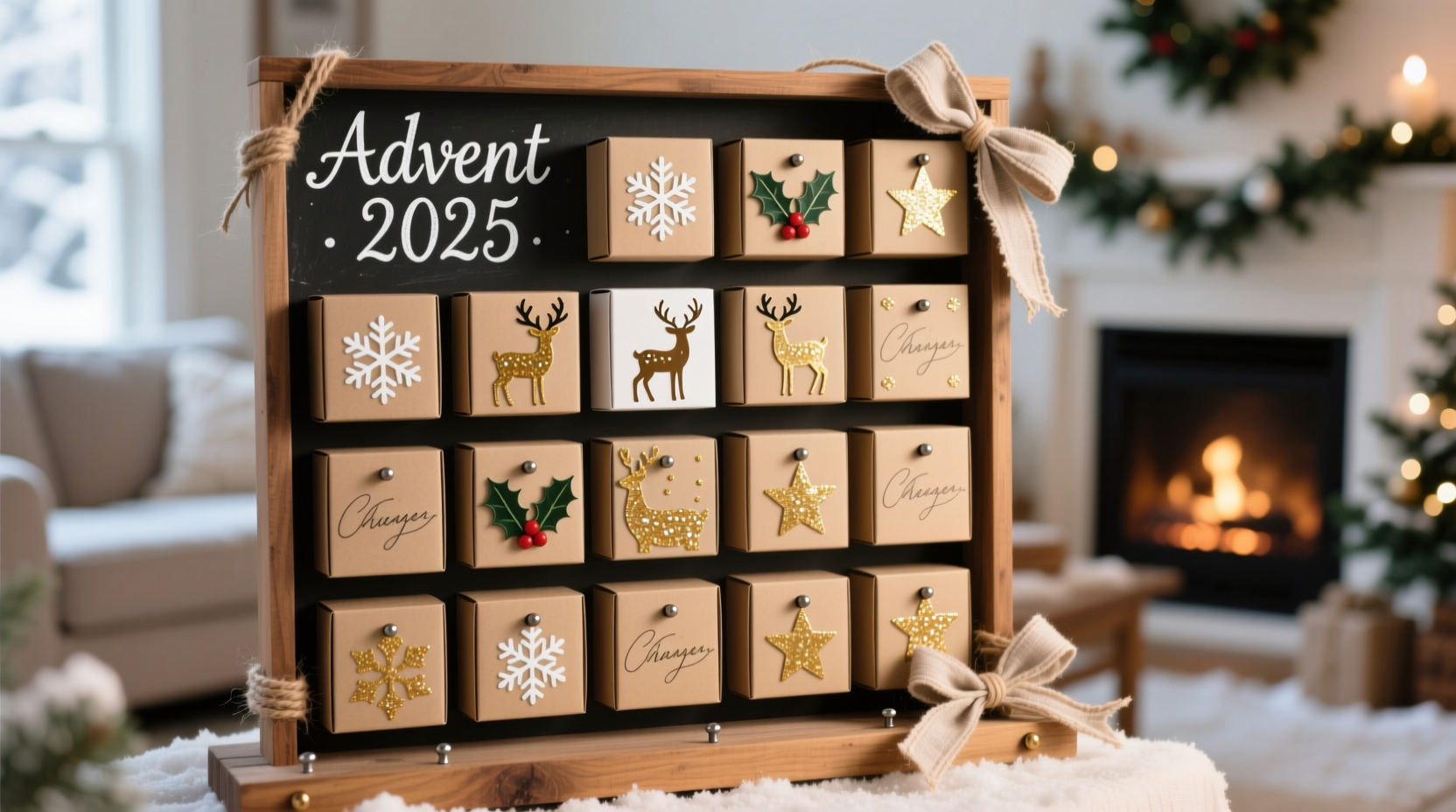
Not all boxes are created equal—but holiday gift boxes consistently outperform standard craft supplies for this project. Their walls are typically 1.5–2.2 mm thick, with reinforced corners and rigid bases. Most feature laminated or coated surfaces that resist scuffing during daily handling. Crucially, they come in natural size gradients: small (3″ × 3″ × 2″) for chocolates or tea bags; medium (5″ × 4″ × 3″) for mini journals or sachets; large (7″ × 5″ × 4″) for ornaments or small toys. This variation eliminates the need for cutting or assembling uniform compartments—a major time-saver and precision advantage.
Unlike corrugated shipping boxes, gift boxes rarely contain adhesives or coatings that off-gas volatile organic compounds (VOCs). Their inks are usually soy- or vegetable-based, especially on premium brands like Williams Sonoma, Anthropologie, or local boutique packaging. That matters when placing them on mantels, shelves, or children’s nightstands. And because they’re already decorated—with pine motifs, gold foil snowflakes, or subtle herringbone patterns—you skip hours of painting, gluing, or embellishing.
Essential Supplies & Sourcing Strategy
You’ll need minimal new materials—most are household staples. The goal is to preserve each box’s original character while unifying them visually and functionally. Prioritize non-toxic, archival-grade items for longevity and safety, especially with children involved.
| Item | Purpose | Recommended Specifications | Why It Matters |
|---|---|---|---|
| Repurposed gift boxes (24–25 total) | Core calendar units | At least 3 distinct sizes; avoid water-damaged or torn boxes | Structural integrity ensures daily opening without collapse or lid detachment |
| Acid-free kraft paper or linen tape (1/4″ wide) | Labeling & reinforcement | Matte finish, no glossy adhesive residue | Prevents yellowing over time and won’t stain delicate box surfaces |
| Number stencils or fine-tip archival ink pens | Numbering days 1–24 | Waterproof pigment ink (e.g., Sakura Pigma Micron 01) | Resists smudging from handling and humid indoor air |
| Natural twine or cotton cord (3–4 mm thickness) | Hanging & grouping | Unbleached, undyed fiber; 50+ ft per calendar | Biodegradable, knot-holds securely, complements rustic or modern aesthetics |
| Small brass or wood beads (optional) | Decorative accents | 10–12 mm diameter; pre-drilled hole | Adds tactile interest without compromising sustainability goals |
Avoid double-sided tape, hot glue, or spray adhesives—they degrade box fibers over time and leave sticky residues. Skip glitter, synthetic ribbons, or plastic charms: they contradict the ethos of mindful reuse and introduce microplastic shedding.
Step-by-Step Assembly Timeline (90 Minutes Total)
This process is designed for efficiency and adaptability. You can complete it in one focused session—or break it across three 30-minute blocks. No power tools required.
- Gather & Sort (15 min): Lay out all boxes. Group by size and visual harmony (e.g., matte reds together, cream-and-gold sets). Discard any with compromised hinges or warped bases. Keep lids separate but paired.
- Clean & Prep (10 min): Wipe interiors and exteriors with a dry microfiber cloth. For stubborn dust, use a soft-bristled toothbrush. Never use water or cleaners—moisture warps cardboard and lifts foil finishes.
- Number & Label (25 min): Use stencils or freehand with archival pen. Place numbers on the front center of each box lid (not the base) for consistent visibility. Apply numbers in descending order (24 first) to avoid miscounting. Let ink dry fully before handling.
- Reinforce & Secure (20 min): Apply a 1″ strip of kraft tape along the inner seam where lid meets base—this prevents accidental popping open. For boxes with weak closures, add a tiny dot of wheat paste (not glue) at the hinge point only.
- Arrange & Hang (20 min): Lay out boxes in your chosen formation (grid, tree shape, cascading line). Thread twine through pre-punched holes (use a leather punch or awl) or tie around box handles. Knot securely with square knots—not slipknots—for safety.
Pro tip: Work on a large, clean surface covered with butcher paper. This catches stray ink dots and protects floors from twine friction.
Real Example: The Thompson Family Calendar (Portland, OR)
In 2022, Sarah Thompson, a third-grade teacher and mother of two, faced a dilemma: her school’s “zero-waste holiday initiative” discouraged store-bought calendars, yet she wanted something durable enough for 24 students to interact with daily. She asked families to donate unused gift boxes from holiday returns. Within one week, she collected 37 boxes—ranging from a tiny Tiffany blue box (donated by a parent who’d returned earrings) to a large Crate & Barrel bakery box lined with recycled kraft paper.
Sarah sorted them by size and color family, then assigned each child a “box day” to fill—no candy, only experiential gifts: “Draw a picture for Mrs. Lee,” “Choose the read-aloud book today,” or “Lead the morning gratitude circle.” She mounted the boxes on a reclaimed barnwood board using brass cup hooks, arranging them in a staggered evergreen silhouette. Students opened one box each morning before homeroom. By January, the board hung in the school library as a permanent display titled “Our Shared Joy.” The boxes remain stored in labeled drawers—ready for next year’s iteration. “It wasn’t about perfection,” Sarah notes. “It was about showing kids that care lives in reuse.”
“Advent calendars made from existing materials don’t just count days—they honor continuity. Each box carries the weight of past generosity, making the present act of giving feel deeper, not smaller.” — Dr. Lena Ruiz, Material Culture Historian, University of Vermont
Smart Filling Ideas (Beyond Chocolate)
The true distinction of a repurposed-box calendar lies in its capacity for meaning—not mass production. Because these boxes have depth, texture, and individuality, they invite thoughtful curation. Prioritize items that align with your values: low-waste, locally sourced, skill-building, or emotionally resonant.
- For Children: Mini seed packets (with planting instructions), hand-stitched felt shapes, coupons for “one bedtime story extra,” or a tiny jar of homemade playdough (label with expiration date).
- For Couples: Handwritten love notes on recycled paper, a tea bag blend named after your first date, a pressed flower from your garden, or a voucher for “no-phones dinner” with a specific recipe included.
- For Classrooms: Positive affirmation cards (“You asked a great question yesterday”), a polished river stone for focus, a packet of native wildflower seeds, or a QR code linking to a student-read poem.
- For Seniors: A small sachet of lavender and chamomile, a high-contrast crossword puzzle, a photo of a shared memory (printed on acid-free paper), or a list of “Three Things I Appreciate About You.”
Avoid anything requiring refrigeration, sharp edges, or batteries. Remember: the box itself is part of the gift. Its weight, sound when opened, and lingering scent (a hint of cedar or vanilla from prior contents) all contribute to the sensory experience.
FAQ
Can I use boxes with logos or branding?
Absolutely—and intentionally. Rather than covering logos, lean into them as part of the story. A “Starbucks” box might hold coffee beans; a “Lush” box could contain bath salts. This adds authenticity and sparks conversation about conscious consumption. If branding feels too commercial, lightly distress the logo area with fine-grit sandpaper—it creates subtle texture without removing identity.
How do I prevent boxes from toppling when hung vertically?
Weight distribution is key. Fill heavier items (small wooden toys, glass ornaments) in lower-row boxes. For wall-mounted displays, attach boxes to a rigid backing (reclaimed wood, corkboard) using removable mounting squares—not nails or screws. Test stability by gently shaking the assembly before final installation. Boxes with flat, wide bases (like shoebox-style) anchor best at the bottom row.
What if I only have 20 boxes—not 24?
Embrace flexibility. Create a 20-day calendar ending on December 20th, followed by a “Week of Wonder” (Dec 21–24) with larger shared experiences: baking cookies together, watching a favorite film, writing letters to loved ones, or volunteering. This honors the spirit of anticipation while honoring your actual resources.
Conclusion: Your Calendar Is Already Waiting
You don’t need to buy supplies, master intricate crafts, or wait for a “perfect” moment to begin. Your advent calendar exists right now—in the cupboard where last year’s boxes rest, in the attic where holiday decor is stored, in the recycling bin waiting to be reconsidered. Every box you repurpose is a quiet act of resistance against disposability. Every number you write by hand is a meditation on patience. Every item you place inside is an offering—not of excess, but of attention.
This isn’t just about December. It’s about training ourselves to see potential where others see discard. To find beauty in what’s already here. To build traditions that grow richer with age, not cheaper with repetition. Start small: gather five boxes this weekend. Number them 1 through 5. Fill them with five tiny acts of kindness. Watch how the ritual begins to reshape your sense of time, value, and connection.




 浙公网安备
33010002000092号
浙公网安备
33010002000092号 浙B2-20120091-4
Comments
No comments yet. Why don't you start the discussion?