
For many homeowners, storing a live Christmas tree in an unheated garage before bringing it indoors is a practical necessity. However, one persistent problem arises: the water in the tree stand can freeze overnight when temperatures drop below freezing. Frozen water prevents the tree from absorbing moisture, accelerating needle drop and increasing fire risk. While commercial heated stands exist, they’re often expensive or not suited for temporary outdoor storage. A cost-effective alternative is a DIY Christmas tree stand heater—simple, safe, and built with readily available components.
This guide walks through designing and assembling a reliable heating solution that keeps water liquid without posing a fire hazard or damaging your garage. From selecting safe materials to understanding electrical load limits, every step ensures both effectiveness and safety. Whether you're prepping for early December or dealing with last-minute setup challenges, this project helps preserve your tree’s freshness until it's ready for display.
Why Tree Stand Water Freezes—and Why It Matters
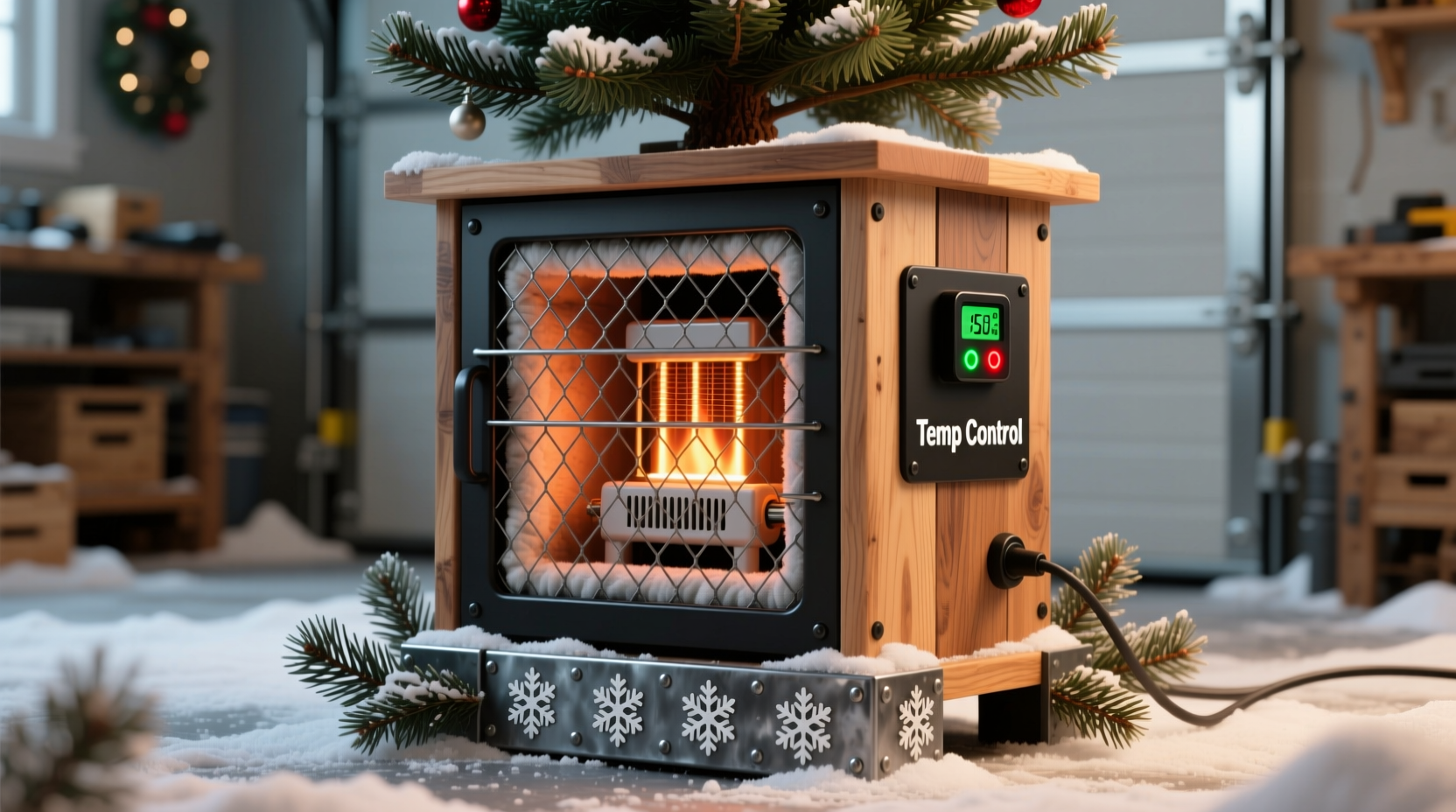
A freshly cut Christmas tree continues to draw water through its trunk even after being harvested. This hydration process slows needle drying and maintains branch flexibility. When stored in an unheated garage where temperatures frequently dip below 32°F (0°C), the water in the stand freezes solid within hours. Once frozen, the tree cannot absorb moisture, leading to premature drying, increased flammability, and shedding before it ever reaches the living room.
The issue isn’t just about convenience—it’s about preservation. According to the National Fire Protection Association (NFPA), dry Christmas trees contribute to hundreds of home fires each year. Preventing freezing at the source significantly reduces these risks by maintaining proper hydration.
Design Principles for a Safe DIY Heater
Any heating device used near wood, water, and electricity must prioritize safety above all else. The goal is gentle warming—not boiling or steaming—but enough heat to keep water just above freezing. To achieve this reliably, follow three core design principles:
- Low wattage, sustained output: Use a heating element under 100 watts to avoid overheating.
- Waterproof insulation: All electrical connections must remain dry and protected.
- Passive temperature regulation: Rely on ambient thermal mass rather than thermostats unless professionally installed.
Unlike high-powered space heaters, which are unsuitable and dangerous in this context, a targeted low-wattage solution delivers precise results. Submersible aquarium heaters, heat mats, or incandescent light bulbs can serve as heat sources when properly enclosed.
“Even a small amount of consistent warmth can prevent ice formation and maintain tree viability during cold storage.” — Dr. Alan Pierce, Horticultural Safety Researcher, University of Vermont Extension
Step-by-Step Guide: Building Your DIY Tree Stand Heater
Below is a proven method using a submersible aquarium heater—a safe, widely available option ideal for controlled water warming.
Materials Needed
- Submersible aquarium heater (25–50W, adjustable preferred)
- Insulated tree stand reservoir (plastic or lined metal)
- Extension cord rated for indoor/outdoor use (UL-listed)
- Ground Fault Circuit Interrupter (GFCI) outlet or adapter
- Thermal wrap or foam insulation sleeve
- Wire ties or zip straps
- Waterproof electrical tape
- Distilled water (to reduce mineral buildup)
Assembly Steps
- Choose a compatible tree stand: Select one deep enough to fully submerge the heater’s element. Avoid shallow trays. If necessary, place a secondary inner container inside the stand to create adequate depth.
- Install the aquarium heater: Submerge the heater completely in the stand’s water basin. Position it away from direct contact with the tree trunk to prevent localized overheating.
- Set temperature control: If your heater has an adjustable thermostat, set it between 36°F and 40°F (2–4°C). This range prevents freezing while minimizing evaporation and energy use.
- Secure wiring: Route the power cord along a safe path, avoiding foot traffic or potential snag points. Use wire ties to fasten excess length to walls or shelving.
- Connect via GFCI protection: Plug into a GFCI outlet or use a GFCI adapter. This critical safety feature cuts power instantly in case of ground fault—essential in damp environments like garages.
- Insulate the setup: Wrap the exterior of the stand with foam insulation or thermal blankets, leaving the top open for refilling. This reduces heat loss and improves efficiency.
- Test before relying: Run the system for 12–24 hours before placing the tree. Monitor water temperature with a floating thermometer to confirm stability.
Alternative Heating Methods and Their Trade-offs
While aquarium heaters offer precision, other options may be more accessible depending on your tools and budget. Each comes with advantages and limitations.
| Method | Pros | Cons | Safety Rating |
|---|---|---|---|
| Aquarium Heater (Submersible) | Precise temp control, waterproof, low wattage | Requires deep water; fragile glass models possible | ★★★★☆ |
| Reptile Heat Mat (External) | Durable, no immersion needed, flexible placement | Less efficient; uneven heating; risk if overlapped | ★★★☆☆ |
| Incandescent Light Bulb (Jar Method) | Inexpensive, easy to find, emits radiant heat | Fall hazard; exposed filament; not waterproof | ★★☆☆☆ |
| Candle Warmer Plate | Designed for continuous use; stable surface | Limited availability; may overheat small volumes | ★★★☆☆ |
| Electric Tea Kettle (Manual Monitoring) | Fast heating; familiar interface | Not designed for sustained use; auto-shutoff issues | ★☆☆☆☆ |
Note: Never use halogen lamps, extension cords not rated for continuous duty, or improvised devices involving open flames. These pose serious fire hazards in enclosed spaces.
Real Example: Keeping Trees Fresh in Northern Minnesota
Mark T., a homeowner in Duluth, MN, regularly faces sub-zero garage temperatures in early December. For years, he struggled with frozen tree stands, often losing two or more gallons of water overnight. After one particularly frustrating season—when his Fraser fir dried out before Christmas Eve—he researched alternatives.
He settled on a 50W adjustable aquarium heater placed in a heavy-duty plastic tub beneath his standard tree stand. He wrapped the tub with closed-cell foam pipe insulation and connected it to a GFCI-protected outlet on a timer circuit. By setting the heater to activate only between 10 PM and 8 AM, he reduced energy usage while ensuring water never froze.
“It cost me about $35 total,” Mark said. “But it saved my tree—and probably prevented a mess when I brought it inside. Now I check the water every morning, and it’s always liquid.”
Essential Safety Checklist
Before powering any DIY heater, verify the following conditions are met:
- ✅ All electrical components are UL-listed or CE-certified
- ✅ Power source includes GFCI protection
- ✅ No exposed wires or damaged insulation
- ✅ Heater is fully submerged (if required) or properly mounted (for external types)
- ✅ Setup is away from flammable materials (paper, gasoline, paint cans)
- ✅ Someone checks the system daily during active use
- ✅ A fire extinguisher is within reach in the garage
“The biggest danger isn’t the heater itself—it’s complacency. One overlooked frayed wire or lack of ground fault protection doubles the risk.” — Sarah Lin, Electrical Safety Inspector, NFPA Partner Program
Frequently Asked Questions
Can I leave the heater running unattended?
You can, but only if all safety measures are in place: GFCI protection, intact wiring, proper ventilation, and a non-flammable base. Still, checking the system once per day is strongly advised. Never leave it running during extended absences (e.g., vacations).
Is distilled water really necessary?
While tap water works initially, minerals in hard water can coat heating elements, reducing efficiency and shortening lifespan. Distilled water minimizes scale buildup, especially important for aquarium heaters used repeatedly. Refill with distilled or filtered water when topping off.
What if my garage has no outlets?
Running an extension cord from the house is common, but ensure it’s rated for outdoor use and protected from snow, ice, and vehicle traffic. Ideally, have a licensed electrician install a dedicated GFCI outlet in the garage. Temporary cords should never be a permanent solution due to trip and overload risks.
Conclusion: Keep Your Tree Hydrated, Healthy, and Safe
A frozen Christmas tree stand doesn’t just inconvenience—it compromises the health and safety of your holiday centerpiece. With a well-designed DIY heater, you can maintain optimal hydration levels even in the coldest garages. The solution doesn’t require advanced skills or expensive parts; it demands attention to detail, respect for electrical safety, and a commitment to prevention.
By combining a low-wattage heat source, proper insulation, and GFCI protection, you create a reliable microclimate that preserves your tree’s vitality. Whether you choose an aquarium heater, reptile mat, or another approved method, the key is consistency and caution. Done right, this simple project extends your tree’s freshness, reduces waste, and supports a safer, more joyful holiday season.




 浙公网安备
33010002000092号
浙公网安备
33010002000092号 浙B2-20120091-4
Comments
No comments yet. Why don't you start the discussion?