
Creating a floating Christmas tree illusion is one of the most enchanting ways to bring modern magic into your holiday decor. By suspending tree sections with transparent acrylic or glass rods, you can achieve the mesmerizing effect of a tree that defies gravity—branches seemingly levitating in mid-air. This technique blends theatrical illusion with minimalist design, making it ideal for contemporary homes, retail displays, and festive events. While it may appear complex, the method relies on careful planning, precise materials, and strategic lighting. With the right approach, anyone can build this eye-catching centerpiece without professional help.
The Science Behind the Illusion
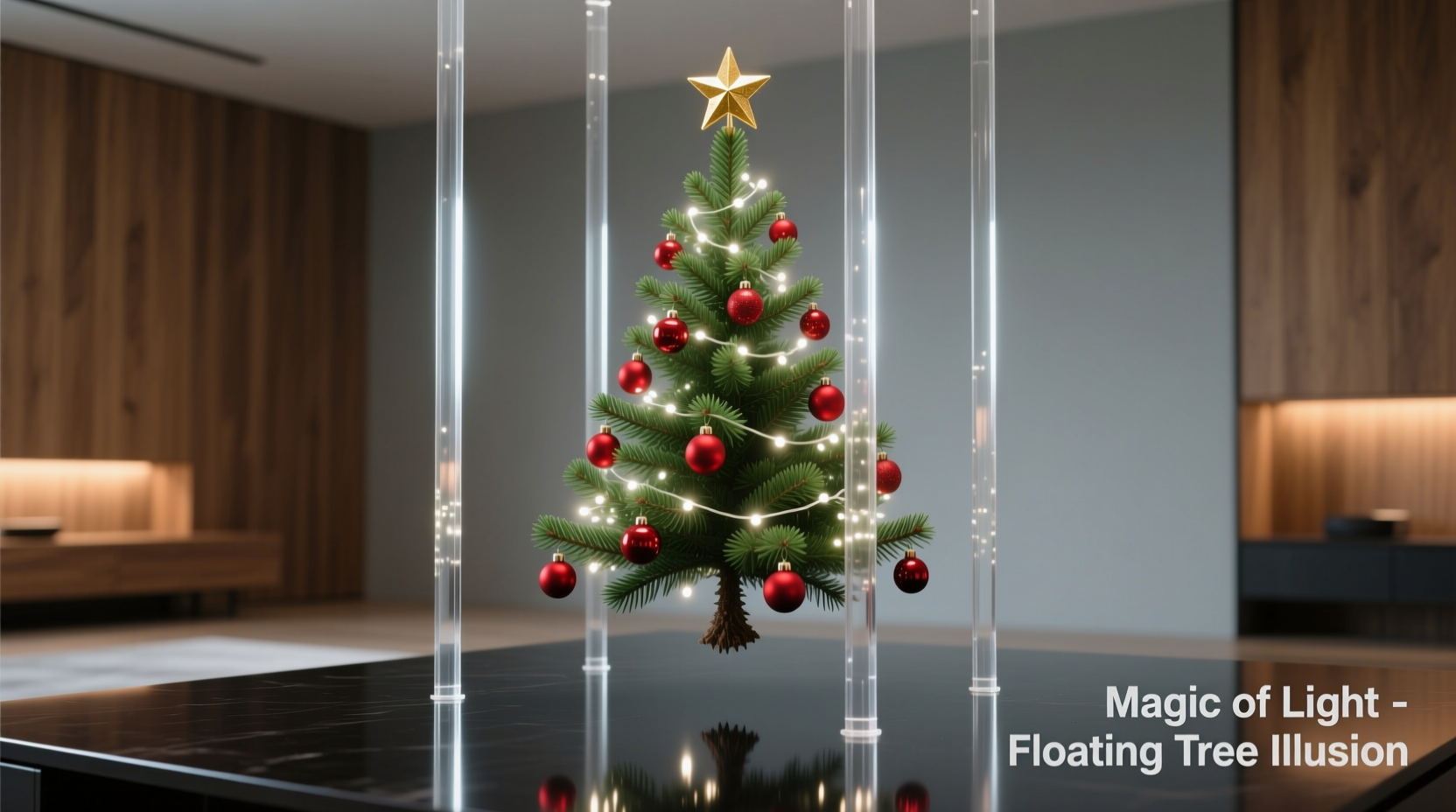
The floating Christmas tree illusion works by breaking the traditional conical shape of a tree into horizontal tiers, each supported by nearly invisible clear rods. These rods—typically made from acrylic (Plexiglas) or tempered glass—are mounted vertically through the center of each tier, aligning perfectly to create the visual continuity of a full tree. When viewed from a slight distance, especially under soft or directional lighting, the rods blend into the background, rendering them nearly undetectable.
This concept draws from stage magic and architectural model-making, where transparency and alignment are used to manipulate perception. The key lies not just in the materials but in the precision of assembly. Even a minor misalignment between tiers can break the illusion, so attention to detail is critical.
“Visual continuity is everything in optical illusions. A fraction of an inch off-center can turn wonder into confusion.” — Daniel Reyes, Set Designer & Visual Artist
Materials and Tools You’ll Need
Before beginning construction, gather all necessary components. Quality materials ensure both structural integrity and invisibility of supports. Below is a comprehensive list:
- Clear acrylic rods – 1/4” to 3/8” diameter, depending on tree size (polished ends recommended)
- Faux Christmas tree – Pre-lit preferred; must be disassemblable into tiers
- Acrylic base plate – 6”–12” diameter, matching rod thickness for flush fit
- Drill with acrylic bit – To prevent cracking during rod insertion
- Level and measuring tape – For vertical alignment
- Epoxy resin or acrylic cement – For permanent bonding
- Threaded inserts or mounting flanges (optional) – For removable designs
- Decorative elements – Ornaments, garlands, lights (non-conductive if near wiring)
Step-by-Step Assembly Guide
Follow this timeline-based process to construct your floating tree safely and accurately. Allow at least 4–6 hours for drying and curing stages.
- Disassemble the tree: Carefully remove branches from the central pole, preserving their original orientation. Label each tier (e.g., “Bottom,” “Middle,” “Top”) to maintain symmetry during reassembly.
- Plan tier spacing: Decide how far apart each section will float. Standard gaps range from 12” to 18”. Larger trees may require wider spacing to enhance the illusion.
- Cut and polish rods: Measure rod length based on total height plus 1” extra per end for embedding. Use fine-grit sandpaper or a flame polisher to smooth cut edges and eliminate cloudiness.
- Prepare the base: Drill a central hole in the acrylic base plate matching the rod diameter. Insert the first rod segment and secure it vertically using epoxy. Use a level to ensure perfect plumb before the adhesive sets (approx. 2–4 hours).
- Attach bottom tier: Once the base rod is fully cured, slide the lowest branch tier onto the rod. Drill a small pilot hole through the trunk sleeve and rod, then secure with a set screw or additional epoxy.
- Stack and align upper tiers: Continue adding rod segments and tiers, checking alignment after each addition. Use a laser level or string line to verify vertical continuity across all sections.
- Finalize top section: Cap the highest rod with a finial or small ornament. Ensure no sharp rod ends are exposed—file or cap them for safety.
- Add lighting and decor: Weave additional fairy lights between tiers for enhanced depth. Avoid heavy ornaments on outer tips to prevent imbalance.
| Tier Position | Recommended Rod Length | Spacing from Previous Tier | Bonding Time (Epoxy) |
|---|---|---|---|
| Base to Bottom Tier | 6 inches | N/A | 4 hours |
| Between Tiers | 14 inches | 12–18 inches | 2 hours |
| Top Section | 8 inches | 12 inches | 3 hours |
Safety, Stability, and Longevity Tips
A floating tree must be as safe as it is stunning. Acrylic rods can support moderate weight, but overloading increases the risk of snapping or tipping. Always anchor the base securely—especially on hardwood or tile floors—using non-marking rubber pads or discreet brackets.
To extend the life of your display:
- Limit direct sunlight exposure to prevent UV degradation of acrylic
- Dust rods gently with a microfiber cloth to avoid scratches
- Turn off lights when unattended to reduce heat stress
- Store rods in protective tubing during off-seasons
Real-World Example: A Boutique Holiday Display
In 2023, a downtown gift shop in Portland, Oregon, replaced its traditional tree with a 7-foot floating illusion to attract foot traffic. Using a pre-lit artificial tree and 3/8” clear acrylic rods spaced 15” apart, the owner created a staggered design visible through the storefront window. Blue-tinted LED strips were wrapped around each rod to amplify the “levitation” effect at night.
The result? A 40% increase in evening visitors during the first week alone. Customers reported feeling “drawn in by the mystery” of how the tree stayed upright. The shop reused the same rods the following year with a new tree, proving the system’s reusability and cost efficiency over time.
Common Mistakes to Avoid
Even experienced decorators can undermine the illusion with small oversights. Here are frequent pitfalls and how to prevent them:
| Mistake | Why It Breaks the Illusion | Solution |
|---|---|---|
| Misaligned rods | Creates a zigzag effect, revealing support structure | Use a plumb line or laser level at every stage |
| Using thick or frosted rods | Increases visibility and glare | Stick to thin, optically clear acrylic |
| Over-decorating outer branches | Causes drooping or imbalance | Distribute weight evenly; use lightweight ornaments |
| Poor base anchoring | Risk of tipping, especially with curious children or pets | Mount base to floor or use hidden counterweights |
Customization Ideas for Different Spaces
The floating tree illusion is highly adaptable. Consider these variations based on your environment:
- Miniature version: Use 1/8” rods and a tabletop tree (2–3 feet tall) for mantels or office desks.
- Outdoor variant: Use UV-resistant polycarbonate rods and weatherproof lights for covered patios (avoid open exposure to rain).
- Color-infused rods: Insert colored gels or LED strips inside hollow rods for a glowing spine effect.
- Rotating base: Install a motorized turntable to add dynamic movement and enhance the illusion from all angles.
“The best holiday illusions don’t hide the mechanics—they make you forget to look for them.” — Lila Nguyen, Immersive Experience Designer
Frequently Asked Questions
Can I reuse the same rods for multiple years?
Yes, provided they’re stored properly. Keep rods in padded tubes away from dust and pressure. Inspect for cracks or cloudiness before each use. Most high-quality acrylic rods last 5+ years with care.
Is this safe around children and pets?
Generally yes, but precautions are essential. Ensure the base is weighted or secured, and avoid sharp rod ends. Supervise young children around the display, and consider placing it in a low-traffic area.
Can I use a real tree for this illusion?
No. Real trees shed needles, dry out, and gain moisture weight, increasing the risk of rod failure. They also cannot be reliably disassembled into stable tiers. Always use a durable faux tree with a sturdy central sleeve.
Checklist: Building Your Floating Tree
- ☐ Choose a pre-lit, disassemblable artificial tree
- ☐ Purchase clear acrylic rods (1/4”–3/8”) and base plate
- ☐ Label and separate tree tiers by height
- ☐ Drill base and rod segments with proper bit
- ☐ Epoxy first rod into base and confirm vertical alignment
- ☐ Attach bottom tier and secure with set screw or adhesive
- ☐ Stack remaining tiers with consistent spacing
- ☐ Test stability and adjust if needed
- ☐ Decorate with lightweight ornaments and supplemental lighting
- ☐ Perform weekly checks during display period
Conclusion: Bring Magic Into Your Holidays
The floating Christmas tree illusion isn’t just a decoration—it’s an experience. By combining engineering precision with artistic vision, you transform a seasonal symbol into a conversation piece that captivates guests and elevates your space. Whether you’re designing for home, business, or community events, this project proves that wonder often lies in what you *don’t* see. With accessible materials and careful execution, the illusion is well within reach.




 浙公网安备
33010002000092号
浙公网安备
33010002000092号 浙B2-20120091-4
Comments
No comments yet. Why don't you start the discussion?