
The holiday season invites creativity, and few decorations capture the imagination quite like a floating Christmas tree. This enchanting illusion—where a miniature tree appears to hover in midair—has become a favorite among decorators seeking elegance and mystery. Achieving this effect doesn’t require magic, but rather a clever combination of physics, careful planning, and nearly invisible support. Using clear wire is one of the most effective and accessible methods to create this levitating look. Whether you’re enhancing your mantel, decorating a dining table centerpiece, or crafting a unique gift display, this guide walks you through every step to achieve a convincing and visually stunning floating tree.
The Science Behind the Illusion
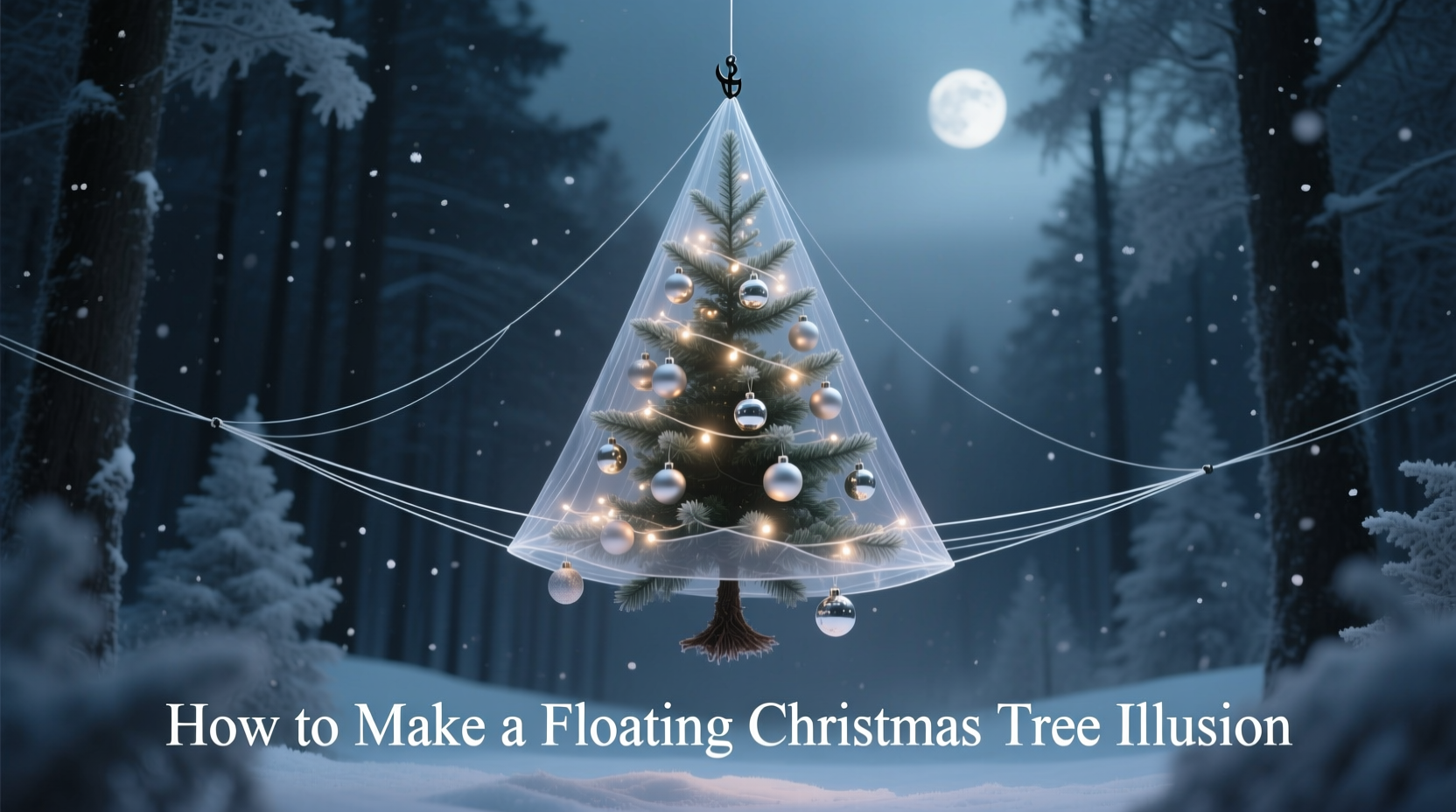
The floating Christmas tree isn’t defying gravity—it’s using it to its advantage. The key lies in minimizing visual cues that would otherwise reveal how the tree is supported. Clear nylon or monofilament wire (commonly used in fishing line) is ideal because it refracts light similarly to air, making it nearly invisible under most lighting conditions. When properly anchored and tensioned, this wire can suspend lightweight objects without drawing attention to the support mechanism.
The illusion works best when viewed from specific angles. Positioning matters: if observers are looking slightly upward or straight on, the wire blends into the background. However, if someone peers directly at the side profile under bright, direct light, the wire may become faintly visible. That’s why strategic placement and controlled lighting are essential components of success.
“Optical illusions in decor rely on perception management. The goal isn’t perfection—it’s misdirection.” — Daniel Ruiz, Set Designer & Visual Artist
For the floating tree, “perception management” means concealing anchor points, choosing the right scale, and using complementary backdrops. A dark wall behind a lightly colored tree, for example, enhances the invisibility of clear wire by reducing contrast.
Materials You’ll Need
Before assembling your floating tree, gather all necessary supplies. Most items are affordable and readily available at craft stores, hardware shops, or online retailers.
- Miniature artificial Christmas tree – Ideally 6 to 14 inches tall; lightweight models work best.
- Clear monofilament fishing line or nylon thread – At least 10 lb test strength for stability.
- Small screw hooks or eye pins – Two per tree (one at base, one at top).
- Adhesive putty or removable mounting tabs – For securing hooks to walls or ceilings without damage.
- Scissors and wire cutters – Precision tools for clean cuts.
- Tape measure or ruler – Ensures symmetrical suspension.
- Optional LED micro lights – Battery-powered string lights enhance the magical effect.
Step-by-Step Assembly Guide
Creating a convincing floating illusion takes patience and precision. Follow these steps carefully to ensure both safety and visual impact.
- Prepare the Tree Base
Inspect the underside of the tree. If it lacks a threaded insert or stable point for attachment, use strong epoxy glue to affix a small eye pin to the center of the base. Allow 24 hours to cure completely. - Attach the Top Anchor
Locate the highest central point of the tree—usually the tip. Carefully insert a second eye pin here. Use pliers to gently twist it into place. For added security, apply a drop of low-viscosity super glue around the base of the pin. - Cut and Thread the Wire
Cut two lengths of clear monofilament, each about 18–24 inches long. Thread one end of each through the top and base eye pins, respectively. Tie secure knots—double fisherman’s knots work well—and trim excess. Test tension by gently pulling. - Install Wall or Ceiling Anchors
Determine where the tree will appear to float. Mark two points vertically aligned above your chosen location—one high (ceiling or upper wall), one lower (wall or furniture edge). Attach adhesive-backed screw hooks at these marks. Ensure they’re level and firmly bonded. - Suspend the Tree
Connect the top wire to the upper hook and the bottom wire to the lower hook. Adjust until the tree hangs perfectly vertical. View from multiple angles to check alignment. Minor tilting breaks the illusion. - Conceal Support Lines
Use matte black tape or paint on any visible portions of the hooks. Position the display against a busy or dark backdrop to further hide the wires. - Add Lighting (Optional)
Wrap micro LED lights around the branches. Battery packs can be hidden behind nearby objects or tucked beneath decorative elements. Warm white LEDs enhance the dreamlike quality.
Troubleshooting Common Issues
If the tree wobbles, it may be due to uneven wire length or weak anchoring. Re-tie knots symmetrically and confirm both hooks bear equal load. If the tree leans, adjust the position of the lower anchor slightly forward or backward until balance is restored.
“Even a millimeter of misalignment can ruin the illusion. Patience pays off in invisible details.” — Lena Torres, Prop Stylist
Design Variations and Creative Applications
Once mastered, the floating tree technique can be adapted in numerous ways. Consider these creative uses:
- Multiple Floating Trees – Suspend several mini trees at varying heights to create a forest-like installation. Use staggered wire lengths and mix tree styles for visual interest.
- Floating Upside-Down Tree – Mount the primary anchor at the bottom and let the tree hang inverted from its tip. This modern twist adds drama and surprises guests.
- Tabletop Levitation – Place a mirrored surface beneath the tree. The reflection doubles the illusion, making it appear as though the tree floats above its own image.
- Window Display – Hang the tree between panes of glass or in front of a window with outdoor lights. During dusk, the silhouette against twilight enhances the mystical effect.
Real-World Example: A Boutique Holiday Window
In downtown Portland, a local gift shop sought to draw holiday foot traffic with a captivating storefront. The owner, Mia Chen, collaborated with a display artist to install three floating trees in ascending height along an invisible diagonal axis. Each tree was suspended with 15 lb test monofilament, anchored to the ceiling and floor with painted steel rods disguised as part of the architectural molding.
To amplify the effect, fiber optic strands were woven through the branches, pulsing softly in sequence. From the sidewalk, passersby perceived the trees as truly airborne. Foot traffic increased by 40% during the first weekend, and the display was featured in a regional lifestyle magazine. The entire setup cost under $120 and took six hours to complete.
This case demonstrates that even small businesses and homeowners can achieve professional-looking results with minimal investment—provided attention is paid to detail and perspective.
Do’s and Don’ts: Best Practices Summary
| Do | Don’t |
|---|---|
| Use lightweight trees made of plastic or thin metal. | Choose trees with heavy bases or thick trunks that increase visibility of supports. |
| Test the setup in the actual display location under normal lighting. | Assume the wire will be invisible under all conditions—always check from guest viewpoints. |
| Anchor wires to solid surfaces like studs or heavy molding. | Rely solely on adhesive hooks on fragile surfaces like drywall without reinforcement. |
| Use warm, diffused lighting to minimize glare on the wire. | Place halogen or spotlight beams directly on the suspension lines. |
| Keep spare wire and hooks on hand for quick repairs. | Overlook environmental factors like drafts or vibrations that may cause swaying. |
Frequently Asked Questions
Can I use regular thread instead of fishing line?
No. Regular thread lacks the tensile strength and clarity needed. Cotton or polyester threads are more visible and prone to snapping under tension. Monofilament fishing line is specifically designed to be strong, thin, and translucent—making it ideal for this application.
How high can I safely hang the tree?
For optimal viewing and safety, keep the tree between 4 and 7 feet off the ground. Higher installations risk increased sway and reduced visual clarity. Always ensure anchors are securely fastened, especially near walkways or areas with air currents.
Is this safe around children or pets?
Yes, provided precautions are taken. Keep the display out of reach, avoid low-hanging installations in high-traffic areas, and inspect the setup weekly for wear. If using near curious hands or paws, consider adding a clear acrylic barrier or placing it on an elevated shelf with a backdrop.
Expert Tips for Long-Term Success
Maintaining the illusion over time requires periodic checks. Dust accumulation on the wire can make it more visible, so gently wipe lines with a lint-free cloth every few weeks. Replace any frayed or stressed sections immediately. Store disassembled components in labeled bags to simplify reassembly next season.
Consider documenting your setup with notes or photos. Record wire lengths, anchor spacing, and lighting positions. This documentation becomes invaluable when recreating the display with consistency.
Conclusion: Bring Magic Into Your Space
The floating Christmas tree illusion is more than a decoration—it’s a conversation piece, a moment of wonder in an ordinary room. With clear wire, a few basic tools, and thoughtful execution, you can transform a simple miniature tree into a mesmerizing focal point. The technique blends art and engineering, rewarding patience with delight. As guests pause to wonder how it stays aloft, you’ll know the secret lies not in magic, but in meticulous craftsmanship.
This holiday season, go beyond traditional decor. Challenge perception, play with light and space, and give your home a touch of whimsy that lingers in memory long after the tinsel is packed away.




 浙公网安备
33010002000092号
浙公网安备
33010002000092号 浙B2-20120091-4
Comments
No comments yet. Why don't you start the discussion?