
In recent years, the fusion of holiday tradition and modern technology has birthed some truly mesmerizing decor innovations. Among them, the floating levitating Christmas tree stands out as a futuristic centerpiece that blends elegance with engineering. By harnessing magnetic levitation—once reserved for high-speed trains and laboratory experiments—home enthusiasts can now create a gravity-defying holiday display that captivates guests and redefines festive ambiance.
This guide walks through the science, materials, and precise steps needed to build your own magnetic levitating Christmas tree. Whether you're a DIY hobbyist, a tech-savvy decorator, or simply drawn to the magic of motionless suspension, this project offers both aesthetic reward and technical satisfaction.
The Science Behind Magnetic Levitation
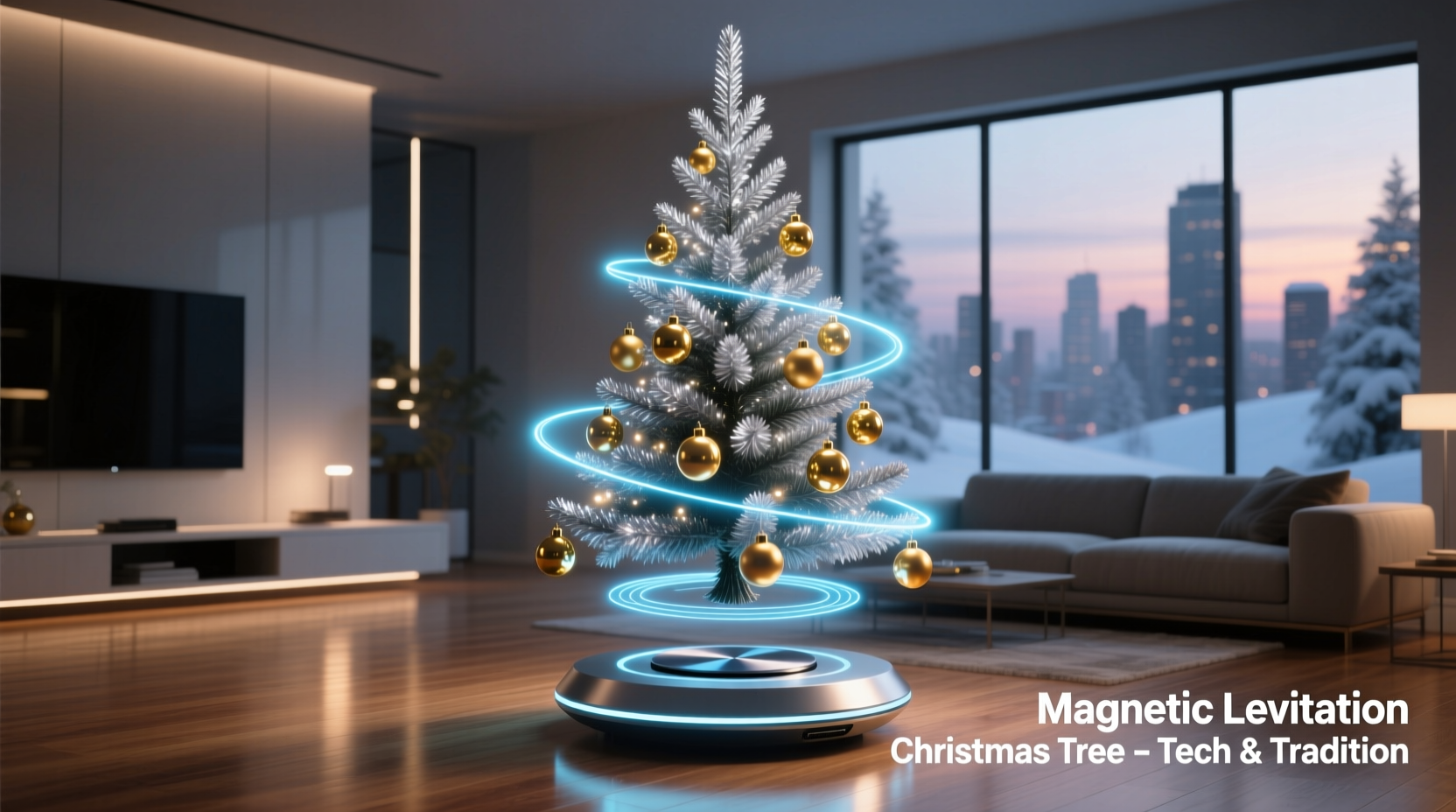
Magnetic levitation relies on the principle of opposing magnetic fields to suspend an object in mid-air without physical support. This is achieved primarily through two configurations: electromagnetic stabilization or permanent magnet repulsion combined with spatial constraints.
In most consumer-grade levitation devices, a base unit contains electromagnets controlled by sensors that detect the position of a floating object. When the object begins to drift, the system adjusts the magnetic field in real time to restore equilibrium. This feedback loop creates stable, silent hovering—perfect for delicate displays like a miniature Christmas tree.
For DIY applications, kits are available that include pre-calibrated bases and floating platforms. These simplify implementation while still allowing full creative freedom in decorating the suspended element.
“Magnetic levitation isn’t just about spectacle—it’s a demonstration of precision control and balance. When applied to decorative objects, it transforms static displays into dynamic art.” — Dr. Alan Reyes, Applied Electromagnetics Researcher at MIT Media Lab
Materials and Tools Required
Building a functional levitating Christmas tree requires careful selection of components. While custom builds from scratch are possible, most successful home projects use commercially available levitation modules for reliability and safety.
| Component | Description | Recommended Specs |
|---|---|---|
| Levitation Base Unit | Electromagnetic platform with built-in sensors and power supply | Supports up to 1 kg; includes auto-stabilization |
| Floating Platform | Lightweight disc or frame that attaches to the tree base | Non-magnetic material (e.g., acrylic, ABS plastic) |
| Neodymium Magnet (Floating) | Strong rare-earth magnet attached to the floating platform | Diameter: 30–50 mm; Grade N52 |
| Base Magnet Array | Set of magnets or coils within the base for repulsion and alignment | Integrated in kit; avoid modifying |
| Miniature Artificial Tree | Pre-lit or unlit artificial tree (plastic or silk) | Height: 12–18 inches; lightweight construction |
| Adhesives & Fasteners | To secure magnet to platform and tree to magnet | Epoxy resin or industrial double-sided tape |
| Power Supply | Adapter for base unit | 5V–12V DC, depending on kit specifications |
Step-by-Step Assembly Guide
Follow these steps carefully to assemble a stable, visually striking levitating Christmas tree. Precision during setup ensures long-term performance and reduces risk of failure.
- Prepare the Floating Platform
Select a flat, circular platform made of lightweight, non-magnetic material. Drill or mold a central recess to hold the neodymium magnet flush with the surface. This minimizes wobbling and improves balance. - Secure the Magnet
Using epoxy or industrial adhesive, affix the neodymium magnet to the center of the platform. Allow 24 hours for full curing. Ensure the magnet is perfectly level—any tilt will disrupt levitation stability. - Attach the Miniature Tree
Choose a small artificial tree with a flat bottom. Apply adhesive to the base and mount it vertically onto the floating platform. Center it precisely over the magnet. Let dry completely. - Test Levitation Without Decorations
Place the assembled unit above the base and slowly power on the system. Adjust distance according to manufacturer instructions (usually 1–3 cm). Observe for smooth rotation or stable float. If unstable, check weight symmetry and re-level the setup area. - Add Lights and Ornaments (Optional)
Once floating reliably, add battery-powered LED string lights or micro ornaments. Avoid wired decorations that could drag or unbalance the tree. Use only lightweight additions. - Final Placement and Calibration
Position the entire unit on a level surface away from metal objects, strong air currents, or vibrations. Recalibrate if necessary after adding final touches.
Troubleshooting Common Issues
- Oscillation or Wobbling: Caused by uneven weight distribution. Recheck tree alignment and trim excess foliage on one side.
- Failure to Levitate: Verify power connection and ensure no foreign metal objects are nearby interfering with the magnetic field.
- Sudden Drops: Often due to overheating or power fluctuation. Allow the base to cool and confirm voltage compatibility.
Safety Considerations and Best Practices
While magnetic levitation appears effortless, improper handling can lead to equipment damage or injury. Neodymium magnets are exceptionally strong and can pinch skin or erase electronic data if mishandled.
“High-strength magnets require respect. Keep them away from pacemakers, credit cards, and children under supervision.” — Safety Advisory, Consumer Technology Association
Additional precautions include:
- Never place fingers between the floating platform and base during operation.
- Use only low-voltage, isolated power supplies to prevent electrical hazards.
- Avoid placing near audio equipment or CRT monitors—magnetic fields may interfere with sensitive electronics.
- Turn off the unit when not in use to prolong coil life and reduce energy consumption.
Real-World Example: A Designer’s Holiday Showcase
Jessica Lin, an interior designer based in Portland, incorporated a levitating Christmas tree into her 2023 holiday pop-up gallery. Seeking a blend of minimalism and wonder, she used a transparent acrylic floating platform with a slender silver-flocked tree adorned with frosted glass orbs.
Mounted above a mirrored base, the tree appeared to hover inside a glass case, rotating slowly thanks to magnetic propulsion. Integrated fiber-optic lighting pulsed gently in sync with ambient music.
“Visitors couldn’t believe it wasn’t CGI,” Jessica said. “The levitating tree became the emotional centerpiece. People stood around it like it was alive.”
Her team used a commercial levitation kit rated for 500 grams, reinforced the tree’s internal wire frame for rigidity, and added counterweights during testing to fine-tune balance. The result operated continuously for six weeks with no maintenance beyond dusting.
Checklist: Building Your Levitating Tree
Use this checklist to stay organized throughout your project:
- ☐ Acquire a reliable magnetic levitation kit with stabilization features
- ☐ Choose a lightweight, symmetrical artificial tree (under 18” tall)
- ☐ Select a non-magnetic floating platform compatible with the magnet size
- ☐ Securely attach the neodymium magnet to the platform with strong adhesive
- ☐ Mount the tree centered on the platform; allow adhesive to cure fully
- ☐ Test levitation without decorations first
- ☐ Add only lightweight, battery-powered lights and ornaments
- ☐ Calibrate on a level, vibration-free surface
- ☐ Implement safety barriers if children or pets are present
- ☐ Monitor performance daily during initial use
Frequently Asked Questions
Can I use a real Christmas tree?
No. Real trees contain moisture, grow heavier over time due to water absorption, and shed needles—all of which destabilize the levitation system. Only synthetic, lightweight trees are suitable.
How much weight can these systems support?
Most consumer levitation bases support between 200 grams and 1 kilogram. Always verify the load limit before assembly. Exceeding it risks motor burnout and sudden collapse.
Will the tree rotate on its own?
Many levitation units induce slow rotation due to slight imbalances or magnetic torque. Some kits even include rotation control. If unwanted, minor counterbalancing can minimize spin.
Enhancing the Experience: Lighting and Environment
To maximize visual impact, consider environmental design. A darkened room with focused uplighting enhances the illusion of flight. Position blue or white LED spotlights beneath the floating tree to cast dramatic shadows upward.
For interactive appeal, pair the display with a motion sensor that activates lights or sound when someone approaches. Bluetooth-enabled bases can synchronize levitation intensity with music beats—a stunning effect during holiday gatherings.
Some advanced users embed tiny wireless speakers inside the base to play carols softly, creating a multi-sensory experience where sight, sound, and motion converge.
Conclusion: Elevate Your Holiday Spirit
The floating levitating Christmas tree is more than a decoration—it's a statement of innovation, care, and imagination. By merging centuries-old traditions with cutting-edge physics, you create not just a seasonal display, but a conversation piece that lingers in memory long after the ornaments are packed away.
With accessible technology, clear guidelines, and attention to detail, anyone can bring this marvel to life. Start small, prioritize balance and safety, and let creativity take flight—literally.




 浙公网安备
33010002000092号
浙公网安备
33010002000092号 浙B2-20120091-4
Comments
No comments yet. Why don't you start the discussion?