
A great product isn’t defined by its features or aesthetics alone. It’s defined by how well it solves real problems for real people. In today’s competitive landscape, the most enduring products aren’t those with the flashiest design or the most aggressive marketing—they’re the ones built around deep customer understanding. Creating a good product means placing the customer at the center of every decision, from conception to launch and beyond.
Success doesn’t come from guessing what users want. It comes from listening, observing, and iterating based on real feedback. Whether you're launching a digital app, a physical device, or a service-based solution, the principles of customer-centric development remain consistent: empathy, validation, simplicity, and continuous improvement.
Understand Your Customer Like a Partner, Not a Target
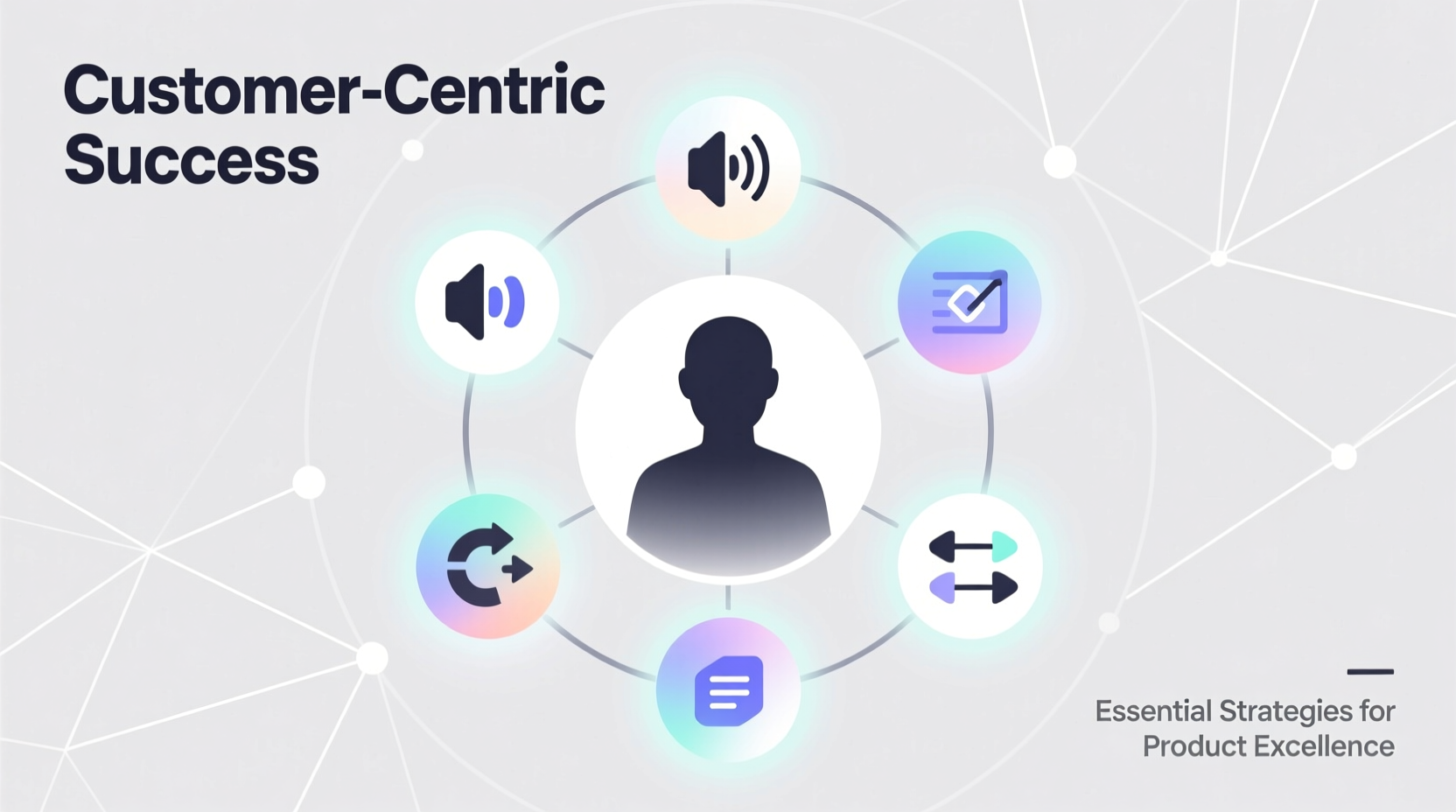
The foundation of any successful product is insight into who your customers are and what they truly need. Too many companies rely on assumptions, market trends, or internal opinions rather than direct engagement with users. This leads to solutions that look good on paper but fall flat in practice.
Start by conducting qualitative research—interviews, focus groups, ethnographic observation. Ask open-ended questions: “What frustrates you about this process?” “When was the last time you tried solving this problem? What happened?” These conversations reveal pain points that surveys or analytics might miss.
“We spent six months talking to small business owners before writing a single line of code. That time saved us years of building the wrong thing.” — Lena Patel, Product Lead at BizFlow
Use these insights to build detailed user personas—not just demographics, but behaviors, motivations, fears, and goals. Map out their journey from initial awareness to post-purchase experience. Identify moments of friction and opportunity.
Validate Before You Build: The Power of Early Testing
One of the most common reasons products fail is premature scaling. Teams invest heavily in development only to discover too late that no one wants what they built. Avoid this by validating demand early and often.
Instead of building a full product, start with a minimum viable product (MVP)—a stripped-down version that tests your core hypothesis. This could be a landing page with a sign-up form, a clickable prototype, or even a concierge service where you manually deliver the solution to test interest.
Measure real behavior: Are people signing up? Willing to pay? Sharing it with others? If not, refine your idea before investing further.
Step-by-Step Guide to Early Validation
- Define the primary problem you’re solving.
- Identify your target audience segment.
- Create a low-fidelity prototype (e.g., mockup, demo video).
- Share it with 10–20 potential users and observe reactions.
- Ask: “Would you use this? Why or why not?”
- Iterate based on feedback—or pivot if necessary.
This process reduces risk and accelerates learning. It also fosters humility: the best ideas aren’t always yours, but those shaped by actual user input.
Design for Simplicity and Real Use Cases
Complexity kills adoption. A product overloaded with features may seem powerful, but it overwhelms users and obscures its core value. Great products do one thing exceptionally well—at least at first.
Apple’s early iPod succeeded because it focused on a single promise: “1,000 songs in your pocket.” It didn’t try to be a phone, a camera, or a web browser. It solved a specific job-to-be-done better than anything else.
Apply the principle of progressive disclosure: reveal advanced features only when users are ready. Prioritize clarity over cleverness. Use plain language, intuitive navigation, and consistent patterns.
| Do | Don't |
|---|---|
| Guide users with clear onboarding flows | Drop them into a feature-rich dashboard with no direction |
| Label buttons with action-oriented text (e.g., “Start Free Trial”) | Use vague terms like “Continue” or “Process” |
| Limit choices to reduce decision fatigue | Present 10 pricing plans with minor differences |
Build Feedback Loops Into Your Product Lifecycle
Customer centricity doesn’t end at launch. The most successful products treat release as the beginning of learning, not the finish line.
Incorporate mechanisms for ongoing feedback: in-app surveys, usage analytics, support ticket analysis, NPS scores, and community forums. Look not just at what users say, but what they do. Are they skipping key steps? Abandoning flows? Using workarounds?
Atlassian, for example, uses behavioral tagging to track which features are adopted—and which are ignored. When data shows low engagement, they investigate whether it’s a usability issue, lack of awareness, or misalignment with user needs.
Mini Case Study: How Typeform Improved Completion Rates
Typeform, the online form platform, noticed declining completion rates on longer forms. Instead of assuming users were just impatient, they dug deeper. Through session recordings and user interviews, they discovered that respondents felt overwhelmed by the length and tone of certain questions.
They redesigned their approach: shorter sentences, friendlier language, progress indicators, and dynamic logic that skipped irrelevant sections. The result? A 25% increase in form completions across enterprise clients—all without removing content.
The lesson: small changes rooted in empathy can have outsized impact.
Essential Checklist for Customer-Centric Development
- ✅ Conduct at least 10 in-depth customer interviews before ideation
- ✅ Define the primary user persona and their core job-to-be-done
- ✅ Test a prototype with real users before writing production code
- ✅ Launch an MVP to validate demand with minimal investment
- ✅ Measure both quantitative (usage, conversion) and qualitative (feedback, sentiment) data
- ✅ Establish a recurring review process for customer insights
- ✅ Iterate based on evidence, not opinion
Frequently Asked Questions
How do I balance customer feedback with my vision?
Listen deeply, but lead decisively. Customers can tell you what frustrates them, but rarely how to solve it. Use feedback to inform your strategy, not dictate it. Steve Jobs famously said, “People don’t know what they want until you show it to them.” The key is balancing insight with innovation.
What if my users ask for conflicting features?
Divergent requests are normal. Look for the underlying need behind each request. One user may want automation, another manual control—but both may be seeking efficiency. Focus on the shared goal, then design a flexible solution that serves multiple paths.
Can B2B products be customer-centric too?
Absolutely. In fact, B2B relationships often allow for deeper customer partnerships. Because fewer users are involved, you can engage directly with power users, champions, and decision-makers. Their success is your retention metric—so align incentives closely.
Conclusion: Make Customer Centricity a Habit, Not a Campaign
Creating a good product isn’t a one-time event. It’s a continuous cycle of listening, building, measuring, and improving. The most successful companies don’t treat customer centricity as a department or a phase—it’s embedded in their culture.
Start small. Talk to three customers this week. Watch someone use your product. Read five support tickets. These actions may seem minor, but they compound into deeper understanding and better decisions.




 浙公网安备
33010002000092号
浙公网安备
33010002000092号 浙B2-20120091-4
Comments
No comments yet. Why don't you start the discussion?