
Indoor air quality significantly affects health, especially in urban homes, during wildfire seasons, or in spaces with limited ventilation. Commercial air purifiers can be effective but often come with high price tags and recurring filter costs. A practical alternative exists: building your own air purifier using a standard box fan and a high-efficiency filter. This DIY solution is not only cost-effective—often under $50—but also scientifically supported and surprisingly efficient at removing airborne particles like dust, pollen, pet dander, and even smoke.
The concept relies on forcing air through a dense filtration medium, capturing pollutants before circulating clean air back into the room. With minimal tools and careful selection of components, you can assemble a functional unit that rivals many store-bought models in particulate removal efficiency.
Understanding How Fan-and-Filter Purifiers Work
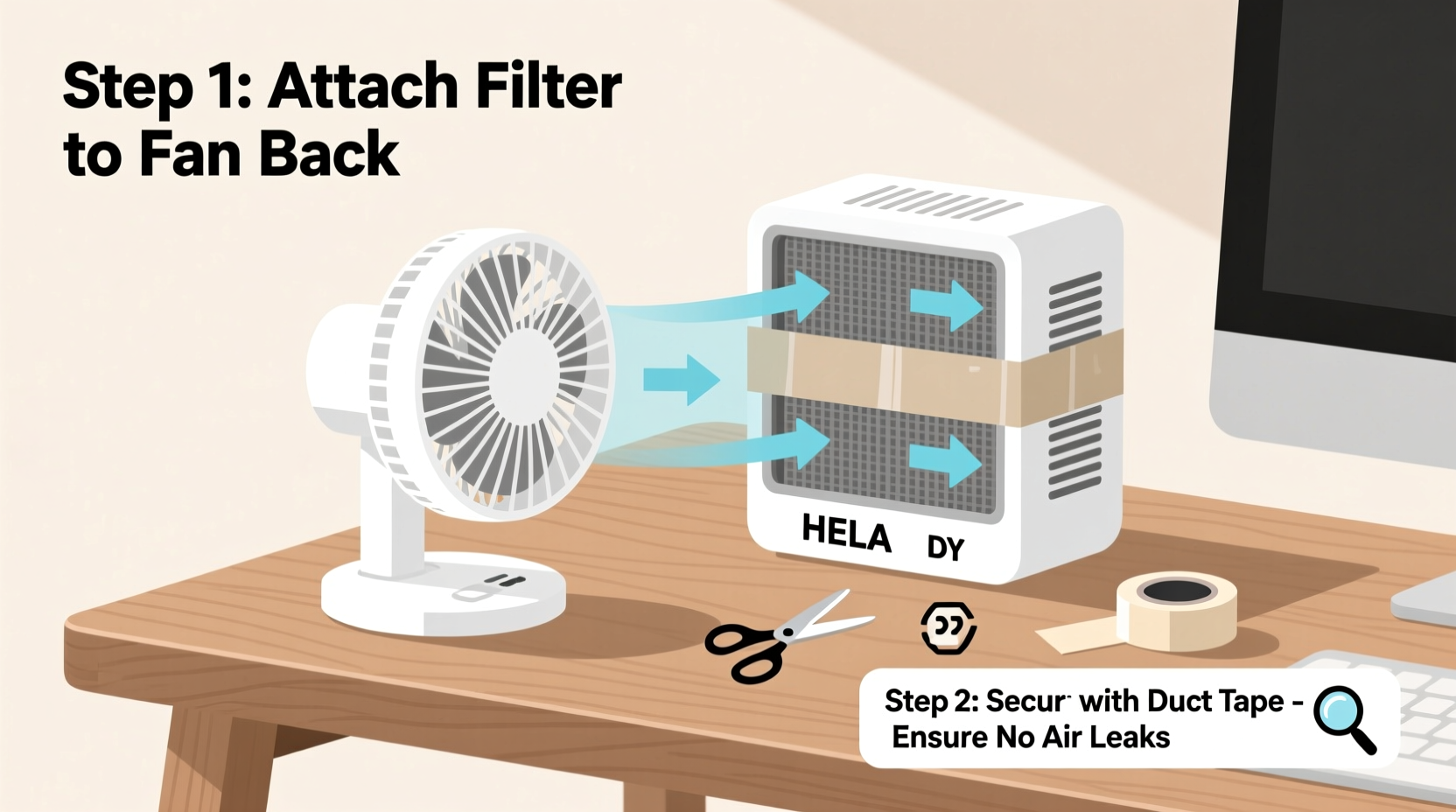
Air purifiers function by pulling ambient air through a filtering system that traps contaminants. The most effective filters for this purpose are High-Efficiency Particulate Air (HEPA) filters, which capture 99.97% of particles as small as 0.3 microns. While true HEPA filters are ideal, HEPA-type or MERV 13+ furnace filters offer a budget-friendly alternative with strong performance.
In a homemade setup, a box fan acts as the propulsion mechanism, drawing air through a sealed filter. When properly assembled, the combination mimics the airflow dynamics of commercial units. Unlike many consumer-grade purifiers that use weak fans paired with undersized filters, a DIY model allows you to maximize both airflow and filtration density.
This method gained attention during the 2020–2021 pandemic and wildfire crises when demand for air purification spiked. Researchers and public health officials, including those from the CDC and ASHRAE, endorsed the “Corsi-Rosenthal Box” design—a duct-taped assembly of multiple filters and a fan—as an emergency solution for improving indoor air quality.
“During emergencies like wildfires or pandemics, low-cost air cleaners made from box fans and filters can significantly reduce exposure to harmful particles.” — Dr. Richard Corsi, Environmental Engineer and Co-Creator of the Corsi-Rosenthal Box
Materials You’ll Need and Where to Find Them
Building a homemade air purifier requires only a few key components. Most can be found at hardware stores, home improvement centers, or online retailers like Amazon or Home Depot.
- Box fan: A 20-inch square fan is ideal for maximum airflow and compatibility with standard filter sizes. Look for models with multiple speed settings and a sturdy frame.
- Filtration media: Use a MERV 13 or higher furnace filter (commonly 20” x 20” x 1”) or a true HEPA filter if available. Avoid fiberglass or low-MERV filters—they don’t capture fine particles effectively.
- Duct tape: Heavy-duty aluminum or cloth-backed duct tape ensures airtight seals between the fan and filter.
- Optional support frame: For larger builds (like the Corsi-Rosenthal design), four filters and a cardboard base may be used to create a cube around the fan.
Step-by-Step Assembly Guide
Follow these steps to build a single-fan, single-filter air purifier—one of the simplest and most effective designs for home use.
- Choose a clean workspace: Lay out all materials on a flat surface free of dust or debris.
- Position the fan: Place the box fan face-down so the intake side (usually the back) is facing up.
- Attach the filter: Center the MERV 13+ or HEPA filter over the intake. Ensure it covers the entire opening without gaps.
- Seal the edges: Use duct tape to secure the filter to the fan frame. Wrap tape tightly around the perimeter to prevent unfiltered air from bypassing the filter.
- Reinforce corners: Add extra tape at each corner to maintain structural integrity, especially if the unit will be moved frequently.
- Turn it on: Flip the fan upright and power it on. Air should now be drawn through the filter and expelled cleanly from the front.
For enhanced performance, consider the **Corsi-Rosenthal Box** design:
- Use five MERV 13 filters: four placed vertically to form a cube, taped together at the edges.
- Place the fifth filter (or a cardboard base) on the bottom to close the structure.
- Mount the box fan on top, blowing upward, and seal it with duct tape.
- This creates a downward draft, pulling air through the four side filters and expelling clean air from the top.
Performance Comparison: DIY vs. Commercial Units
Independent tests have shown that well-constructed DIY purifiers can match or exceed the Clean Air Delivery Rate (CADR) of commercial units priced over $200. CADR measures how quickly a purifier removes smoke, dust, and pollen from the air.
| Model | CADR (Smoke) | Estimated Cost | Noise Level (High) | Maintenance |
|---|---|---|---|---|
| DIY Fan + MERV 13 Filter | ~200 CFM | $30–$50 | Moderate to loud | Replace filter every 1–3 months |
| Corsi-Rosenthal Box (5-filter) | ~300 CFM | $60–$80 | Loud | Replace all filters quarterly |
| Commercial HEPA Purifier (e.g., Levoit Core 300) | 125 CFM | $150+ | Quiet to moderate | Replace filter every 6–8 months |
| Honeywell HPA300 | 240 CFM | $250 | Moderate | Replace pre-filter and HEPA every 12 months |
While DIY units often move more air, they tend to be noisier due to the powerful fan motors. However, their raw filtration capacity makes them ideal for garages, workshops, or temporary use during poor air quality events.
Real-World Example: Improving Air Quality During Wildfire Season
In 2023, residents across the Pacific Northwest faced prolonged exposure to hazardous air due to regional wildfires. Among them was Maria T., a Portland-based teacher with asthma. Concerned about indoor air quality, she built a Corsi-Rosenthal Box using a box fan and four MERV 13 filters purchased from a local hardware store.
She placed the unit in her bedroom and ran it continuously on medium speed. Within two hours, she noticed a visible reduction in haze and a significant decrease in throat irritation. Using an affordable air quality monitor, she recorded PM2.5 levels dropping from 120 µg/m³ (unhealthy) to 28 µg/m³ (moderate) in under three hours.
“I didn’t think something I built myself could work this well,” Maria said. “It gave me peace of mind knowing my kids and I weren’t breathing toxic smoke while sleeping.”
Do’s and Don’ts of Homemade Air Purifiers
To ensure safety, efficiency, and longevity, follow these best practices.
| Do’s | Don’ts |
|---|---|
| Use MERV 13 or higher filters for optimal particle capture | Use fiberglass or MERV 8 filters—they’re ineffective for fine particles |
| Seal all gaps between the fan and filter with duct tape | Allow air leaks; bypassed air reduces efficiency by up to 50% |
| Place the purifier in a central location away from walls | Shove it into a corner; restricted airflow limits performance |
| Clean the fan blades monthly to maintain airflow | Ignore maintenance; dust buildup strains the motor |
| Run the unit for several hours before expecting results | Expect instant results; air cleaning is cumulative |
Maintenance and Long-Term Use Tips
A homemade air purifier is only as effective as its upkeep. Filters become clogged over time, reducing airflow and straining the fan motor. Replace the filter every 1 to 3 months, depending on usage and air pollution levels.
To extend filter life:
- Vacuum the outer surface of the filter monthly using a brush attachment.
- Run the unit only when necessary—such as during cooking, wildfire events, or allergy season.
- Pair it with source control: reduce indoor pollutants by avoiding smoking indoors, minimizing candle use, and vacuuming regularly with a HEPA-filter vacuum.
If you notice a drop in airflow or increased noise, the filter likely needs replacement. Never wash or reuse disposable filters, as this compromises their filtration efficiency.
FAQ: Common Questions About DIY Air Purifiers
Can I use a smaller fan or filter?
Yes, but performance will decrease. A 16-inch fan with a matching 16x20 filter can work for small rooms, but the airflow (CFM) will be lower. Always match the filter size to the fan intake as closely as possible.
Are these purifiers safe to run overnight?
Generally yes, provided the unit is assembled securely and placed on a non-flammable surface. Avoid covering the fan or blocking vents. While rare, overheating can occur with low-quality fans or damaged cords. Inspect equipment regularly.
Do DIY purifiers remove viruses or odors?
They effectively capture virus-laden droplets and aerosols attached to larger particles. However, they do not eliminate gaseous pollutants or odors unless equipped with an activated carbon layer. Some MERV filters include carbon; otherwise, consider pairing the unit with a separate odor absorber like baking soda or a charcoal bag.
Final Checklist Before You Build
Before assembling your air purifier, verify you have everything in place:
- ✅ 20-inch box fan with adjustable speeds
- ✅ One or more MERV 13 or HEPA-rated furnace filters (20” x 20” x 1”)
- ✅ Heavy-duty duct tape (aluminum or fabric-backed)
- ✅ Flat workspace and 30 minutes of time
- ✅ Optional: air quality monitor to measure results
Conclusion: Breathe Easier Without Breaking the Bank
Creating a homemade air purifier is a smart, science-backed way to improve indoor air quality on a tight budget. Whether you're battling seasonal allergies, wildfire smoke, or everyday dust, this simple device delivers measurable results with minimal investment. By selecting the right filter, sealing the assembly properly, and maintaining it regularly, you can achieve cleaner air without relying on expensive commercial systems.
The beauty of this solution lies in its accessibility and effectiveness. It empowers anyone—from renters to homeowners—to take control of their environment using common household items. As air quality challenges continue to rise globally, practical solutions like this become not just useful, but essential.




 浙公网安备
33010002000092号
浙公网安备
33010002000092号 浙B2-20120091-4
Comments
No comments yet. Why don't you start the discussion?