
Bringing the spirit of the holidays into your workspace doesn’t require tinsel or towering evergreens. A growing trend blends festive cheer with sustainable greenery: crafting a mini Christmas tree from live succulents. Unlike traditional cut trees that dry out in weeks, this living decoration thrives beyond the season, offering year-round charm. Compact, low-maintenance, and uniquely personal, a succulent Christmas tree doubles as both holiday decor and a long-term desk companion. With careful selection and thoughtful arrangement, you can create a centerpiece that’s as functional as it is beautiful.
Why choose succulents for a holiday centerpiece?
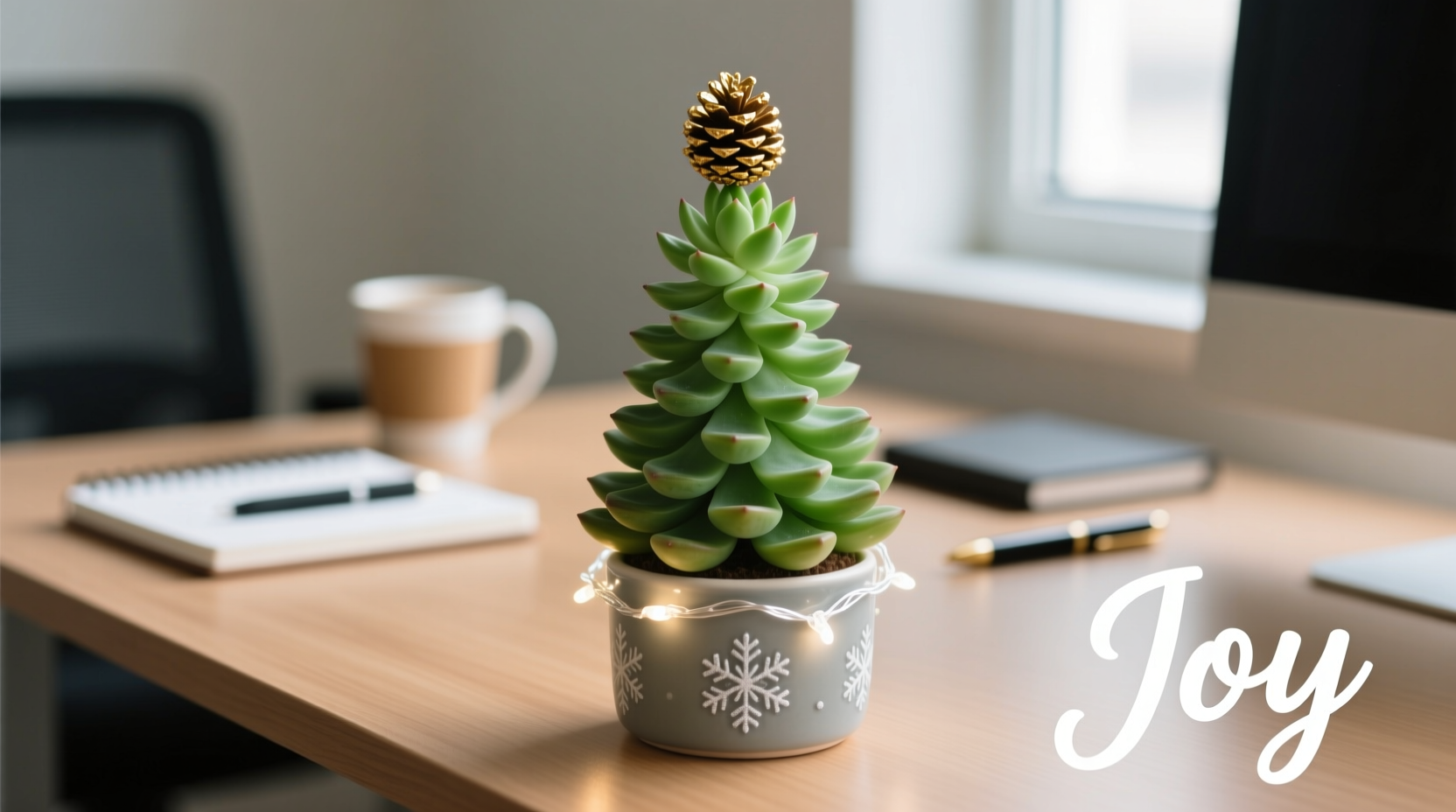
Succulents are ideal candidates for miniature living crafts due to their hardy nature, slow growth, and sculptural forms. Their thick, water-storing leaves allow them to survive in low-humidity environments—perfect for office desks where heating systems dry the air. Beyond practicality, succulents symbolize resilience and enduring life, making them a meaningful alternative to disposable decorations.
Unlike artificial trees made from plastic or foam, a succulent version supports eco-conscious decorating. Once the holidays pass, it doesn’t end up in a landfill. Instead, you can continue nurturing it, transplanting individual plants, or gifting sections to friends. This blend of sustainability and seasonal creativity has made succulent Christmas trees a favorite among urban dwellers, plant enthusiasts, and minimalist decorators alike.
“Plants bring warmth and humanity to sterile spaces. A living tree on a desk reminds us of nature even during winter.” — Dr. Lena Torres, Environmental Psychologist and Urban Greening Advocate
Materials and tools you’ll need
Building a stable, attractive succulent tree requires more than just plants. The structure must support multiple specimens while allowing proper drainage and root development. Below is a complete list of supplies, including alternatives for budget-conscious or beginner crafters.
| Item | Purpose | Recommended Options |
|---|---|---|
| Succulents (5–9 plants) | Form the branches and canopy of the tree | Echeveria ‘Lola’, Graptopetalum paraguayense, Sedum dasyphyllum, Crassula ovata ‘Minima’ |
| Floral foam or sphagnum moss | Anchor roots and retain moisture | Use biodegradable floral foam or soak moss in water before packing |
| Wire frame or cone (6–10 inches tall) | Provides structural shape | Metal mesh cone, chicken wire shaped into a pyramid, or repurposed foam cone |
| Garden wire or floral pins | Secure plants to the frame | 22-gauge green floral wire; avoid rust-prone metals |
| Small pot or tray (optional) | Holds base and catches water | Ceramic dish, wooden box, or decorative saucer |
| Rooting hormone (powder or liquid) | Encourages new root growth in cuttings | Optional but helpful for longevity |
| Watering syringe or dropper | Delivers water precisely without oversaturation | Medicine dropper or turkey baster works too |
For best results, source healthy, pest-free succulents from a reputable nursery. Avoid specimens with yellowing leaves or soft stems, which may indicate rot. If using cuttings, allow them to callous over for 2–3 days before planting to reduce infection risk.
Step-by-step guide to building your succulent Christmas tree
Creating a cohesive, tree-like form from individual succulents takes patience and precision. Follow this detailed process to ensure stability, aesthetics, and plant health.
- Prepare the wire frame: Shape chicken wire or purchase a pre-made metal cone. Ensure the base is wide enough to stand upright. For added stability, insert a wooden dowel through the center and anchor it into a small pot filled with pebbles or lightweight soil.
- Soak the moss or prepare the foam: If using sphagnum moss, submerge it in water for 10 minutes, then squeeze out excess moisture. For floral foam, cut it to fit snugly inside the cone, ensuring it won’t disintegrate when wet.
- Pack the growing medium: Fill the cone with moss or foam, pressing firmly to eliminate air pockets. This will support the weight of the plants and hold moisture around the roots.
- Select and position your succulents: Start at the bottom with larger, sturdier varieties like Jade or Aeonium. Work upward, placing progressively smaller rosettes toward the top. Rotate the cone as you go to maintain balance and fullness.
- Insert each plant securely: Gently push the stem into the medium. Use short pieces of floral wire to wrap around the base of the plant and twist at the back of the frame. Do not bury lower leaves—exposure prevents rot.
- Add finishing touches: Tuck in ground cover succulents like Sedum rubrotinctum (“Red Elf”) between gaps to mimic dense foliage. Optional: weave in tiny LED fairy lights (battery-operated, cool-to-touch) for a festive glow.
- Allow for adjustment period: Place the tree in bright, indirect light for 7–10 days. Avoid watering immediately to prevent shock. After settling, begin a light misting routine every 5–7 days.
Maintenance and seasonal care
A succulent Christmas tree isn’t just a temporary display—it’s a living arrangement that evolves. Proper care ensures it remains vibrant during the holidays and transitions smoothly into post-season life.
- Light: Provide at least 4–6 hours of bright, indirect sunlight daily. South-facing windows are ideal. Rotate the tree weekly for even growth.
- Watering: Use a dropper to deliver water directly to the base of each plant every 10–14 days. Overwatering is the leading cause of failure. Let the medium dry completely between applications.
- Humidity: Avoid placing near radiators or HVAC vents. Low humidity is tolerable, but extreme dryness can cause leaf shriveling.
- Fertilizing: Apply diluted succulent fertilizer (half strength) once in early spring. Do not fertilize during winter dormancy.
- Post-holiday plan: In January, carefully remove plants and repot individually. Some may have developed new roots and can thrive independently.
“Succulents grown in confined arrangements often adapt by sending out aerial roots. This is a sign they’re thriving—not stressed.” — Miguel Santos, Botanical Horticulturist at Green Canopy Conservatory
Real-world example: A teacher’s classroom centerpiece
At Maplewood Elementary, fourth-grade teacher Rachel Lin wanted a festive yet educational decoration for her classroom. Rather than a plastic tree, she involved her students in building a succulent Christmas tree using cuttings donated by parents. Each child selected a plant, labeled it with its scientific name, and helped secure it to a recycled wire cone.
The project doubled as a science lesson on plant propagation and sustainability. By February, the succulents were removed and potted individually—each student took one home. “They learned that beauty doesn’t have to be temporary,” Lin said. “Now, months later, some kids still bring in photos of their grown plants.”
This approach not only reduced waste but fostered emotional connection to nature during winter months when outdoor gardening isn’t possible.
Common pitfalls and how to avoid them
Even experienced plant lovers can misstep when assembling living crafts. Awareness of these frequent errors improves success rates significantly.
| Do | Don’t |
|---|---|
| Use well-draining materials like sphagnum moss or perlite-blended soil | Use regular potting soil, which retains too much moisture |
| Choose compact succulents under 3 inches in diameter | Select fast-growing types like Kalanchoe, which quickly outgrow the design |
| Inspect plants for mealybugs or aphids before assembly | Introduce pests into a closed environment where they spread easily |
| Label each plant with a small tag for future identification | Assume all green rosettes are the same species |
| Display away from direct heat sources | Place near space heaters or fireplaces, which dry out foliage |
Frequently asked questions
Can I use fake snow or spray-on glitter on my succulent tree?
No. Most aerosol sprays contain chemicals that clog leaf pores and inhibit photosynthesis. Fake snow can trap moisture and promote mold. For sparkle, use removable decorative picks or non-adhesive ornaments instead.
How long will the succulent tree last?
If properly maintained, the arrangement can remain intact for 3–6 months. Individual plants may live for years after being replanted. Longevity depends on light, watering habits, and airflow.
Is this safe for pets?
Most succulents are non-toxic, but some—like certain Euphorbias—are mildly toxic if ingested. Always verify plant safety if cats or dogs have access to the desk. Keep the tree elevated and out of reach if needed.
Checklist: Building your succulent Christmas tree
- ☐ Gather all materials: succulents, wire frame, moss or foam, floral wire, pot (optional)
- ☐ Prepare the frame and anchor it securely
- ☐ Soak moss or condition foam for optimal moisture retention
- ☐ Select healthy, appropriately sized succulents
- ☐ Insert plants starting from the base, working upward
- ☐ Secure each plant with floral wire or pins
- ☐ Add filler succulents for density and realism
- ☐ Place in bright, indirect light for acclimation
- ☐ Begin light watering schedule after one week
- ☐ Plan for post-holiday disassembly and replanting
Create something lasting this holiday season
In a world of mass-produced decor and fleeting trends, a handmade succulent Christmas tree stands apart. It’s more than ornamentation—it’s an act of care, creativity, and continuity. Every time you water it or notice a new leaf unfurling, you’re reminded that celebration and sustainability can coexist.
This project fits seamlessly into tight spaces, suits renters and homeowners alike, and offers a rewarding sense of accomplishment. Whether you're decorating a home office, gifting a living centerpiece, or teaching children about plant life cycles, this miniature tree delivers meaning along with beauty.




 浙公网安备
33010002000092号
浙公网安备
33010002000092号 浙B2-20120091-4
Comments
No comments yet. Why don't you start the discussion?