
There’s something quietly magical about a miniature sleigh—even without snow or reindeer. When paired with warm, flickering LED candles, it becomes a focal point of quiet holiday charm: cozy, nostalgic, and entirely safe for year-round indoor use. Unlike traditional flame-based displays, this project eliminates fire risk, heat buildup, and wax drips while delivering rich ambiance and tactile authenticity. It’s not just decoration—it’s intentional atmosphere. This guide walks through every practical decision you’ll face: selecting the right scale and material for your sleigh, choosing LEDs that mimic real candlelight (not sterile white light), wiring discreetly, anchoring elements securely, and styling the display so it feels curated—not cluttered. Whether you’re crafting for a nursery shelf, a minimalist mantel, or a vintage-inspired entryway, the principles here ensure durability, visual harmony, and effortless operation.
Why Mini Sleigh + LED Candles Work So Well Indoors
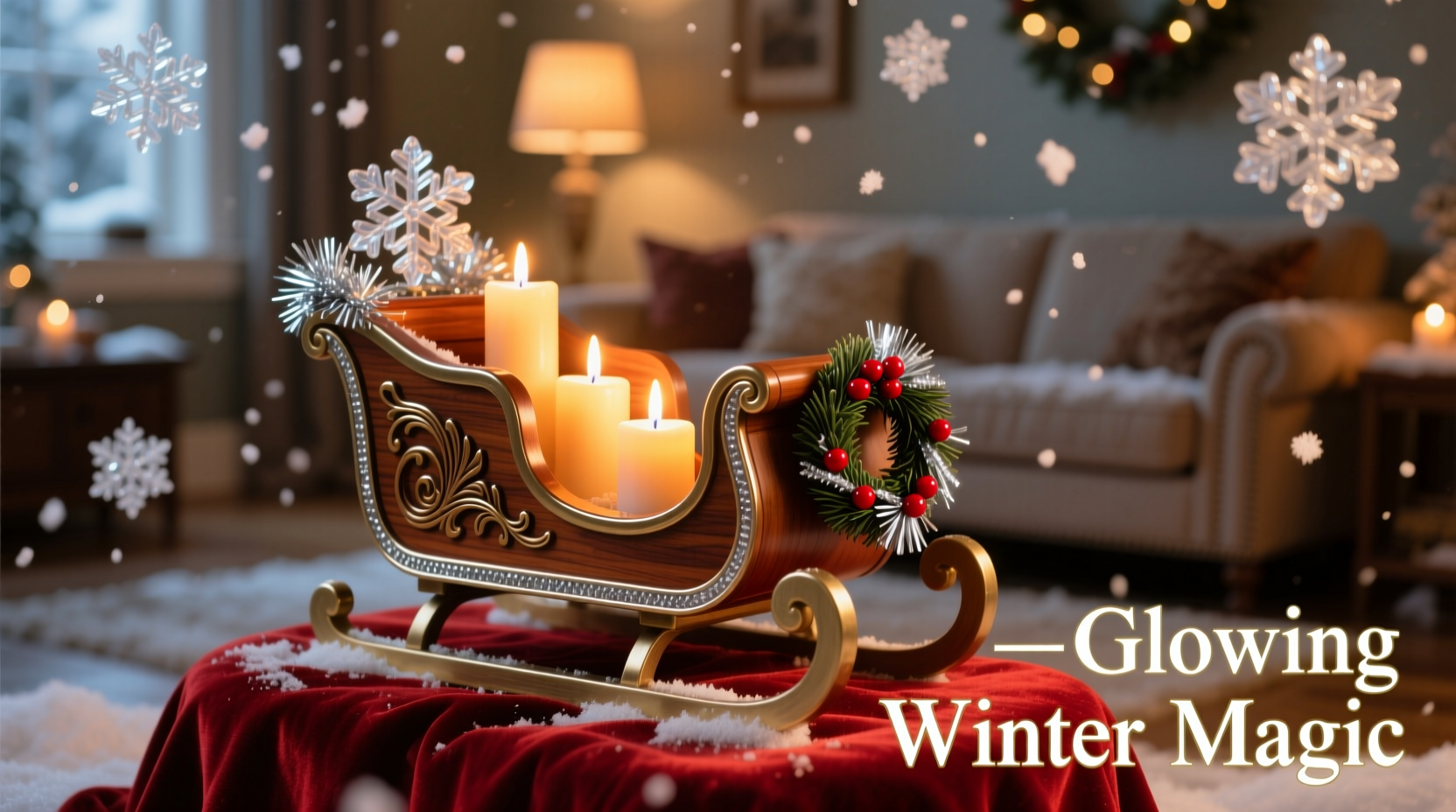
A full-size sleigh is impractical in most homes—too large, too heavy, too seasonal. A mini version (typically 8–14 inches long) bridges function and fantasy. It fits naturally on bookshelves, side tables, window sills, or fireplace surrounds without dominating the space. When lit with quality LED candles, it introduces gentle movement and warmth—the subtle, organic flicker triggers the same psychological comfort as real flame, but without combustion byproducts, oxygen depletion, or regulatory concerns. According to lighting designer Lena Torres, who consults on residential holiday installations, “The human eye doesn’t distinguish between a high-fidelity LED flicker and a real candle at conversational distance—especially when layered with texture like wood grain, burlap, or dried greenery. What matters is rhythm, color temperature, and diffusion.” Her team consistently recommends 2200K–2400K warm-white LEDs with randomized flicker patterns for domestic displays. That narrow range avoids the clinical blue-tinge of cheap bulbs and prevents the overly yellow “sunset” glow that reads as artificial.
What You’ll Actually Need (No Surprises)
This isn’t a list of vague “craft supplies.” Every item below serves a precise functional or aesthetic role—and alternatives are noted where substitutions won’t compromise safety or longevity. Avoid generic “holiday kits”: they often include underpowered batteries, non-dimmable LEDs, or flimsy sleighs that warp over time.
| Item | Purpose & Key Specs | Where to Source (Reliable Options) |
|---|---|---|
| Mini Wooden Sleigh | 8–12\" long; solid basswood, pine, or birch (no MDF or particleboard—these swell if near humidity or condensation). Must have shallow, stable base—no wobble. | Local craft stores (Michaels, Hobby Lobby); Etsy sellers specializing in hand-turned wooden miniatures (search “hand-carved basswood sleigh”); museum gift shops (often carry archival-quality replicas). |
| Flicker-Effect LED Tea Lights | Battery-operated, 3V CR2032; warm white (2200K–2400K); randomized flicker pattern (not steady pulse); silicone or frosted plastic housing (diffuses light evenly). Avoid “dancing flame” models—they’re too theatrical for subtle displays. | Amazon (look for “Luminara” or “Bloomz” brand; check reviews for “realistic flicker” mentions); specialty lighting retailers like HolidayLEDs.com; hardware stores with premium lighting sections (e.g., Home Depot’s “Holiday Essentials” line). |
| Small-Gauge Wire & Connectors | 22 AWG stranded copper wire (flexible, easy to conceal); insulated alligator clips or JST connectors (for clean, tool-free battery swaps); optional: micro-switch (SPST, momentary) for manual on/off without removing batteries. | Electronics suppliers (Digi-Key, Mouser); local electronics hobby shops (e.g., RadioShack legacy stores or independent makerspaces); Amazon (search “22 AWG stranded hook-up wire” + “JST PH 2-pin connector”). |
| Textural Accents | Dried eucalyptus sprigs, cinnamon sticks, small pinecones (under 1.5\"), natural jute twine, unscented beeswax-dipped cotton batting (for “snow” effect). All non-flammable, low-dust, and pet-safe. | Farmers’ markets (dried botanical vendors); floral supply wholesalers (e.g., FiftyFlowers.com); health food stores (cinnamon sticks, raw pinecones); craft stores (jute, batting). |
| Adhesive & Anchoring | Low-temp hot glue gun (for quick, reversible bonds); clear-drying PVA glue (Elmer’s Wood Glue Max) for porous wood; museum putty (repositionable, no residue) for securing candles inside sleigh runners. | Hardware stores (low-temp glue guns); craft stores (PVA wood glue); office supply chains (museum putty, e.g., UHU Museum Putty). |
Step-by-Step Assembly: From Bare Sleigh to Lit Centerpiece
- Prep the Sleigh Base: Wipe interior and runners with a dry microfiber cloth to remove dust or factory oils. Lightly sand any rough edges on the wood with 220-grit paper—this improves glue adhesion and prevents snagging on textiles.
- Plan Candle Placement: Arrange 3–5 LED tea lights inside the sleigh bowl. For visual balance, use an odd number. Position tallest candle slightly off-center toward the back; nestle shorter ones forward and to the sides. Leave ½\" clearance around each candle for airflow and easy battery access.
- Secure Candles Discreetly: Apply pea-sized dabs of museum putty beneath each LED base. Press firmly for 5 seconds. Putty grips both smooth plastic and porous wood without staining—and lifts cleanly if repositioning is needed later.
- Wire for Shared Power (Optional but Recommended): If using multiple candles, daisy-chain them instead of relying on individual batteries. Strip ¼\" insulation from wire ends. Twist positive (+) wires together and solder (or use a JST Y-connector). Repeat for negatives (–). Attach the combined leads to a single CR2032 battery holder with on/off switch. Hide the holder beneath the sleigh’s rear runner using low-temp glue—ensure battery door remains accessible.
- Add Textural Layers: Tuck dried eucalyptus sprigs along the sleigh’s front lip, letting tips curl naturally over the edge. Nestle one cinnamon stick horizontally across the center, resting on two pinecones placed at 10 o’clock and 2 o’clock positions. Finish with a whisper-thin layer of beeswax batting scattered like drifted snow in the bowl’s corners—never covering LED lenses.
- Final Stability Check: Gently tilt the sleigh 30 degrees left/right and forward/back. No element should shift or slide. If candles wobble, add a second dab of putty. If botanicals lift, secure with a single dot of PVA glue at their base.
Real-World Example: The Apartment Mantel Project
Maya R., a graphic designer in Portland, built this display for her 700-square-foot apartment with radiant-floor heating—a challenge because consistent warmth can accelerate battery drain and soften adhesives. She chose a 10-inch basswood sleigh with deep runners (to shield LEDs from ambient heat), wired four Luminara tea lights to a single battery pack mounted *inside* a hollowed-out pinecone (drilled carefully with a ⅛\" bit, then glued shut with wood glue). She used museum putty instead of hot glue for the candles—critical when floor temps hover near 72°F year-round. For botanicals, she avoided fresh greens (which wilt fast indoors) and opted for preserved silver dollar eucalyptus and kiln-dried cedar cones, both heat-stable and fragrance-neutral. Her display has run continuously for 11 months with only two battery changes. “It’s not ‘just Christmas decor’ anymore,” she notes. “It’s part of my living room’s rhythm—like a piece of furniture that happens to glow.”
Common Pitfalls—and How to Avoid Them
- Overcrowding the Sleigh Bowl: More than five LEDs creates glare and visual noise. Stick to three for small sleighs (under 10\"), five max for larger ones. Let negative space breathe.
- Using Non-Flicker LEDs: Steady-bright LEDs read as “exit sign,” not hearth. Always verify packaging states “flicker effect,” “candle mode,” or “flame simulation.” If unsure, watch unboxing videos—reputable sellers demonstrate the flicker.
- Ignoring Battery Life Realities: CR2032 cells last 100–150 hours *per set*. Wiring multiple LEDs to one battery cuts runtime proportionally. Use a battery tester monthly—or invest in a rechargeable 3.7V lithium-polymer pack with built-in voltage regulator (sold as “LED candle upgrade kits”).
- Securing Botanicals with Spray Adhesive: Aerosol glues yellow over time and emit volatile compounds that degrade LED housing plastics. Use PVA glue or museum putty exclusively.
- Placing Near HVAC Vents: Direct airflow cools LEDs unevenly, causing inconsistent flicker and premature battery failure. Mount displays at least 24\" from vents or ceiling fans.
“People underestimate how much thermal stability matters in LED displays. A 10°F fluctuation in ambient temperature can shift color temperature by up to 200K—and make warm light look sickly. That’s why wood, not metal, is ideal: it buffers temperature swings.” — Dr. Aris Thorne, Lighting Physicist, Illuminating Engineering Society (IES)
FAQ
Can I use these displays year-round—or are they strictly holiday-themed?
Absolutely year-round. Swap evergreen sprigs for dried lavender or wheat stalks in spring; replace cinnamon sticks with smooth river stones and bleached driftwood in summer; use copper-toned acorns and rust-colored maple leaves in autumn. The sleigh’s form is timeless—the seasonality comes from what you place *with* it, not the structure itself.
How do I clean the display without damaging LEDs or botanicals?
Once monthly: Use a soft makeup brush or lens-cleaning blower to remove dust from LED lenses and wood grain. Never spray cleaners directly—dampen a microfiber cloth with distilled water only, then gently wipe sleigh surfaces *away* from LED bases. Avoid moisture near battery compartments. Replace dried botanicals every 6–8 months as they become brittle.
Is it safe to leave the LEDs on overnight or while away from home?
Yes—if using certified, UL-listed LED tea lights with built-in auto-shutoff (most reputable brands include 4–6 hour timers). For continuous operation, choose models with “always-on” mode *and* thermal cutoff protection (they dim or pause if internal temps exceed 140°F). Never use uncertified or dollar-store LEDs for unattended use.
Conclusion: Your Turn to Create Quiet Magic
A mini sleigh with working LED candles isn’t about replicating December—it’s about cultivating presence. It’s the difference between scrolling past a holiday post and pausing to watch light catch the curve of carved wood. It’s choosing warmth over wattage, texture over trend, and intention over impulse. You don’t need a workshop, a budget, or prior experience—just attention to detail, respect for materials, and willingness to slow down for 45 focused minutes. The result isn’t disposable decor. It’s a small heirloom: something that gathers stories, softens hard edges, and reminds you that beauty often lives in restraint—in the hush between flickers, the grain beneath your fingertips, the quiet certainty of light that asks for nothing but your notice.




 浙公网安备
33010002000092号
浙公网安备
33010002000092号 浙B2-20120091-4
Comments
No comments yet. Why don't you start the discussion?