
In compact homes, studios, or urban apartments, the traditional towering evergreen can feel overwhelming—both physically and visually. Yet the holiday spirit doesn’t require excess. A minimalist Christmas tree, thoughtfully designed, can deliver warmth, elegance, and festive charm without sacrificing square footage. The key lies not in what you add, but in what you choose to keep—and how intentionally you present it. This guide explores how to craft a Christmas tree that’s small in stature but powerful in presence, using clean lines, curated details, and spatial awareness.
Why Minimalism Works for Small Spaces
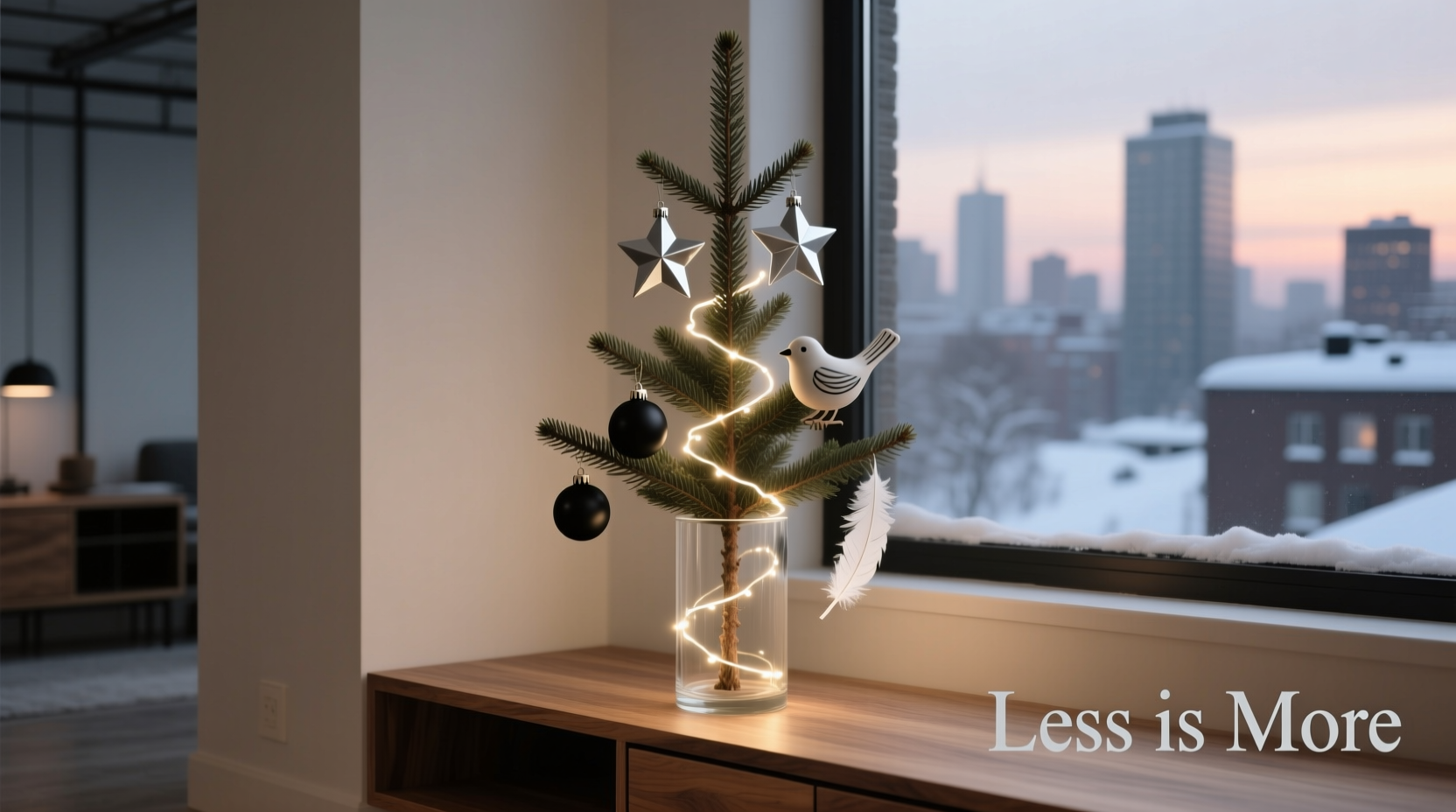
Minimalist design thrives on restraint, clarity, and purpose. In small living areas, clutter competes for attention and reduces perceived space. A minimalist tree sidesteps this by focusing on quality over quantity. Instead of covering every branch in ornaments, it highlights a few meaningful pieces, allowing each to be seen and appreciated. This approach also aligns with modern interior trends that favor Scandinavian, Japandi, and mid-century aesthetics—styles where simplicity speaks louder than ornamentation.
A smaller tree naturally takes up less floor space, but its visual footprint matters just as much. A tree overloaded with tinsel and mismatched baubles can feel chaotic even if it's only four feet tall. Conversely, a sparsely decorated tree with a cohesive color scheme and thoughtful placement can become a serene focal point.
“Minimalism isn’t about absence—it’s about intention. Every object should earn its place.” — Clara Mendez, Interior Designer & Author of *Calm Spaces*
Selecting the Right Tree: Size, Shape, and Style
The foundation of a successful minimalist tree is choosing the right form. In small spaces, standard 7–8 foot trees are often impractical. Instead, consider alternatives that maintain holiday symbolism while adapting to your environment.
- Tabletop Trees (2–3 feet): Ideal for mantels, consoles, or dining tables. These allow you to bring holiday cheer into tight corners without blocking pathways.
- Narrow Profile Trees (4–5 feet): Slim evergreens take up half the width of traditional trees, fitting neatly into alcoves or beside bookshelves.
- Wall-Mounted or Flatback Trees: These are essentially two-dimensional silhouettes made from branches or wire frames, mounted directly on the wall. They offer the shape of a tree with zero floor impact.
- Alternative Materials: Consider dried eucalyptus, birch branches, or even a sculptural metal frame styled like a tree. These non-traditional options suit modern interiors and eliminate shedding concerns.
Color Palette and Decor Strategy
A minimalist tree relies heavily on a unified aesthetic. Without a consistent color story, even a simple tree can appear disjointed. Stick to one or two dominant colors, complemented by natural textures or metallic accents.
Popular minimalist palettes include:
- White & Gold: Elegant and airy, ideal for bright, modern spaces.
- Black & Silver: Dramatic and contemporary, perfect for industrial lofts.
- Natural Tones (beige, cream, wood, green): Warm and organic, blending seamlessly with neutral interiors.
- Monochrome (all white or all black): Bold and artistic, creating a sculptural effect.
When decorating, apply the “less is more” principle. For a 4-foot tree, 10–15 ornaments are often sufficient. Space them evenly, focusing on balance rather than density. Use larger statement pieces at the base and mid-levels, with smaller accents toward the top.
| Decor Approach | Recommended Quantity (per ft) | Best For |
|---|---|---|
| Ornaments Only | 2–3 per foot of height | Clean, classic look |
| String Lights + 1–2 Ornaments | 10–20 lights; 5–8 ornaments | Cozy, ambient effect |
| Natural Elements Only | 3–5 pinecones, dried citrus, or cinnamon sticks | Rustic-modern spaces |
| Single Statement Ornament | 1 large centerpiece ornament | Artistic or gallery-style rooms |
Lighting: Subtlety Over Sparkle
Lighting can define a minimalist tree. Avoid multicolored or blinking lights—they disrupt visual calm. Opt instead for warm white LED string lights with a low glow. Wrap them loosely, focusing on the inner branches to create a soft halo effect rather than a bright outline.
For an even more subdued option, use battery-powered fairy lights wrapped in sections or clustered at the base. Alternatively, skip lights altogether and rely on ambient room lighting or nearby candles to cast gentle shadows.
Step-by-Step: Building Your Minimalist Tree
Follow this sequence to assemble a tree that feels intentional and polished.
- Choose location: Identify a spot that receives attention—near a window, beside a mirror, or opposite a seating area. Ensure it won’t obstruct movement.
- Select tree type: Based on space, pick a tabletop, narrow, or wall-mounted version. Prioritize proportions that match your room scale.
- Prep the base: Use a simple stand or decorative planter. Neutral ceramics, concrete pots, or woven baskets enhance minimalism.
- Add structure: If using real branches, secure them in a foam base. For artificial trees, fluff branches evenly to avoid clumping.
- Apply lighting (if used): Begin at the base and work upward, tucking wires into the trunk. Use clips to secure strands and prevent sagging.
- Place ornaments sparingly: Step back after each addition. Use symmetry or asymmetry deliberately—don’t scatter randomly.
- Final review: View from multiple angles. Remove any element that feels redundant or distracting.
Real Example: A Studio Apartment Transformation
Maria, a graphic designer in Brooklyn, lives in a 400-square-foot studio where every inch counts. Last year, she replaced her bulky pre-lit tree with a 3-foot slim-fir model placed in the corner between her desk and sofa. She chose a palette of ivory, sage green, and brushed brass.
She used only eight handmade ceramic ornaments—each painted with abstract winter scenes—and wrapped 15 warm white micro-lights around the central branches. At the base, she added a linen tree skirt and a single stack of wrapped books in kraft paper with twine.
The result was a serene, gallery-like display that didn’t dominate the room. Guests consistently commented on how “calm” and “intentional” it felt. Maria reported feeling less stressed during the holidays, noting that the simplified routine—no tangled lights, no daily ornament adjustments—freed up mental space.
“A minimalist tree didn’t diminish my joy—it focused it.” — Maria R., NYC Resident
Common Pitfalls to Avoid
Even with good intentions, it’s easy to drift from minimalism into emptiness or under-decoration. Here are frequent missteps and how to correct them:
- Overcompensating with texture: Using too many materials (wood, metal, fabric, glass) can create visual noise. Stick to two or three complementary textures max.
- Ignoring scale: Large ornaments on a small tree overwhelm. Match ornament size to tree proportion—e.g., 2-inch max for a 3-foot tree.
- Skipping the base: An exposed stand breaks the aesthetic. Hide it with a skirt, basket, or surrounding decor like books or plants.
- Forgetting scent: Minimalist trees often lack the pine fragrance of traditional ones. Introduce aroma through a nearby diffuser with fir, cedar, or cinnamon oil.
Checklist: Your Minimalist Tree Essentials
Before you begin, gather these items to ensure a smooth setup:
- ✔️ Measured space dimensions
- ✔️ Appropriately sized tree (real, artificial, or alternative)
- ✔️ Neutral or matching stand/planter
- ✔️ Warm white LED lights (optional)
- ✔️ 5–10 cohesive ornaments or natural elements
- ✔️ Simple tree skirt or base cover
- ✔️ Scissors, tape, and ornament hooks
- ✔️ Mirror or camera for viewing from multiple angles
Frequently Asked Questions
Can a minimalist tree still feel festive?
Absolutely. Festivity comes from atmosphere, not quantity. Soft lighting, a signature scent, and a few meaningful decorations can evoke just as much holiday warmth as a densely packed tree. The key is emotional resonance over visual saturation.
What if I have children or pets? Is minimalism practical?
Yes—with adaptations. Use unbreakable ornaments made from felt, wood, or silicone. Keep decorations higher up if needed, and secure the tree to prevent tipping. You can still maintain a minimalist look with durable, safe materials.
How do I store a minimalist tree without losing its shape?
Use a cylindrical storage bag designed for slim trees. Wrap delicate branches in tissue paper if necessary. Store in a cool, dry place away from pests. For branch-only displays, lay flat in a shallow box with dividers.
Conclusion: Less Can Be More Meaningful
A minimalist Christmas tree in a small space isn’t a compromise—it’s a refinement. It challenges the notion that holidays must be loud, bright, and everywhere at once. Instead, it invites mindfulness, creativity, and presence. By focusing on what truly matters—a sense of peace, connection, and beauty—you create a celebration that feels authentic, not exhausting.
Start small. Choose one tree, one color, one ornament with meaning. Let it stand not as a decoration, but as a declaration of how you want to experience the season. In doing so, you might find that the smallest tree casts the longest shadow of joy.




 浙公网安备
33010002000092号
浙公网安备
33010002000092号 浙B2-20120091-4
Comments
No comments yet. Why don't you start the discussion?