
In compact homes, city apartments, or any space where square footage feels limited, the illusion of size can be more valuable than actual expansion. One of the most effective, low-cost, and design-savvy methods to visually enlarge a room lies in two foundational elements: mirrors and lighting. When used strategically, mirrors reflect light and extend sightlines, while layered lighting enhances depth and dimension. Together, they transform cramped interiors into airy, open-feeling environments. This guide explores the science and art behind these techniques, offering actionable strategies that interior designers use—and anyone can apply.
Understanding Visual Space Expansion
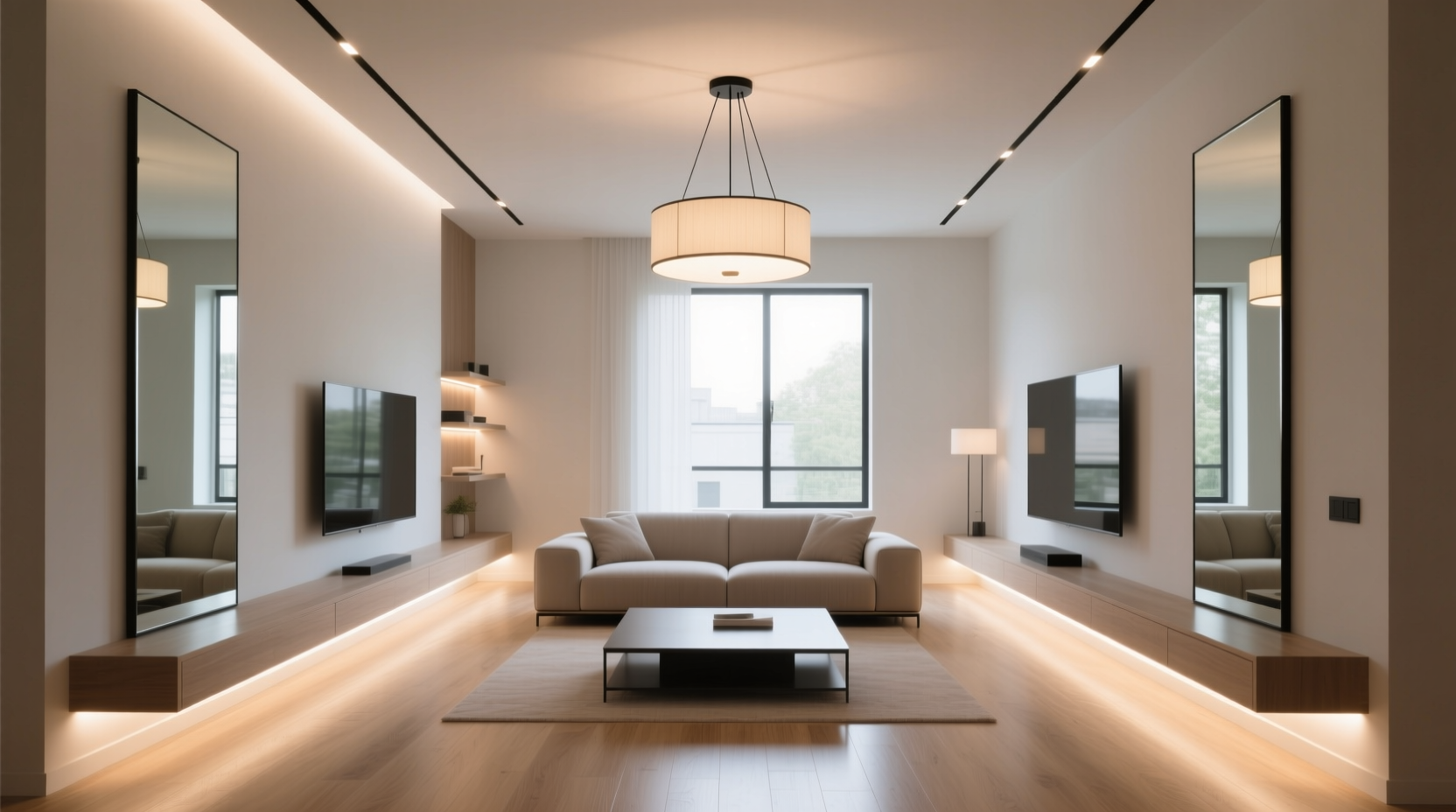
The perception of space is influenced not by measurements alone, but by how light, color, texture, and reflection interact within an environment. Rooms with poor lighting or flat, one-dimensional illumination often feel boxed-in. Similarly, solid walls without visual breaks create a sense of enclosure. Mirrors counteract this by duplicating views and bouncing light deeper into a space. Lighting, when properly layered, prevents shadows from dominating corners and helps define zones without physical barriers.
Architects and interior designers have long relied on optical illusions to enhance perceived volume. As British designer Ilse Crawford notes:
“Light and reflection are tools of psychology as much as decoration. A well-placed mirror doesn’t just show what’s there—it suggests what could be.” — Ilse Crawford, Interior Designer and Educator
This principle underpins every technique discussed here: manipulate perception to create openness, airiness, and flow—even in the smallest of rooms.
Mirror Placement: Principles That Work
Not all mirror placements yield the same results. A large mirror tucked behind a door or facing a blank wall may add little value. Strategic positioning, however, multiplies available light and creates continuity.
1. Opposite Windows to Capture Natural Light
The most impactful location for a mirror is directly across from a window. Sunlight enters the room, hits the mirror, and reflects back, effectively doubling both brightness and the sense of exposure. This works especially well in north-facing rooms with limited daylight.
2. Across from Attractive Views or Architectural Features
If your window overlooks a garden, tree line, or interesting streetscape, position the mirror to reflect that view. The brain interprets the reflection as an extension of the real scene, making the room feel like it opens into a larger landscape.
3. At the End of Narrow Hallways or Corridors
Hallways often feel like tunnels. Placing a mirror at the far end tricks the eye into perceiving greater length. Oval or round mirrors work particularly well here, softening angular lines and reducing the corridor effect.
4. Adjacent to Light Sources (Lamps, Sconces)
Even artificial light benefits from reflection. Mounting a mirror beside or behind a floor lamp or wall sconce amplifies its glow. This is especially useful in living rooms or bedrooms where ambient lighting is key.
5. Using Multiple Small Mirrors Instead of One Large One
In some cases, a cluster of smaller mirrors—arranged in a gallery-style layout—can create dynamic reflections without overwhelming the wall. This approach adds texture and movement, preventing the “looking into a void” effect that oversized mirrors sometimes cause.
Lighting Techniques to Enhance Spatial Perception
Lighting does more than illuminate—it sculpts space. Poorly lit rooms feel smaller because shadows dominate, corners recede, and surfaces appear flat. Thoughtful lighting introduces layers, depth, and rhythm.
1. Layer Your Lighting
Use a combination of three lighting types:
- Ambient (general) lighting: Overhead fixtures or recessed lights that provide baseline illumination.
- Task lighting: Desk lamps, reading lights, or under-cabinet lighting that serve functional needs.
- Accent lighting: Spotlights, LED strips, or picture lights that highlight features and add dimension.
Layering prevents reliance on a single harsh overhead source, which flattens the room. Instead, varied intensities create pockets of warmth and depth, making the space feel larger and more inviting.
2. Bounce Light Off Ceilings and Walls
Instead of shining light downward, aim fixtures upward. Uplights placed in corners or behind furniture bounce illumination onto ceilings, creating a \"floating\" effect. This lifts the perceived height of the room and reduces the feeling of being enclosed.
3. Use Warm White Bulbs (2700K–3000K)
Cool white or blue-toned lights (above 4000K) can feel clinical and stark, emphasizing emptiness rather than warmth. Warm white bulbs mimic natural indoor light, making spaces feel cozier and more expansive through emotional comfort.
4. Install Dimmers for Flexibility
Dimmable lighting allows you to adjust brightness based on time of day and activity. Lower levels create intimacy; higher levels open up the space. This adaptability ensures the room never feels too confined or too exposed.
5. Highlight Vertical Lines
Draw the eye upward to increase perceived ceiling height. Use vertical sconces, tall bookshelves with top lighting, or wall-mounted LED strips along crown molding. This vertical emphasis elongates the room and shifts focus away from floor-level constraints.
Combining Mirrors and Lighting: Synergistic Strategies
When mirrors and lighting are combined intentionally, their impact is multiplicative. Consider the following pairings:
| Strategy | Mirror Role | Lighting Role |
|---|---|---|
| Place mirror opposite window with sheer curtains | Reflects natural light and outdoor view | Maximizes daylight penetration without glare |
| Mount mirror behind a table lamp | Doubles artificial light output | Lamp provides primary source; mirror spreads glow |
| Install mirrored closet doors with overhead lighting | Expands narrow bedroom | Overhead or LED strip lighting eliminates dark gaps |
| Use mirrored backsplash in kitchen with under-cabinet lights | Reflects countertop activity and light | Task lighting bounces off surface, enhancing usability |
This synergy turns functional elements into spatial enhancers. For instance, a mirrored backsplash isn’t just easy to clean—it makes upper cabinets appear farther away, adding breathing room above countertops.
Mini Case Study: Transforming a 10x12 Foot Bedroom
Jessica, a graphic designer in Brooklyn, lived in a studio apartment where her sleeping area measured just 10 by 12 feet. The room had one south-facing window but felt closed-in due to dark walls and a lack of reflective surfaces.
She implemented the following changes:
- Painted walls in matte white to improve light diffusion.
- Installed floor-to-ceiling mirrored closet doors opposite the window.
- Added two dimmable wall sconces on either side of the bed, angled toward the ceiling.
- Placed a full-length mirror on the wall adjacent to the bed, angled slightly to catch the window view.
Within days, guests remarked that the room “felt twice as big.” Jessica reported improved mood and reduced claustrophobia. The transformation cost under $300 and required no structural changes—only strategic use of reflection and layered lighting.
Actionable Checklist: Mirror and Lighting Optimization
- Identify the primary natural light source (window or glass door).
- Position the largest mirror directly opposite that source.
- Ensure mirrors reflect something visually appealing—never a cluttered corner.
- Add at least three types of lighting: ambient, task, and accent.
- Install dimmer switches on main circuits.
- Use warm white bulbs (2700K–3000K) throughout.
- Place uplights in corners to bounce light onto walls and ceiling.
- Consider mirrored furniture (e.g., glass-top tables with mirrored bases) for subtle effects.
- Avoid heavy frames or ornate mirrors that draw attention to themselves rather than the reflection.
- Test mirror angles during different times of day to optimize light capture.
Common Mistakes to Avoid
- Placing mirrors opposite clutter: Reflecting a messy closet or piled-up items doubles the visual chaos.
- Using overly large mirrors on short walls: Can distort proportions and make ceilings seem lower.
- Relying solely on overhead lighting: Creates flat, unflattering illumination that minimizes depth.
- Ignoring bulb temperature: Cool white LEDs may brighten a room but make it feel sterile and smaller emotionally.
- Blocking mirror reflections with furniture: Ensure clear sightlines between mirrors and light sources or views.
Frequently Asked Questions
Can I use a mirror in a room with no windows?
Yes. While natural light maximizes mirror effectiveness, mirrors still amplify artificial light. Pair them with layered lighting—especially floor lamps and sconces—to simulate depth. In windowless bathrooms or hallways, mirrors are essential for preventing a cave-like feel.
What size mirror should I use?
Aim for a mirror that covers at least one-third of the wall height where it’s placed. In most cases, floor-to-ceiling or near-full-height mirrors deliver the strongest spatial effect. However, in very small rooms, a large mirror may overwhelm—scale matters. When in doubt, go slightly smaller with clean edges.
Are LED strip lights effective for making rooms look bigger?
Yes, especially when installed along ceiling edges, behind furniture, or under shelves. LED strips create floating effects and indirect illumination, which lift the visual weight of the room. Use warm white strips (not cool or colored) for the most natural expansion effect.
Final Thoughts: Design With Intention
Creating the illusion of space isn’t about deception—it’s about thoughtful design. Mirrors and lighting are not mere accessories; they are active participants in shaping how we experience a room. By understanding how light travels, how reflections extend vision, and how layered brightness influences mood, you gain control over perception.
The techniques outlined here require minimal investment but deliver maximum return. Whether you’re staging a home for sale, optimizing a studio apartment, or simply seeking comfort in a tight space, these strategies offer lasting benefits. Start with one mirror and one new light source. Observe the change. Then build from there.




 浙公网安备
33010002000092号
浙公网安备
33010002000092号 浙B2-20120091-4
Comments
No comments yet. Why don't you start the discussion?