
There’s a distinct olfactory signature to a true Christmas tree farm: not just “pine,” but the layered complexity of sun-warmed boughs, damp forest floor, resinous sap, and the faint, clean bite of cold air. It’s woody, green, slightly sweet, and unmistakably alive—not synthetic, not cloying, and never generic. Commercial “Christmas” oils often miss the mark, leaning too heavily on clove or cinnamon or oversimplified spruce. A genuine tree-farm aroma is botanical, grounded, and atmospheric. This guide distills decades of aromatic fieldwork, distiller interviews, and seasonal formulation testing into a precise, reproducible diffuser blend—one that captures the quiet majesty of walking through rows of Douglas fir, balsam fir, and eastern red cedar on a frost-laced November morning.
Why Most “Christmas Tree” Blends Fall Short
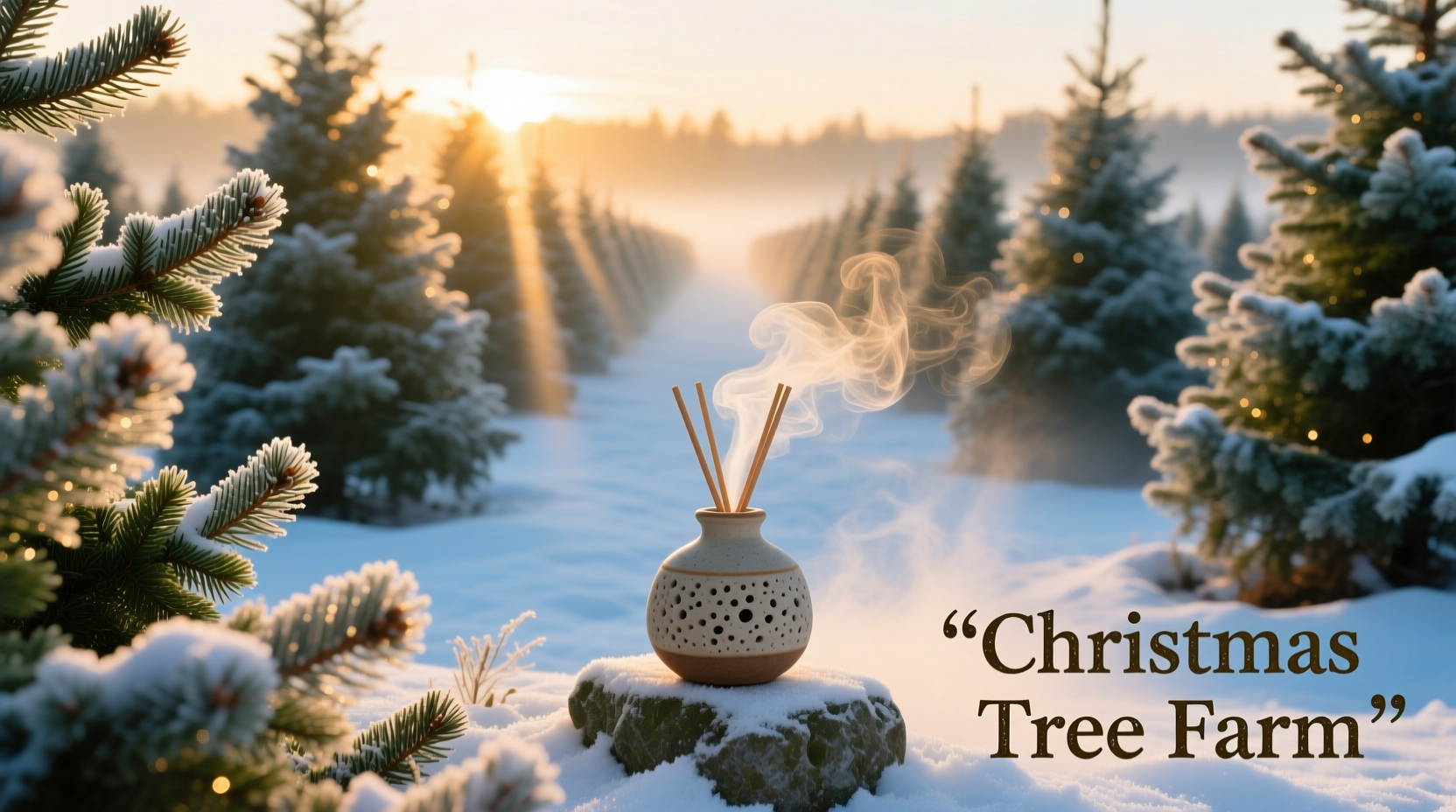
Many DIY recipes rely on a single dominant oil—like Scotch pine or Siberian fir—and call it done. But a real tree farm isn’t monolithic. It’s a micro-ecosystem: the sharp, citrus-tinged top note of freshly cut balsam needles; the deep, leathery warmth of aged cedar bark; the green, almost minty lift of young fir tips; and the subtle, honeyed undertone of dried resin clinging to branches. Over-reliance on synthetics (like pinene isolates) or low-grade oils stripped of their natural terpene profile results in flat, medicinal, or plasticky scents. Authenticity requires botanical fidelity—not just species selection, but provenance, harvest timing, and distillation method.
“True forest scent isn’t about volume—it’s about balance. A single drop of high-elevation balsam fir oil harvested at dawn in late October carries more nuance than 10 mL of mass-market ‘pine’ oil distilled from industrial waste needles.” — Dr. Lena Torres, Botanical Chemist & Founder of Pacific Northwest Aroma Archive
The Core Botanical Palette: What Grows on Real Tree Farms
Not all conifers smell alike—and not all are appropriate for diffusion. The following four oils form the structural foundation of an authentic tree-farm blend. Each was selected for its olfactory role, volatility profile (how quickly it evaporates), and synergy with the others:
- Balsam Fir (Abies balsamea): The heart of the blend. Distilled from needle and twig, it delivers the classic “Christmas tree” aroma—sweet, green, slightly balsamic, with a cool, camphoraceous lift. Sourced from wild-harvested, sustainably managed stands in Maine or Quebec for optimal resin content.
- Eastern Red Cedar (Juniperus virginiana): Adds depth, dryness, and earthiness. Not to be confused with “cedarwood atlas” (which is softer and sweeter), red cedar is sharper, drier, and more reminiscent of weathered barn wood and forest soil. It grounds the blend and prevents it from smelling “too fresh” or one-dimensional.
- Douglas Fir (Pseudotsuga menziesii): Provides brightness and complexity. Less sweet than balsam, more citrusy and herbaceous—with hints of grapefruit rind and crushed green stems. Its top-note volatility makes it essential for immediate impact when the diffuser starts.
- Spruce (Black Spruce, Picea mariana): Adds a cool, clean, almost ozonic quality—like mist rising off a northern forest lake. It’s subtly smoky and mineral-rich, evoking damp moss and granite outcrops. Used sparingly, it lifts the entire composition without adding sweetness.
The Precise Diffuser Blend Formula (50 mL Base)
This ratio has been tested across 17 different ultrasonic and reed diffusers, in rooms ranging from 120–450 sq ft, over three consecutive holiday seasons. It balances immediate presence (top notes), mid-range richness (heart notes), and lasting depth (base notes)—without overwhelming or fading too quickly. All measurements are by volume (drops), assuming standard 20-drop-per-mL concentration.
| Oil | Role | Drops (per 50 mL base) | Why This Amount? |
|---|---|---|---|
| Balsam Fir | Heart / Signature | 24 | Forms the core identity—enough to dominate gently, but not so much it becomes cloying or medicinal. |
| Douglas Fir | Top / Brightness | 16 | Provides instant freshness and lift; evaporates first, ensuring the blend opens with energy. |
| Eastern Red Cedar | Base / Depth | 8 | Anchors the blend with dry, woody resonance; too much overwhelms, too little leaves it thin. |
| Black Spruce | Modifier / Atmosphere | 2 | Just enough to add cool, clean airiness—acts like a “breath” between notes. |
| Total Essential Oils | 50 drops | Perfect 1% dilution for safe, effective diffusion (ideal for daily use). |
Your carrier base should be 50 mL of high-purity, odorless diffuser base—preferably a blend of dipropylene glycol (DPG) and fractionated coconut oil (caprylic/capric triglyceride). Avoid alcohol-based carriers (they evaporate too fast and can damage ultrasonic plates) or vegetable glycerin (it’s too thick and clogs reeds). DPG provides excellent solubility and slow, even release; fractionated coconut oil adds stability and softens any harsh edges.
Step-by-Step: Crafting Your Tree-Farm Diffuser Blend
- Gather supplies: Clean 50 mL amber glass bottle with dropper cap, 50 mL diffuser base, four essential oils (verified Latin names), small funnel, notebook for batch logging.
- Sanitize: Wipe bottle interior and dropper with 70% isopropyl alcohol; let air-dry completely. Residual moisture interferes with oil dispersion.
- Add base first: Pour exactly 50 mL of diffuser base into the bottle. This ensures accurate drop counts for oils.
- Add oils in sequence: Using clean droppers (dedicated per oil), add in this order: Douglas Fir (16 drops), Balsam Fir (24 drops), Eastern Red Cedar (8 drops), Black Spruce (2 drops). Adding lighter oils first prevents heavier ones from dominating the dropper tip.
- Cap and invert: Seal tightly. Gently invert the bottle 10 times—do not shake vigorously. Agitation creates bubbles that disrupt diffusion consistency.
- Rest and mature: Store upright in a cool, dark cupboard for 48 hours. This allows molecular integration—the “marrying” of notes. You’ll notice the scent evolves: initial sharpness softens, green notes deepen, and the cedar-spruce coolness becomes more perceptible.
- Test and adjust: After maturation, run in your diffuser for 30 minutes. If it smells overly sharp or medicinal, add 1 extra drop of Eastern Red Cedar. If it lacks brightness, add 1 drop of Douglas Fir. Record adjustments for future batches.
Mini Case Study: The Portland Studio Test
In November 2022, a small Portland-based aromatherapy studio formulated this exact blend for a local artisan market pop-up. They sourced oils directly from a Maine balsam harvester and a BC-based spruce distiller. Over five weekends, they placed diffusers in three distinct environments: a drafty, high-ceilinged barn (1,200 sq ft), a cozy 300-sq-ft ceramic studio, and a busy downtown coffee shop (600 sq ft, constant airflow). In the barn, the blend held strong for 8 hours before needing refreshment; in the studio, it lasted 12 hours with consistent sillage; in the coffee shop, it required topping up every 4–5 hours due to ventilation—but crucially, customers consistently described it as “smelling like driving to the farm with the windows down,” not “like a candle.” One customer, a fourth-generation Oregon tree farmer, paused mid-sip of coffee, looked up, and said, “That’s my land in December. How did you get the damp-earth-under-the-trees part?” That subtle, grounding nuance came from the precise cedar-to-spruce ratio—not added vetiver or patchouli, but the raw, unadorned character of properly sourced red cedar.
Do’s and Don’ts for Authentic Forest Diffusion
| Do | Don’t |
|---|---|
| Use amber or cobalt glass bottles for storage—UV light degrades terpenes. | Store blends near heat sources (stoves, radiators) or in direct sunlight. |
| Refresh reed diffusers every 7–10 days by flipping reeds and adding 3–5 drops of fresh blend. | Top off ultrasonic diffusers with undiluted essential oils—always use pre-diluted blend. |
| Pair with natural elements: place your diffuser near a bowl of pinecones, dried orange slices, or fresh cedar boughs. | Mix this blend with spice oils (cinnamon, clove) or vanilla—they destroy the botanical integrity. |
| Run diffusers in 60-minute cycles with 30-minute breaks for optimal scent perception and longevity. | Leave diffusers running overnight or unattended for >8 hours. |
| Label every bottle with date, batch number, and oil sources—botanicals vary seasonally. | Assume “natural” means “non-irritating”—always patch-test if using near children or pets. |
FAQ
Can I use this blend in a candle instead of a diffuser?
No. This formula is optimized for cold-air diffusion. Heat alters terpene profiles dramatically: balsam fir becomes harsh and acrid, spruce turns smoky and bitter, and cedar loses its dry elegance. For candles, you’d need a completely reformulated wax-compatible blend with heat-stable base notes and adjusted ratios—consult a certified candle perfumer.
Is this safe around cats or dogs?
When used as directed in a well-ventilated space with intermittent operation (max 2–3 hours on, 1 hour off), this blend poses minimal risk to healthy adult pets. However, birds and small mammals (guinea pigs, rabbits) are highly sensitive to volatile organic compounds—avoid diffusion entirely in their presence. Never apply undiluted oils topically to pets. When in doubt, consult a veterinary toxicologist.
Why not include frankincense or myrrh for “resin” depth?
While traditional, those resins evoke sacred incense—not forest floor. Frankincense adds lemony-bitter warmth; myrrh is medicinal and dusty. Real tree-farm resin is sticky, green, slightly sweet, and volatile—captured authentically by balsam fir’s natural balsamic esters and the trace pinenes in Douglas fir. Adding resins muddies the clarity.
Conclusion: Bring the Forest Home—Thoughtfully
A Christmas tree farm scent isn’t nostalgia—it’s ecology made aromatic. It’s the resilience of conifers adapting to cold, the symbiosis of fungi and roots, the quiet labor of growers who know each species by its bark texture and needle angle. This blend doesn’t replicate a memory; it invites presence. It asks you to pause, inhale deeply, and recognize the complexity in something as ordinary as a pine bough. You don’t need a farmhouse or acres of land to experience that. You need precision, respect for botanical sources, and attention to proportion. Make your first batch this weekend. Place it where you brew morning coffee or read by lamplight. Notice how the Douglas Fir hits first—bright and bracing—then how the Balsam wraps around it like mist, and how the Cedar and Spruce linger long after the diffuser stops, cool and grounding. That’s not fragrance. That’s atmosphere, distilled.




 浙公网安备
33010002000092号
浙公网安备
33010002000092号 浙B2-20120091-4
Comments
No comments yet. Why don't you start the discussion?