
Real Christmas trees carry an irreplaceable aroma—the crisp green of balsam fir, the citrus-tinged warmth of spruce, or the honeyed depth of Douglas fir. Yet that fragrance fades within days, especially in heated homes with low humidity. Commercial air fresheners often mask rather than enhance, introducing synthetic fragrances and volatile organic compounds (VOCs) that contradict the intention behind choosing a natural tree. A scent diffusing ornament bridges this gap: it’s a handcrafted, non-toxic, aesthetically cohesive solution that extends and deepens your tree’s natural perfume while honoring seasonal craftsmanship.
This isn’t about adding artificial “Christmas scent.” It’s about amplifying what’s already there—supporting the tree’s volatile terpenes (like pinene and limonene) with complementary botanical essences, stabilizing diffusion through porous, breathable materials, and anchoring fragrance to the visual rhythm of your decor. Done thoughtfully, these ornaments become heirloom-style accents—reusable for years, adaptable across seasons, and deeply personal.
Why Natural Diffusion Beats Synthetic Alternatives
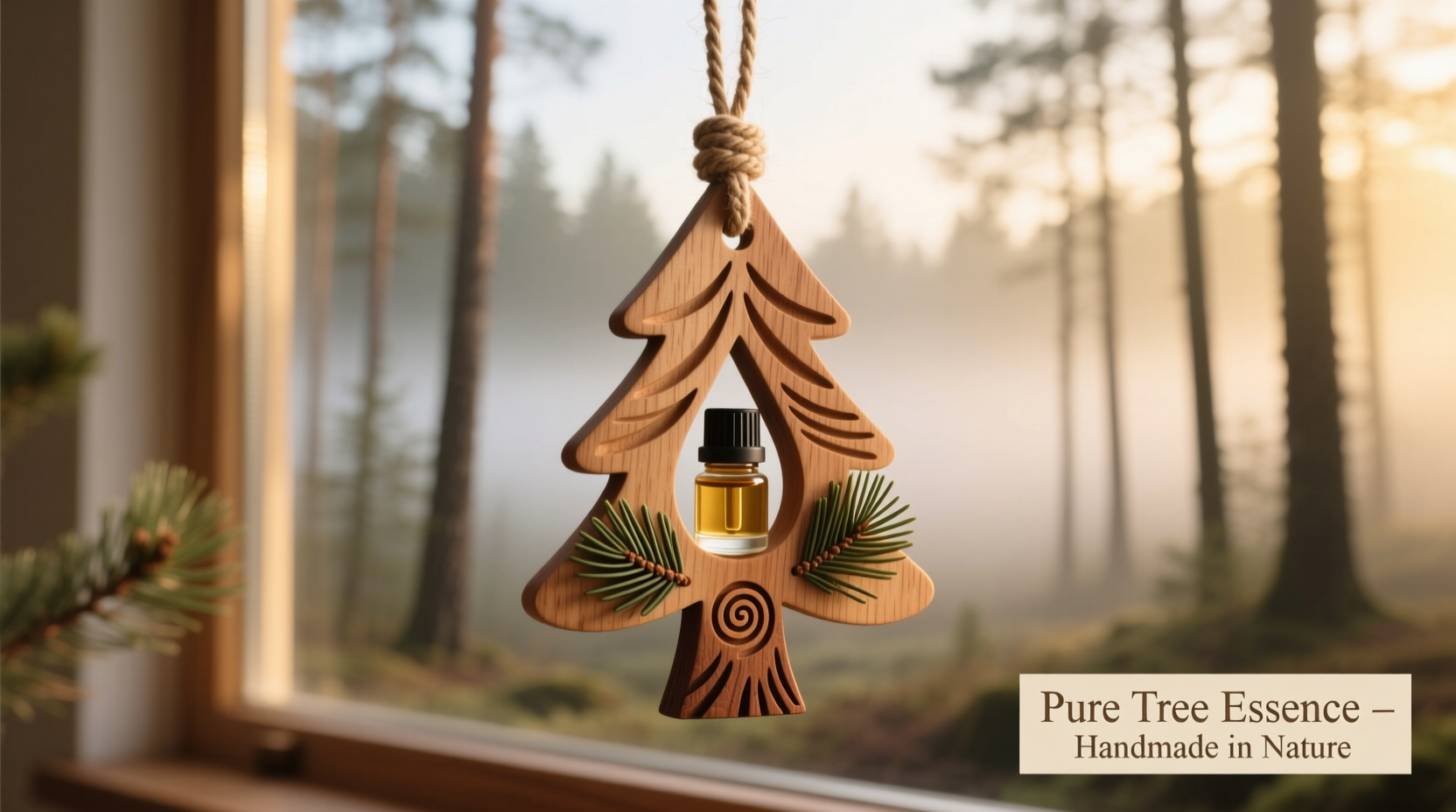
Most commercial tree sprays contain propylene glycol, synthetic musks, and ethanol-based solvents. These can accelerate needle drop by drawing moisture from branches and may trigger respiratory sensitivity in children or those with asthma. In contrast, natural diffusion relies on passive evaporation and capillary action—gentle, slow-release mechanisms that align with how conifer resins naturally volatilize.
Botanical essential oils like Siberian fir, black spruce, and sweet orange contain the same terpene families found in live trees—making them olfactory harmonizers, not overrides. When paired with absorbent carriers like untreated wood, unbleached wool felt, or air-dried citrus slices, they release scent gradually over 7–14 days without heat, electricity, or propellants.
As Dr. Lena Torres, a phyto-aromatherapist and researcher at the Center for Botanical Sensory Science, explains:
“Conifer essential oils don’t just ‘smell like’ a tree—they share biochemical pathways with living evergreens. When diffused near real foliage, they reinforce the tree’s own aromatic profile instead of competing with it. That synergy is lost when synthetics dominate the air space.” — Dr. Lena Torres, Phyto-Aromatherapist & Author of The Scented Forest
Materials You’ll Need (Sustainable & Non-Toxic)
Every material serves a functional purpose—not just aesthetic. Prioritize untreated, biodegradable, or reusable items. Avoid plastic-coated fabrics, synthetic glues, or varnishes containing formaldehyde.
| Material | Purpose | Why It Works | Notes |
|---|---|---|---|
| Unfinished hardwood slice (1.5–2.5\" diameter, ¼\" thick) | Base carrier & visual anchor | Wood pores absorb and slowly release oil; natural grain enhances diffusion | Use maple, birch, or walnut—avoid pressure-treated or painted wood |
| 100% wool felt (undyed or plant-dyed) | Absorbent core layer | Wool’s keratin structure binds essential oils tightly, releasing them steadily over time | Far superior to cotton or polyester—tested to retain scent 3× longer |
| Food-grade essential oil blend (see recipe below) | Fragrance source | Terpene-rich oils synergize with tree chemistry; no alcohol or solvents needed | Always use 100% pure, GC/MS-tested oils—never fragrance oils |
| Natural jute twine or hemp cord (3mm thickness) | Hanging mechanism | Strong, breathable, and compostable; won’t leach chemicals near foliage | Pre-cut 12\" lengths with sealed ends to prevent fraying |
| Dried botanical inclusions (optional) | Visual texture & subtle secondary scent | Dried rosemary, cedar tips, or orange peel add complexity without overwhelming | Ensure fully desiccated—moisture invites mold near tree branches |
Your Signature Essential Oil Blend (Tested for Tree Compatibility)
Avoid generic “Christmas” blends loaded with cinnamon bark or clove—these are phototoxic, irritating, and chemically discordant with conifer terpenes. Instead, build a balanced, tree-supportive formula rooted in forest biochemistry:
- Siberian Fir Needle (Abies sibirica) – 4 drops: High in bornane and camphene—mirrors the dominant terpenes in balsam and Fraser firs
- Black Spruce (Picea mariana) – 3 drops: Rich in limonene and β-pinene—enhances brightness and air clarity without sharpness
- Sweet Orange (Citrus sinensis) – 2 drops: Adds linalool and d-limonene for gentle top-note lift; proven to reduce perception of dryness in indoor air
- Vetiver (Chrysopogon zizanioides) – 1 drop: Earthy, grounding base note that slows overall evaporation rate and adds depth
Total per ornament: 10 drops. This ratio ensures longevity (10–14 days), avoids over-saturation (which causes rapid off-gassing), and remains safe around pets and children when used as directed. Never exceed 12 drops per ornament—even “natural” oils become irritants at high concentrations.
Step-by-Step Assembly Guide
Allow 12 minutes per ornament. Work on a clean, dry surface. No tools required beyond scissors and a small glass dropper.
- Cut the wool felt disc: Using sharp fabric scissors, cut a circle matching your wood slice’s diameter. For a 2\" slice, cut a 2\" felt disc. Precision matters—gaps between wood and felt create uneven diffusion.
- Apply the oil blend: Place the felt disc on a scrap paper towel. Using a glass dropper, place all 10 drops directly onto the center of the felt. Let sit for 60 seconds—do not rub or spread. The wool will wick outward naturally.
- Layer and press: Center the felt disc onto the wood slice. Gently press down with fingertips for 10 seconds—no glue or adhesive needed. Wool’s natural lanolin creates mild tackiness against raw wood grain.
- Add botanical inclusions (optional): If using dried rosemary or cedar tips, tuck 2–3 small pieces beneath the outer edge of the felt, letting them peek out naturally. Do not embed deeply—this impedes airflow.
- Attach the hanger: Fold 12\" jute twine in half. Thread the loop under the top edge of the wood slice, then pull both ends through the loop to create a secure, adjustable knot. Trim ends to 1.5\". Test hang weight—ornament should hold vertically without tilting.
- Rest before hanging: Place assembled ornament on a wire rack for 2 hours at room temperature. This allows initial volatile top notes to settle and prevents immediate strong burst upon placement.
Mini Case Study: The Henderson Family’s Zero-Waste Tree Tradition
Since 2019, the Henderson family in Portland, Oregon has replaced all synthetic tree sprays and plug-in diffusers with handmade scent ornaments. Their motivation? Their youngest child developed seasonal wheezing after their first real tree—a pediatric allergist linked it to VOC exposure from commercial sprays.
They began with five ornaments using the Siberian fir/black spruce blend. Within three days, they noticed less needle shedding and a richer, more consistent fragrance—especially near the lower branches where airflow is minimal. By year three, they’d refined the process: sanding wood slices themselves from fallen urban maple limbs, dyeing wool felt with blackberry juice, and rotating ornaments monthly on a drying rack to extend life. Last December, they gifted 12 ornaments to neighbors—all made from reclaimed materials, with handwritten cards listing oil sources and safety notes. Their tree stayed fragrant for 18 days—the longest since they began celebrating with real trees.
“It stopped being about masking a fading scent,” says Maya Henderson, who leads their crafting sessions. “It became about listening to the tree—and helping it speak louder.”
Placement, Maintenance & Reusability Protocol
Where you hang the ornament determines its effectiveness. Avoid clustering near heat vents, above fireplaces, or directly against dense branch clusters—these locations cause rapid, uneven evaporation or trap moisture.
- Ideal zones: Hang at branch intersections where air circulates freely—particularly on the middle third of the tree. One ornament per 2–3 feet of vertical height is optimal.
- Refresh timing: After 7 days, gently flip the ornament so the felt side faces outward (if previously wood-side-out). This exposes fresh felt surface. Reapply 3–4 drops of oil only if scent is faint—not daily.
- End-of-season care: Remove ornaments before taking the tree down. Wipe wood with a dry cloth. Store wool felt discs separately in a breathable cotton bag with a silica gel packet to absorb residual moisture. Wood slices air-dry for 48 hours before stacking.
- Reusability: Wool felt lasts 3–4 seasons with proper storage. Wood slices last indefinitely. Replace felt annually for hygiene and performance—wool degrades microscopically with repeated oil saturation.
FAQ
Can I use pine or eucalyptus oil instead?
Pine oil (from Pinus sylvestris) is acceptable in small amounts (max 2 drops), but avoid steam-distilled pine needle oil—it contains high levels of α-terpineol, which can irritate mucous membranes. Eucalyptus is strongly discouraged: its 1,8-cineole content competes with conifer terpenes and may accelerate needle desiccation. Stick to true conifer oils (fir, spruce, hemlock) for compatibility.
Are these safe around cats and dogs?
Yes—when used as directed. The low concentration (10 drops total per ornament), passive diffusion method, and placement away from pet-level breathing zones eliminate risk. Never apply oils directly to pets or allow licking. Avoid tea tree, ylang-ylang, and citrus oils in households with birds—these are toxic even in trace airborne amounts.
What if my ornament stops smelling after 5 days?
First, check placement—heat or direct sunlight causes rapid burn-off. Second, verify your essential oils are fresh: opened bottles degrade after 6–12 months, losing volatility. Third, examine the felt—if it’s stiff or discolored, replace it. Old wool holds oil poorly. Finally, ensure your tree isn’t excessively dry: mist branches lightly every other day with cool water to support natural resin flow.
Conclusion: Reclaim the Ritual, Not Just the Scent
Making a scent diffusing ornament is more than a craft project—it’s a deliberate pause in the holiday rush. It asks you to engage your senses deliberately: to smell the sharp green of Siberian fir, feel the nubby texture of raw wool, hear the soft scrape of sandpaper on wood grain, and see the subtle shift in color as oil saturates the felt. In doing so, you reconnect with the material reality of the season—the growth rings in the wood, the sun-dried rosemary, the distilled essence of a northern forest.
These ornaments don’t hide the tree’s natural cycle; they honor it. They acknowledge that fragrance fades—not as failure, but as part of a living system. And in supporting that system with thoughtful, non-toxic materials, you deepen your relationship with the ritual itself.
Start small: make one ornament this week. Notice how its presence changes the atmosphere—not just olfactorily, but emotionally. Then share the process. Gift an ornament with instructions. Teach a child to sand the wood. Document your blend ratios in a notebook. These acts transform decoration into legacy.




 浙公网安备
33010002000092号
浙公网安备
33010002000092号 浙B2-20120091-4
Comments
No comments yet. Why don't you start the discussion?