
Starting a new business is both exhilarating and daunting. The early days shape the trajectory of your venture more than any other phase. A strong start isn’t about perfection—it’s about clarity, momentum, and smart decisions made under uncertainty. Founders who build solid foundations from day one are more likely to adapt, grow, and survive the inevitable challenges ahead. This guide outlines actionable strategies to help you launch with purpose, minimize avoidable mistakes, and gain confidence through preparation and execution.
Clarify Your Vision and Validate Your Idea
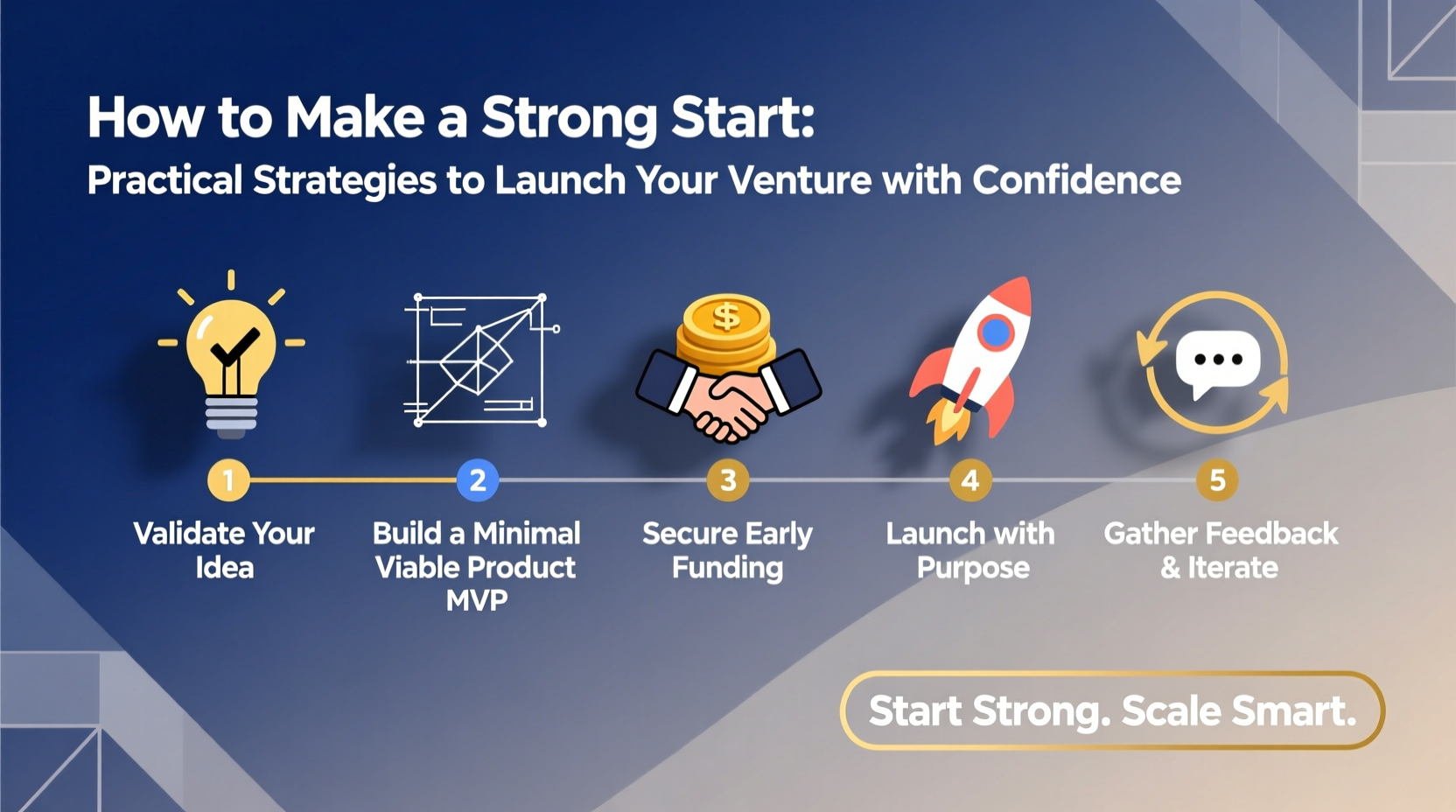
Before investing time and capital, ensure your idea solves a real problem for a specific audience. Many ventures fail because they’re built on assumptions rather than evidence. Begin by clearly defining your value proposition: What do you offer? Who needs it? Why should they choose you?
Engage potential customers early. Conduct interviews, distribute surveys, or run low-cost pilot tests. This validation process reduces risk and sharpens your offering. For example, if you're launching a meal prep service for busy professionals, talk to 20 target customers before finalizing your menu or pricing.
“Your first product will never be perfect. But if you’ve talked to real people who genuinely want it, you’re already ahead.” — Arun Patel, Serial Entrepreneur and Startup Mentor
Build a Lean Launch Plan
A lean launch focuses on speed, learning, and resource efficiency. Instead of waiting for everything to be ready, identify the minimum version of your product or service that delivers core value—your Minimum Viable Product (MVP). Launch quickly, gather feedback, and iterate.
This approach conserves capital, accelerates learning, and helps you avoid building features no one wants. For instance, a fitness app founder might start with a simple workout tracker instead of an AI-powered coach.
Step-by-Step: Creating Your MVP in 5 Weeks
- Week 1: Finalize your core value proposition and define key user outcomes.
- Week 2: Design a basic prototype (e.g., wireframes, landing page, sample service).
- Week 3: Test with 5–10 early adopters and collect qualitative feedback.
- Week 4: Refine based on insights and prepare for public launch.
- Week 5: Soft launch to a small audience and begin tracking engagement metrics.
Secure Early Traction with Strategic Outreach
Traction isn’t just revenue—it’s proof that people care. Early signals like sign-ups, waitlist interest, pre-orders, or social engagement validate demand and attract partners, investors, and talent.
Leverage personal networks, niche communities, and targeted outreach. Offer limited-time incentives such as beta access or exclusive discounts. Partner with micro-influencers or complementary businesses to amplify reach without overspending on ads.
| Traction Metric | Why It Matters | How to Achieve It |
|---|---|---|
| Email Sign-Ups | Shows interest and builds future sales pipeline | Create a compelling landing page with a clear CTA |
| Pre-Orders | Demonstrates willingness to pay | Offer early-bird pricing or bonuses |
| Social Shares | Indicates organic appeal and brand resonance | Design shareable content or referral programs |
| Customer Interviews Completed | Validates understanding of pain points | Reach out via LinkedIn, email, or community groups |
Establish Operational Discipline from Day One
Even the most innovative idea can falter without structure. Set up systems early—whether for finances, customer communication, or project management. These don’t need to be complex, but they must be consistent.
Use tools like spreadsheets for cash flow tracking, shared calendars for deadlines, and cloud storage for document organization. Automate where possible: email sequences for onboarding, invoicing software for payments, and analytics dashboards to monitor performance.
Mini Case Study: From Side Hustle to Sustainable Business
Jamila started a handmade candle business selling at local markets. After three months, she had steady weekend sales but no online presence or inventory system. She decided to formalize her operations: created a simple Shopify store, used Google Sheets to track materials and profit margins, and set up an email list via a free tool.
Within two months, online orders surpassed market sales. By reinvesting profits into better packaging and targeted Facebook ads, she grew revenue by 300% in six months—all while working part-time. Her disciplined approach to data and consistency allowed her to scale without burnout.
Prepare for Challenges with Resilience Strategies
No launch goes exactly as planned. Delays, technical issues, or slow adoption are common. Confidence doesn’t come from avoiding obstacles—it comes from knowing how to respond.
- Set realistic timelines with buffer periods.
- Maintain a lean budget with emergency reserves.
- Practice stress-testing your plans: “What if we get zero sales in month one?”
- Build a support network of mentors, peers, or accountability partners.
“Resilience isn’t toughness—it’s preparation meets perspective. The founders who last are those who expect setbacks and plan for them.” — Dr. Lena Torres, Organizational Psychologist
Launch Readiness Checklist
Use this checklist to evaluate your preparedness before going live:
- ✅ Problem-solution fit confirmed through customer conversations
- ✅ MVP developed and tested with real users
- ✅ Basic branding and messaging finalized (name, logo, tagline)
- ✅ Sales or delivery channel established (website, marketplace, physical location)
- ✅ First 100-day marketing plan outlined (content, outreach, promotions)
- ✅ Financial basics in place (bank account, pricing model, expense tracking)
- ✅ Legal structure chosen (sole proprietorship, LLC, etc.) and registered
- ✅ Support system identified (mentor, advisor, peer group)
Frequently Asked Questions
How much funding do I need to start?
The amount varies by industry, but many ventures launch successfully with less than $5,000. Focus on validating demand first. Bootstrap using personal savings, pre-sales, or small grants. Avoid over-relying on external funding early—it can delay critical learning.
Should I quit my job to launch full-time?
Only if you have sufficient runway and early traction. Most successful founders start part-time while maintaining income. Transition when your venture generates consistent revenue or has secured investment. Reducing financial pressure increases your chances of long-term success.
What if my first launch fails?
Most do—not completely, but partially. Failure is part of the process. Analyze what worked and what didn’t. Talk to customers. Iterate quickly. Many iconic companies pivoted after weak initial responses. What matters is persistence, not perfection.
Conclusion: Start Strong, Stay Agile
A strong start isn’t about having all the answers. It’s about asking the right questions, taking informed action, and staying committed to learning. Confidence grows not from certainty, but from motion—each step forward builds momentum and insight.
You don’t need a flawless plan. You need clarity of purpose, a willingness to test ideas, and the discipline to keep moving. Whether you’re launching a tech startup, creative studio, or neighborhood service, these strategies position you to begin with strength and adapt with agility.




 浙公网安备
33010002000092号
浙公网安备
33010002000092号 浙B2-20120091-4
Comments
No comments yet. Why don't you start the discussion?