
Every year, millions of Christmas trees are discarded after the holidays, contributing to landfill waste or requiring energy-intensive recycling processes. While artificial trees offer reusability, many are made from non-recyclable plastics and travel thousands of miles before reaching homes. There’s a third option—one that’s kinder to the planet, sparks creativity, and turns waste into wonder: building a Christmas tree entirely from recycled materials.
This isn’t about compromise. It’s about reinvention. A recycled-material Christmas tree can be just as festive, expressive, and central to holiday celebrations—without the environmental cost. Whether you live in an apartment with limited space, want to teach children about sustainability, or simply enjoy hands-on crafting, this guide walks you through designing and assembling a beautiful, eco-conscious centerpiece using items already in your home.
Why Choose a Recycled Materials Christmas Tree?
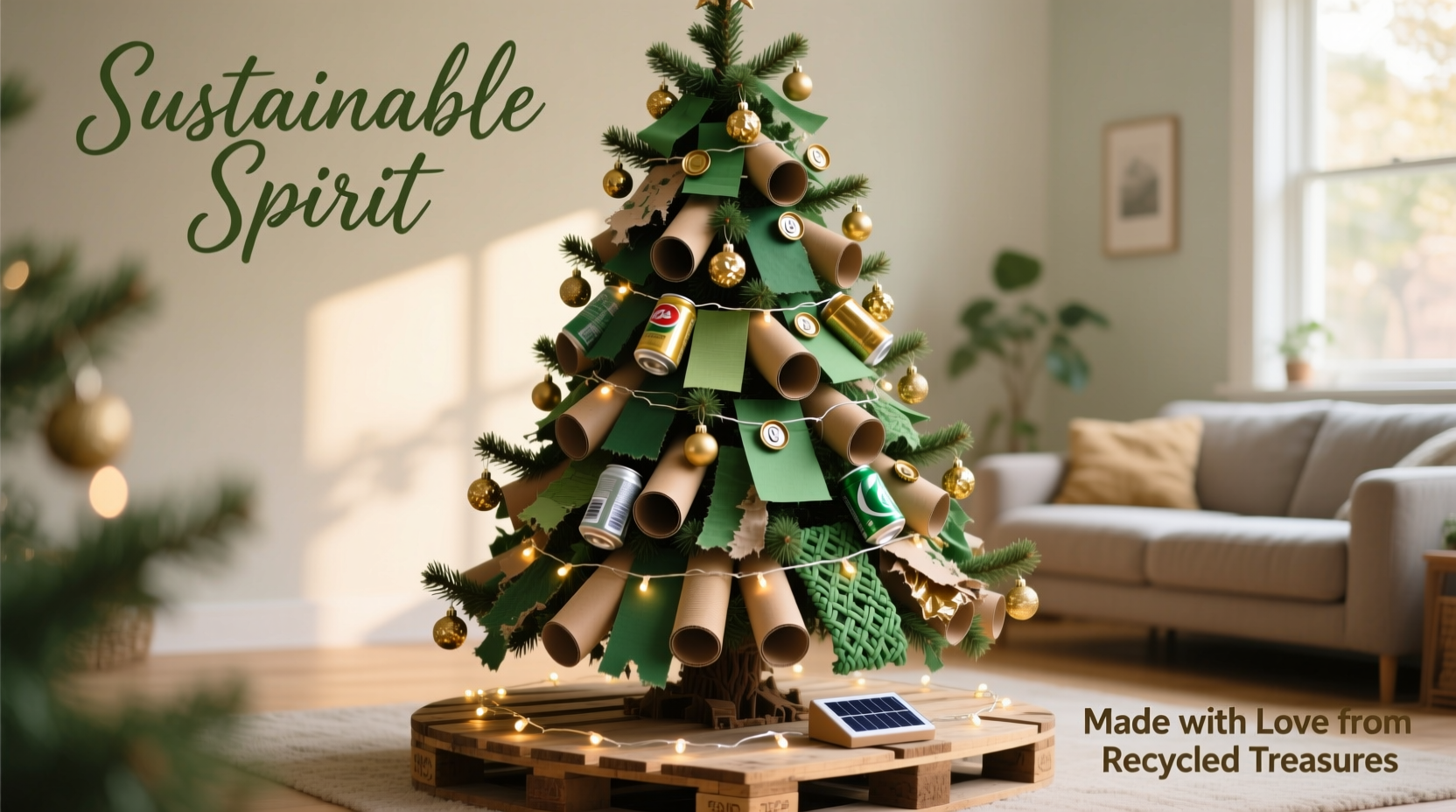
The environmental impact of traditional Christmas trees is often overlooked. Real trees require land, water, and transportation. Though biodegradable, many end up in landfills where they emit methane as they decompose. Artificial trees, while reusable, are typically made from PVC and metal, both energy-intensive to produce. Most are used for fewer than five years before being discarded—defeating their long-term benefit.
A tree built from recycled materials sidesteps these issues entirely. It repurposes what would otherwise be thrown away, reduces demand for new resources, and encourages mindful consumption. More than that, it becomes a statement—a symbol of ingenuity and care for the planet during a season often defined by excess.
“Sustainability doesn’t mean sacrificing beauty. In fact, some of the most meaningful holiday traditions emerge from resourcefulness.” — Dr. Lena Patel, Environmental Educator and Author of *Green Holidays, Happy Homes*
Materials You Can Use (And Where to Find Them)
The foundation of any recycled-material project is knowing what’s available. The best part? You likely already have most of what you need. Below is a categorized list of common household recyclables that can form the structure, branches, and decoration of your tree.
| Material Type | Potential Uses | Sourcing Tips |
|---|---|---|
| Cardboard boxes | Tree silhouette, base stand, layered tiers | Save packaging from online orders or ask local stores for spare boxes |
| Newspaper & magazines | Paper chains, rolled \"logs\" for trunk, decorative fringe | Use old holiday editions or unsolicited mail |
| Glass jars & bottles | Transparent ornaments, candle holders, base weights | Rinse and remove labels; save throughout the year |
| Plastic containers (yogurt cups, lids) | Ornament molds, painted decorations, snowflake cutouts | Clean thoroughly and sort by color for design planning |
| Scrap fabric & textiles | Bunting, ribbon substitutes, tree skirts, stuffed ornaments | Old clothes, worn linens, or fabric remnants |
| Metal cans & tins | Base support, lanterns, jingle bell shakers | Remove sharp edges carefully; sand if needed |
Step-by-Step Guide: Building Your Sustainable Tree
There’s no single way to build a recycled Christmas tree—it depends on your space, skills, and vision. Below is a flexible six-step process adaptable to various designs, whether freestanding, wall-mounted, or tabletop.
- Choose Your Design Style
Decide between a 3D freestanding tree, a flat wall tree, or a tiered cone. Wall trees save space and work well in small apartments. Freestanding versions make bolder statements but require sturdier bases. - Build the Frame
For a freestanding tree: Cut cardboard into increasing trapezoidal layers (e.g., 6\", 9\", 12\", 15\") and stack them on a wooden or tin-can base. Secure with non-toxic glue or wire. For a wall tree: Use a single large cardboard triangle or create a minimalist outline with painted tape or rope. - Add Texture and “Foliage”
Cover the frame creatively. Try crumpled newspaper glued in overlapping rows to mimic pine needles. Alternatively, weave strips of green fabric or cut plastic bottles into fringes and attach them radially. For a modern look, use folded magazine pages in gradient tones. - Create Decorations from Waste
Make ornaments from bottle caps (painted gold), fabric scraps (stuffed stars), or old CDs (shiny reflective discs). String popcorn from saved kernels or dried citrus slices from holiday recipes. Write messages on scrap paper and roll them into tiny scrolls tied with twine. - Incorporate Lighting Sustainably
Use LED string lights (preferably solar-powered or battery-operated with rechargeable cells). Never wrap cords tightly around flammable materials like dry paper. Tuck bulbs behind translucent elements—like cut plastic jars—for a glowing effect. - Finish with a Recycled Tree Topper
Craft a star from flattened aluminum cans or a dove from white fabric scraps. Reuse an old angel ornament or mold one from air-dry clay mixed with coffee grounds (another compostable material).
“Children remember not the price of the decoration, but the story behind it. A tree made from yesterday’s cereal box becomes a lesson in care, creativity, and connection.” — Mara Thompson, Founder of EcoKids Workshop
Real Example: The Apartment Balcony Tree
In Portland, Oregon, 32-year-old designer Naomi Lin transformed her small balcony into a winter display using only materials from her recycling bin. With limited indoor space, she opted for a vertical wall tree mounted on a salvaged wooden pallet.
She cut cardboard into a triangular shape, then covered it with hundreds of rolled-up magazine strips dyed green using leftover herbal tea (a mix of matcha and nettle). Ornaments included jar-lid snowflakes painted silver, wine cork reindeer, and a star topper made from bent bicycle spokes collected at a community repair shop.
She strung secondhand fairy lights donated by a neighbor who was switching to solar. The entire project cost nothing, took four evenings to complete, and became a conversation starter with neighbors—three of whom started their own recycled trees the following year.
Naomi’s experience proves that sustainability thrives not in perfection, but in participation. Her tree wasn’t symmetrical or glossy, but it was authentic—and full of meaning.
Checklist: Building Your Tree Without Waste
- ☑ Gather materials over time—don’t buy new supplies
- ☑ Clean and sort recyclables by type and color
- ☑ Sketch a simple design based on available space
- ☑ Use non-toxic adhesives (e.g., flour paste, water-based glue)
- ☑ Test structural stability before adding decorations
- ☑ Prioritize fire-safe lighting practices
- ☑ Document your process to inspire others
- ☑ Plan for post-holiday disassembly and reuse
Common Pitfalls and How to Avoid Them
Even well-intentioned projects can go off track. Here are frequent challenges and practical solutions:
- Structural instability: Cardboard or paper trees may sag under ornament weight. Solution: Reinforce with a central dowel (reused from old curtain rods) or layer cardboard for thickness.
- Faded colors: Sunlight can bleach newspaper or fabric. Solution: Place the tree away from direct sun or use UV-resistant sealants made from natural ingredients (e.g., beeswax polish).
- Fire hazard: Paper and fabric near lights pose risks. Solution: Use cool-burning LEDs, avoid covering bulbs, and turn lights off when unattended.
- Time constraints: Last-minute builds lead to frustration. Solution: Break the project into weekly tasks—collecting, building, decorating, lighting.
FAQ: Your Questions Answered
Can a recycled Christmas tree be safe for homes with kids or pets?
Absolutely. In fact, it can be safer than traditional trees. Without loose needles or chemical preservatives, there’s less risk of ingestion or irritation. Just ensure all materials are securely attached, avoid small detachable parts, and keep cords out of reach. Opt for lightweight designs that won’t tip easily.
What if I don’t consider myself crafty?
No artistic skill is required. Start simple: paint a cardboard triangle green and hang repurposed items like mittens, toy blocks, or cookie cutters as ornaments. The charm lies in authenticity, not precision. Many families treat the build as a collaborative activity, valuing the time together over the final look.
Can I recycle the tree again after the holidays?
Yes—this is the goal. Paper and cardboard can be composted or recycled curbside. Metals and glass go straight into recycling bins. Plastics should be cleaned and sorted according to local guidelines. If you used minimal glue and no laminates, recyclability remains high. Store reusable decorations for future years.
Conclusion: A Tradition Rooted in Responsibility
A sustainable Christmas tree made from recycled materials is more than a craft project. It’s a quiet act of resistance against disposable culture. It redefines celebration—not by how much we spend, but by how thoughtfully we create.
This holiday season, let your tree tell a different story. One of renewal, imagination, and care. Build it with what you have. Share it with those you love. And when the lights come down, take it apart knowing nothing was wasted, and everything had purpose.




 浙公网安备
33010002000092号
浙公网安备
33010002000092号 浙B2-20120091-4
Comments
No comments yet. Why don't you start the discussion?