
Cauliflower steak has emerged as a standout in modern plant-forward cuisine—not merely as a meat substitute, but as a centerpiece dish in its own right. With its dense, meaty texture and ability to absorb bold flavors, a well-prepared cauliflower steak can satisfy even the most discerning palates. Whether you're cooking for vegetarians, flexitarians, or simply aiming to diversify your weekly menu with nutrient-rich vegetables, mastering this technique elevates everyday cooking into something restaurant-worthy. The process is simpler than it may appear: slicing the cauliflower correctly, seasoning thoughtfully, and applying heat with precision transforms an ordinary head of cauliflower into a visually striking and deeply savory entrée.
Definition & Overview
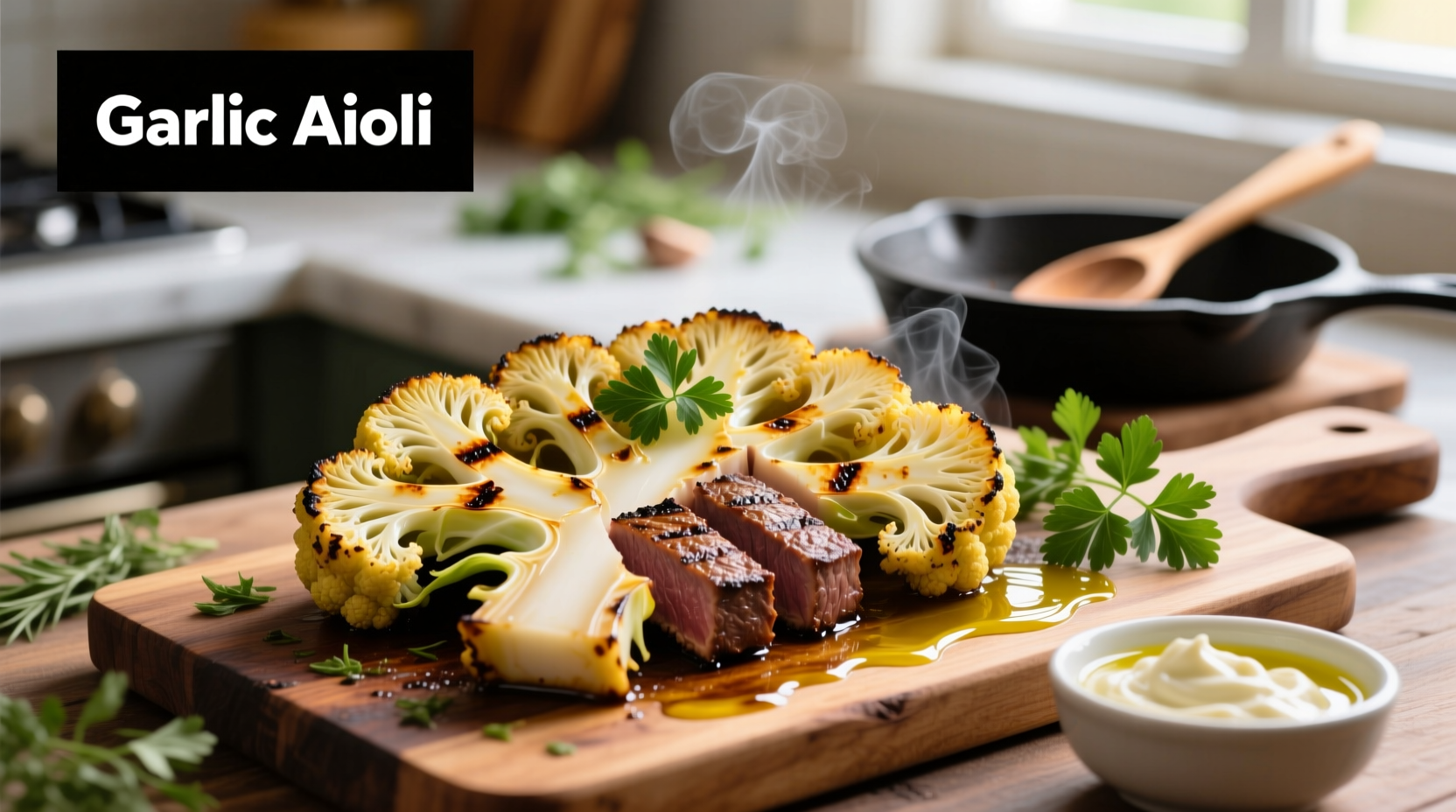
A \"cauliflower steak\" refers to a thick, crosswise slice of whole cauliflower—typically 1 to 1.5 inches thick—cut from the center of the head so that the florets remain attached to the central core. This structural integrity allows the \"steak\" to hold together during roasting, grilling, or searing. Unlike mashed or riced cauliflower, which breaks down the vegetable entirely, the steak format preserves its form, offering a hearty bite and dramatic presentation.
The concept gained popularity in upscale vegetarian and farm-to-table restaurants around the early 2010s, where chefs began treating vegetables as standalone mains rather than side dishes. Cauliflower, with its neutral base flavor and robust structure, proved ideal for this treatment. When seasoned and cooked properly, it develops complex umami notes, subtle nuttiness, and a tender-crisp interior reminiscent of roasted root vegetables or grilled portobello mushrooms.
Culinary traditions around the world have long featured whole roasted or grilled vegetables, but the term \"steak\" applied to cauliflower reflects a contemporary shift toward redefining protein-centric dining. It signals not substitution, but celebration—of texture, depth, and vegetable craftsmanship.
Key Characteristics
| Characteristic | Description |
|---|---|
| Flavor Profile | Mildly sweet and earthy when raw; develops nutty, caramelized, and umami-rich tones when roasted or grilled. |
| Aroma | Subtle sulfurous note when raw (common in cruciferous vegetables); becomes warm and toasted when cooked. |
| Texture | Firm and cohesive when sliced thick; tender-crisp interior with charred edges when seared or roasted. |
| Color | Pale ivory when raw; golden-brown to deep amber on exterior after high-heat cooking. |
| Culinary Function | Main course vegetable entrée; serves as a canvas for sauces, spices, and accompaniments. |
| Shelf Life | Uncooked: 3–5 days in refrigerator; best used fresh. Cooked: up to 3 days refrigerated. |
Practical Usage: How to Cut, Cook, and Serve
The success of a cauliflower steak hinges on three stages: preparation, cooking, and finishing. Each step must be executed with attention to detail to preserve structure and maximize flavor.
Step 1: Selecting and Preparing the Cauliflower
Choose a large, firm head of cauliflower with compact florets and minimal browning. Avoid those with loose or splayed curds, which indicate age and reduce structural integrity. One medium to large head typically yields two center steaks, with smaller outer slices usable for sides or roasting.
- Remove outer leaves and trim the stem flush with the base, keeping the core intact.
- Lay the cauliflower on its side and use a sharp chef’s knife to slice vertically through the center, maintaining the core’s alignment.
- Cut two 1- to 1.5-inch-thick steaks from the center. These will include both florets and stem tissue, ensuring cohesion.
- Set aside any remaining pieces for other uses (e.g., stir-fries, soups).
Tip: If the steak feels unstable, lightly score the outer edge of the core without cutting through it. This helps release tension and prevents cracking during cooking.
Step 2: Cooking Methods
Several techniques yield excellent results, each contributing different textures and flavor profiles.
Roasting (Recommended for Beginners)
Rimming delivers even cooking and reliable caramelization. Preheat oven to 425°F (220°C). Place cauliflower steaks on a parchment-lined baking sheet. Brush both sides with olive oil and season generously.
- Suggested seasoning: salt, black pepper, garlic powder, smoked paprika, cumin.
- Optional marinade: whisk together olive oil, lemon juice, tahini, and harissa; brush over steaks before roasting.
- Cook for 20–25 minutes per side, flipping halfway, until deeply golden and tender when pierced with a knife.
Grilling (For Smoky Depth)
High-heat grilling imparts a smoky crust and appealing grill marks. Use medium-high heat (around 400°F / 200°C). Oil the grates well and brush the steaks liberally with oil to prevent sticking.
- Grill 6–8 minutes per side, covered, until charred and tender.
- Use a thin metal spatula to flip gently, supporting the entire steak to avoid breakage.
Pan-Searing (Fast, Restaurant-Style Finish)
For a crisp exterior and moist interior, sear in a hot cast-iron skillet. Heat 1–2 tablespoons of oil until shimmering. Sear steaks 6–7 minutes per side over medium-high heat. Reduce heat if edges burn before center cooks.
- Baste with herb-infused butter or garlic oil during cooking for added richness.
- Finish in a 375°F (190°C) oven for 10–12 minutes if needed to ensure tenderness.
Step 3: Finishing and Serving
The final touches elevate cauliflower steak from simple roasted veg to a composed dish. Always rest the steak for 3–5 minutes after cooking to stabilize its structure.
- Sauces: Drizzle with romesco, chimichurri, tahini-lemon sauce, gremolata, or browned butter.
- Toppings: Sprinkle with toasted nuts (pine nuts, almonds), seeds (pumpkin, sesame), crumbled feta, or shaved Parmesan.
- Acidity: A splash of lemon juice or vinegar brightens the earthy notes.
- Herbs: Fresh parsley, cilantro, dill, or mint add vibrancy.
Pro Tip: For enhanced umami, sprinkle a small amount of nutritional yeast or mushroom powder before roasting. Alternatively, finish with a few drops of soy sauce or tamari.
Variants & Types
While the standard white cauliflower steak remains most common, several variants offer distinct colors, textures, and nutritional benefits.
| Type | Characteristics | Best Uses |
|---|---|---|
| White Cauliflower | Classic variety; mild flavor, firm texture. | Ideal for all cooking methods; especially good with bold seasonings. |
| Orange Cauliflower | Rich in beta-carotene; slightly sweeter, creamier when cooked. | Excellent for purees or when vibrant color is desired. |
| Purple Cauliflower | Contains anthocyanins; retains purple hue when raw, fades slightly when cooked. | Perfect for visual appeal in salads or cold platters. |
| Mini or Baby Cauliflower | Smaller heads; more delicate, faster-cooking. | Best roasted whole or halved; suitable for individual servings. |
In professional kitchens, chefs sometimes use **Romanesco**, a fractal-patterned relative of cauliflower, for its dramatic appearance. Though more fragile due to its branching structure, it can be treated similarly with careful handling.
Comparison with Similar Ingredients
Cauliflower steak is often compared to other vegetable \"steaks,\" but key differences affect usage and outcome.
| Vegetable | Differences from Cauliflower Steak |
|---|---|
| Portobello Mushroom Cap | More delicate texture; higher moisture content leads to faster cooking. Stronger umami flavor naturally. Less structurally stable over time. |
| Beetroot Steak | Higher sugar content causes quicker charring. Prone to bleeding color. Best par-roasted before grilling. Earthier, less neutral flavor. |
| Zucchini or Eggplant “Steak” | Softer, more watery flesh requires salting and draining. Less capable of holding shape. Better suited for layered dishes like gratins. |
| Broccoli Steak | Less common; stalk is fibrous. Florets separate easily. Requires very thick cuts and careful cooking to maintain integrity. |
Unlike these alternatives, cauliflower offers a rare balance: neutral enough to pair with global flavors, yet sturdy enough to withstand high-heat methods without disintegrating.
Practical Tips & FAQs
Can I make cauliflower steaks ahead of time?
Yes, but with caveats. Raw steaks can be pre-sliced and stored in an airtight container for up to 24 hours. However, they are more prone to drying or cracking. Fully cooked steaks reheat well—warm gently in a 350°F (175°C) oven for 10–12 minutes to preserve texture. Avoid microwaving, which softens the exterior.
Why did my cauliflower steak fall apart?
This usually occurs due to one of three reasons: slicing too thin (less than 1 inch), removing the core, or using a dull knife that tears rather than cuts cleanly. Ensure the core remains intact and use a sharp, long-bladed knife for smooth passage through the stem.
Is cauliflower steak healthy?
Exceptionally so. One serving (half a head) provides approximately 120 calories, 6 grams of fiber, and significant vitamin C, K, and B6. It’s low in carbohydrates, naturally gluten-free, and rich in antioxidants like glucosinolates, which support detoxification pathways in the body.
What are good side dishes?
Pair with grains (farro, quinoa, wild rice), legumes (lentils, white beans), or roasted vegetables (carrots, Brussels sprouts, sweet potatoes). A simple arugula salad with lemon vinaigrette complements the richness.
Can I freeze cauliflower steaks?
Not recommended. Freezing disrupts cell structure, leading to mushiness upon thawing and reheating. Instead, roast extra steaks and refrigerate for use within three days.
How do I add protein?
Top with poached eggs, grilled halloumi, marinated tofu, or a spoonful of lentil stew. For non-vegetarian options, serve alongside a small portion of grilled chicken or fish.
Storage Tip: Store uncut cauliflower in a paper bag in the crisper drawer for up to 5 days. Once cut, wrap tightly in plastic or place in a sealed container to minimize moisture loss.
Expert Insight: From Farm to Plating
\"We treat our cauliflower like we would a ribeye—respecting its structure, building layers of flavor, and finishing with care. The goal isn’t to mimic meat, but to highlight what makes cauliflower exceptional on its own terms.\" — Chef Lena Torres, Executive Chef at Verdant, Portland, OR
In fine-dining settings, cauliflower steak often undergoes multi-stage cooking: first blanched to tenderize, then chilled, pressed for density, and finally seared. While impractical for home kitchens, this underscores the vegetable’s versatility. A simplified version involves steaming the steak for 5 minutes before roasting—ideal for larger or denser heads—to ensure even doneness without burning the exterior.
Summary & Key Takeaways
Cauliflower steak is more than a trend—it’s a testament to the evolving appreciation of vegetables as centerpieces. By understanding its structure, flavor potential, and optimal cooking methods, home cooks can produce a dish that is both nourishing and impressive.
- Cutting matters: Slice thickly through the core to maintain integrity.
- Season boldly: Its neutral base welcomes spices, herbs, acids, and umami boosters.
- Cook with confidence: Roast, grill, or sear at high heat for caramelization and texture.
- Finish thoughtfully: Sauces, toppings, and acidity complete the experience.
- Explore varieties: Orange and purple cauliflowers offer visual and nutritional diversity.
- Store wisely: Use fresh, and refrigerate leftovers promptly for up to three days.
Try making cauliflower steak this week with a spice blend inspired by a global cuisine—harissa and lemon for North African flair, gochujang and sesame for Korean fusion, or smoked paprika and sherry vinegar for Spanish influence. Share your creation with #CauliflowerSteakChallenge and join the movement redefining plant-based dining.




 浙公网安备
33010002000092号
浙公网安备
33010002000092号 浙B2-20120091-4
Comments
No comments yet. Why don't you start the discussion?