
Every meaningful creation begins with an idea. Whether it's launching a business, writing a book, building an app, or organizing a community event, the difference between success and stagnation lies in execution. Ideas alone are fragile; they gain strength only when acted upon. The process of turning abstract thoughts into tangible outcomes is not magic—it’s methodical. With clarity, structure, and consistent action, anyone can transform imagination into impact.
Clarify Your Vision: From Fuzzy Thought to Clear Intent
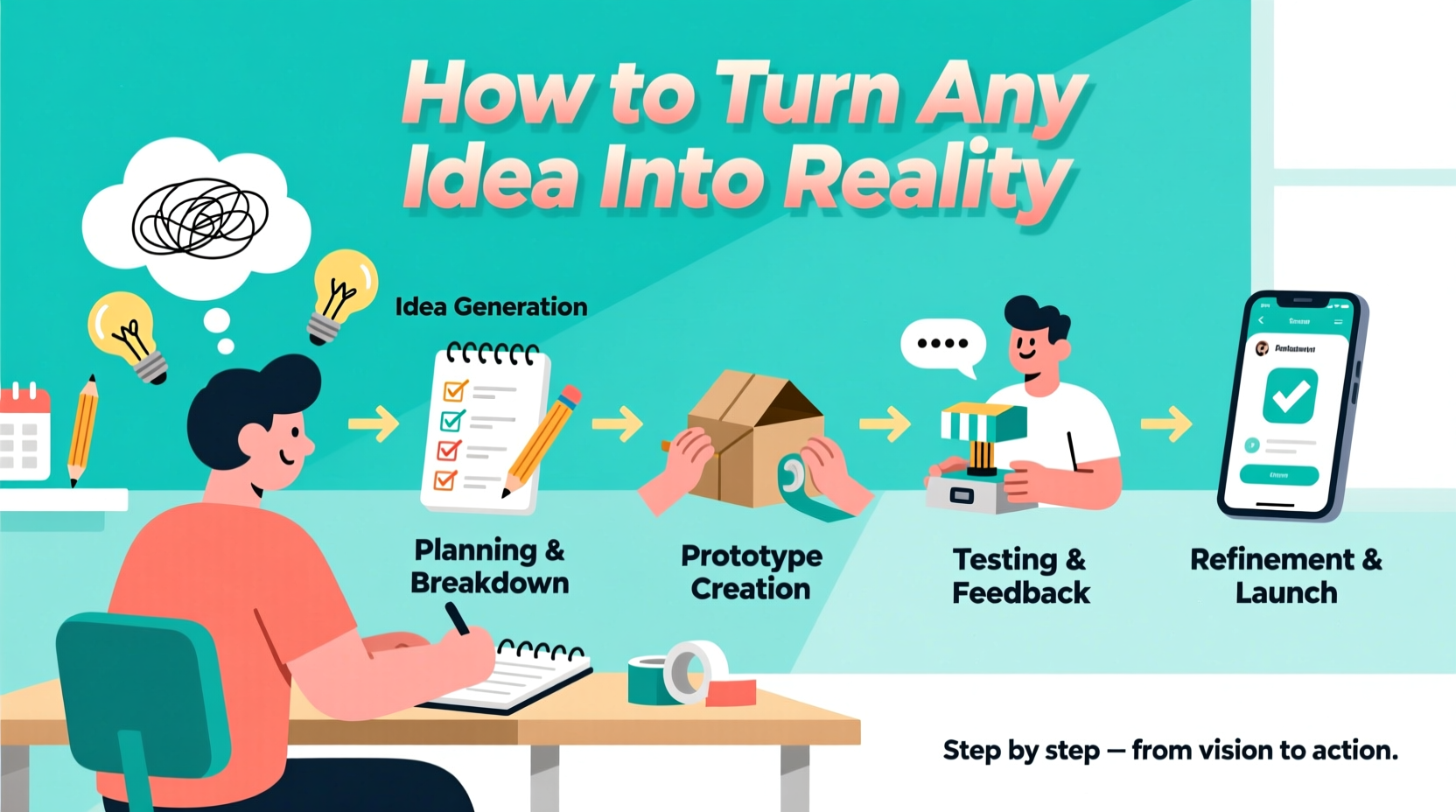
The first barrier most people face isn’t lack of inspiration—it’s lack of definition. An idea like “I want to start a fitness brand” is too broad to act on. To move forward, you must refine it into something specific, measurable, and personally meaningful.
Ask yourself:
- What problem does this idea solve?
- Who benefits from it?
- What would success look like in six months?
- Why does this matter to me?
Answering these questions sharpens your focus. For example, “I want to help busy professionals over 40 build sustainable fitness habits through 15-minute daily home workouts delivered via a mobile app.” That version has direction, audience, and scope.
The Execution Framework: A 7-Step Process
Turning ideas into reality follows a repeatable pattern. This framework works whether you're designing a product, starting a side hustle, or renovating your kitchen.
- Define the outcome. Be precise about what “done” looks like.
- Break it into phases. Divide the project into beginning, middle, and end stages.
- List required resources. Identify skills, tools, time, money, and support needed.
- Map out key milestones. Set checkpoints to track progress.
- Schedule actions. Assign tasks to specific days or weeks.
- Start small. Begin with the easiest or most critical step to build momentum.
- Review and adapt. Adjust plans weekly based on results and feedback.
This approach prevents overwhelm. Instead of staring at a mountain, you take the first step—and then the next.
Overcoming Inertia: Why Most Ideas Die Before They Begin
Psychological resistance is often the biggest obstacle. Fear of failure, perfectionism, or uncertainty paralyzes action. Research shows that people who succeed aren’t necessarily smarter or more talented—they simply begin sooner and persist longer.
Author James Clear, in *Atomic Habits*, emphasizes starting so small that resistance is impossible: “You don’t have to be ready. You just have to begin.” Writing one paragraph, sketching one wireframe, or sending one email changes the trajectory from passive dreaming to active doing.
“Success is not the product of grand visions alone, but of small actions repeated consistently.” — James Clear, author of *Atomic Habits*
Real Example: From Idea to Launch in 90 Days
Sophie had an idea: a newsletter for remote workers sharing productivity tips and mental wellness strategies. She’d thought about it for years but never started. Then she applied the 7-step framework.
She defined her goal: launch a free biweekly newsletter with 500 subscribers within three months. She broke the work into phases—research, branding, content creation, tech setup, and promotion. She scheduled 90 minutes every Tuesday and Thursday to work on it.
Her first milestone? Send a test email to five friends. Her second? Publish three sample articles. By week six, she had a simple website and began collecting sign-ups through LinkedIn posts. At day 88, she launched with 537 subscribers—exceeding her target.
The key wasn’t genius or funding. It was commitment to the process, even when motivation faded.
Do’s and Don’ts When Bringing Ideas to Life
| Do | Don't |
|---|---|
| Start before you feel ready | Wait for perfect conditions |
| Set micro-deadlines (e.g., “draft outline by Friday”) | Rely on vague intentions (“work on it someday”) |
| Seek early feedback from trusted peers | Isolate yourself until everything is “perfect” |
| Track progress weekly | Measure success only at the end |
| Revise based on real-world response | Defend your original plan at all costs |
Action Checklist: Turn Any Idea Into Reality
Use this checklist as a template for your next project:
- ☑ Define the idea in one clear sentence
- ☑ Identify the primary goal and timeline
- ☑ List the top three obstacles you might face
- ☑ Name the first physical action required (e.g., research, sketch, call someone)
- ☑ Schedule that action in your calendar
- ☑ Share your idea with one person for accountability
- ☑ Review progress every Sunday for adjustments
Frequently Asked Questions
What if my idea seems too big or complex?
Break it into smaller components. Ask: “What’s the smallest part I can work on today?” Even massive projects like building a house start with laying a foundation. Focus only on the next immediate step—not the entire blueprint.
How do I stay motivated when progress feels slow?
Motivation fades; systems endure. Instead of relying on how you feel, build routines. Track completed tasks, celebrate small wins, and revisit your original “why.” Visual reminders—like a vision board or project journal—can reignite purpose during lulls.
Should I wait until I have more experience or resources?
No. Action builds competence faster than preparation. Many successful creators started without expertise. They learned by doing. Resources often follow momentum, not precede it. Begin where you are, use what you have, and improve as you go.
Conclusion: Make It Real, One Step at a Time
An idea unexecuted remains a fantasy. But the moment you take action—no matter how small—you shift from dreamer to creator. The path from concept to reality isn’t reserved for the gifted or well-funded. It belongs to those willing to clarify, plan, and persist.
You don’t need permission. You don’t need perfection. You need to start. Refine your idea, define your first step, schedule it, and do it. Repeat. Over time, these actions compound into results that surprise even you.




 浙公网安备
33010002000092号
浙公网安备
33010002000092号 浙B2-20120091-4
Comments
No comments yet. Why don't you start the discussion?