
Coffee doesn’t require expensive equipment or electricity to taste good. In fact, some of the world’s best brews come from rudimentary tools and simple techniques. Whether you're camping, facing a power outage, or just curious about low-tech alternatives, making coffee without a machine is not only possible—it can be rewarding. With common kitchen items already in your home, you can produce a flavorful, aromatic cup that rivals anything from a drip machine or espresso bar.
The key lies in understanding extraction: how hot water pulls flavor from ground coffee beans. The method matters less than consistency in grind size, water temperature, and brew time. This guide walks through several practical, proven techniques using only what you likely already have—no gadgets required.
Boiling Method (Cowboy Coffee)
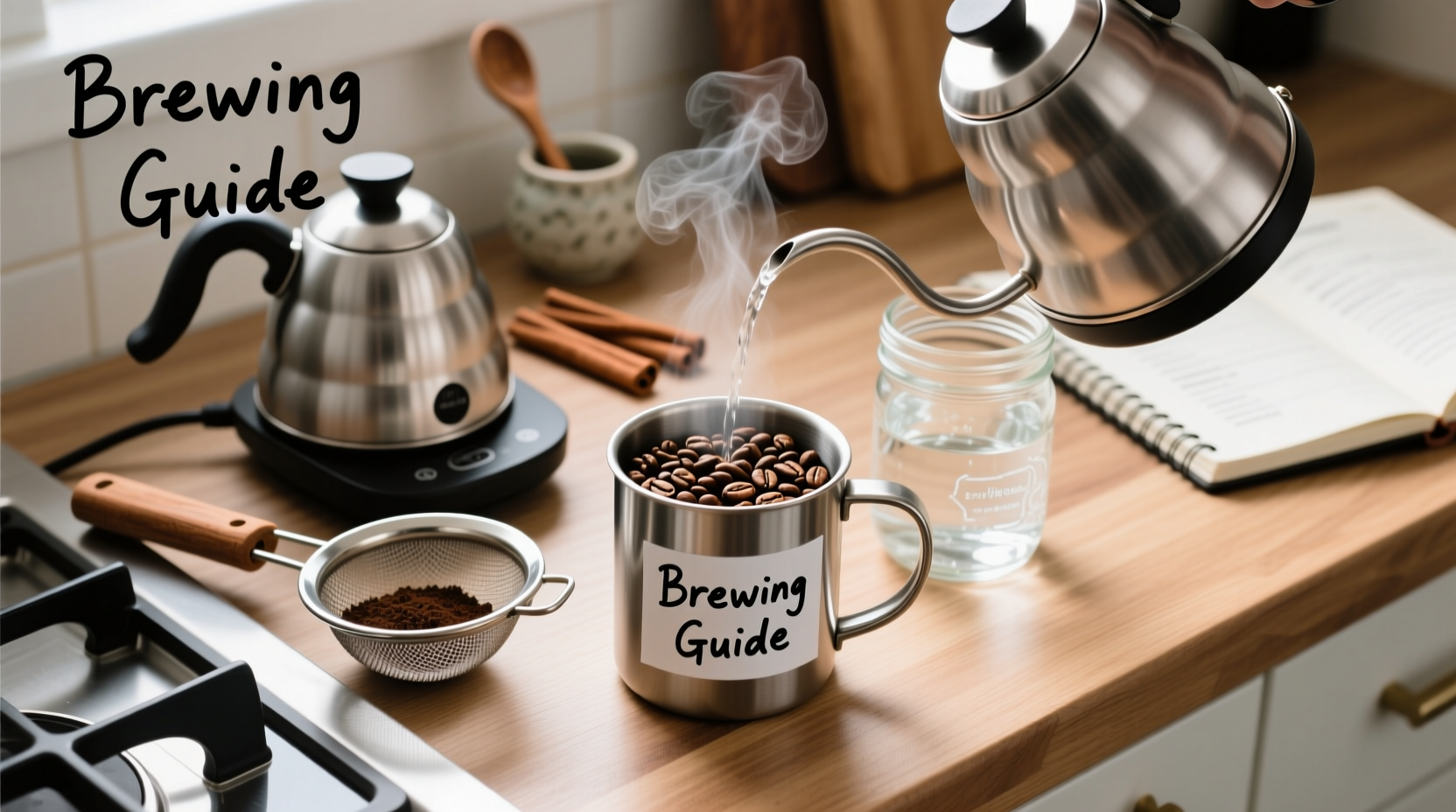
One of the oldest and most accessible ways to brew coffee requires only a pot, water, coffee grounds, and a heat source. Known colloquially as \"cowboy coffee,\" this method dates back to frontier times when travelers brewed over open fires.
Start by bringing fresh, cold water to a boil in a saucepan or small pot. For every 8 ounces (1 cup) of water, use 2 tablespoons of coarsely ground coffee. Once the water boils, remove it from heat and stir in the grounds. Let the mixture steep for 4 minutes. Then, add a splash of cold water to help the grounds settle. Carefully pour the coffee into a mug, leaving the sediment behind.
To improve clarity, you can strain the coffee through a clean cloth, paper towel, or even a fine mesh sieve lined with a coffee filter substitute like a paper napkin. While this won’t eliminate all sediment, it significantly reduces grit.
“Simplicity is the soul of good coffee. Some of the cleanest cups I’ve had were made in a dented pot over a campfire.” — Rafael Mendez, Barista & Coffee Educator
French Press Alternative Using a Mason Jar
If you don’t own a French press, you can replicate its function with a mason jar and a makeshift plunger. This method gives you control over steeping time and produces a rich, full-bodied brew.
Use medium-coarse coffee grounds—about 1 tablespoon per 4 ounces of water. Heat water until it’s just off the boil (around 200°F). Pour the hot water into a large mason jar, add the coffee, and stir gently. Place the lid on loosely and let it steep for 4 minutes.
Now, create a DIY plunger. Cut a piece of sturdy foam or rubber to fit snugly inside the jar lid. Insert a chopstick or skewer through the center so you can push the foam down. After steeping, insert the plunger and slowly press the grounds to the bottom. Pour carefully into your cup.
| Tool | Household Substitute | Notes |
|---|---|---|
| French Press | Mason jar + foam plunger | Ensure foam fits tightly to avoid grounds escaping |
| Drip Coffee Maker | Cup + paper filter or cloth | Gravity does the work; patience required |
| Espresso Machine | Stove-top pot + pressure simulation | Limited crema, but strong flavor possible |
| Kettle | Saucepan | Watch for boiling; aim for just below boiling point |
Stovetop Percolation with a Jar or Pot
This technique mimics early percolators by cycling hot water through coffee grounds using steam pressure. It requires a glass jar that can withstand heat (like a Pyrex measuring cup) or a small pot with a lid.
Place a small amount of coarse coffee grounds in the bottom of the jar. Fill it halfway with cold water. Cover the top with aluminum foil and poke a few small holes in the center. As the water heats, steam will force it up through the holes and over the grounds, creating a looping effect. After 5–7 minutes, remove from heat and let it settle before pouring.
Alternatively, use two nested pots: place grounds in a cloth bag suspended in the upper pot, then boil water in the lower one. Steam rises, condenses, and drips through the coffee—a slow but effective infusion.
Pour-Over Style Using a Cup and Filter Substitute
The pour-over method emphasizes precision and clarity. Without a cone or specialized dripper, you can still achieve similar results using everyday materials.
Take a clean mug or cup and place a paper towel, napkin, or cotton cloth (like a handkerchief or bandana) over the rim. Secure it with a rubber band if needed. Add 1–2 tablespoons of medium-fine coffee grounds onto the filter material. Slowly pour hot water (just under boiling) in a circular motion, allowing the coffee to bloom for 30 seconds before continuing.
This method takes practice. Pour too fast, and you’ll get weak coffee; too slow, and it may over-extract and turn bitter. Aim for a total brew time of 2.5 to 3.5 minutes for a single cup.
Step-by-Step Guide: Cloth Filter Pour-Over
- Wash a cotton cloth or handkerchief thoroughly—no detergent residue.
- Boil it for 2 minutes to sterilize and remove lint.
- Stretch it over a mug and secure with a rubber band.
- Add 2 tablespoons of medium-ground coffee.
- Pour ½ cup of hot water (200°F) in stages: first a small amount to wet the grounds, wait 30 seconds, then continue in slow circles.
- Brew for 3 minutes total, then remove the cloth and enjoy.
After use, rinse the cloth immediately with hot water and store it dry. Reuse it multiple times—it develops a natural oil layer that improves filtration over time.
Instant Coffee Reinvented: Enhancing Solubles at Home
Even if you’re using instant coffee, you can elevate it beyond the basic dissolve-and-drink routine. Many people overlook instant coffee as “low quality,” but modern freeze-dried versions offer surprisingly nuanced flavors.
To enhance your instant brew, try dissolving the granules in a small amount of hot water first, then adding cold or room-temperature water to adjust strength. This prevents clumping and ensures even extraction. You can also froth milk with a jar: fill it halfway with milk, seal, and shake vigorously for 30 seconds. Warm it briefly in the microwave for a latte-style finish.
For depth, add a tiny pinch of salt to reduce bitterness, or a drop of vanilla extract for sweetness. If you have access to spices, a dash of cinnamon or nutmeg enhances aroma without added sugar.
Checklist: How to Make Great Coffee Without a Machine
- ✅ Use freshly ground beans when possible—even a manual grinder isn't needed (see below).
- ✅ Boil water, then let it sit 30 seconds before brewing (ideal temp: 195–205°F).
- ✅ Match grind size to method: coarse for boiling, medium for cloth filters, fine for quick infusions.
- ✅ Strain properly to minimize sediment—paper, cloth, or foam works.
- ✅ Clean your tools immediately to prevent rancid oils from building up.
- ✅ Experiment with ratios: start with 1:16 (coffee to water), then adjust to taste.
Grinding Beans Without a Grinder
No electric grinder? No problem. You can crush coffee beans using tools found in any kitchen.
Place beans between two clean cutting boards and roll a rolling pin over them. Alternatively, use a hammer or meat tenderizer in a sealed plastic bag. Pulse in a blender or food processor for a few seconds—be careful not to over-process into powder.
The goal is consistency. Uneven grinds lead to uneven extraction—some particles over-brew, others under-extract. Work in small batches and sift through a fine mesh if needed. A mortar and pestle offers the most control, especially for small servings.
“The best coffee tool isn’t the most expensive—it’s the one you understand and use consistently.” — Lila Tran, Coffee Roaster & Workshop Instructor
Real Example: Power Outage Morning Routine
Last winter, a storm knocked out electricity across much of the Northeast for three days. Sarah, a teacher from Vermont, woke up shivering and craving coffee. With no power for her Keurig, she turned to her camping knowledge.
She filled a saucepan with water and brought it to a near-boil on her gas stove. While it heated, she crushed whole beans with a mortar and pestle—about ¼ cup for two servings. She used a clean cotton T-shirt cut into squares as filters, placing them over her favorite mugs with two tablespoons of grounds each.
After pouring the hot water slowly over the grounds, she waited four minutes, removed the cloth, and added a splash of shelf-stable milk. The result? “Better than my usual pod coffee,” she said. “I realized I’d been relying too much on machines.”
That morning, she shared her method with neighbors via a community Facebook group. By noon, five households had brewed their own batch using similar setups.
Frequently Asked Questions
Can I reuse a cloth coffee filter?
Yes, and you should. Cotton or linen cloths improve with use as they retain natural coffee oils that aid filtration. Rinse thoroughly after each use and boil weekly to prevent mold or odor buildup.
Why does my homemade coffee taste bitter?
Bitterness usually comes from over-extraction. This happens when water is too hot, brew time is too long, or grounds are too fine. Try reducing steep time, cooling the water slightly, or using a coarser grind.
Is it safe to use paper towels as coffee filters?
In a pinch, yes—but choose unbleached, unscented ones to avoid chemicals or dyes. Pre-rinse with hot water to remove loose fibers and reduce paper taste. Don’t use recycled paper towels, as they may contain contaminants.
Final Tips for Consistent Results
Success in machine-free coffee brewing comes down to repetition and attention to detail. Keep a small notebook to record what works: grind texture, water volume, brew time, and flavor notes. Over time, you’ll develop an intuitive sense of balance.
Store your beans in an airtight container away from light and moisture. Grind only what you need per brew to preserve freshness. And remember: altitude, humidity, and even water hardness affect taste. If your tap water tastes flat or metallic, try filtered or bottled water for a cleaner cup.
Conclusion
Making coffee without a machine isn’t a compromise—it’s a return to fundamentals. With nothing more than a pot, a jar, or a piece of cloth, you can craft a satisfying, personalized cup that reflects your taste and resourcefulness. These methods aren’t just backups for emergencies; they’re valid brewing styles with history, character, and charm.
Next time you reach for a pod or flick on the automatic brewer, consider pausing. Try one of these techniques. You might discover a deeper connection to your daily ritual—and a better-tasting cup along the way.




 浙公网安备
33010002000092号
浙公网安备
33010002000092号 浙B2-20120091-4
Comments
No comments yet. Why don't you start the discussion?