
Making cold brew coffee at home is simple in theory: steep coarsely ground coffee in cold water for hours, then strain. But many people end up with a batch that’s either too weak and watery or harsh and bitter. The truth is, great cold brew isn’t about luck—it’s about precision, patience, and understanding the science behind extraction.
The balance between strength, sweetness, and bitterness hinges on several factors: grind size, water quality, coffee-to-water ratio, steeping time, and even storage. When these elements are aligned, you get a silky, full-bodied concentrate with low acidity and no off-flavors. This guide walks through every step of crafting cold brew that’s consistently smooth, rich, and satisfying—without requiring expensive gear or barista-level skills.
Choose the Right Coffee Beans
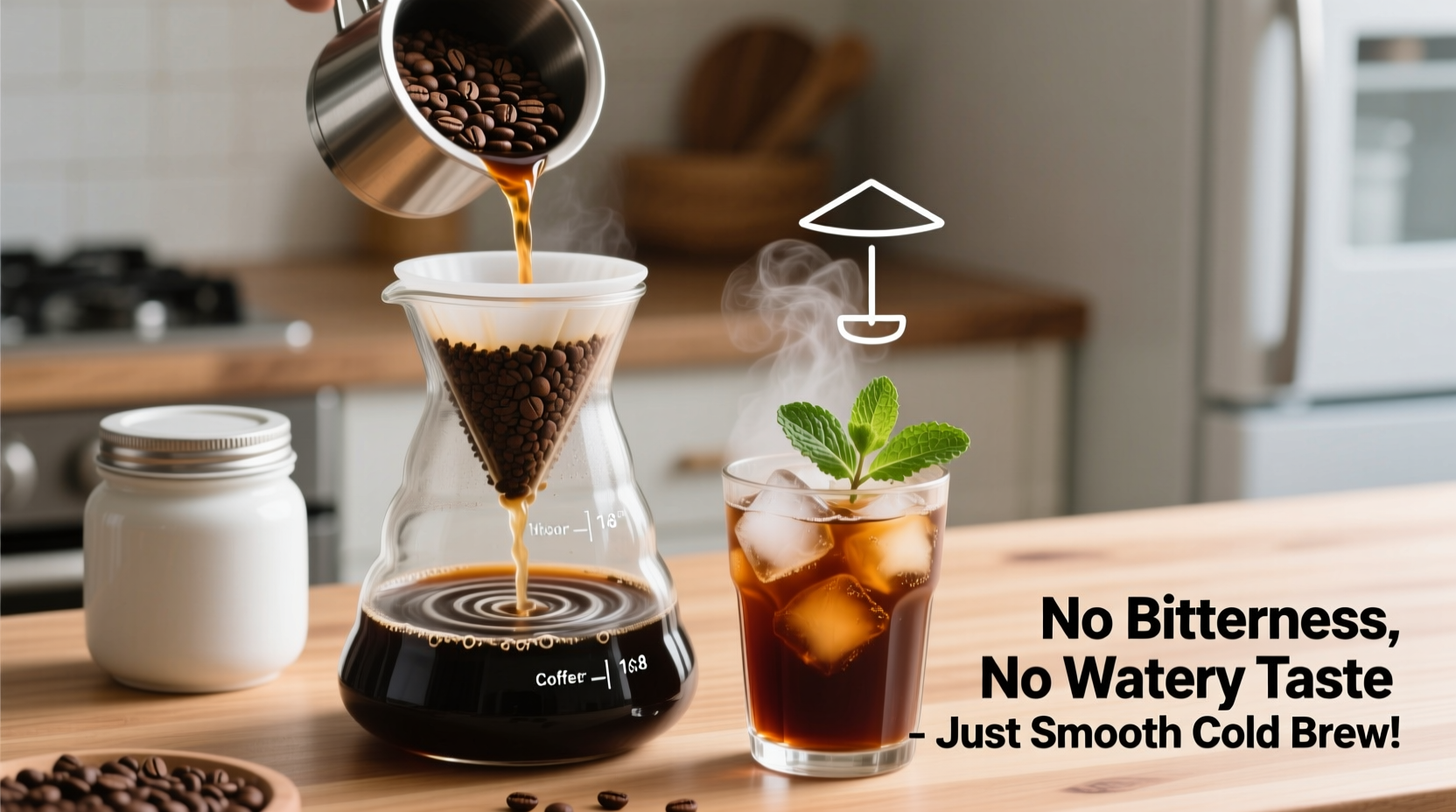
The foundation of good cold brew starts with the beans. Unlike hot brewing, where heat rapidly extracts flavors, cold water pulls compounds slowly over time. This means certain flavor profiles shine better in cold brew than others.
Look for beans labeled as “medium-dark” or “dark roast.” These roasts tend to have deeper chocolate, nutty, or caramel notes that translate beautifully into cold brew. Light roasts, while excellent for pour-over or AeroPress, often lack the body and sweetness needed for a satisfying cold concentrate. That said, high-quality medium roasts with chocolate or fruity undertones can also work well if you prefer a brighter profile.
Avoid pre-ground coffee unless it’s specifically coarse and packaged fresh. Pre-ground sits exposed to oxygen, losing volatile compounds that contribute to aroma and complexity. Grinding your own beans just before brewing preserves freshness and ensures consistency in particle size—a critical factor in preventing over- or under-extraction.
“Cold brew highlights the inherent sweetness of coffee while muting acidity. Choose beans with balanced roast profiles and avoid anything overly smoky or charred.” — Carlos Mendez, Specialty Coffee Roaster & Educator
Grind Size Matters More Than You Think
One of the most common mistakes in homemade cold brew is using the wrong grind. Too fine, and you risk over-extracting bitter compounds; too coarse, and the water won’t pull enough flavor, resulting in a flat, watery drink.
The ideal grind for cold brew is **coarse**, similar to breadcrumbs or sea salt. This allows water to flow evenly around the particles during steeping, extracting desirable sugars and oils without pulling excessive tannins or lignin (which cause bitterness).
If you’re using a blade grinder, pulse in short bursts and sift through a sieve to remove fines. Better yet, invest in a burr grinder, which gives consistent particle size. Inconsistent grinds lead to uneven extraction—some particles over-extract while others remain untouched.
What Happens If the Grind Is Off?
| Grind Size | Effect on Cold Brew | Solution |
|---|---|---|
| Fine (like espresso) | Bitter, muddy, over-extracted | Use coarser setting; stir less frequently |
| Medium (like drip) | Can be slightly sharp or thin | Adjust ratio or reduce steep time |
| Coarse (ideal) | Smooth, balanced, full-bodied | Maintain current settings |
| Very coarse (like peppercorns) | Weak, watery, under-extracted | Fine-tune grind or extend steep time |
Master the Coffee-to-Water Ratio
Ratios are the backbone of reproducible cold brew. Without a standard, each batch becomes a gamble. The key is starting with a strong concentrate that can be diluted later to taste.
A reliable baseline is a **1:4 coffee-to-water ratio by weight** (e.g., 100g coffee to 400g water). This produces a concentrated brew that holds up when mixed with ice, milk, or water. Using volume (cups) instead of weight introduces inconsistency because different beans have varying densities.
After steeping, dilute the concentrate with an equal part water or milk (1:1) for a ready-to-drink beverage. Adjust to preference—some like it stronger, others milder. Never brew weak and hope to fix it later; dilution after extraction gives far better control than starting with too little coffee.
Step-by-Step Brewing Process
Follow this proven method to ensure clarity, balance, and depth in every batch:
- Weigh and grind your beans: Use 100g of whole beans ground coarse.
- Add coffee to a large jar or pitcher: A 1-liter mason jar or French press works well.
- Pour in 400g of cold, filtered water: Stir gently with a non-metal spoon to saturate all grounds.
- Cover and steep at room temperature for 12–16 hours: Avoid refrigeration during steeping—it slows extraction and may lead to underdeveloped flavor.
- Strain thoroughly: First use a French press plunger, then double-strain through a paper filter or cheesecloth-lined mesh sieve to remove fines.
- Store the concentrate: Transfer to a clean bottle or jar and refrigerate for up to 14 days.
- Serve: Mix 1 part concentrate with 1 part water, milk, or plant-based alternative. Add ice.
Why room temperature? Cold water extraction is already slow. Refrigerating the mixture drops the temperature further, reducing solubility and extending optimal steep time beyond 24 hours—which increases risk of sediment and stale flavors.
Real Example: Fixing a Bitter Batch
Sarah had been making cold brew for months but always ended up dumping half her batch due to bitterness. She used pre-ground coffee from the supermarket, steeped it in the fridge for 20 hours, and diluted it with tap water. After switching to freshly ground medium-dark beans, adjusting to a 1:4 ratio, and steeping at room temp for only 14 hours, her next batch was dramatically smoother. She realized the pre-ground coffee was too fine and stale, and the long fridge steep exaggerated the bitterness. Now she makes cold brew weekly and shares bottles with coworkers.
Water Quality and Temperature Control
You can have the best beans and perfect grind, but poor water will ruin everything. Tap water with chlorine, heavy minerals, or metallic taste transfers directly into your brew. Always use filtered water—either from a pitcher filter (like Brita) or bottled spring water.
Temperature plays a subtle but important role. While cold brew uses cold water, \"cold\" doesn’t mean icy. Room temperature (68–72°F / 20–22°C) is ideal for consistent extraction. Water straight from the fridge (around 40°F) slows chemical diffusion, leading to incomplete extraction even after 18+ hours. Warm water (>75°F) risks microbial growth and speeds up undesirable extractions.
If you live in a hot climate, keep your brewing vessel in a cool, dark cupboard—not on a sunny counter. Consistency matters more than chasing extremes.
Storage and Dilution Best Practices
Once strained, cold brew concentrate should be stored in an airtight container in the refrigerator. Exposure to air accelerates oxidation, which dulls flavor within days. Glass jars with tight lids are ideal. Avoid metal containers, which can react with acids in the coffee over time.
Dilution is personal, but start with a 1:1 ratio of concentrate to liquid. Taste first before adding sugar or cream—well-made cold brew has natural sweetness. Over-diluting is a common reason people think their brew tastes “watery.” If yours lacks body, try a 2:1 ratio (two parts concentrate to one part water) or switch to oat or whole milk for added richness.
“I taste-test hundreds of cold brews a year. The ones that stand out aren’t the strongest—they’re the ones with balance. Sweetness, body, and zero bitterness.” — Lena Park, Coffee Quality Institute Evaluator
Common Mistakes and How to Avoid Them
- Using hot water to speed up brewing: Defeats the purpose. Heat increases acidity and bitterness.
- Over-steeping: Beyond 18 hours, tannins begin to dominate, especially with finer grinds.
- Skipping the second filter: Paper filtering removes micro-fines that cloud the brew and add grittiness.
- Brewing in direct sunlight: UV light degrades coffee compounds quickly, causing stale flavors.
- Reusing grounds: Not worth it. Second batches are extremely weak and lack aroma.
FAQ
Can I make cold brew without special equipment?
Absolutely. All you need is a large jar, a fine-mesh sieve, cheesecloth or paper filters, and a funnel. A French press helps with initial straining but isn’t required.
Why does my cold brew taste sour sometimes?
Sourness usually indicates under-extraction. Check your grind—if it’s too coarse, or your steep time is under 12 hours, increase contact time or go slightly finer. Also ensure all grounds were fully wetted at the start.
Is cold brew stronger than regular coffee?
Per ounce, yes—the concentrate is highly caffeinated. But since it’s diluted before drinking, a typical serving has similar caffeine to hot coffee. A 16oz cold brew made from 1:4 concentrate and diluted 1:1 contains roughly 160–200mg of caffeine.
Checklist: Perfect Cold Brew at Home
- ✓ Use freshly roasted, medium-dark beans
- ✓ Grind coarse (like sea salt)
- ✓ Measure by weight: 1 part coffee to 4 parts water
- ✓ Steep at room temperature for 12–16 hours
- ✓ Strain twice: first through mesh, then paper filter
- ✓ Store in a sealed glass container in the fridge
- ✓ Dilute 1:1 with water, milk, or alternative
- ✓ Clean equipment immediately after use
Conclusion
Making cold brew at home that’s neither bitter nor watery comes down to control: controlling variables like grind, ratio, time, and water. Once you dial in the process, you’ll save money, reduce waste, and enjoy café-quality coffee whenever you want. The ritual becomes part of your routine—measuring, stirring, waiting, and finally pouring that smooth, aromatic glass over ice.
Don’t settle for mediocre cold brew. Experiment with different beans, adjust ratios, and take notes. Great coffee isn’t magic—it’s method. Start today, and taste the difference precision makes.




 浙公网安备
33010002000092号
浙公网安备
33010002000092号 浙B2-20120091-4
Comments
No comments yet. Why don't you start the discussion?