
Walk into any classic American diner at 7 a.m., and the first thing you’ll likely smell is butter sizzling in a griddle, followed by the soft clink of a spatula folding golden clouds of scrambled eggs. These aren’t rubbery, overcooked ovals—they’re light, creamy, and impossibly airy. The kind that melt on your tongue before you even chew. What’s their secret? It’s not expensive equipment or rare ingredients. It’s technique—simple, repeatable, and entirely achievable in a home kitchen with nothing more than a bowl, fork, pan, and spatula.
The best diner-style scrambled eggs rely on fundamentals: temperature control, fat selection, gentle handling, and timing. No blenders, double boilers, or immersion circulators required. This guide breaks down exactly how to replicate that professional texture and flavor using only basic tools and common pantry items.
The Science Behind Fluffy Eggs
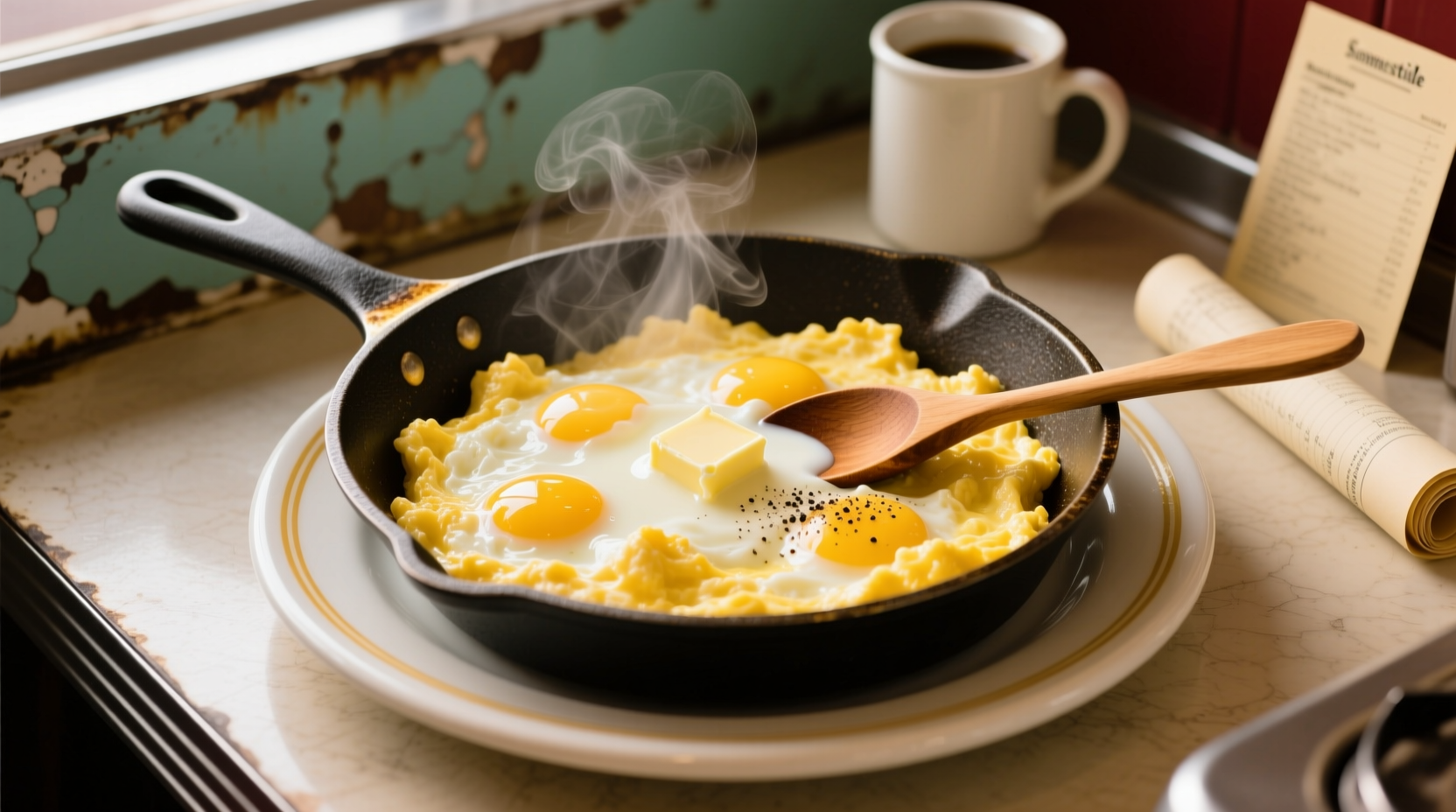
Eggs become fluffy when air and water vapor are trapped within a network of cooked proteins. When heat is applied slowly, the egg proteins coagulate gradually, forming soft curds that retain moisture instead of squeezing it out. Rush the process, and you end up with tough, dry lumps. But apply low, steady heat with the right amount of fat, and you create pillowy folds of custardy richness.
The key lies in controlling two variables: heat and agitation. High heat forces proteins to tighten too quickly, expelling liquid and creating a grainy texture. Over-stirring breaks down delicate curds before they can grow. Diner chefs master this balance instinctively—knowing when to stir, when to fold, and when to pull the pan off the heat just before the eggs look “done.” Residual heat finishes the job.
Essential Tools and Ingredients
You don’t need a professional kitchen to make great scrambled eggs. In fact, most diners use the same basic tools found in average home kitchens. Here’s what you actually need:
- A nonstick or well-seasoned skillet (8–10 inches)
- A mixing bowl and fork or whisk
- A silicone or rubber spatula
- A stovetop with reliable heat control
- Fresh eggs, whole milk or cream, unsalted butter
That’s it. No mixer, thermometer, or steam wand necessary. The quality of your ingredients matters more than the number of gadgets. Use the freshest eggs you can find—ideally pasture-raised for richer yolks—and real dairy. Powdered milk, margarine, or water won’t deliver the same depth of flavor or texture.
Why Butter Makes the Difference
Diners use butter—not oil or spray—for a reason. Butter adds flavor, promotes browning, and helps create a silkier mouthfeel. Its milk solids brown slightly at medium heat, contributing to that signature golden hue and nutty aroma. Clarified butter works too, but regular salted or unsalted delivers better taste for this application.
“Most people think scrambled eggs are easy. But the difference between good and great comes down to one thing: patience with the heat. Low and slow wins every time.” — Carlos Mendez, Line Cook at Joe’s Diner, Chicago (18 years)
Step-by-Step Guide to Diner-Style Scrambled Eggs
Follow this timeline for consistently fluffy results. Total time: about 8 minutes.
- Crack and whisk (1 minute): Break 3 large eggs into a bowl. Add 1 tablespoon of whole milk or heavy cream. Whisk vigorously for 30–45 seconds until fully blended and slightly frothy. You should see tiny air bubbles across the surface.
- Preheat the pan (2 minutes): Place an 8–10 inch nonstick skillet over low heat. Add 1 tablespoon of unsalted butter. Let it melt slowly without browning. Swirl to coat the entire surface.
- Pour and wait (1 minute): Pour in the egg mixture. Do not stir immediately. Let it sit undisturbed for 20–30 seconds to form a thin set layer at the bottom.
- Low-heat cook with folding (3–4 minutes): Using a silicone spatula, gently push the set edges toward the center. Tilt the pan to let uncooked egg flow into open spaces. Repeat every 20–30 seconds. Avoid constant stirring—this breaks curds too early.
- Finish and rest (1 minute): When eggs are mostly set but still glossy and slightly wet in places, remove the pan from heat. Continue folding gently for 15–20 seconds. Transfer immediately to a warm plate. Season with flaky sea salt and freshly cracked pepper.
Common Mistakes and How to Avoid Them
Even experienced cooks fall into traps that ruin scrambled eggs. Below is a comparison of frequent errors and their solutions.
| Mistake | Why It Ruins Eggs | How to Fix It |
|---|---|---|
| Using high heat | Cooks eggs too fast, forcing out moisture and creating toughness | Use low to medium-low heat only; never let butter foam aggressively |
| Over-whisking after heating starts | Breaks developing curds, leading to small, dense texture | Fold gently and infrequently; let curds grow naturally |
| Adding salt too early | Can weaken protein structure and draw out water if left too long | Season lightly at the end, or if pre-salting, cook immediately |
| Using cold eggs straight from the fridge | Temperature shock slows even cooking and increases curd size inconsistency | Let eggs sit at room temp for 10–15 minutes before cooking |
| Leaving eggs in the pan too long | Residual heat continues cooking, drying them out | Plate while still slightly wet—appearance should be glistening, not shiny |
Real Example: From Home Cook to Breakfast Pro
Sarah, a software analyst in Portland, used to dread making breakfast for guests. Her scrambled eggs always turned out flat and rubbery, despite following online recipes. She blamed her stove. Then she watched a short video of a diner cook using a wooden spoon and low heat, folding slowly. Inspired, she tried the method with her existing nonstick pan and basic tools.
She cracked three eggs into a bowl, added a splash of cream, and whisked by hand. Instead of cranking the burner, she set it to low. She waited a full 30 seconds before touching the eggs. Each fold was deliberate, slow. When the eggs looked almost done—but still moist—she plated them immediately.
The result surprised her. The eggs were thick, creamy, and held soft peaks. Her partner asked, “Did you go to culinary school?” She hadn’t. She’d just respected the process. Now, she makes them weekly, often adding chives or a pinch of smoked paprika. All with the same tools, same ingredients—just better technique.
Checklist: Perfect Scrambled Eggs in 7 Steps
Print or save this checklist for quick reference next time you cook:
- ☐ Use fresh, room-temperature eggs
- ☐ Whisk with 1 tsp cream or milk per egg
- ☐ Choose a nonstick or seasoned skillet
- ☐ Melt butter over low heat—don’t let it brown
- ☐ Pour in eggs and wait 20–30 seconds before first fold
- ☐ Fold gently every 20–30 seconds as curds form
- ☐ Remove from heat while still slightly glossy; season after plating
Do’s and Don’ts at a Glance
To reinforce best practices, here’s a clear summary of what to embrace and avoid.
| Do | Don’t |
|---|---|
| Use low, consistent heat | Turn the heat up to save time |
| Fold, don’t stir constantly | Aggressively scramble like you're beating batter |
| Add dairy for creaminess | Use water or skip liquid entirely |
| Remove eggs before they look fully set | Wait until no wetness remains in the pan |
| Season at the end with flaky salt | Over-salt before cooking begins |
FAQ
Can I make diner-style scrambled eggs without dairy?
Yes, but the texture will differ. Dairy contributes both fat and water, which help create steam and smoothness. If avoiding dairy, try a small amount of plant-based cream (like cashew or oat) with added fat (e.g., ½ tsp olive oil). Results won’t be identical, but you can still achieve soft curds with careful heat control.
Why do restaurant eggs taste richer than mine?
Beyond technique, restaurants often use higher-fat dairy (like heavy cream instead of milk) and more butter. Some add a small amount of grated cheese during cooking, which melts into the curds. At home, you can replicate this by stirring in ½ tablespoon of cream cheese or mascarpone at the final folding stage.
Is it safe to eat slightly wet scrambled eggs?
Yes, as long as the eggs have reached a safe internal temperature (160°F / 71°C). The “wet” appearance comes from retained moisture, not rawness. If the eggs are cohesive, no visible liquid pooling, and smell clean and eggy—not sulfuric—they are properly cooked. Pulling them early ensures they finish gently off the heat.
Final Tips for Mastery
Great scrambled eggs aren’t about perfection on the first try—they’re about consistency. Even diner cooks burned batches before mastering the rhythm. Practice the same method two or three mornings in a row. Adjust heat based on your stove. Note how long each phase takes. Soon, you’ll develop a feel for the motion and timing.
Consider keeping a small journal: note the heat level, type of pan, dairy used, and outcome. Over time, you’ll refine your version of the ideal scramble. Maybe you prefer larger curds, or a hint of garlic powder. That’s fine. The foundation—low heat, gentle handling, timely removal—is what gives you the canvas to experiment.
“The best scrambled eggs aren’t flashy. They’re humble, comforting, and made with attention. That’s what people remember.” — Miriam Tran, Owner of The Sunrise Griddle, Seattle
Cook, Share, and Enjoy
Fluffy scrambled eggs are one of the simplest yet most satisfying dishes you can master. They require no special gear, no imported ingredients, and less than ten minutes of your morning. Once you learn how to control heat and handle the eggs with care, you’ll wonder why you ever settled for dry, bouncy cubes.
Try the method this weekend. Make it for someone you love. Watch their reaction when they take that first bite. Then share what you’ve learned—whether it’s a tip with a friend or a comment below. Great food is meant to be passed on.




 浙公网安备
33010002000092号
浙公网安备
33010002000092号 浙B2-20120091-4
Comments
No comments yet. Why don't you start the discussion?