
There’s nothing quite like a refreshing glass of iced coffee on a warm morning or afternoon. But too often, that first satisfying sip turns into disappointment as the drink quickly becomes diluted, losing its bold flavor and turning weak. The culprit? Melting ice. Most home brewers pour hot coffee over ice only to find their drink watered down within minutes. The good news: you don’t have to sacrifice strength for chill. With a few smart techniques, you can enjoy rich, full-bodied iced coffee that stays flavorful from the first sip to the last drop.
The Problem with Traditional Iced Coffee
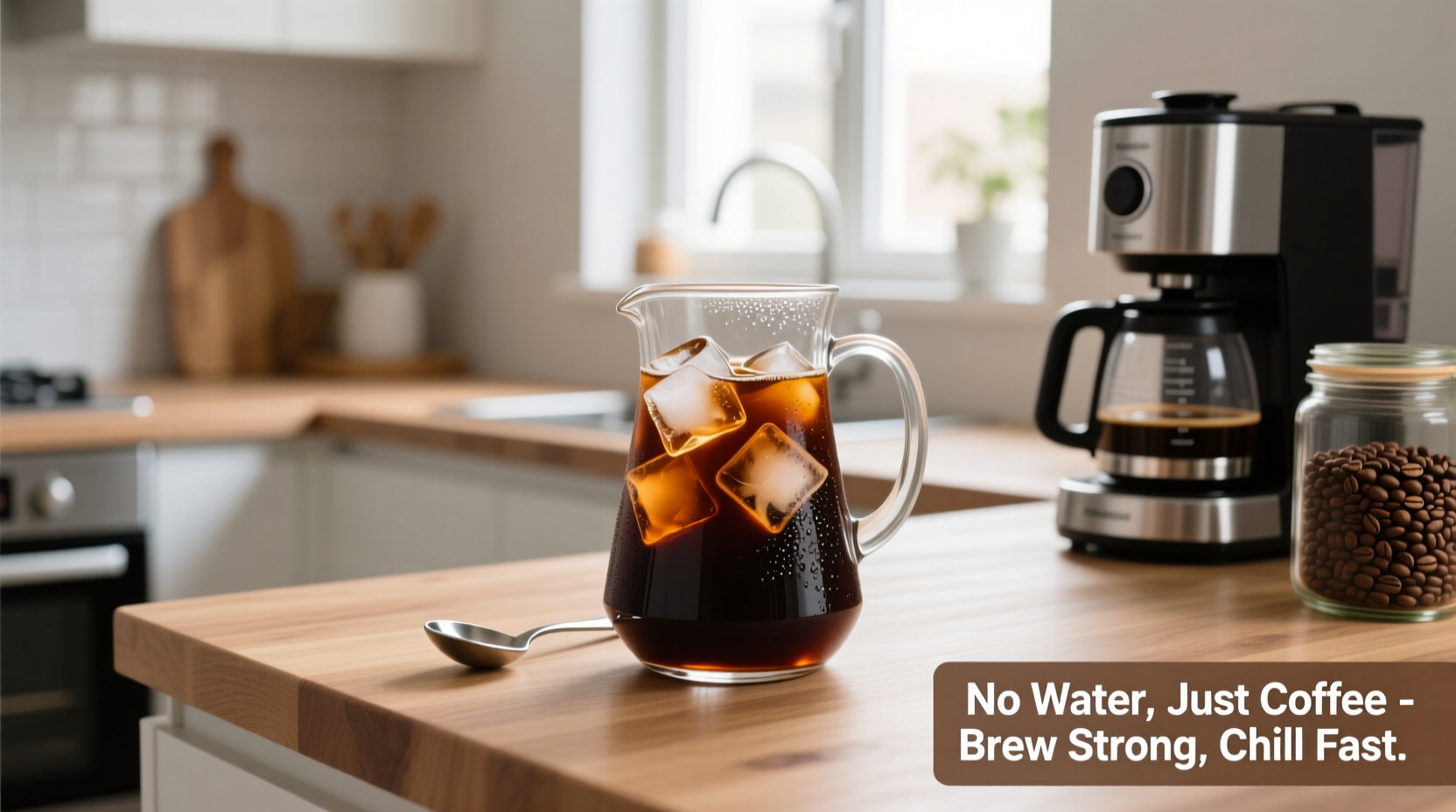
Conventional iced coffee is typically made by brewing hot coffee and pouring it directly over ice. While this method is quick, it introduces a major flaw—thermal shock. When hot liquid hits ice, the ice melts rapidly, diluting the coffee before you even take a sip. This not only reduces caffeine intensity but also blurs the nuanced flavors developed during roasting and extraction.
Baristas and coffee enthusiasts have long known that temperature control is key to preserving taste. As James Hoffmann, World Barista Champion and coffee educator, explains:
“Dilution is the enemy of flavor clarity in iced coffee. If you're just cooling down hot coffee with ice, you’re fighting physics—and losing.” — James Hoffmann, Author of *The World Atlas of Coffee*
To truly enjoy iced coffee without compromising quality, you need strategies that either eliminate melting ice or use it to your advantage.
Brew Stronger: The Concentrate Method
One of the most effective ways to prevent watery iced coffee is to brew it stronger than usual. By increasing the coffee-to-water ratio, you create a concentrate that can be chilled and later diluted with cold water or milk—but on your terms, not the ice’s.
A standard drip coffee uses a 1:15 to 1:17 coffee-to-water ratio (e.g., 1 gram of coffee per 15 grams of water). For a concentrate, aim for 1:8 or even 1:6. This means doubling or tripling the amount of ground coffee while keeping water volume constant.
After brewing, let the coffee cool to room temperature, then transfer it to a sealed container and refrigerate. This concentrate can last up to two weeks and serves as a versatile base for custom drinks. When ready to serve, pour 2–3 ounces of concentrate over ice and top with cold water, milk, or a dairy alternative.
Step-by-Step: Brewing a Coffee Concentrate
- Weigh 60 grams of medium-coarse ground coffee (or measure 1/2 cup).
- Heat 480 grams (about 2 cups) of filtered water to 200°F (93°C).
- Pour water evenly over grounds in a drip brewer or French press.
- Steep for 4 minutes if using a French press; stir and plunge slowly.
- Strain and allow to cool completely at room temperature (do not refrigerate while hot).
- Store in an airtight container in the fridge for up to 14 days.
- When serving, mix 1 part concentrate with 1–2 parts cold water or milk over ice.
Cold Brew: The Smooth, Low-Acid Option
Cold brew coffee isn’t just trendy—it’s scientifically designed to avoid dilution. Unlike hot brewing, cold brew steeps coarsely ground coffee in cold or room-temperature water for 12 to 24 hours. The result is a naturally smooth, low-acid concentrate that’s already cold and ready to serve over ice without further chilling.
Because no heat is involved, cold brew extracts fewer bitter compounds and acids, producing a mellow, sweet profile ideal for iced drinks. Since it's brewed as a concentrate, adding ice doesn’t weaken the flavor significantly.
| Method | Brew Time | Coffee:Water Ratio | Flavor Profile |
|---|---|---|---|
| Hot Coffee + Ice | 5 minutes | 1:15 | Bright, acidic, quickly diluted |
| Coffee Concentrate | 5–8 minutes | 1:6 to 1:8 | Strong, bold, customizable |
| Cold Brew | 12–24 hours | 1:4 to 1:8 | Smooth, sweet, low acid |
| Flash-Chilled (Japanese Iced Coffee) | 3–4 minutes | 1:12 (adjusted for ice melt) | Crisp, aromatic, balanced |
For best results, use a 1:8 ratio for general cold brew concentrate. After steeping, strain through a fine-mesh sieve lined with a paper filter to remove sediment. Store in the refrigerator and dilute with equal parts water or milk when serving.
Freeze It: Coffee Ice Cubes
If you love the ritual of pouring freshly brewed coffee over ice but hate the dilution, coffee ice cubes are your solution. Instead of using regular ice made from water, freeze leftover coffee or strong concentrate into ice cube trays. When these cubes melt, they release more coffee—not water—into your glass.
This technique works especially well with batch-brewed coffee or excess concentrate. Simply pour cooled coffee into an ice tray, freeze for at least 4 hours, and store in a sealed bag to prevent odor absorption.
- You can use any type of coffee—drip, espresso, or cold brew—for the cubes.
- For extra flavor, add a splash of vanilla extract or a pinch of cinnamon before freezing.
- Use larger cubes or spheres—they melt slower than small cubes.
Mini Case Study: Sarah’s Summer Coffee Fix
Sarah, a marketing consultant in Austin, Texas, used to rely on drive-thru iced coffee during her summer commute. She loved the convenience but hated how weak and lukewarm it became by the time she reached the office. After learning about coffee ice cubes, she started brewing a double-strength pot every Sunday night, freezing half into cubes and storing the rest as concentrate.
Now, each morning, she fills a tumbler with coffee ice cubes, pours 4 ounces of cold concentrate over them, and adds a splash of oat milk. Her drink stays strong and cold for over an hour—even in 95°F heat. “It tastes better than anything I was buying,” she says. “And I’ve cut my coffee spending in half.”
Flash-Chilling: Japanese Iced Coffee Technique
A favorite among specialty cafes, the Japanese iced coffee method involves brewing hot coffee directly onto a bed of ice. But unlike the flawed “hot coffee over ice” approach, this method accounts for dilution from the start. The barista adjusts the brew strength so that when the ice melts, it brings the coffee to the perfect drinking strength—no guesswork needed.
Here’s how it works: half the total water weight in the recipe is replaced with ice placed in the serving vessel beneath the brewer. As hot coffee drips onto the ice, it instantly chills while simultaneously diluting to the target strength. The result is vibrant, aromatic, and perfectly balanced iced coffee with zero post-pour weakening.
How to Make Japanese Iced Coffee at Home
- Determine your total liquid volume (e.g., 16 oz / 480g).
- Place half of that weight in ice (240g) into a heatproof pitcher or carafe.
- Set up your pour-over cone (V60, Chemex, etc.) over the pitcher.
- Add 24 grams of medium-fine ground coffee (1:10 ratio including melted ice).
- Bloom with 50g of hot water (200°F) for 30 seconds.
- Pour remaining 190g of water in slow, circular motions over 2–2.5 minutes.
- Stir gently once brewing is complete and serve immediately.
This method preserves delicate floral and fruity notes that cold brew often loses, making it ideal for light-roast single-origin beans. Just remember: because the ice is part of the recipe, do not add more after brewing.
Do’s and Don’ts of Dilution-Free Iced Coffee
| Do | Don’t |
|---|---|
| Brew stronger concentrates for controlled dilution | Brew regular-strength coffee and pour over ice |
| Use coffee ice cubes to maintain flavor | Use water ice cubes with hot-brewed coffee |
| Pre-chill glasses and pitchers | Store coffee in open containers (absorbs odors) |
| Experiment with cold brew ratios for sweetness | Over-steep cold brew beyond 24 hours (can turn woody) |
| Try the Japanese method for bright, complex profiles | Ignore grind size—too fine causes over-extraction |
Frequently Asked Questions
Can I use espresso to make iced coffee without dilution?
Yes. A double shot of espresso poured over a small amount of ice makes a strong base for an iced latte. Because espresso is highly concentrated, some melting is acceptable. For zero dilution, pull your shot directly over coffee ice cubes or serve \"on the rocks\" with minimal ice.
How long does cold brew concentrate last in the fridge?
Properly stored in an airtight container, cold brew concentrate can last up to 14 days. However, for optimal freshness and flavor, it’s best consumed within 7–10 days. Always keep it sealed to prevent oxidation and contamination from other food odors.
Why does my cold brew taste weak even when I don’t use ice?
This usually happens when the coffee-to-water ratio is too low or the steep time is insufficient. Try increasing the coffee amount (aim for 1:4 to 1:6) and extending the steep time to 18–20 hours at room temperature. Also, ensure your grind is coarse enough to avoid over-extraction but not so coarse that it under-extracts.
Final Tips for Perfect Iced Coffee at Home
- Invest in quality beans: Freshly roasted, whole-bean coffee makes a noticeable difference in cold preparations.
- Grind just before brewing: Pre-ground coffee loses volatile compounds quickly, reducing aroma and complexity.
- Filter your water: Impurities in tap water can affect both taste and extraction efficiency.
- Label and date your batches: Keep track of when you brewed concentrate or cold brew to ensure freshness.
Conclusion
Making iced coffee at home without watering it down isn’t about luck—it’s about strategy. Whether you choose cold brew for its silky texture, coffee ice cubes for zero-flavor-loss chilling, or the Japanese flash-chill method for aromatic brilliance, each technique puts you in control of the final taste. No more sad, lukewarm puddles at the bottom of your glass. Just bold, refreshing coffee that stays true from start to finish.
Start experimenting today. Try one method this week, another next week. Adjust ratios, test beans, and find what suits your palate. Once you master dilution-free iced coffee, you may never go back to the drive-thru—or plain ice cubes—again.




 浙公网安备
33010002000092号
浙公网安备
33010002000092号 浙B2-20120091-4
Comments
No comments yet. Why don't you start the discussion?