
Mexican rice is a cornerstone of traditional Mexican cuisine—a fragrant, golden-red side dish that transforms simple meals into something deeply satisfying. While variations exist across regions, one consistent element in many home and restaurant kitchens is the use of tomato paste to build rich color and savory depth. Unlike fresh tomatoes, which can introduce excess moisture, tomato paste delivers concentrated flavor without diluting the rice’s texture. This method produces a fluffy yet slightly chewy grain with a robust umami backbone, ideal for balancing spicy salsas, creamy beans, or grilled proteins. For cooks seeking authenticity and reliability, mastering Mexican rice with tomato paste isn’t just practical—it’s essential.
Definition & Overview
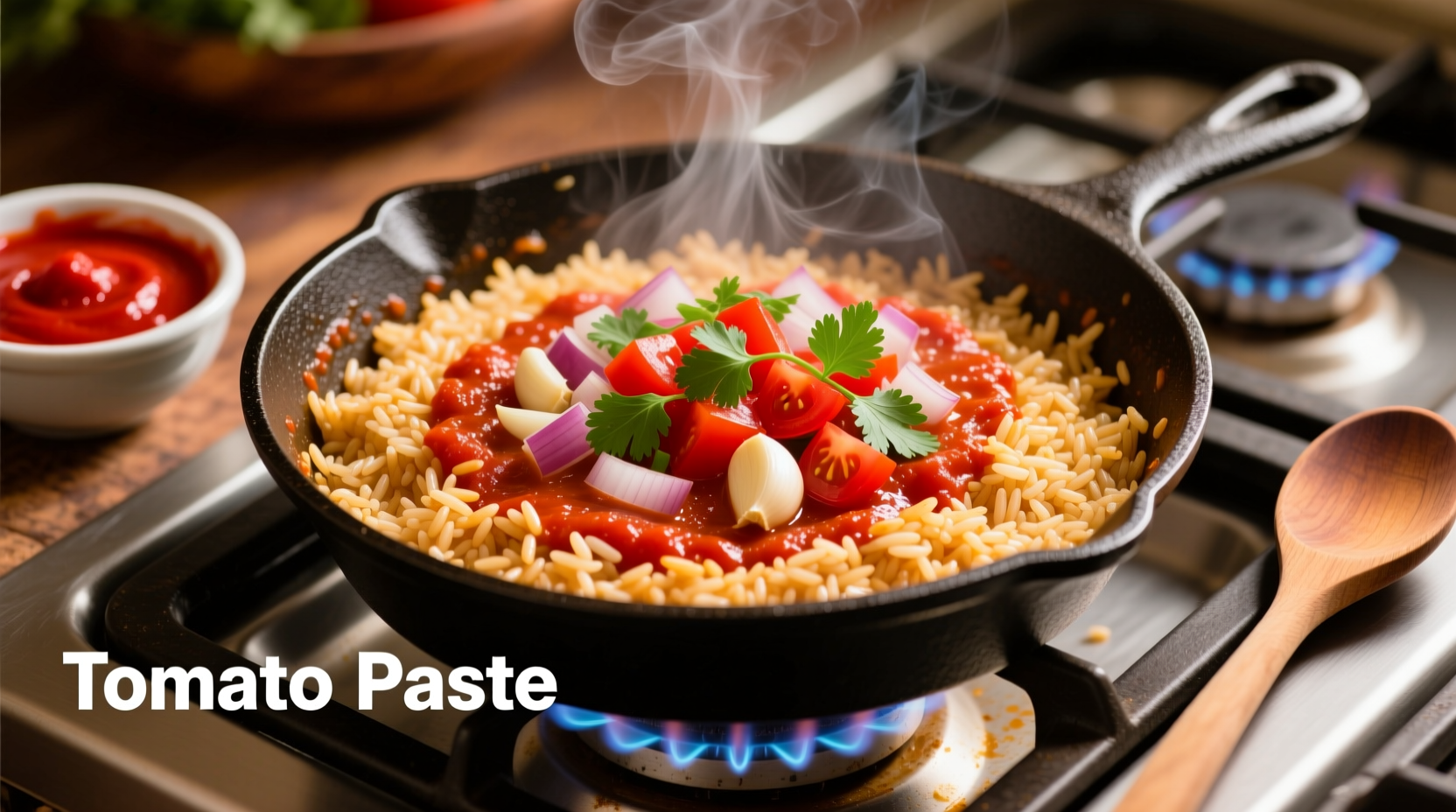
Mexican rice, known in Spanish as arroz rojo (red rice) or arroz mexicano, is a seasoned long-grain rice dish cooked in a tomato-based broth. It differs significantly from Spanish paella or Asian fried rice due to its distinct preparation technique: the rice is first toasted in oil until golden, then simmered in a liquid infused with aromatics and tomato concentrate. The result is a soft, moist grain with a slightly nutty exterior and a deep red-orange hue.
The dish has roots in Mesoamerican culinary traditions but evolved during the colonial period when Europeans introduced rice to the Americas. Over centuries, it became a staple in both household cooking and regional cuisines throughout Mexico—from the citrus-kissed versions in Yucatán to the chili-laced renditions in Oaxaca. Despite regional differences, the core principle remains: enhance rice through slow infusion of flavor rather than masking it with heavy sauces.
Using tomato paste instead of fresh tomatoes offers several advantages. It eliminates variability in acidity and water content found in fresh produce, ensuring consistent results. Additionally, tomato paste undergoes caramelization when sautéed, unlocking complex Maillard reaction flavors that elevate the entire dish. This makes it particularly well-suited for weeknight cooking where precision and time efficiency matter.
Key Characteristics
- Flavor: Savory, slightly sweet, with earthy tomato undertones and subtle warmth from garlic and onion.
- Aroma: Toasted rice and cumin (if used), mingling with the deep scent of reduced tomato paste.
- Color/Form: Uniformly golden-red grains; neither clumpy nor dry when properly cooked.
- Heat Level: Mild unless additional chilies are incorporated.
- Culinary Function: Serves as a complementary side, adding body and contrast to bold main dishes.
- Shelf Life: Up to 5 days refrigerated; reheats well with a splash of water or broth.
- Texture: Tender but separate grains, achieved through proper toasting and absorption cooking.
Pro Tip: Never skip the toasting step. Browning raw rice in oil before adding liquids enhances flavor complexity and prevents mushiness by sealing the starch granules.
Practical Usage: How to Make Mexican Rice Using Tomato Paste
Creating authentic Mexican rice using tomato paste hinges on technique more than ingredients. The goal is not merely coloring the rice, but developing layers of flavor through controlled heat application. Follow this detailed process for optimal results every time.
- Ingredients You’ll Need (Serves 4–6):
- 1½ cups (300g) long-grain white rice (e.g., Carolina or basmati)
- 2 tablespoons neutral oil (vegetable, canola, or avocado)
- 3 tablespoons tomato paste
- 1 small white onion, finely diced
- 2 cloves garlic, minced
- 2¼ cups (540ml) chicken or vegetable broth (low-sodium preferred)
- ½ teaspoon ground cumin (optional but recommended)
- ½ teaspoon kosher salt (adjust to taste)
- 1 tablespoon fresh lime juice (added at end)
- 2 tablespoons chopped cilantro (for garnish)
- Step 1: Rinse and Dry the Rice
Place rice in a fine-mesh strainer. Rinse under cold water for 30–60 seconds until water runs clear. This removes excess surface starch, reducing stickiness. Spread rinsed rice on a clean towel and pat dry thoroughly—moisture inhibits effective toasting. - Step 2: Toast the Rice
Heat oil in a heavy-bottomed skillet or Dutch oven over medium heat. Add rice and stir constantly for 6–8 minutes until grains turn golden brown and emit a nutty aroma. Adjust heat if browning too quickly. Properly toasted rice should sound crisp when stirred. - Step 3: Build the Flavor Base
Add diced onion and cook for 3–4 minutes until translucent. Stir in garlic and cook for 30 seconds—do not let it burn. Push vegetables aside, create space in the center of the pan, and add tomato paste. Let it sit undisturbed for 1 minute to caramelize slightly, then mix into onions and rice. - Step 4: Deglaze and Simmer
Pour in hot broth gradually while scraping the bottom of the pot to lift any browned bits. Stir in cumin and salt. Bring to a boil, then reduce heat to low. Cover tightly with a lid. - Step 5: Cook Undisturbed
Simmer for 18–20 minutes. Do not lift the lid or stir—this traps steam necessary for even cooking. After time elapses, remove from heat and let rest, covered, for 10 minutes. Fluff gently with a fork. - Step 6: Finish and Serve
Stir in lime juice and half the cilantro. Taste and adjust seasoning. Garnish with remaining herbs. Serve warm alongside enchiladas, carne asada, or black bean soup.
Why Tomato Paste Works Better Than Fresh Tomatoes
Fresh tomatoes contain up to 95% water, requiring extended reduction times to achieve the same intensity of flavor. In contrast, tomato paste is concentrated—cooked down to about 30% solids—which means it integrates quickly and evenly into the oil phase of cooking. When seared with rice and aromatics, it undergoes non-enzymatic browning, producing compounds like furans and pyrazines responsible for roasted, smoky notes. This creates a deeper foundation than fresh purées, which often require pre-cooking to avoid dilution.
Restaurant Technique: The “Arroz Rojo” Method
In professional kitchens across central Mexico, chefs often use a two-stage approach: first browning rice in lard or oil, then incorporating rehydrated dried chilies blended with tomato paste. A common variation includes ancho or guajillo puree added with the broth for subtle heat and fruitiness. Some upscale taquerías also infuse the broth with epazote or hoja santa for herbal complexity. At home, you can replicate this by adding ¼ teaspoon smoked paprika or a pinch of crushed dried oregano.
Tip Box: Avoid Common Pitfalls
• Over-stirring after adding liquid – disrupts steam and leads to gummy texture.
• Using cold broth – shocks the rice and slows gelatinization.
• Skipping the resting phase – causes uneven moisture distribution.
• Substituting instant rice – lacks structural integrity for toasting.
Variants & Types
Mexican rice varies widely depending on region and household tradition. While all versions share foundational techniques, the choice of fat, aromatics, and seasonings defines each style. Below are four notable variants made using tomato paste as a base.
| Variant | Key Ingredients | Distinctive Feature | Best Paired With |
|---|---|---|---|
| Arroz Rojo Clásico | Tomato paste, onion, garlic, cumin | Balanced, everyday version | Tacos al pastor, refried beans |
| Arroz con Verduras | + diced carrots, peas, corn | Colorful, slightly sweet | Chicken fajitas, quesadillas |
| Arroz Rojo con Chorizo | Chorizo drippings, extra paprika | Spicy, redder hue from sausage fat | Egg breakfast burritos, queso fundido |
| Arroz Blanco-Mexicano Hybrid | Half tomato paste, half broth-only layering | Marbled appearance, milder flavor | Seafood ceviche, grilled fish |
To adapt these styles at home, consider modifying the base recipe:
• For **vegetable-studded rice**, sauté ½ cup carrots and ⅓ cup peas with the onions.
• For **chorizo-infused rice**, brown ¼ pound Mexican chorizo first, remove meat, then toast rice in rendered fat.
• For a **lighter hybrid**, cook half the rice plain in broth, mix with tomato-paste version before serving.
Comparison with Similar Ingredients
Mexican rice is frequently confused with other tomato-based rice dishes globally. Understanding distinctions helps preserve authenticity and improve execution.
| Dish | Base Ingredient | Cooking Method | Texture | Key Difference |
|---|---|---|---|---|
| Mexican Rice | Tomato paste + toasted rice | Sauté → absorbent simmer | Separate, fluffy grains | Rice is toasted before liquid addition |
| Spanish Paella | Fresh tomatoes + saffron | One-pot simmer, no stirring | Slightly crusty bottom (socarrat) | Uses short/medium grain; includes seafood/meat |
| Caribbean Red Rice | Tomato sauce + coconut milk | Boiled together | Softer, creamier | Includes dairy or coconut; less emphasis on toasting |
| Asian Tomato Fried Rice | Ketchup or tomato sauce | Stir-fried with day-old rice | Chewy, high-heat sear | Uses cold cooked rice; fast wok cooking |
“The secret to great Mexican rice isn’t the spice blend—it’s patience. You have to respect the toast. That golden crunch is where flavor begins.” — Maria López, Chef de Cocina, Mercado de San Juan, Mexico City
Practical Tips & FAQs
Can I make this vegan?
Yes. Use vegetable broth and ensure your tomato paste contains no additives derived from animals. Most commercial brands are plant-based, but check labels if strict adherence is needed.
Is tomato paste the same as tomato sauce or purée?
No. Tomato paste is highly concentrated (about 7–8x reduced), whereas tomato sauce is thinner and seasoned, and purée is intermediate in consistency. Substituting them directly alters texture and salt levels. If unavailable, reduce tomato purée by boiling ¾ cup down to 3 tablespoons.
Can I freeze Mexican rice?
Absolutely. Cool completely, portion into airtight containers, and freeze for up to 3 months. Reheat in a covered skillet over low heat with 1–2 tablespoons water per cup to restore moisture.
What type of rice should I use?
Long-grain white rice (like Carolina or Jasmine) works best due to its low amylopectin content, minimizing stickiness. Avoid Arborio, Calrose, or sushi rice—they become too glutinous. Parboiled (converted) rice is acceptable but yields a firmer bite.
Why did my rice come out mushy?
Common causes include: insufficient toasting, using too much liquid, lifting the lid during cooking, or not allowing resting time. Stick to a 1:1.5 ratio of rice to liquid when using tomato paste (since it adds minimal moisture).
How do I store leftovers safely?
Cool within two hours of cooking and refrigerate in shallow containers. Consume within five days. Always reheat to an internal temperature of 165°F (74°C) to prevent bacterial growth.
Can I double the recipe?
Yes, but only if using a wide, heavy pot with a tight-fitting lid. Doubling in a narrow vessel risks uneven steaming. Consider making batches separately for best texture control.
Checklist: Success Factors for Perfect Mexican Rice
☐ Rice rinsed and dried before toasting
☐ Oil hot enough to sizzle raw rice
☐ Tomato paste caramelized briefly in fat
☐ Broth heated before adding
☐ Lid stays closed during cooking
☐ Rests 10 minutes post-heat
☐ Finished with acid (lime juice)
Summary & Key Takeaways
Making Mexican rice using tomato paste is a masterclass in flavor concentration and textural precision. By leveraging the intense umami and color of tomato paste, home cooks can produce a consistently excellent side dish that complements a wide range of proteins and legumes. The technique—rinsing, drying, toasting, building a soffritto-like base, and simmering with care—is transferable to many global rice preparations.
Key advantages of using tomato paste include faster cooking, richer color, and superior flavor development compared to fresh alternatives. Regional variations allow customization based on dietary needs or ingredient availability, whether adding vegetables, sausage, or adapting for vegan diets. When executed correctly, the result is a vibrant, aromatic rice that stands on its own while enhancing whatever shares the plate.
Mastering this recipe empowers cooks to move beyond canned or instant versions, embracing a foundational skill in Latin American cooking. With attention to detail and respect for process, anyone can recreate the warmth and depth of authentic arroz rojo in their own kitchen.
Call to Action: Try this recipe this week with grilled chicken and charro beans. Then experiment: swap in fire-roasted tomato paste, add a pinch of chipotle powder, or fold in roasted corn. Share your twist with #MexicanRicePerfected.




 浙公网安备
33010002000092号
浙公网安备
33010002000092号 浙B2-20120091-4
Comments
No comments yet. Why don't you start the discussion?