
Creating music doesn’t require a million-dollar studio or years of formal training. With today’s accessible tools and digital platforms, anyone can begin writing, recording, and producing original songs from home. Whether you’re drawn to pop, hip-hop, rock, or electronic music, the process starts with curiosity and consistent effort. This guide breaks down the journey into clear, actionable steps so you can turn ideas into finished tracks—no prior experience needed.
Step 1: Define Your Musical Direction
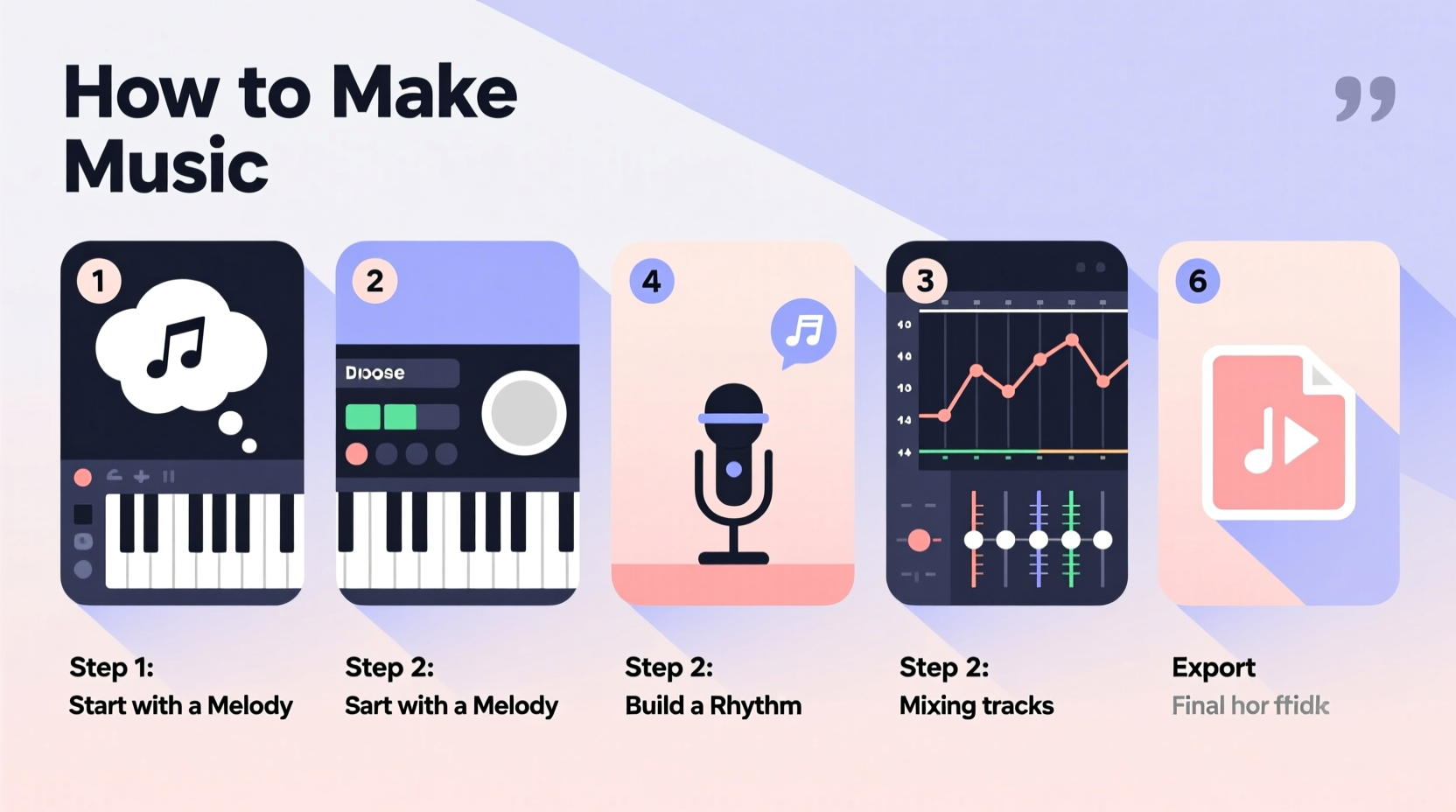
Before touching a microphone or opening software, take time to clarify what kind of music you want to make. Your genre, mood, and message will shape every decision that follows. Listen critically to artists you admire. What instruments do they use? How are their songs structured? What emotions do they evoke?
Ask yourself:
- What themes matter to me? (Love, struggle, joy, identity)
- Do I lean toward lyrics-driven songs or instrumentals?
- Am I more inspired by melodies, beats, or chord progressions?
Step 2: Learn the Basics of Song Structure
Most popular songs follow a predictable format. Understanding this structure helps you organize ideas and keep listeners engaged. A typical arrangement includes:
- Intro: Sets the tone; usually instrumental.
- Verse: Tells the story; changes lyrically each time.
- Chorus: The emotional and melodic peak; repeated with same lyrics.
- Bridge: Offers contrast; often appears once before the final chorus.
- Outro: Brings the song to a close.
You don’t need all sections in every song. Some tracks start with a chorus, others skip the bridge. But having a structural blueprint prevents aimless writing.
| Section | Purpose | Typical Length |
|---|---|---|
| Verse | Develop narrative or theme | 8–16 bars |
| Chorus | Deliver main message/hook | 8 bars |
| Bridge | Add surprise or emotional shift | 4–8 bars |
| Intro/Outro | Frame the song | 4–8 bars |
Step 3: Start Writing with Simple Tools
You don’t need expensive gear to begin. Start with what you have:
- A smartphone voice memo app
- A notebook or text editor
- A free digital audio workstation (DAW) like GarageBand, Cakewalk, or BandLab
Begin by capturing raw ideas. Hum melodies, jot down phrases, or record short chord patterns. Don’t judge at this stage—just collect material. Many hit songs began as 30-second voice notes.
When developing lyrics, focus on authenticity over perfection. Use conversational language. Try writing from a specific moment or memory. For melodies, experiment with singing over simple chord loops. Even basic piano or guitar chords (like C–G–Am–F) can support strong vocal lines.
“Start small. A two-line idea can grow into a full song if you give it space to breathe.” — Maya Chen, Independent Singer-Songwriter
Step 4: Set Up a Basic Home Recording Environment
Once you have a song idea, it’s time to record a demo. You’ll need:
- A quiet room (closets filled with clothes work well for vocal booths)
- A USB microphone (e.g., Audio-Technica AT2020, Samson Q2U)
- Headphones
- A computer or tablet with DAW software
Install your DAW and connect your microphone. Record your vocals or instrument line by line. Layer them track by track—a process called multitracking. Keep takes clean but expressive. It’s better to capture emotion than technical perfection at this stage.
Step 5: Arrange and Produce Your Track
Now that you have recorded elements, build your full arrangement. Add drums, bass, synths, or backing vocals using virtual instruments (VSTs) or sample packs. Most DAWs include built-in loops and sounds perfect for beginners.
Follow this checklist when producing:
✅ Production Checklist
- Import or program a drum beat that fits the song’s energy
- Add bassline to complement chords
- Layer pads or guitars to fill out harmony
- Keep arrangement dynamic—don’t overcrowd verses
- Use silence and space intentionally
- Ensure vocals sit clearly in the mix
Focus on serving the song, not showing off skills. Sometimes less is more. A sparse arrangement with emotional delivery often resonates deeper than a busy one.
Mini Case Study: From Bedroom to Streaming Platforms
Jamal, a college student with no formal music training, wanted to share his poetry through music. He started with a single USB mic and GarageBand. Each weekend, he wrote short verses about campus life and recorded them over lo-fi hip-hop beats found online. After six months, he had ten demos. He picked his strongest three, mixed them carefully, and uploaded them to SoundCloud under the name “Campus Echo.” One track gained traction after being shared by a local DJ. Within a year, Jamal played his first live show and signed to a small indie label.
His secret? Consistency. He didn’t wait for perfect gear—he used what was available and improved with every song.
Step 6: Mix and Master Your Song
Mixing balances levels, panning, and effects so every element sits well together. Mastering prepares the final track for distribution by adjusting overall loudness and tonal balance.
For beginners, use these simple practices:
- Lower instrument volumes so vocals are always clear
- Apply light reverb to vocals for depth
- Use EQ to remove muddy low frequencies from non-bass tracks
- Limit the final output to avoid distortion
Free tools like LANDR or iZotope’s Vinyl can handle basic mastering. While professional engineers achieve finer results, automated services are sufficient for early releases.
Common Pitfalls to Avoid
| Do | Don’t |
|---|---|
| Finish songs—even imperfect ones | Endlessly tweak one track without releasing |
| Save regular backups of your project files | Work for weeks without saving versions |
| Take breaks to listen with fresh ears | Mix for hours straight without rest |
| Share early versions with trusted listeners | Isolate yourself completely during creation |
FAQ
Can I make music without knowing how to play an instrument?
Absolutely. Many producers use MIDI keyboards, drag-and-drop loops, or vocal improvisation to generate ideas. Melody and rhythm can be discovered through experimentation, not just technical skill.
How long does it take to produce a song?
It varies widely. A simple demo might take a few hours. A polished track could take weeks. Focus on progress, not speed. Regular short sessions are more effective than rare marathon efforts.
Where should I share my music?
Start with platforms like SoundCloud, YouTube, or Bandcamp. They allow direct uploads and audience engagement without gatekeepers. As you grow, distribute to Spotify and Apple Music via services like DistroKid or TuneCore.
Final Steps: Release and Reflect
When your song feels complete, export it as a high-quality MP3 or WAV file. Give it artwork—even a simple image made in Canva adds professionalism. Upload it with a title, genre, and description. Share it with friends, post on social media, and ask for feedback.
After release, reflect: What worked? What felt difficult? Use each song as a learning milestone. Your tenth track will likely surpass your first—not because you suddenly became talented, but because you practiced the entire process.
“The fastest way to learn music production is to finish songs. Not dream about them. Not plan them forever. Finish them.” — Derek Liu, Music Educator and Producer
Conclusion
Creating music is a journey of expression, experimentation, and growth. You don’t need permission, pedigree, or perfection to begin. All you need is the willingness to try, fail, revise, and try again. Every artist you admire once stood where you are now—facing a blank timeline, wondering if their voice mattered. Yours does. Open your DAW, press record, and let the first note lead you forward.




 浙公网安备
33010002000092号
浙公网安备
33010002000092号 浙B2-20120091-4
Comments
No comments yet. Why don't you start the discussion?