
Oatmeal is a beloved breakfast staple for its heartiness, fiber content, and comforting warmth. But one common complaint echoes across kitchens: watery, grainy texture. Many turn to dairy milk to create a creamier consistency, but that’s not an option for those avoiding lactose, following a vegan diet, or managing a milk allergy. The good news? You don’t need dairy to achieve luxuriously smooth, velvety oatmeal. With the right ingredients, methods, and a few chef-inspired tricks, you can elevate your bowl into a rich, satisfying meal—all while keeping it completely dairy-free.
The key lies in understanding how creaminess forms during cooking. It’s not just about liquid—it’s about starch release, emulsification, fat content, and even resting time. By manipulating these elements with plant-based tools, you can transform basic oats into something decadent and spoon-coating, without compromising dietary needs.
Choose the Right Oats for Creaminess
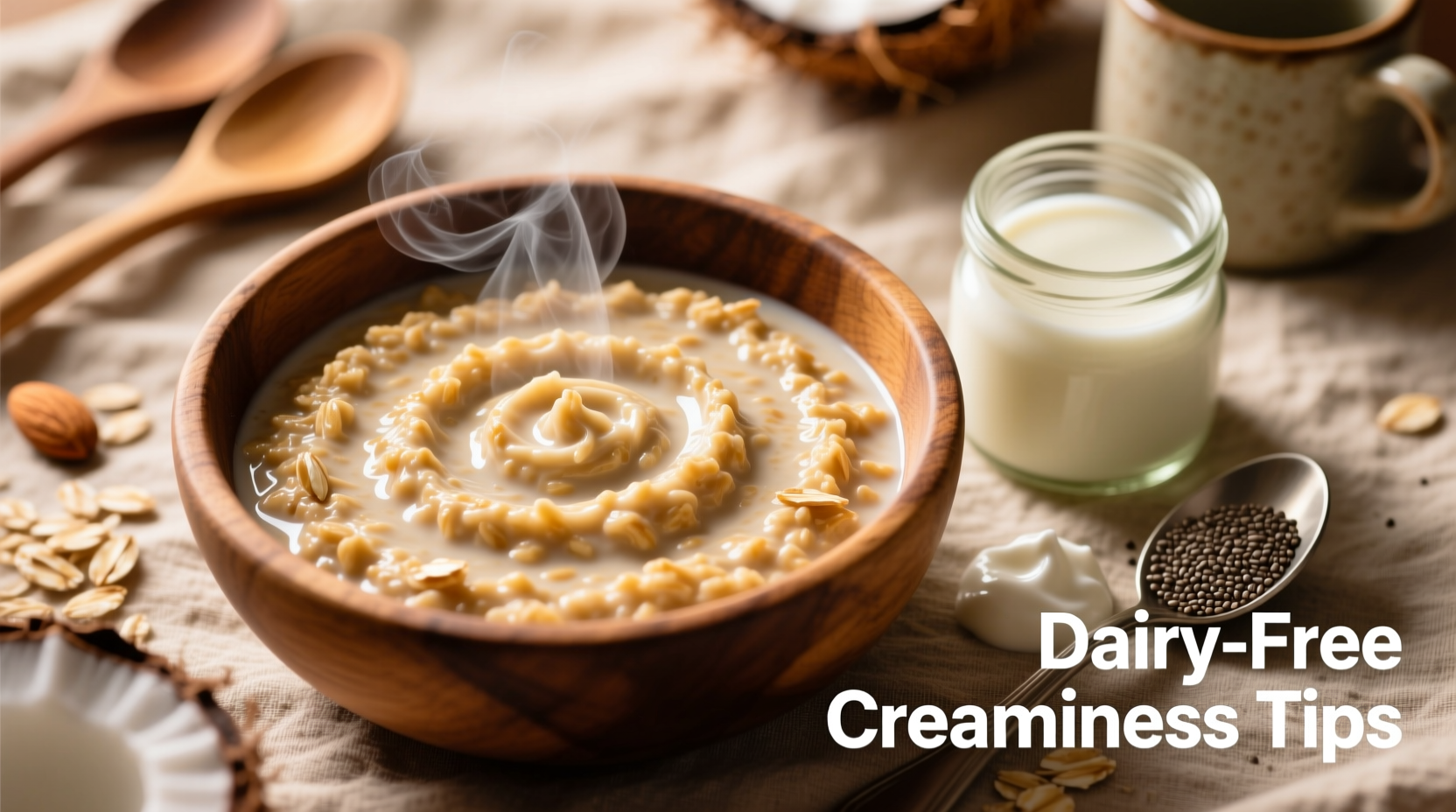
Not all oats are created equal when it comes to texture. The type of oat you start with sets the foundation for how creamy your final dish will be.
| Oat Type | Cooking Time | Creaminess Potential | Dairy-Free Tip |
|---|---|---|---|
| Steel-cut oats | 20–30 minutes | Moderate (chewy texture) | Add extra simmer time and stir frequently to release starches |
| Old-fashioned rolled oats | 5–7 minutes | High (ideal balance) | Best choice for creamy results without overcooking |
| Instant oats | 1–2 minutes | Low (often mushy or thin) | Use sparingly; mix with rolled oats for better body |
| Oat flour or blended oats | N/A (used as thickener) | Very high | Blend 1 tbsp into liquid before cooking for silkier texture |
Rolled oats strike the perfect balance between structure and softness. Their larger surface area allows more starch to dissolve into the cooking liquid, creating natural thickness. For maximum creaminess, avoid instant varieties—they’re pre-cooked and often lack the depth of texture needed for a luxurious mouthfeel.
Optimize Your Cooking Technique
How you cook your oatmeal matters just as much as what you cook it with. Even with dairy-free liquids, proper technique can extract every bit of starch from the oats, resulting in a naturally creamy porridge.
- Start with cold liquid: Pour plant-based milk or water into the pot before adding oats. This ensures even hydration and prevents clumping.
- Simmer gently: Bring the mixture to a boil, then reduce to a low simmer. Rapid boiling breaks down oats too quickly, leading to uneven texture.
- Stir frequently: Use a wooden spoon or silicone spatula to stir every few minutes. This encourages starch release and prevents sticking.
- Cover and rest: After cooking, remove from heat, cover, and let sit for 5 minutes. The residual heat continues to soften the oats and thicken the mixture.
A lesser-known trick? Toast your oats lightly in a dry saucepan before adding liquid. This enhances nutty flavor and slightly gelatinizes the outer layer, helping them absorb liquid more evenly and contribute to a smoother final product.
Best Dairy-Free Liquids for Creamy Oatmeal
The liquid base is where most people go wrong. Water alone produces a thin, bland result. But not all plant milks are equally creamy. Some separate under heat, others are too watery, and many contain added sugars or gums that affect texture.
Here are the top dairy-free liquids ranked by creaminess, stability, and neutral flavor:
- Oat milk – Naturally starchy and slightly sweet, oat milk blends seamlessly with oats. Look for barista or full-fat versions for best results.
- Cashew milk – Rich in healthy fats and naturally creamy, cashew milk creates a smooth, mild base without overpowering flavor.
- Soy milk – High in protein and fat, soy milk mimics the richness of dairy well and holds up during prolonged cooking.
- Coconut milk (canned, light) – Adds tropical richness, but use sparingly—full-fat coconut milk can dominate flavor. Dilute with water if needed.
- Almond milk – Common but often too thin; opt for unsweetened, fortified versions with added calcium or gums for stability.
“The creaminess of oatmeal isn’t just about fat—it’s about viscosity. Oat and soy milks naturally contain soluble fibers and proteins that mimic the mouthfeel of dairy.” — Dr. Lena Torres, Plant-Based Nutrition Scientist
For optimal texture, use a 1:1 blend of plant milk and water. Too much water dilutes flavor and body, while all-milk bases can become overly thick. A balanced ratio gives you control over consistency.
Enhance Texture with Natural Thickeners and Add-Ins
Beyond liquid and oats, strategic additions can dramatically improve creaminess without relying on dairy. These ingredients work by binding water, increasing viscosity, or adding emulsified fat.
1. Mashed Banana or Applesauce
Adding half a mashed banana or 2 tablespoons of unsweetened applesauce not only sweetens naturally but also contributes pectin—a soluble fiber that thickens when heated. It integrates smoothly and adds a subtle fruitiness.
2. Nut and Seed Butters
Stirring in 1 tablespoon of almond butter, cashew butter, or tahini after cooking enriches the mouthfeel and adds healthy fats. These act as natural emulsifiers, creating a silky finish.
3. Chia Seeds or Flaxseed Meal
These tiny seeds swell when exposed to liquid, forming a gel-like coating. Add 1 teaspoon of chia or ground flax at the beginning of cooking to boost thickness and omega-3 content.
4. Cooked White Beans (Yes, Really)
Blended cannellini or navy beans add protein and starch without altering flavor. Puree 2 tablespoons into your liquid before cooking—your taste buds won’t detect them, but your texture will thank you.
5. Coconut Cream or Full-Fat Yogurt Alternative
After cooking, swirl in a spoonful of chilled coconut cream or unsweetened dairy-free yogurt. Both add tang and a luxurious sheen, mimicking the finish of cream-topped oatmeal.
Step-by-Step Guide: Ultra-Creamy Dairy-Free Oatmeal
Follow this method to consistently achieve restaurant-quality, creamy oatmeal without a drop of dairy.
- Gather ingredients: ½ cup rolled oats, ¾ cup unsweetened oat milk, ¼ cup water, 1 tsp chia seeds, pinch of salt.
- Pre-thicken (optional): Blend 1 tbsp oats into powder and mix with liquid to prevent lumps.
- Combine in saucepan: Add all ingredients except toppings. Stir once to combine.
- Bring to a boil, then reduce to low. Simmer uncovered for 6–7 minutes, stirring every minute.
- Remove from heat, cover, and rest for 5 minutes. The oats will continue to absorb and thicken.
- Stir in enhancers: Fold in 1 tbsp almond butter, ½ mashed banana, or a splash of coconut cream.
- Serve immediately with fresh fruit, cinnamon, or maple syrup.
This method maximizes starch release, leverages natural thickeners, and finishes with fat for a rounded, satisfying texture.
Real Example: Sarah’s Breakfast Transformation
Sarah, a nurse with a plant-based diet, used to skip breakfast because her microwave oatmeal always turned out gluey or watery. She tried almond milk, rice milk, even water—but nothing felt satisfying. After learning about starch activation and proper simmering, she switched to rolled oats cooked slowly with a mix of oat milk and water, plus a teaspoon of chia seeds. She now finishes her bowl with a spoonful of cashew butter and berries. “It’s like dessert for breakfast,” she says. “I actually look forward to it now.”
Her routine takes only 10 minutes, fits her hectic schedule, and keeps her full until lunch. The change wasn’t in effort—it was in understanding the science behind the texture.
Common Mistakes That Ruin Creaminess
Even with dairy-free ingredients, small missteps can sabotage your efforts. Avoid these pitfalls:
- Using low-fat or “light” plant milks: These often have diluted fat and protein, leading to thin results.
- Overcooking: Prolonged heat breaks down oats too much, turning them into mush instead of cream.
- Not stirring enough: Infrequent stirring limits starch release and causes bottom-layer scorching.
- Adding all liquid at once: Consider a two-phase pour—start with less liquid, then add more during cooking to control thickness.
- Skipping the rest period: Removing the lid too soon releases steam needed for final softening.
“Creaminess is a function of patience. Let the oats do the work—don’t rush the simmer, and always allow that final rest.” — Marcus Reed, Vegan Chef & Cookbook Author
Frequently Asked Questions
Can I make creamy oatmeal with just water?
Yes, but it requires technique. Use rolled oats, stir frequently, and add a thickener like chia seeds, mashed banana, or blended oats. The result won’t be as rich as with plant milk, but it can still be smooth and satisfying.
Why does my oatmeal turn out gummy with some plant milks?
Some plant milks—especially soy and oat—can curdle or thicken unpredictably when boiled. To prevent this, warm the milk gradually and avoid rapid temperature changes. Also, check for additives like carrageenan, which may separate under heat.
Is there a difference between using canned vs. carton coconut milk?
Yes. Carton coconut milk (refrigerated) is diluted and designed for drinking—too thin for creaminess. Canned coconut milk, especially the full-fat version, has a high fat content ideal for rich texture. Use light canned coconut milk if you want creaminess without strong flavor.
Checklist: Build Your Creamy Dairy-Free Oatmeal
Use this quick-reference checklist each morning to ensure perfect texture:
- ✅ Use rolled oats (not instant)
- ✅ Combine oat or soy milk with a small amount of water
- ✅ Add a natural thickener (chia, flax, blended oats)
- ✅ Simmer gently and stir often
- ✅ Rest covered for 5 minutes after cooking
- ✅ Finish with nut butter or coconut cream
- ✅ Avoid overloading with watery fruits (like melon) until serving
Final Thoughts
Creamy oatmeal without dairy isn’t a compromise—it’s a revelation. Once you understand how starch, fat, and technique interact, you gain complete control over texture and flavor. Whether you’re vegan, lactose-intolerant, or simply curious, the tools are already in your pantry. From choosing the right oats to mastering the simmer-and-rest method, every step brings you closer to a bowl that’s indulgent, nourishing, and deeply satisfying.
You don’t need special equipment or exotic ingredients. Just attention to detail and a willingness to experiment. Try one new tip at a time—swap your liquid, add chia, extend the rest—and notice the difference. Soon, you’ll wonder why you ever thought dairy was essential.




 浙公网安备
33010002000092号
浙公网安备
33010002000092号 浙B2-20120091-4
Comments
No comments yet. Why don't you start the discussion?