
Every great application starts as a simple idea—sometimes scribbled on a napkin, sometimes whispered in a meeting room. But the gap between concept and code is where most projects fail. Turning an abstract notion into a working software product requires more than just technical skill; it demands structure, clarity, and a repeatable process. The solution lies in treating software not just as a tool, but as a practical framework—a system that transforms vision into value.
This approach shifts focus from isolated coding tasks to holistic development cycles, enabling individuals and teams to build purposeful, scalable, and maintainable applications. Whether you're a solo founder, a startup engineer, or part of an enterprise team, building a structured software framework can dramatically improve your success rate.
Define the Problem Before Writing Code
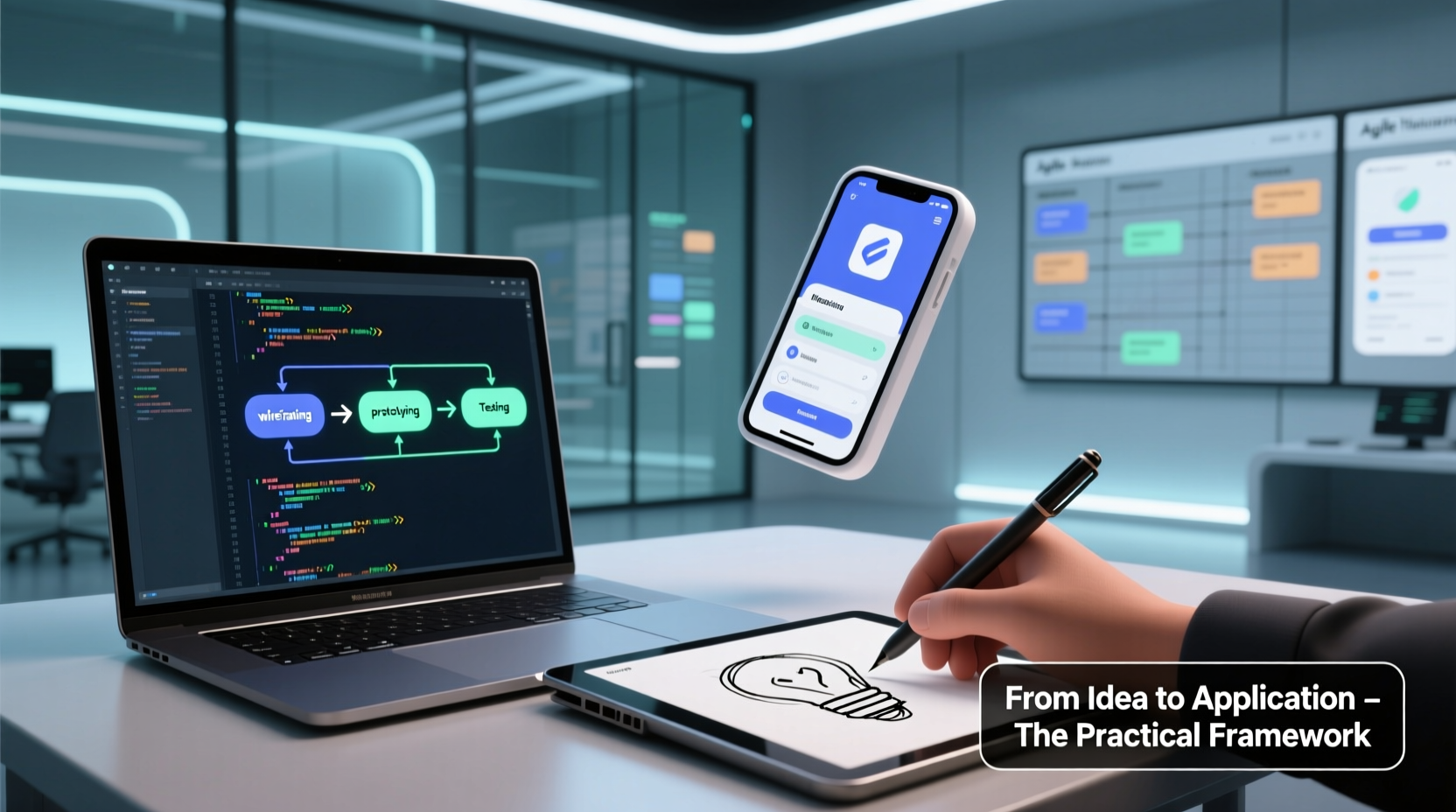
The most common mistake in software development is starting with implementation before fully understanding the problem. A well-defined problem statement acts as the foundation of any successful application. It answers the “why” behind the project and aligns all subsequent decisions.
Begin by asking: Who is this for? What pain point does it solve? How will users interact with it? These questions help shape user stories and define core functionality. Without clarity here, even elegant code can miss the mark.
For example, instead of saying, “We want to build a fitness app,” reframe it as: “Busy professionals need a way to track workouts and nutrition without spending more than five minutes per day.” This version defines the audience, the need, and constraints—all essential for guiding design and development.
Adopt a Modular Development Framework
A practical software framework breaks down complexity into manageable components. Modularity allows developers to isolate features, test independently, and iterate quickly. Think of it like constructing a house: each room serves a purpose, but only works effectively when connected through a coherent blueprint.
Use architectural patterns such as MVC (Model-View-Controller), microservices, or component-based design (like React) to enforce separation of concerns. This ensures that changes in one area don’t destabilize the entire system.
Start by identifying key modules based on user workflows:
- User authentication and permissions
- Data input and validation
- Business logic processing
- Reporting and analytics
- Integration with external services
Each module should have clear inputs, outputs, and responsibilities. Document these interfaces early to prevent confusion during implementation.
Step-by-Step Guide to Structuring Your Application
- Map user journeys: Sketch out how users will move through the app—from sign-up to core actions.
- Break down features: Convert each journey step into a functional requirement.
- Design data models: Define entities (e.g., User, Order, Product) and their relationships.
- Create API contracts: Specify endpoints, request/response formats, and error handling.
- Build incrementally: Implement one module at a time, testing integration points as you go.
- Automate testing: Write unit and integration tests for every completed module.
- Deploy in stages: Use feature flags or staging environments to release safely.
Integrate Feedback Loops Early and Often
No framework is complete without mechanisms for feedback. Software built in isolation often fails because it doesn't reflect real user behavior. Incorporating continuous feedback prevents costly pivots later.
Use prototypes, wireframes, or clickable mockups to gather input before writing production code. Tools like Figma or Balsamiq allow non-technical stakeholders to visualize flow and provide meaningful suggestions.
Once development begins, deploy minimum viable versions (MVPs) to small user groups. Collect usage data and qualitative responses. Iterate based on what users actually do—not what you assume they’ll do.
“Speed matters, but direction matters more. The fastest way to fail is building something nobody wants.” — Paul Graham, Y Combinator Co-Founder
Checklist: Building a Practical Software Framework
- ✅ Clearly define the problem and target audience
- ✅ Break the solution into modular components
- ✅ Design APIs and data models before coding
- ✅ Establish automated testing protocols
- ✅ Set up version control and CI/CD pipelines
- ✅ Gather user feedback at prototype and MVP stages
- ✅ Document architecture decisions and trade-offs
- ✅ Monitor performance and errors in production
Real Example: From Idea to App in Six Weeks
Consider a small team aiming to build a task management tool for remote freelancers. Their initial idea was broad: “An app to help freelancers stay organized.” After interviews with ten target users, they refined the problem: “Freelancers lose income tracking time because invoices aren’t linked to completed tasks.”
They adopted a modular framework:
- Task Module: Create, assign, and mark tasks as done.
- Time Tracker: Log hours against tasks automatically.
- Invoicing Engine: Generate client bills directly from tracked time.
Within three weeks, they had a working prototype connecting these modules. By week five, they tested it with five beta users who provided critical feedback: the invoice preview was unclear. The team adjusted the UI and added export options. By week six, they launched a public beta—with 83% of early users reporting time savings.
The key wasn’t advanced technology; it was using software as a structured framework to validate assumptions, build incrementally, and respond to real needs.
Do’s and Don’ts of Framework Design
| Do | Don’t |
|---|---|
| Start with user problems, not technical solutions | Jump straight into coding without planning |
| Use version control (e.g., Git) from day one | Work on untracked local files |
| Write tests for critical business logic | Assume manual testing is sufficient |
| Document APIs and dependencies clearly | Rely solely on tribal knowledge |
| Refactor regularly to reduce technical debt | Keep patching broken code instead of rebuilding |
Frequently Asked Questions
How do I know if my idea is worth turning into software?
Test its viability by talking to potential users. If multiple people confirm they face the same problem and would use a solution, you have traction. Avoid building anything without at least five validated conversations.
Can I build a software framework without being a developer?
Absolutely. Non-technical founders can define workflows, map user journeys, and specify requirements. Use no-code tools like Bubble or Adalo to prototype. Partner with a developer once the framework is clear to accelerate implementation.
What if my idea changes during development?
Change is expected. A good framework accommodates evolution through loose coupling and clear interfaces. Maintain a changelog of architectural decisions so the team understands why certain paths were taken—and how to adapt them.
Conclusion: Turn Ideas Into Impact
Software is more than lines of code—it’s a disciplined method for solving human problems. When treated as a practical framework, it becomes a powerful engine for innovation. The difference between a fleeting idea and a functioning application lies not in brilliance, but in process.
By defining problems clearly, structuring systems thoughtfully, and validating continuously, anyone can bridge the gap between imagination and execution. You don’t need perfection on day one. You need momentum, clarity, and a framework that turns thinking into doing.




 浙公网安备
33010002000092号
浙公网安备
33010002000092号 浙B2-20120091-4
Comments
No comments yet. Why don't you start the discussion?