
Tomato jelly jam is a vibrant, savory-sweet preserve that transforms ripe tomatoes into a luxurious spread with the texture of fruit jelly and the depth of sun-ripened produce. Often overlooked in favor of strawberry or apricot preserves, tomato jelly offers a sophisticated alternative—ideal for elevating cheese boards, glazing meats, or adding complexity to sandwiches. Unlike chunky tomato sauces, this translucent jam captures the essence of tomatoes in a refined form, concentrating their natural sugars and acidity through careful simmering and gelling. With rising interest in home canning, seasonal preservation, and low-waste cooking, making tomato jelly jam has become a valuable skill for cooks seeking to extend the life of garden-fresh tomatoes while exploring new flavor dimensions.
Definition & Overview
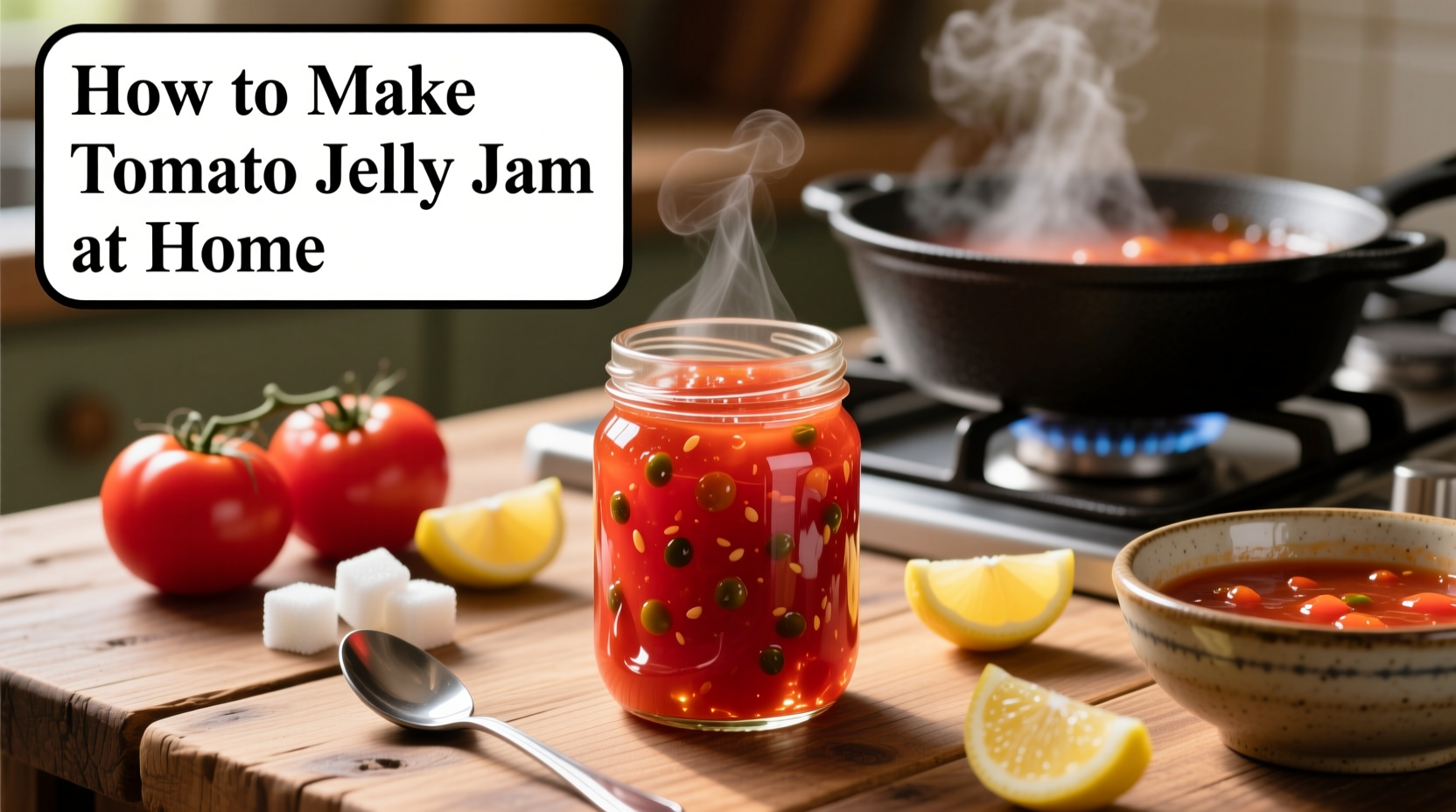
Tomato jelly jam is a clear, gel-like preserve made by extracting juice from ripe tomatoes and combining it with sugar, acid (typically lemon juice), and sometimes pectin to achieve a firm set. It differs from tomato sauce, paste, or salsa in both texture and purpose: rather than serving as a base for savory dishes, tomato jelly functions more like a fruit preserve—spreadable, glossy, and balanced between sweetness and acidity. The process involves maceration, straining, and controlled boiling to concentrate flavor without browning or caramelizing the delicate tomato solids.
The origins of tomato jelly trace back to early 20th-century American home economics, particularly in Southern and Midwestern kitchens where large tomato harvests necessitated creative preservation methods. Before commercial pectin was widely available, cooks relied on naturally high-pectin fruits such as apples or citrus to help set the jelly. Today, modern techniques allow for consistent results using standardized pectin products, though traditionalists still prefer slow-cooked, long-set versions made entirely from fresh ingredients.
Culinary applications span casual and fine dining contexts. In artisanal charcuterie, tomato jelly pairs exceptionally well with sharp cheddar, goat cheese, or cured meats like prosciutto. Its bright acidity cuts through rich fats, much like quince paste (membrillo) in Spanish cuisine. Chefs also use reduced tomato jelly as a finishing glaze for roasted poultry or grilled vegetables, adding sheen and subtle sweetness. For home cooks, it represents an elegant way to utilize overripe or cosmetically flawed tomatoes that might otherwise go to waste.
Key Characteristics
| Characteristic | Description |
|---|---|
| Flavor Profile | Bright, tangy, mildly sweet; retains the umami depth of ripe tomatoes with enhanced clarity due to clarification. |
| Aroma | Freshly crushed tomatoes with floral hints from slow reduction; no cooked or canned odor when properly made. |
| Color | Translucent amber-red to deep ruby, depending on tomato variety; should not appear cloudy if strained correctly. |
| Texture | Smooth, firm gel that holds its shape but spreads easily at room temperature; similar to apple or cranberry jelly. |
| Acidity Level | High natural acidity (pH ~4.0–4.3), which contributes to shelf stability and clean taste. |
| Shelf Life (Unopened) | 12–18 months when processed in sealed jars using water bath canning. |
| Storage (After Opening) | Refrigerate and consume within 3–4 weeks. |
| Culinary Function | Serving as a condiment, glaze, or pairing agent; enhances contrast in fat-rich dishes. |
Practical Usage: How to Use Tomato Jelly Jam
Once prepared, tomato jelly jam opens up numerous culinary possibilities beyond the breakfast table. Its concentrated flavor and smooth consistency make it ideal for layering flavors in composed dishes.
In Home Cooking
- Cheese Pairings: Serve alongside aged cheeses such as Manchego, Parmigiano-Reggiano, or blue cheese. A thin layer on a cracker bridges the saltiness of cheese with fruity brightness.
- Sandwich Enhancer: Replace mayonnaise or mustard with a smear of tomato jelly on turkey, chicken salad, or grilled cheese sandwiches for added complexity.
- Breakfast Application: Spread lightly on toast, scones, or biscuits—especially effective when paired with cream cheese or ricotta.
- Glaze for Proteins: Melt gently and brush onto roasted duck breast, pork tenderloin, or baked ham during the final 10 minutes of cooking. The sugar content promotes gentle browning without burning.
- Vinaigrette Base: Whisk a teaspoon into olive oil, red wine vinegar, Dijon mustard, and herbs for a unique salad dressing with body and sweetness.
Professional Kitchen Applications
- Plated Garnish: Dot around plates containing seared scallops or foie gras to add visual appeal and counterpoint richness.
- Component in Terrines: Layer into vegetable terrines or meat galantines for bursts of acidity between dense elements.
- Infused Sauces: Incorporate small amounts into demi-glace or pan reductions to lift heaviness with freshness.
- Modernist Cuisine: Some chefs dehydrate tomato jelly into brittle sheets or reconstitute it into foams using lecithin for avant-garde presentations.
Tip: Always taste tomato jelly before using in savory applications—some batches may lean sweeter depending on ripeness and sugar ratio. Adjust seasoning accordingly by balancing with vinegar or salt if needed.
Step-by-Step Guide to Making Tomato Jelly Jam
- Select Ripe Tomatoes: Choose fully ripe, red tomatoes—preferably varieties high in natural pectin and acidity such as Roma, Amish Paste, or San Marzano. Avoid underripe green tomatoes unless intentionally blending for tartness.
- Wash and Chop: Rininely wash 2 kg (about 4.5 lbs) of tomatoes. Remove stems and cores, then roughly chop into quarters. Do not peel or seed—they will be strained later.
- Simmer for Juice Extraction: Place chopped tomatoes in a heavy-bottomed pot. Bring to a simmer over medium heat, stirring occasionally, until they break down completely (approx. 30–40 minutes). Do not boil vigorously.
- Strain Through a Jelly Bag: Line a colander with dampened cheesecloth or use a dedicated jelly bag. Pour hot tomato pulp into the cloth and let drain undisturbed for 4–6 hours or overnight. Do not squeeze—the goal is clear juice, not cloudy liquid from forced extraction.
- Measure Juice: You should yield approximately 750 ml–1 liter of juice from 2 kg of tomatoes. Record exact volume for accurate sugar measurement.
- Add Acid and Pectin: For every cup (240 ml) of juice, add 1 tablespoon (15 ml) fresh lemon juice. This ensures safe pH levels and supports gel formation. If using powdered pectin, follow manufacturer instructions (typically 1 package per 4 cups juice).
- Combine with Sugar: Add ¾ to 1 cup granulated sugar per cup of juice, depending on desired sweetness. Stir thoroughly before heating.
- Boil to Gel Point: Return mixture to clean pot. Boil rapidly, stirring constantly, until it reaches 104°C (220°F)—the jelling point. Test by placing a small spoonful on a chilled plate; if it wrinkles when pushed with a finger, it’s ready.
- Sterilize Jars: While cooking, sterilize glass canning jars and lids in boiling water for 10 minutes. Keep warm until filling.
- Fill and Process: Carefully ladle hot jelly into hot jars, leaving ¼ inch headspace. Wipe rims, apply lids and rings, then process in a boiling water bath for 10 minutes (adjust for altitude above 1,000 ft).
- Cool and Store: Let jars cool undisturbed for 12–24 hours. Check seals—lids should not flex when pressed. Label and store in a cool, dark place.
Expert Tip: To enhance clarity and depth, some producers add a small piece of fresh ginger (peeled, about 1-inch slice) or a cinnamon stick during simmering. Remove before straining. These spices complement the fruitiness without overpowering.
Variants & Types of Tomato Jelly
While classic tomato jelly relies solely on tomato juice, sugar, and acid, several variations exist to suit different palates and uses.
- Spiced Tomato Jelly: Infuse with whole cloves, allspice berries, or star anise during simmering. Removes after straining. Adds warmth suitable for holiday gift-giving.
- Herb-Infused: Stir in fresh basil, thyme, or rosemary just before jarring. Provides aromatic complexity; best used within 6 months even when canned.
- Chili-Tomato Jelly: Add finely minced jalapeño or red pepper flakes during cooking. Creates a spicy-sweet preserve excellent with cream cheese and crackers.
- Lemon-Ginger Tomato Jelly: Double the lemon juice and add grated ginger. Brightens flavor profile and aids digestion; popular in contemporary farm-to-table menus.
- Low-Sugar Version: Use calcium water and low-methoxyl pectin to reduce sugar content by up to 50%. Requires precise measurements but accommodates dietary restrictions.
- Smoked Tomato Jelly: Begin with smoked tomatoes (oven-dried with smoldering wood chips) or add liquid smoke (sparingly). Offers a bold, barbecue-inspired twist.
| Variant | Best Used For | Sugar Ratio (per cup juice) | Special Notes |
|---|---|---|---|
| Classic | All-purpose spreading, glazing | ¾–1 cup | Pure expression of tomato; ideal starter recipe |
| Spiced | Holiday gifts, meat accompaniments | 1 cup | Use whole spices only; avoid ground to prevent cloudiness |
| Herb-Infused | Cheese boards, appetizers | ¾ cup | Add herbs post-boil; do not reboil after addition |
| Chili | Spicy snacks, fusion dishes | 1 cup | Adjust heat level gradually; seeds increase spiciness |
| Low-Sugar | Diet-conscious consumers | ⅓–½ cup | Requires special pectin; longer setting time |
Comparison with Similar Ingredients
Tomato jelly is often confused with other tomato-based products. Understanding distinctions ensures proper usage in recipes.
| Product | Texture | Sugar Content | Primary Use | Key Difference |
|---|---|---|---|---|
| Tomato Jelly | Clear, firm gel | High (≥75% of juice volume) | Condiment, glaze | Clarified juice with structured set; resembles fruit jelly |
| Tomato Sauce | Thick liquid, often particulate | Low to none | Cooking base | Used as foundation for stews, soups, pasta—not spreadable |
| Tomato Paste | Dense paste | Negligible | Flavor concentrator | Reduced for umami, not sweetness; never contains added sugar |
| Salsa | Chunky, loose | Variable (usually low) | Dip, topping | Includes onions, peppers, cilantro; not gelled |
| Apple Jelly | Clear gel | High | Spread, dessert pairing | Similar texture but fruit-forward; lacks savory depth |
\"The magic of tomato jelly lies in its duality—it tastes unmistakably of summer gardens yet performs like a fine preserve in formal service. It's one of those rare kitchen projects that feels indulgent but starts with humble surplus.\"
— Chef Elena Ruiz, Culinary Instructor & Preserves Specialist
Practical Tips & FAQs
Why didn’t my tomato jelly set?
Failure to gel typically results from insufficient pectin, inaccurate sugar ratios, or inadequate boiling time. Tomatoes vary in natural pectin content. Using underripe tomatoes or skipping commercial pectin increases risk. Always test for gel stage using the cold plate method.
Can I make tomato jelly without added sugar?
Yes, but only with specially formulated low-sugar pectin and strict adherence to instructions. Sugar acts as both preservative and structural component in traditional jellies. Substituting with honey or maple syrup alters flavor and may inhibit gelling.
Is lemon juice necessary?
Absolutely. Lemon juice lowers pH for safe canning and activates pectin. Never omit it, even if your tomatoes seem acidic. Safe home canning requires a pH below 4.6 to prevent botulism risk.
Can I freeze tomato jelly instead of canning?
Yes. Freeze in airtight containers with ½ inch headspace for expansion. Thaw in refrigerator before use. Shelf life: 10–12 months. Freezing preserves texture better than repeated refrigeration.
What tomatoes work best?
Roma, San Marzano, and other paste tomatoes are preferred due to higher solids and lower water content. Heirloom types can be used but may require longer reduction or added pectin.
How do I know if canned jelly has spoiled?
Check for bulging lids, off-odors, mold, or spurting liquid upon opening. Never taste suspect preserves. Discard immediately if any signs appear.
Storage Checklist:
✔ Store unopened jars in a cool, dark pantry
✔ Refrigerate after opening
✔ Use clean utensils to prevent contamination
✔ Label jars with date and variant type
✔ Consume within 4 weeks once opened
Summary & Key Takeaways
Tomato jelly jam is a versatile, flavorful preserve that transforms simple garden tomatoes into a gourmet ingredient. By extracting clarified juice and combining it with sugar, acid, and pectin, home cooks can create a glossy, firm jelly suitable for spreading, glazing, or pairing with cheeses and meats. The process emphasizes precision in ratios and timing to ensure proper gelling and food safety.
Success depends on selecting ripe, high-acid tomatoes, allowing slow drainage through a jelly bag for clarity, and maintaining accurate proportions of sugar and lemon juice. Variations—including spiced, herb-infused, and low-sugar versions—allow customization based on preference and dietary needs. Unlike tomato sauce or paste, tomato jelly functions as a condiment with a balance of sweetness and acidity, bridging the gap between savory and sweet applications.
Understanding differences between tomato jelly and similar products prevents misuse in recipes. When stored properly, homemade tomato jelly lasts up to 18 months in sealed jars, making it an excellent candidate for seasonal preservation and thoughtful gifting.
Ready to try? Start with a small batch using 1 kg of ripe tomatoes to refine technique. Once mastered, scale up during peak tomato season to preserve summer’s bounty in jewel-toned jars that bring brightness to winter meals.




 浙公网安备
33010002000092号
浙公网安备
33010002000092号 浙B2-20120091-4
Comments
No comments yet. Why don't you start the discussion?