
Tomato soup is a timeless comfort food—creamy, tangy, and deeply satisfying. While many recipes call for fresh or canned whole tomatoes, few home cooks realize that **tomato paste** can serve as the foundation for an intensely flavorful soup. Concentrated, rich, and shelf-stable, tomato paste offers a practical and potent alternative, especially when fresh produce isn't available. This method delivers a velvety texture and bold umami depth, often surpassing traditional versions in complexity. Whether you're stocking a pantry for emergencies or seeking a quick weeknight meal, learning how to make tomato soup using tomato paste unlocks culinary flexibility without sacrificing quality.
Definition & Overview
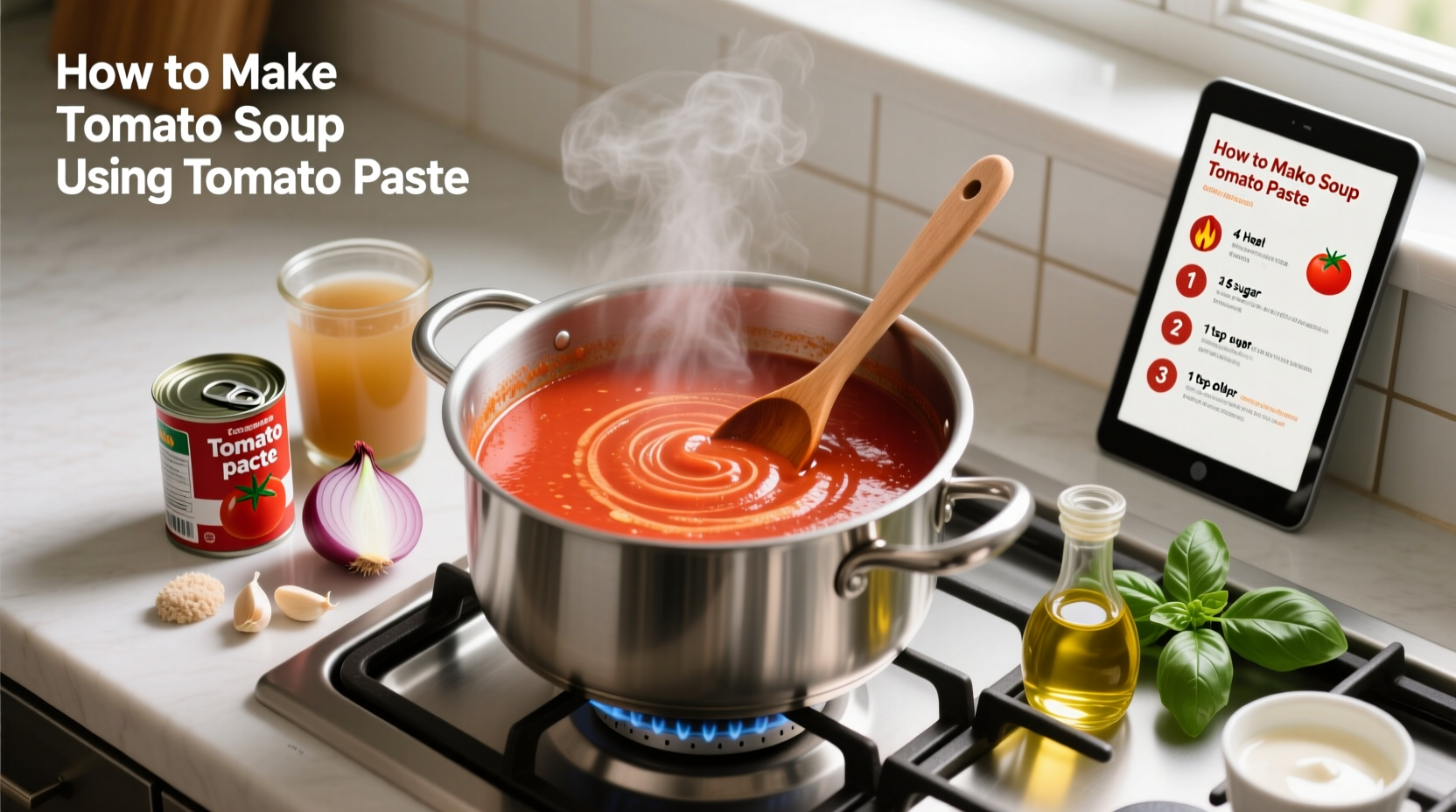
Tomato paste is a thick concentrate made by cooking down ripe tomatoes for several hours until most of the water evaporates. The result is a deep red, viscous product with an intense savory-sweet flavor profile. Unlike canned crushed tomatoes or tomato sauce, which retain more moisture and are milder in taste, tomato paste is designed to amplify tomato essence in small quantities.
When reconstituted properly, tomato paste becomes the base of a robust tomato soup. This approach is common in professional kitchens, where chefs use paste to control consistency and deepen flavor efficiently. The process hinges on understanding how to dilute, season, and enrich the paste into a balanced, silky soup—transforming a pantry staple into a gourmet dish.
This technique is particularly valuable during winter months, off-seasons, or in regions where fresh tomatoes lack ripeness or availability. It also reduces food waste: a partial tube of tomato paste no longer needs to be discarded after a single tablespoon is used.
Key Characteristics of Tomato Paste
Understanding the intrinsic qualities of tomato paste is essential for successful soup-making. Its concentrated nature means minor adjustments in quantity or preparation have significant impacts on final taste and texture.
| Characteristic | Description |
|---|---|
| Flavor | Deeply savory (umami), slightly sweet, with natural acidity. Caramelization enhances richness. |
| Aroma | Earthy, roasted, with hints of sun-dried tomato and cooked garlic when sautéed. |
| Color/Form | Thick, dense paste; deep brick-red to mahogany. Darkens further when cooked in oil. |
| Culinary Function | Flavor base (sofrito enhancer), colorant, thickener, umami booster. |
| Shelf Life (unopened) | 18–24 months in a cool, dry place. |
| Shelf Life (opened) | 5–7 days at room temperature; up to 6 weeks refrigerated; 6 months frozen in portions. |
Practical Usage: How to Turn Tomato Paste Into Soup
The transformation from paste to soup relies on three key stages: **blooming**, **dilution**, and **enrichment**. Each step builds layers of flavor and ensures a smooth, restaurant-quality result.
Step 1: Bloom the Paste in Fat
Blooming—cooking tomato paste in oil or butter before adding liquid—is non-negotiable. This brief sauté (2–4 minutes) caramelizes natural sugars, removes raw bitterness, and develops a deeper, almost smoky character. Use olive oil, butter, or a blend.
- Heat 2 tablespoons fat over medium heat.
- Add 1/3 to 1/2 cup tomato paste (depending on desired yield).
- Stir constantly until the paste darkens slightly and releases an aromatic, roasted scent.
“Bloomed tomato paste is the secret behind our house tomato soup at Bistro Marceau. It adds a dimension you can’t get from canned tomatoes alone.”
— Chef Antoine Leclair, Culinary Director, Midwest Regional Group
Step 2: Build Aromatics
After blooming, incorporate aromatic vegetables to create a flavor foundation. These should be softened but not browned.
- Add 1/2 cup diced onion, 1/4 cup diced carrot, and 1/4 cup celery (a classic mirepoix ratio).
- Sauté 5–7 minutes until translucent.
- Optional: Add 1 minced garlic clove in the last minute to avoid burning.
For richer depth, deglaze the pot with 1/4 cup dry white wine or vermouth, scraping up any browned bits. Simmer until nearly evaporated.
Step 3: Dilute and Simmer
Gradually add liquid to reconstitute the paste into a soup base. Rapid addition causes clumping.
- Pour in 1/2 cup vegetable or chicken broth slowly, stirring continuously to form a smooth slurry.
- Add remaining 3 cups broth gradually, increasing heat to bring to a gentle simmer.
- Simmer uncovered for 20–25 minutes to meld flavors and reduce excess acidity.
Step 4: Season and Enrich
Seasoning must be adjusted incrementally. Tomato paste is salt-concentrated, so taste before adding extra sodium.
- Add 1 teaspoon sugar or honey if soup tastes too sharp.
- Balance with 1/2 teaspoon smoked paprika or 1/4 teaspoon baking soda (neutralizes acid without dulling flavor).
- Herbs: 1 dried bay leaf, 1/2 teaspoon dried oregano, or 1 teaspoon fresh thyme.
For creaminess:
- Stir in 1/2 cup heavy cream, coconut milk, or cashew cream at the end (do not boil after adding).
- Alternatively, blend in 2 tablespoons unsalted butter for a glossy finish (monter au beurre).
Step 5: Blend and Strain
For a smooth texture, use an immersion blender directly in the pot. For ultra-silkiness, strain through a fine-mesh sieve to remove fibrous bits from skins and seeds (even though paste is filtered, minor grit may remain).
Pro Tip: Freeze leftover tomato paste in 2-tablespoon portions using an ice cube tray. Once solid, transfer to a freezer bag. One cube = one standard recipe base unit.
Basic Recipe: Homemade Tomato Soup from Tomato Paste
Serves 4 | Total Time: 40 minutes
- 2 tbsp olive oil or butter
- 1/3 cup tomato paste (about half a standard 6 oz can)
- 1/2 cup yellow onion, finely diced
- 1/4 cup carrot, finely diced
- 1/4 cup celery, finely diced
- 1 garlic clove, minced
- 3 1/2 cups vegetable or chicken broth
- 1 tsp sugar or honey
- 1/2 tsp dried thyme
- 1/4 tsp smoked paprika (optional)
- 1/2 cup heavy cream or full-fat coconut milk
- Salt and freshly ground black pepper to taste
- Fresh basil or parsley for garnish
- Heat oil in a medium pot over medium heat. Add tomato paste and cook, stirring, for 3–4 minutes until darkened and fragrant.
- Add onion, carrot, and celery. Sauté 6–7 minutes until soft.
- Add garlic; cook 1 minute until aromatic.
- Pour in 1/2 cup broth, stirring vigorously to combine. Gradually add remaining broth.
- Stir in sugar, thyme, and paprika. Bring to a simmer and cook 20 minutes.
- Use immersion blender to puree until smooth. Alternatively, transfer in batches to a countertop blender (vent lid to avoid steam pressure).
- Return to low heat. Stir in cream. Warm through (do not boil).
- Season with salt and pepper. Garnish with herbs and a swirl of cream.
Variants & Types of Tomato Paste
Not all tomato paste is created equal. Choosing the right type affects both ease of use and final flavor.
| Type | Form | Best For | Notes |
|---|---|---|---|
| Canned Paste | 6 oz tin or tube | General-purpose cooking | Most common; prone to oxidation once opened unless refrigerated. |
| Tube Paste | Squeeze tube (similar to mustard) | Precise portioning; long-term storage | Less exposure to air; ideal for infrequent users. |
| Double-Concentrate | Labeled “double strength” or “double concentrated” | Intense flavor applications | Use half the amount; requires longer blooming to avoid bitterness. |
| Organic / Fire-Roasted | Canned or tube | Gourmet or specialty soups | Fire-roasted adds smokiness; excellent for rustic profiles. |
| Dried Powder | Dehydrated flakes or powder | Camping, emergency kits | Reconstitute 1:3 with water; lacks body but useful in a pinch. |
Comparison with Similar Ingredients
Tomato paste is frequently confused with other tomato products. Understanding differences prevents recipe failures.
| Ingredient | Water Content | Tomato Density | Role in Soup | Substitution Ratio for Paste |
|---|---|---|---|---|
| Tomato Sauce | High (~90%) | Low | Base liquid; mild flavor | Use 1.5 cups sauce per 1/3 cup paste + reduce cooking time |
| Crushed Tomatoes | Medium-high | Moderate | Bulk ingredient; chunkier texture | 2 cups crushed ≈ 1/3 cup paste after reduction |
| Tomato Puree | Medium | Moderate | Intermediate concentrate | 2/3 cup puree ≈ 1/3 cup paste |
| Passata | Medium | Moderate | Smooth, uncooked base | 1 cup passata ≈ 1/4 cup paste (add extra simmer time) |
| Ketchup | High | Very low | Condiment; sweet and vinegary | Not recommended—altered pH and added sugar/vinegar disrupt balance |
Practical Tips & FAQs
Can I make this soup vegan?
Yes. Substitute dairy cream with full-fat coconut milk, cashew cream, or blended silken tofu. Use vegetable broth and omit butter or replace with plant-based alternatives.
Why does my soup taste metallic?
This often results from cooking tomato paste too long in an aluminum pot or using low-quality canned paste. Use stainless steel or enameled cookware and opt for BPA-free lined cans or tubes.
How do I fix a soup that’s too acidic?
Add 1/4 teaspoon baking soda and stir—it neutralizes acid quickly. Alternatively, swirl in a tablespoon of cream or a teaspoon of sugar. Simmer 2–3 minutes to integrate.
Can I use water instead of broth?
You can, but the soup will lack depth. If using water, increase paste by 1–2 tablespoons and add 1 teaspoon soy sauce or Worcestershire (vegan version available) for umami.
Is tomato paste healthy?
Yes, in moderation. It's rich in lycopene—a powerful antioxidant enhanced by cooking—and low in calories. However, some commercial brands add salt, sugar, or citric acid. Read labels; choose products with \"tomatoes only\" or minimal ingredients.
What dishes pair well with tomato soup?
- Grilled cheese sandwich (classic pairing)
- Garlic bread or cheesy croutons
- Green salad with vinaigrette
- Roasted vegetables or quiche
Can I freeze tomato soup made from paste?
Absolutely. Cool completely and store in airtight containers for up to 3 months. Thaw overnight in the refrigerator and reheat gently. Cream-based versions may separate slightly; whisk while reheating and add a splash of broth if needed.
Storage Tip: Portion cooled soup into silicone muffin tins and freeze. Pop out cubes and store in a bag—perfect for single servings later.
Summary & Key Takeaways
Tomato paste is far more than a supporting ingredient—it’s a powerhouse for creating deeply flavored, economical, and pantry-friendly tomato soup. By mastering the art of blooming, balancing acidity, and enriching texture, home cooks can produce a restaurant-quality result in under an hour.
Core principles to remember:
- Bloom the paste in fat to unlock its full flavor potential.
- Build on aromatics—onion, carrot, celery—for a layered base.
- Dilute gradually to prevent clumping and ensure smooth integration.
- Adjust seasoning carefully, as paste is salt- and acid-concentrated.
- Enrich at the end with cream, butter, or plant-based alternatives for silkiness.
- Store leftovers wisely—freeze in usable portions for future meals.
This method exemplifies resourceful cooking: turning a humble, shelf-stable ingredient into something luxurious and nourishing. Whether you're feeding a family, meal-prepping, or simply craving warmth on a cold day, knowing how to make tomato soup using tomato paste is a foundational skill every kitchen should hold.
Ready to elevate your pantry cooking? Try this recipe tonight—and save the rest of the paste for your next stew, sauce, or braise.




 浙公网安备
33010002000092号
浙公网安备
33010002000092号 浙B2-20120091-4
Comments
No comments yet. Why don't you start the discussion?