
Many people assume that only high-end, designer fragrances have the staying power to last from morning to night. But the truth is, even affordable perfumes can linger beautifully on the skin—with the right techniques. The secret lies not in the price tag, but in how you wear and layer your scent. By understanding the science of fragrance longevity and using smart layering strategies, you can transform an inexpensive bottle into a long-lasting signature aroma.
Fragrance longevity depends on several factors: skin type, humidity, pH levels, and application method. But one of the most effective ways to boost performance is through scent layering—the practice of building complementary products that share similar notes to intensify and prolong the experience. This approach is commonly used by luxury brands who offer matching body lotions, shower gels, and sprays for their perfumes. You don’t need to buy those sets; you can replicate the effect affordably and creatively.
The Science Behind Scent Longevity
Fragrances are made up of top, middle (heart), and base notes that evaporate at different rates. Top notes are the first impression—light and volatile—while base notes like vanilla, musk, or sandalwood linger longest. Cheap perfumes often contain fewer essential oils and more alcohol, which causes them to fade quickly. However, when applied over a moisturized or scented base, the fragrance molecules adhere better to the skin, slowing evaporation.
The key principle here is “scent anchoring.” When your skin is dry, it absorbs fragrance rapidly, reducing diffusion and duration. A hydrated, oily surface allows the scent to sit atop the skin and release gradually. Layering enhances this by creating a unified aromatic environment where each product reinforces the next.
“Scent layering isn't just about strength—it's about structure. Building a full olfactory profile helps weaker fragrances behave like Eau de Parfums.” — Lena Moretti, Fragrance Formulator & Olfactory Consultant
Step-by-Step Guide to Effective Scent Layering
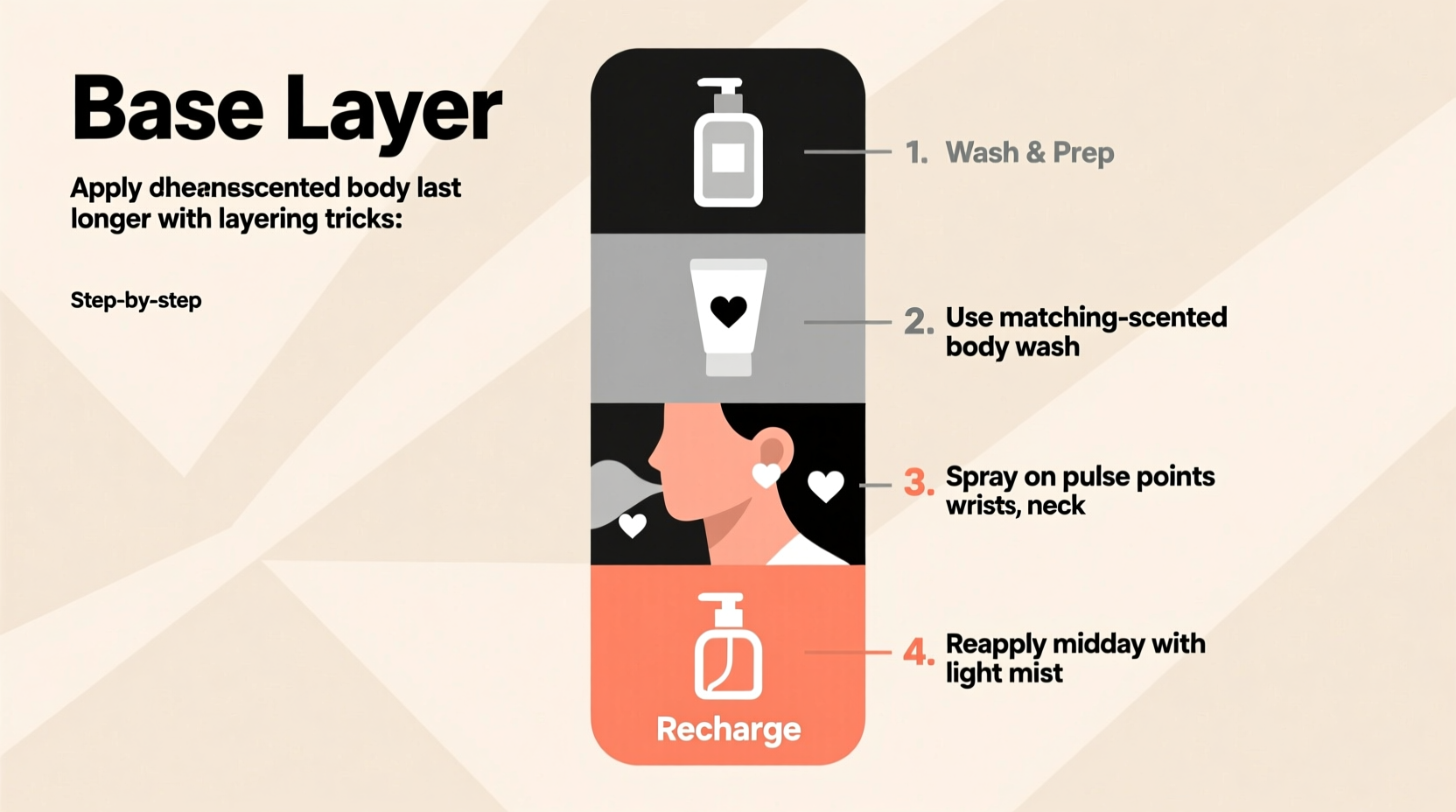
To maximize the lifespan of a budget-friendly perfume, follow this structured layering routine. Each step amplifies the previous one, creating a cumulative effect that lasts 6–8 hours or more—even with lower-concentration formulas.
- Start with a scented shower gel or soap: Choose one that matches the dominant note of your perfume (e.g., citrus, floral, woody). Washing with a complementary scent primes your skin with subtle fragrance molecules.
- Apply a matching body oil or unscented moisturizer: Right after showering, while skin is still damp, lock in hydration. If available, use a lightly scented oil that echoes your perfume’s base notes. Otherwise, plain coconut or jojoba oil works as a neutral anchor.
- Use a fragrance-infused body lotion: This is the core of layering. Apply generously to pulse points before spraying perfume. The creamy texture holds scent longer than bare skin.
- Spray your perfume correctly: Target warm areas like wrists, neck, behind ears, and inner elbows. Avoid rubbing wrists together, which breaks down delicate top notes.
- Refresh midday with a matching solid perfume or scented balm: Keep a small tin in your bag for touch-ups without reapplying liquid.
Smart Product Pairing Strategies
You don’t need expensive branded sets to layer effectively. With some creativity, everyday products can become part of your fragrance system. Here’s how to match items based on scent families:
| Fragrance Family | Matching Shower Gel | Recommended Moisturizer Base | Budget-Friendly Pairing Tip |
|---|---|---|---|
| Floral (e.g., rose, jasmine) | Nivea Creme Care with Rose Oil | Shea butter or almond oil | Add 2 drops of essential oil to unscented lotion |
| Citrus (lemon, bergamot) | Dove Deep Moisture Citrus Nectar | Aloe vera gel + light oil | Use vitamin C serum—it complements bright notes |
| Oriental/Spicy (vanilla, cinnamon) | Olay Shea Butter & Vanilla | Coconut oil or cocoa butter | Pair with warm-toned body powders |
| Woody (sandalwood, cedar) | Axe Signature Timber | Jojoba oil or glycerin cream | Layer under earthy essential oil diffusers |
When exact matches aren’t available, focus on overlapping key notes. For example, if your perfume has a strong amber base, pair it with any warm, slightly sweet lotion—even if the brand doesn’t advertise it as “fragrance-matching.” Consistency in scent chemistry matters more than branding.
Mini Case Study: From Faint to Fabulous
Sophie, a 28-year-old teacher, loved a $15 oceanic fragrance she bought online, but it disappeared within 30 minutes. After learning about layering, she began using a sea-salt body scrub followed by a coconut-oil-based lotion and finished with two sprays of her perfume. She also stored the bottle away from sunlight and applied it immediately after her morning routine.
Within days, coworkers started complimenting her scent. “I didn’t change my perfume,” she said, “but now it lasts until I leave school at 4 PM.” Her simple switch—from dry skin application to strategic layering—extended wear time by over 500%.
Common Mistakes That Kill Fragrance Life
Even with perfect layering, certain habits sabotage longevity. Avoid these pitfalls:
- Applying perfume to clothing instead of skin: Fabric absorbs scent but doesn’t emit it well. Worse, alcohol can stain or degrade fibers.
- Storing perfume in the bathroom: Heat and humidity break down volatile compounds. Keep bottles in a cool, dark drawer.
- Over-spraying: Too much at once overwhelms the senses and accelerates evaporation due to alcohol saturation.
- Using heavily scented deodorants: Antiperspirants with clashing notes create olfactory confusion and shorten perceived scent life.
- Skipping moisturizer: Dry skin acts like a sponge, soaking up fragrance instead of releasing it.
DIY Layering Hacks on a Budget
You don’t need to spend extra money to layer effectively. Try these cost-efficient methods:
- Customize Unscented Lotions
- Add 3–5 drops of essential oil per ounce of plain lotion. Match the oil to your perfume’s dominant note (e.g., lavender for floral, patchouli for earthy).
- Create a Matching Body Mist
- Mix distilled water, a splash of vodka (acts as preservative), and a few drops of your perfume in a spray bottle. Use as a midday refresher or pre-perfume primer.
- Wear Scented Jewelry
- Apply a drop of perfume oil to a locket or porous stone bracelet. It emits scent slowly and protects the formula from air exposure.
- Use Hair Products Strategically
- Apply a drop of scented hair serum or balm that aligns with your fragrance. Hair holds scent longer than skin and moves with you.
These hacks allow you to build a personalized fragrance ecosystem without purchasing multiple branded products.
Checklist: Your 7-Day Layering Challenge
Put theory into practice with this actionable checklist. Follow it for one week to see noticeable improvement in your perfume’s staying power:
- ☐ Identify your current perfume’s primary note (floral, citrus, etc.)
- ☐ Find a matching or complementary shower product
- ☐ Switch to a richer body lotion or add oil post-shower
- ☐ Apply perfume within 3 minutes of moisturizing
- ☐ Store your perfume in a drawer away from heat and light
- ☐ Carry a solid perfume or scented balm for touch-ups
- ☐ Test one DIY hack (e.g., custom lotion or body mist)
By the end of the week, track changes in longevity and compliments received. Most users report a dramatic difference.
Frequently Asked Questions
Can I layer different perfumes together?
Yes, but cautiously. Combining two full-strength perfumes risks creating a muddy scent. Instead, layer a dominant perfume with a single-note oil (like vanilla or sandalwood) to enhance depth without clashing.
Does skin type affect layering success?
Absolutely. Oily skin naturally holds fragrance longer, while dry skin benefits most from heavy moisturizing. Very sensitive skin may react to layered scents, so patch-test new combinations first.
Why does my perfume last longer on others than on me?
This is common and usually due to differences in skin chemistry, pH, and hydration. Some bodies metabolize fragrance faster. Layering helps level the playing field by providing a consistent base.
Final Thoughts: Elevate Your Everyday Scent Experience
Long-lasting fragrance isn’t reserved for luxury buyers. With intelligent layering, even the most affordable perfumes can project confidence and elegance throughout the day. The techniques outlined here—starting with proper cleansing, building a scented base, applying strategically, and maintaining consistency—are rooted in both cosmetic science and real-world testing.
What matters most isn’t how much you spent, but how thoughtfully you wear your scent. By treating your fragrance as part of a holistic routine rather than a standalone product, you unlock its full potential. These methods cost little, require minimal effort, and deliver impressive results.




 浙公网安备
33010002000092号
浙公网安备
33010002000092号 浙B2-20120091-4
Comments
No comments yet. Why don't you start the discussion?