
In today’s digital-first world, visibility on Google is no longer optional—it's essential. Whether you're a freelancer, entrepreneur, artist, or professional seeking career advancement, having your name rank prominently in search results strengthens credibility, opens opportunities, and builds trust. But appearing on the first page of Google doesn’t happen by accident. It requires intentional personal branding, strategic content creation, and smart optimization. The good news? You don’t need a massive budget or technical expertise to get started.
Claim and Optimize Your Google Business Profile (If Applicable)
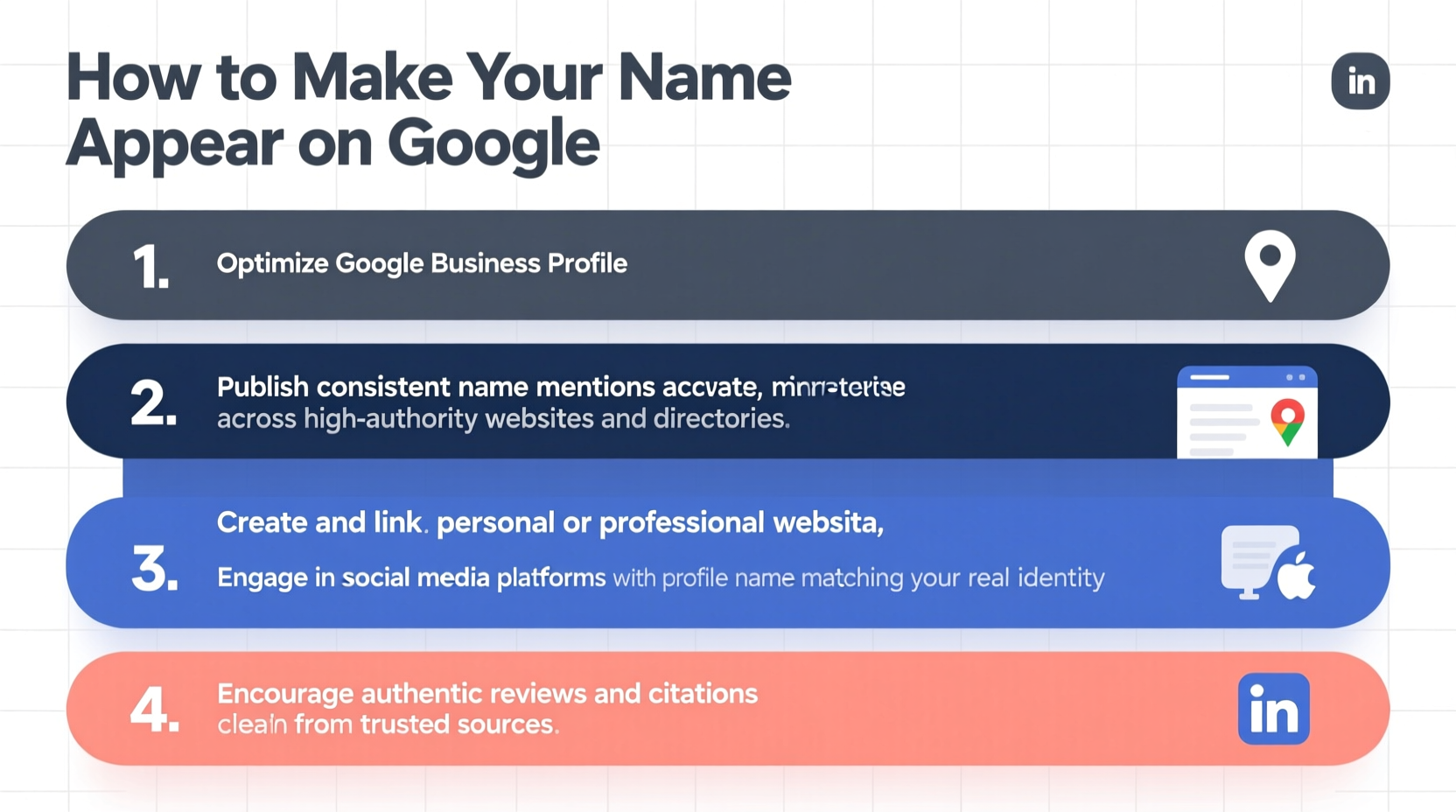
If your name is associated with a service-based business—like coaching, consulting, photography, or freelancing—creating and optimizing a Google Business Profile (GBP) is one of the fastest ways to appear in local search results. Even if you work remotely, a GBP can help your name surface when people search for your expertise in your city or niche.
Start by claiming your profile at Google Business Profile. Use your full name as the business name if you operate under your personal brand. Add high-quality photos, detailed service descriptions, and accurate contact information. Encourage satisfied clients to leave reviews—social proof significantly boosts visibility and click-through rates.
Build a Personal Website or Portfolio
Your personal website acts as your digital headquarters. Unlike social media platforms, where algorithms control reach, your site is fully under your control. It’s also the most credible place to host content that Google trusts.
Choose a domain name that includes your full name (e.g., johnsmith.com). If unavailable, consider variations like iamjohnsmith.com or johnsmithofficial.com. On your site, include key pages: Home, About, Services/Portfolio, Blog, and Contact. Make sure it’s mobile-friendly and loads quickly—Google prioritizes user experience.
Publish an “About Me” page that clearly outlines who you are, what you do, and why you matter. Include keywords naturally—such as “digital marketing consultant in Austin” or “award-winning graphic designer”—to help Google understand your expertise.
“Your personal website isn’t vanity—it’s authority. It’s the one asset you own outright in the digital economy.” — Amina Patel, Digital Brand Strategist
Produce Consistent, Search-Friendly Content
Content is the engine of online visibility. Google ranks websites that provide value, answer questions, and demonstrate expertise. Writing articles, blog posts, or LinkedIn updates about your field positions you as a knowledgeable voice.
Identify topics your audience is searching for. Use free tools like Google Trends or AnswerThePublic to discover common queries related to your profession. For example, a nutrition coach might write “How to Start a Plant-Based Diet Without Feeling Deprived,” while a career coach could publish “5 Resume Mistakes That Get Applicants Rejected Automatically.”
Optimize each post with proper headings, keyword-rich titles, and internal links. Aim for depth—longer, well-researched content tends to rank better. Publish regularly, even if it’s just once a month. Consistency signals authority to search engines.
Step-by-Step Guide: Publishing Content That Ranks
- Research 3–5 relevant keywords using free tools (Google Keyword Planner, Ubersuggest).
- Create a compelling title that includes the primary keyword.
- Write a 800–1500 word article addressing the topic thoroughly.
- Use subheadings (H2, H3) with secondary keywords.
- Add internal links to other pages on your site.
- Submit the URL to Google Search Console for indexing.
- Share the post on LinkedIn, Twitter, and niche communities.
Leverage Social Media Platforms Strategically
Social profiles often dominate Google search results for personal names. Platforms like LinkedIn, Twitter (X), Instagram, and Medium are highly indexed by Google. Optimize your profiles with your full name, professional photo, location, job title, and a bio rich with keywords.
On LinkedIn, for instance, customize your public profile URL to include your name (linkedin.com/in/johnsmith). Fill out every section, including featured posts, recommendations, and skills. Regularly share insights, comment on industry trends, and engage with others’ content. Activity increases visibility both on the platform and in search engines.
Medium is especially powerful for writers and thought leaders. Publishing articles there gives you a high-authority platform that ranks quickly. Link back to your personal website to build cross-visibility.
| Platform | Best For | SEO Tip |
|---|---|---|
| Professionals, consultants, B2B services | Use headline with role + location + specialty | |
| Twitter (X) | Real-time commentary, networking | Pin a tweet linking to your website or latest project |
| Creatives, coaches, lifestyle brands | Include full name and keyword in bio; use alt text for images | |
| Medium | Writers, experts, educators | Tag posts with popular topics; link to personal site |
Get Mentioned on Other Reputable Websites
Backlinks—links from other websites to yours—are one of Google’s top ranking factors. When authoritative sites mention your name and link to your content, they signal to Google that you’re credible.
Start by contributing guest posts to industry blogs. Offer to write a helpful article in exchange for a bio with a link to your site. Participate in expert roundups, where bloggers collect quotes from professionals on trending topics. Join HARO (Help a Reporter Out) to respond to journalist queries—getting quoted in publications like Forbes or Entrepreneur can dramatically boost your visibility.
Mini Case Study: How Sarah Lin Appeared on Page One in 90 Days
Sarah Lin, a UX designer based in Portland, wanted her name to appear when recruiters searched “UX designer Portland.” She started by registering sarahlin.design and building a simple portfolio with case studies and a blog. She published three detailed articles on usability testing and mobile design trends.
She optimized her LinkedIn profile with keywords and began sharing design tips weekly. She contributed a guest post to a design newsletter with 20,000 subscribers, earning a backlink. Within two months, her name appeared on the first page of Google for her target search. By day 90, she had received five freelance inquiries and two job offers directly referencing her online presence.
Personal Branding Checklist
Follow this checklist to systematically improve your Google footprint:
- ✅ Register a domain with your full name
- ✅ Create a professional personal website with an About page and portfolio/blog
- ✅ Claim and optimize your Google Business Profile (if applicable)
- ✅ Set up and optimize profiles on LinkedIn, Twitter, and one creative platform (e.g., Medium, Behance)
- ✅ Publish at least 3 pieces of original content (blog posts, articles)
- ✅ Earn at least 2 backlinks from reputable sites (guest posts, interviews, features)
- ✅ Submit your sitemap to Google Search Console
- ✅ Monitor your name in Google searches monthly
Frequently Asked Questions
How long does it take for my name to appear on Google?
It varies. If you create a website and social profiles today, they may appear in search results within a few days to a few weeks. Ranking higher—especially on page one—typically takes 3–6 months of consistent effort, depending on competition and content quality.
What if someone else has the same name as me?
This is common. Differentiate yourself by adding a middle initial, location, or professional title (e.g., “John M. Smith – Financial Advisor”). Use structured data (schema markup) on your website to tell Google who you are. Over time, your unique content and backlinks will help you outrank others with the same name.
Can I remove negative search results about me?
You can’t always delete them, but you can push them down. Create positive content (articles, videos, profiles) that competes for space. In some cases, you can request removal if the content is inaccurate, defamatory, or violates privacy laws—consult a legal professional if needed.
Conclusion: Take Control of Your Digital Identity
Your online presence is no longer separate from your real-world reputation—it is your reputation. Making your name appear on Google isn’t about vanity; it’s about visibility, opportunity, and influence. With deliberate action—claiming your digital real estate, creating valuable content, and earning recognition—you can shape how the world sees you.
Start today. Register that domain. Write that first article. Update your LinkedIn. Every step compounds over time. The internet remembers everything—make sure it remembers you for the right reasons.




 浙公网安备
33010002000092号
浙公网安备
33010002000092号 浙B2-20120091-4
Comments
No comments yet. Why don't you start the discussion?