
Creating homemade bath bombs can be a rewarding and creative process—offering customization, cost savings, and the satisfaction of crafting something luxurious with your own hands. Yet, many beginners face frustrating setbacks: lopsided shapes, premature fizzing, crumbling, or sticky messes that coat countertops and mixers. The root causes are often preventable with the right ingredients, ratios, tools, and timing. With attention to detail and a few expert-backed techniques, you can consistently produce firm, fizzy, beautifully scented bath bombs that dissolve perfectly in water.
The Science Behind Bath Bomb Success
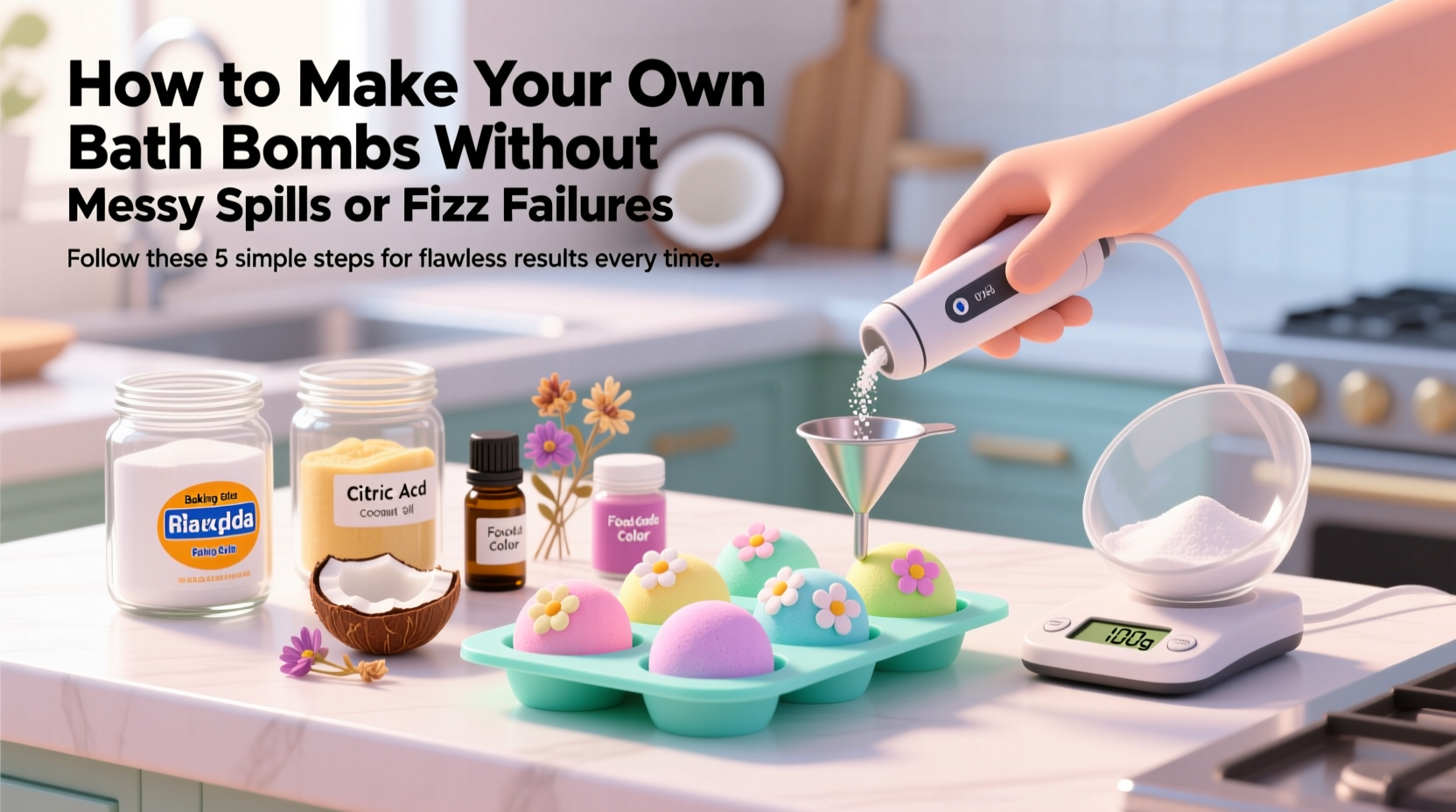
Bath bombs rely on a simple acid-base reaction. When citric acid and baking soda (sodium bicarbonate) come into contact with water, they react to produce carbon dioxide gas—the source of the signature fizz. But this same chemical sensitivity means exposure to moisture during mixing or storage can trigger premature reactions. Humidity, wet utensils, or over-mixing can all cause early activation, leading to flat, crumbly, or misshapen results.
The key is keeping dry ingredients completely separate from liquids until the final moment—and even then, introducing moisture gradually. Binding agents like witch hazel or light oils act as controlled activators. Too much liquid too soon causes expansion and fizzing in the bowl; too little leaves the mixture too dry to hold shape.
“Precision in ratios and patience in mixing are what separate successful bath bomb makers from those stuck cleaning up fizzed-out paste.” — Dr. Lena Torres, Cosmetic Chemist & Formulation Consultant
Essential Ingredients and Their Roles
Not all ingredients are created equal. Using subpar or incorrect components is a common reason for failure. Below is a breakdown of each core ingredient and its function in the formulation.
| Ingredient | Purpose | Common Pitfalls |
|---|---|---|
| Baking Soda (Sodium Bicarbonate) | Base component; reacts with citric acid to create fizz | Clumping if expired or exposed to moisture |
| Citric Acid | Acid component; triggers CO₂ release when wet | Lumpy texture leads to uneven distribution and weak fizz |
| Cornstarch or Arrowroot Powder | Stabilizer; slows reaction, improves skin feel | Overuse makes bath bombs too dense or slow to dissolve |
| Carrier Oil (e.g., coconut, sweet almond) | Binds mixture, adds moisturizing properties | Too much oil prevents hardening and causes greasy residue |
| Fine Sea Salt or Epsom Salt | Texture enhancer; supports muscle relaxation | Coarse grains may interfere with mold compression |
| Witch Hazel or Isopropyl Alcohol (in spray bottle) | Moisture activator; dampens mixture just enough to bind | Water causes instant fizzing—never use tap water |
| Fragrance Oil or Essential Oil | Scent enhancement; must be skin-safe and oil-soluble | Alcohol-based perfumes can trigger premature fizzing |
For best results, sift all dry powders before mixing to eliminate clumps and ensure even distribution. This step alone prevents weak spots and inconsistent fizzing.
Step-by-Step Guide to Flawless Bath Bombs
Follow this tested method to minimize mess and maximize success. This process emphasizes control, precision, and patience—three essentials for consistent results.
- Prepare Your Workspace: Cover surfaces with wax paper or silicone mats. Gather all ingredients, tools (mixing bowls, whisk, sifter, spray bottle), and molds. Ensure everything is completely dry.
- Sift Dry Ingredients: In a large bowl, combine 1 cup baking soda, ½ cup citric acid, ½ cup cornstarch, and ½ cup Epsom salt. Sift together twice to aerate and remove lumps.
- Mix Wet Ingredients Separately: In a small container, blend 1 tsp carrier oil, 10–15 drops fragrance or essential oil, and optional colorant (mica or lab-safe dye). Avoid water-based dyes.
- Incorporate Oils Gradually: Slowly drizzle the oil mixture into the dry ingredients while whisking continuously. Break up clumps with fingers if needed. Mixture should resemble damp sand.
- Test Moisture Level: Perform the squeeze test: grab a handful and press. It should hold shape briefly but crumble when poked. If it falls apart, lightly spritz with witch hazel—one spritz at a time, mixing thoroughly after each.
- Fill Molds Immediately: Pack mixture tightly into both halves of a sphere mold. Overfill slightly, press halves together firmly, and gently twist to seal. Avoid shaking or dropping.
- Demold After Drying: Let sit in mold for 2–3 minutes. Gently tap out. Place on parchment-lined tray. Cure for 24–48 hours in a cool, dry place.
- Store Properly: Once fully hardened, wrap in plastic or store in airtight containers with silica gel packs to prevent moisture absorption.
Avoid These Common Mistakes
Even experienced crafters occasionally fall into traps that ruin batches. Recognizing these errors early saves time, money, and frustration.
- Using water instead of witch hazel: Water activates the citric acid-baking soda reaction instantly. Witch hazel contains minimal water and evaporates quickly, giving you time to mold.
- Adding too much liquid at once: Spritz incrementally. One extra spray can turn your mixture into a foaming volcano.
- Working in humid conditions: High ambient moisture causes ingredients to react prematurely. Ideal humidity is below 50%.
- Poor mold technique: Under-packing leads to cracks; over-tightening can deform the bomb. Apply even pressure and let set before demolding.
- Rushing the drying process: Skipping the curing phase results in soft bombs that break easily. Patience ensures hardness and longevity.
Real Example: From Fizz Failure to Spa-Quality Success
Jamie, a DIY enthusiast from Portland, tried making bath bombs three times before succeeding. Her first batch fizzed violently in the bowl due to using water to bind the mixture. The second attempt used too much coconut oil, resulting in greasy, soft spheres that never hardened. On her third try, she followed a precise recipe, switched to witch hazel, worked in an air-conditioned room, and used a fine mesh sifter. She also reduced the essential oil to 12 drops per batch to avoid reactivity. The result? Firm, smooth bath bombs with a steady, long-lasting fizz and no mess. Jamie now sells her creations at local markets, attributing her turnaround to understanding ingredient chemistry and environmental control.
Checklist for Foolproof Bath Bomb Making
Use this checklist before starting each batch to ensure optimal conditions and ingredients.
- ✅ All tools and surfaces are clean and completely dry
- ✅ Working in a room with low humidity (<50%)
- ✅ Dry ingredients are fresh, lump-free, and sifted
- ✅ Fragrance and colorants are oil-soluble and skin-safe
- ✅ Witch hazel (not water) is in a fine mist spray bottle
- ✅ Molds are ready and free of residue
- ✅ Carrier oil measured precisely (no more than 1 tsp per cup of dry mix)
- ✅ Curing space available with good airflow and no direct sunlight
FAQ: Troubleshooting Your Bath Bomb Issues
Why do my bath bombs crack or fall apart?
Cracking usually occurs from either too little moisture (mixture too dry) or too much oil. It can also happen if the molds aren’t packed tightly or if the bath bomb is removed too soon. Allow 2–3 minutes in the mold before demolding, and ensure the mixture holds together when squeezed.
Can I use food coloring in bath bombs?
No. Most liquid food coloring contains water, which will activate the fizz prematurely. It can also stain skin and tubs. Use cosmetic-grade micas or lab-tested bath bomb dyes instead—they’re oil-dispersible and safe for bath products.
How long do homemade bath bombs last?
Properly stored in an airtight container with desiccants, they can last 6 months to a year. However, the fizz potency diminishes over time. For best results, use within 3–4 months. Store away from heat, light, and humidity.
Expert Tips for Advanced Results
Once you’ve mastered the basics, consider these upgrades to refine your craft:
- Add a surprise center: Embed small toys, crystals, or tea bags in the center before closing the mold. Make sure they’re sealed in waterproof material if applicable.
- Create layered colors: Divide mixture into bowls, tint each differently, and layer them in the mold for a marbled or rainbow effect.
- Use isopropyl alcohol for delicate scents: Some essential oils (like citrus) accelerate fizzing. Lightly spraying with 91% isopropyl alcohol instead of witch hazel reduces water content and stabilizes the mixture.
- Label and date your batches: Track formulations, fragrances, and performance over time. This helps replicate successes and troubleshoot failures.
“The most beautiful bath bombs aren’t just about looks—they’re about consistency, safety, and a reliable sensory experience.” — Maya Chen, Artisan Skincare Formulator
Conclusion: Turn Trial and Error Into Trusted Technique
Making bath bombs at home doesn’t have to be messy or unreliable. By respecting the chemistry behind the fizz, using precise measurements, and controlling environmental factors, you can produce professional-quality results every time. The difference between failure and success often comes down to one overlooked spritz of witch hazel or a forgotten sifting step. With the right approach, you’ll spend less time cleaning up and more time enjoying the soothing, aromatic baths you’ve crafted yourself.




 浙公网安备
33010002000092号
浙公网安备
33010002000092号 浙B2-20120091-4
Comments
No comments yet. Why don't you start the discussion?