
There’s something deeply satisfying about slipping into a bed that smells clean, soft, and subtly fragrant—like a sun-drenched meadow or a quiet forest after rain. While store-bought linen sprays offer convenience, many contain synthetic fragrances, alcohol that can degrade fabric over time, and preservatives that may irritate sensitive skin. Making your own linen spray is not only safer and more sustainable, but also allows you to customize the scent profile to match your mood, season, or sleep preferences.
Creating a homemade linen spray requires just a few simple ingredients, most of which you likely already have in your pantry or medicine cabinet. With a basic understanding of essential oils, solubilizers, and proper storage, you can craft a luxurious, long-lasting spray that enhances your bedtime ritual and transforms your bedroom into a sanctuary of calm.
Why Make Your Own Linen Spray?
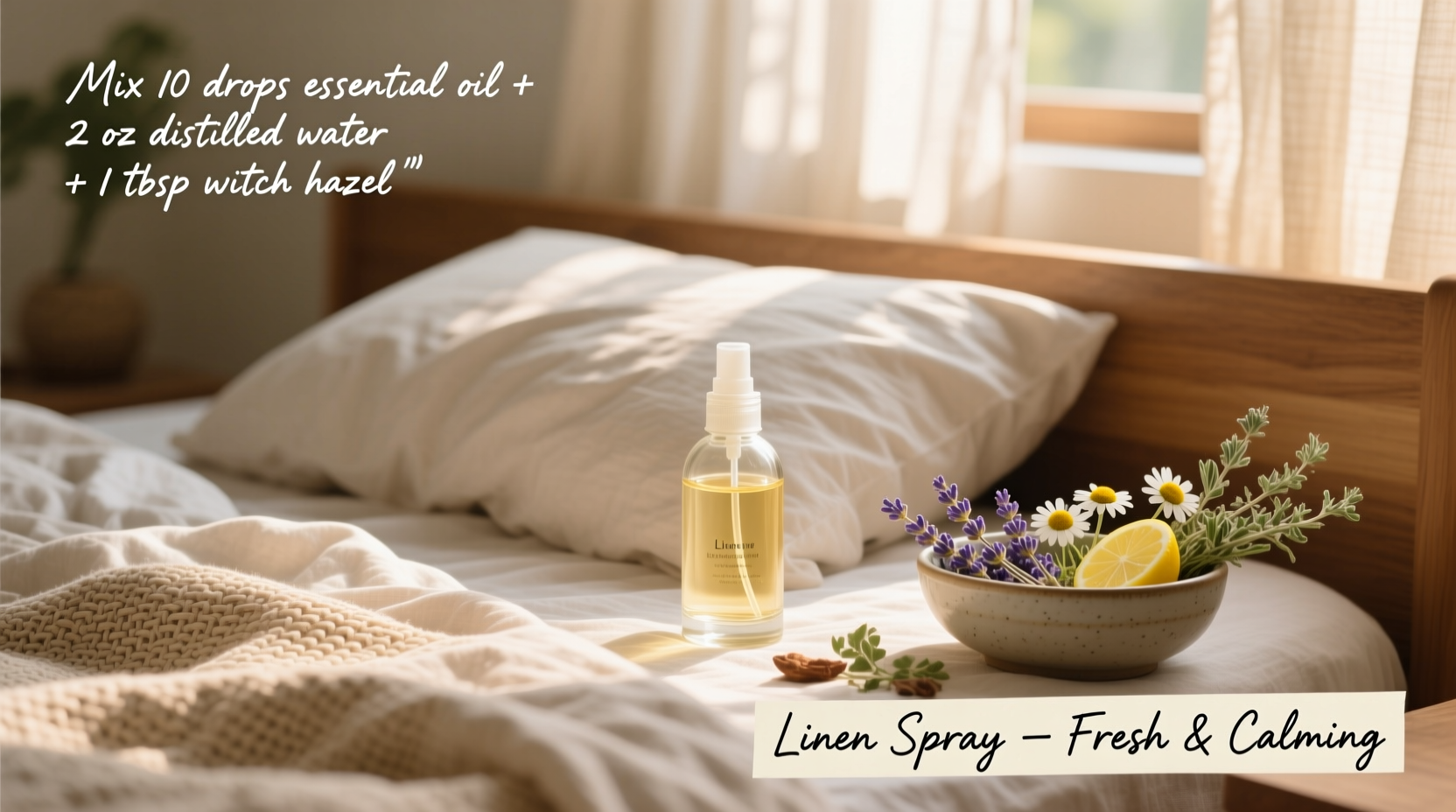
Commercial linen sprays often rely on synthetic fragrance compounds to deliver strong, long-lasting scents. These artificial aromas may trigger headaches, allergies, or respiratory discomfort in sensitive individuals. In contrast, natural linen sprays use plant-derived essential oils known not only for their pleasing aroma but also for their therapeutic properties.
Beyond health considerations, DIY sprays are economical. A single bottle of high-quality essential oil can yield dozens of batches, costing a fraction of what you’d pay for premium branded sprays. You also eliminate plastic waste from frequent repurchasing and gain full control over ingredient transparency.
“Switching to natural linen mists was a game-changer for my clients with sensitivities. The right blend doesn’t just mask odors—it supports relaxation and better sleep.” — Dr. Lila Nguyen, Aromatherapy Consultant
Essential Ingredients and Their Roles
Understanding each component in your linen spray ensures both safety and effectiveness. Here’s a breakdown of the core ingredients and why they matter:
- Distilled water: Free from minerals and impurities found in tap water, distilled water prevents bacterial growth and extends shelf life.
- Essential oils: Provide fragrance and therapeutic benefits. Lavender promotes relaxation; eucalyptus clears the air; citrus uplifts mood.
- High-proof alcohol (e.g., vodka): Acts as an emulsifier and preservative. It helps disperse oils evenly in water and inhibits microbial growth.
- Witch hazel (optional): A natural astringent that doubles as a solvent and mild preservative. Gentler than alcohol but less effective at dispersion.
- Vegetable glycerin (optional): Helps the scent linger longer on fabrics by slowing evaporation.
Step-by-Step Guide to Crafting Your Linen Spray
Follow this detailed process to create a balanced, safe, and aromatic linen spray at home. This recipe yields approximately 8 ounces (240 ml), enough to refresh a full-sized bed multiple times.
- Gather Supplies: You’ll need an 8 oz amber or cobalt glass spray bottle, a small funnel, measuring tools, and clean workspace.
- Add Alcohol Base: Pour 2 tablespoons (30 ml) of 80-proof or higher vodka into the bottle. This will help bind the oils to the water.
- Select & Blend Essential Oils: Choose 25–30 drops total of essential oils. For a calming nighttime blend: 15 drops lavender, 8 drops bergamot, 7 drops cedarwood. Adjust ratios based on preference.
- Mix Oils with Alcohol: Add the essential oils directly to the alcohol in the bottle. Cap and shake gently for 30 seconds to emulsify.
- Add Witch Hazel (Optional): Include 1 tablespoon (15 ml) witch hazel for added solubility and skin-soothing properties.
- Top with Distilled Water: Fill the rest of the bottle with distilled water, leaving about half an inch of space at the top.
- Final Shake & Label: Secure the sprayer and shake well. Label the bottle with ingredients and date made.
- Rest Before Use: Let the mixture sit for 24–48 hours. This allows the oils to fully integrate and the scent to mature.
When ready to use, shake the bottle lightly before each spray. Mist lightly over pillows, sheets, and duvet covers from a distance of 8–12 inches. Avoid soaking fabrics—light diffusion is sufficient.
Custom Scent Profiles for Every Season
Your linen spray can evolve with the seasons, aligning with nature’s rhythms and your emotional needs. Here are four signature blends tailored to different times of year:
| Season | Scent Profile | Essential Oil Blend (30 drops total) | Benefits |
|---|---|---|---|
| Spring | Floral-Citrus Renewal | 10 geranium, 10 sweet orange, 6 patchouli, 4 lemon | Uplifting, energizing, supports emotional balance |
| Summer | Cooling Herbal Breeze | 12 lemongrass, 10 peppermint, 8 eucalyptus | Refreshing, clears mental fog, cooling effect |
| Fall | Warm Spiced Earth | 10 cinnamon leaf, 8 clove bud, 7 vetiver, 5 orange | Grounding, comforting, ideal for cooler nights |
| Winter | Woody-Camphor Soothe | 14 cedarwood, 10 frankincense, 6 tea tree | Purifying, meditative, supports immune wellness |
Avoiding Common Mistakes
Even simple formulations can go wrong if key details are overlooked. Below are common pitfalls and how to prevent them:
- Using tap water: Minerals can cloud the solution and promote bacterial growth. Always opt for distilled water.
- Overloading with essential oils: More isn’t better. Excessive oils can stain fabrics or cause skin irritation. Stick to 25–30 drops per 8 oz.
- Skipping the shake: Essential oils separate from water. Always shake before spraying to ensure even distribution.
- Storing in clear bottles or sunlight: UV light degrades essential oils. Use dark glass and store in a cool, dark cupboard.
- Not labeling the bottle: Without labels, it’s easy to forget ingredients or preparation dates, increasing risk of using spoiled mixtures.
“Most people don’t realize that essential oils are potent biochemical compounds. Respect their strength—dilute properly and patch-test on fabric first.” — Rafael Torres, Certified Aromatherapist
Mini Case Study: Transforming a Stuffy Guest Room
Sarah, a homemaker in Portland, Oregon, struggled with her guest bedroom feeling musty despite regular cleaning. The room sat unused for weeks, and stored linens developed a stale odor. Commercial sprays left a chemical after-scent and irritated her sister’s asthma during visits.
She decided to try a DIY linen spray using 8 oz of distilled water, 2 tbsp vodka, 10 drops tea tree (for its natural antifungal properties), 12 drops lavender, and 8 drops lemon. After two weeks of misting sheets before guests arrived, the room consistently received compliments for its “crisp mountain air” freshness. Her sister reported easier breathing and deeper sleep. Sarah now rotates seasonal blends and keeps a bottle in every bedroom.
Storage and Shelf Life Guidelines
A properly made linen spray lasts 4–6 months when stored correctly. To maximize longevity:
- Use sterilized glass bottles with tight-fitting sprayers.
- Keep away from heat sources and direct sunlight.
- Shake gently before each use.
- Check for cloudiness, mold, or off-odors before spraying. Discard if any appear.
If you want to extend shelf life beyond six months, consider adding 1/4 tsp of liquid germall plus or another broad-spectrum cosmetic preservative—especially if you live in a humid climate.
FAQ
Can I use this spray on silk or delicate fabrics?
Yes, but always test on an inconspicuous area first. Use lower oil concentrations (15–20 drops per 8 oz) and avoid direct spraying on delicate trims. Allow fabric to dry completely before contact with skin.
Is it safe to use around pets?
Some essential oils—especially tea tree, eucalyptus, citrus, and peppermint—are toxic to cats and dogs. If you have pets, stick to pet-safe oils like lavender (in moderation) and avoid spraying while animals are present. Consult your vet if unsure.
Why does my spray smell weak after a few days?
This could be due to poor emulsification. Ensure you’re using enough alcohol or witch hazel to bind the oils. Also, some oils (like citrus) evaporate faster than base notes (like sandalwood). Blending top, middle, and base notes creates a longer-lasting aroma.
Checklist: Make Your First Linen Spray in 10 Minutes
- ✓ Gather glass spray bottle, funnel, and measuring tools
- ✓ Measure 2 tbsp high-proof alcohol into the bottle
- ✓ Add 25–30 drops of chosen essential oils
- ✓ Optional: Add 1 tbsp witch hazel or 1/2 tsp vegetable glycerin
- ✓ Fill remainder with distilled water
- ✓ Shake well and label with date and ingredients
- ✓ Let sit 24 hours before first use
- ✓ Store in a cool, dark place
- ✓ Shake before each application
- ✓ Enjoy fresh, naturally scented bedding
Conclusion
Making your own linen spray is more than a cost-saving hack—it’s an act of self-care. By choosing pure ingredients and intentional scents, you transform a mundane chore into a mindful ritual. Whether you’re winding down after a long day or preparing your home for guests, a few spritzes of a thoughtfully crafted mist can elevate the atmosphere and soothe the nervous system.
The beauty of this practice lies in its simplicity and adaptability. Start with one calming blend, then experiment with seasonal variations. Share bottles as thoughtful handmade gifts. Notice how different scents influence your sleep quality and morning mood. Over time, you’ll develop a personal olfactory language—one that speaks directly to comfort, cleanliness, and peace.




 浙公网安备
33010002000092号
浙公网安备
33010002000092号 浙B2-20120091-4
Comments
No comments yet. Why don't you start the discussion?