
Minimalist Christmas decor isn’t about scarcity—it’s about intention. It’s the quiet weight of a single pine bough draped over a mantel, the subtle rustle of dried eucalyptus stems tied with undyed linen, the soft scent of foraged cedar rising in cool air. In a season saturated with mass-produced ornamentation, a garland made entirely from what grows nearby grounds the holidays in place, memory, and reverence. This approach reduces environmental impact, deepens connection to local ecology, and yields a decoration that feels personal, unhurried, and deeply human. More than aesthetics, it’s an act of attention: learning which branches bend without snapping, recognizing the difference between aromatic white pine and sturdy yew, understanding when to harvest without harm. Done thoughtfully, foraging becomes stewardship—not extraction.
Why Forage Responsibly (and What You’re Allowed to Gather)
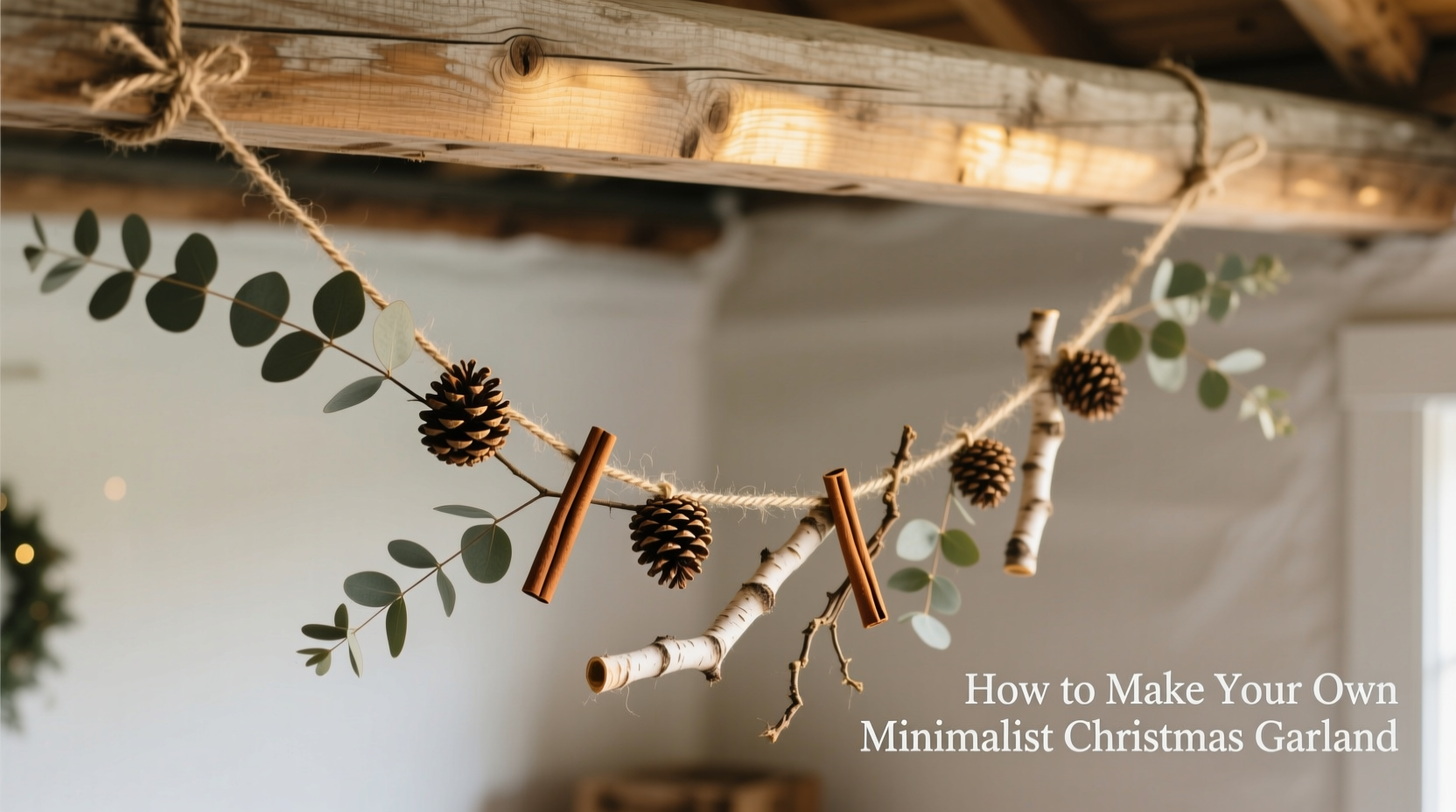
Foraging isn’t a free-for-all. It’s governed by ecological ethics, land ownership laws, and seasonal awareness. Most public lands—including national forests, state parks, and many county preserves—require permits for plant collection, even for personal decorative use. Always check regulations before stepping onto any managed land. On private property, explicit permission is non-negotiable. Ethical foraging begins with the “three Cs”: consent, conservation, and care.
Conservation means never taking more than 5–10% of any single stand of plants—and never harvesting from the same location two years in a row. Never cut the terminal bud of conifers (the growing tip at the end of a branch), as this halts growth. Avoid rare or slow-growing species like yew (highly toxic and ecologically sensitive) or old-growth cedar. Stick to abundant, fast-regenerating species: Eastern white pine, Norway spruce, common juniper, American holly (only if berries are present and you leave plenty for birds), and native ferns like Christmas fern.
Timing matters. Late November through mid-December is ideal: foliage is fully hardened against frost, sap flow is minimal (reducing bleed and wilting), and most deciduous trees have dropped their leaves—making evergreen textures more visible. Avoid foraging after heavy rain (slippery terrain, muddy roots) or during drought (plants are stressed and less resilient).
Your Foraging Toolkit & Seasonal Harvest Calendar
You don’t need specialized gear—but precision and respect do require specific tools. Below is a curated list of essentials, plus timing guidance based on USDA Hardiness Zones 4–7 (adjust ±2 weeks for warmer or colder zones):
| Material | Best Harvest Window | Key Identification Markers | Max Harvest per Plant |
|---|---|---|---|
| Eastern White Pine | Nov 20 – Dec 15 | Needles in bundles of 5, soft blue-green, flexible; bark gray-brown, deeply furrowed on mature trunks | 3–4 side branches per tree (never from main leader) |
| Norway Spruce | Dec 1 – Dec 20 | Sharp, four-sided needles; cones hang downward, 4–6 inches long; bark reddish-brown, scaly | 2–3 lower lateral branches per mature tree |
| Dried Common Yarrow | Sept 15 – Oct 30 (harvest & dry ahead) | Feathery, fern-like leaves; flat-topped clusters of tiny white or pale pink flowers | Entire above-ground portion of 1–2 flowering stalks per patch |
| Red Osier Dogwood Stems | Nov 10 – Dec 5 (after first hard frost) | Sleek, bright red bark; opposite branching pattern; no thorns; leaves fully dropped | Up to 5 stems per clump (cut at base, not mid-cane) |
| Wild Rose Hips | Oct 20 – Nov 30 | Round, glossy red-orange fruits below leafless stems; often clustered; calyx (sepals) persisting at blossom end | Half the hips from any one shrub—leave remainder for wildlife |
Remember: If you cannot confidently identify a plant—walk away. Misidentification risks ecological harm and personal safety. Use field guides like *Peterson Field Guide to Edible Wild Plants* or apps like iNaturalist (with verification mode enabled) to cross-reference. When in doubt, photograph and consult a local extension office or native plant society.
The Minimalist Garland Assembly Process
A minimalist garland rejects clutter. Its power lies in rhythm, contrast, and negative space—not density. The goal is a linear composition where each element earns its place. This isn’t a “fill-in-the-gaps” project; it’s curation.
- Prep Your Materials (Day 1): Rinse foraged greens gently under cool water to remove dust and insects. Pat dry with clean cotton towels—never rub. Lay stems flat on wire racks in a cool, dark, well-ventilated room (e.g., a garage or unused closet) for 12–24 hours. This pre-drying prevents mold and helps stems hold shape.
- Create the Base (Day 2, Morning): Cut a length of 4mm natural jute twine or undyed linen cord—add 24 inches to your desired finished garland length (for hanging loops and tying off). Secure one end to a hook or doorknob. Begin attaching greenery using the “wrap-and-tuck” method: lay a 6–8 inch stem diagonally across the cord, then tightly wrap the cord twice around stem and cord together. Tuck the cut end of the stem underneath the next layer—no glue, no wire.
- Establish Rhythm (Day 2, Afternoon): Alternate every 8–12 inches with a contrasting element: a 4-inch dogwood stem, a cluster of 3–5 rose hips threaded onto thin raffia, or a single yarrow bloom head. Leave 4–6 inches of bare cord between accents. This breathing room defines minimalism.
- Add Texture & Depth (Day 3, Morning): Weave in fine-textured elements: individual white pine needles bundled with raffia (5–6 per bundle), or tiny sprigs of dried lavender tucked beneath larger branches. These are whispers—not statements.
- Final Trim & Rest (Day 3, Afternoon): Hang the garland loosely over a clothesline or banister for 2 hours. Gently adjust any stems that splayed outward. Trim protruding ends with sharp shears for clean lines. Let rest horizontally overnight—this sets the drape.
“True minimalism in botanical work isn’t about using less—it’s about choosing with such clarity that every element resonates with purpose. A single cedar frond, placed with intention, carries more meaning than a dozen mismatched ornaments.” — Dr. Lena Torres, Ethnobotanist & Director of the Appalachian Botanical Conservancy
Real Example: Sarah’s Lakeside Cabin Garland
Sarah, a textile designer living near Lake Superior, wanted a garland that reflected her surroundings—not generic holiday tropes. She walked her 3-acre wooded lot on December 3rd, noting where white pine grew densely along the south-facing slope (sun-warmed, resilient) and where red osier dogwood formed thickets near the frozen creek. With written permission from her neighbor (whose land bordered hers), she harvested 14 white pine side branches—taking only from lower limbs of seven healthy trees—and nine dogwood stems from two vigorous clumps. She’d gathered and air-dried wild yarrow in September, and collected rose hips in early November. Over three evenings, she assembled a 72-inch garland using unbleached linen cord. She spaced dogwood stems every 10 inches, threaded rose hips onto thin raffia (three per cluster), and tucked yarrow heads at the midpoint and ends. No ribbon, no bells, no glitter. When hung over her stone fireplace, the garland didn’t shout “Christmas”—it whispered “winter, home, continuity.” Neighbors asked where she’d bought it. She smiled and said, “I walked outside and listened.”
Care, Longevity & End-of-Season Rituals
A foraged garland is ephemeral—and that’s part of its integrity. Unlike plastic counterparts, it evolves: needles may loosen, colors deepen to russet and amber, fragrances mellow. Expect 10–14 days of peak freshness indoors (cooler rooms extend life). To maximize longevity:
- Mist lightly with water once daily—focus on stem cut ends, not foliage (which can encourage mold).
- Keep away from heat sources: radiators, fireplaces (even unlit ones), and direct sunlight.
- Store overnight in a cool garage or porch if indoor temps exceed 68°F.
- Refresh cut ends every 3 days: snip ¼ inch off with sharp shears and re-submerge in shallow water for 2 hours.
When the garland begins to shed significantly or lose structural integrity, honor its cycle. Remove all natural elements and compost them—no plastic ties or synthetic wires should be present. Save the linen cord for next year. Dry remaining rose hips for tea. Bundle pine needles into sachets for drawers. Scatter dogwood stems in garden beds—they’ll slowly release nutrients. This closing ritual transforms disposal into reciprocity.
Frequently Asked Questions
Can I forage in city parks or neighborhood greenways?
Generally, no—most municipal ordinances prohibit plant removal, even for personal use. Exceptions are rare and require formal written permission from the parks department. Instead, focus on your own yard (if you have one), talk with neighbors who welcome responsible harvesting, or join organized foraging walks led by certified botanists or native plant societies.
What if I live in an apartment with no access to wild spaces?
You still have options. Visit local farmers’ markets in late November—many vendors sell sustainably harvested evergreen boughs, dried grasses, and seed pods. Contact florists who source locally; some will set aside trimmings (ask for unsprayed, pesticide-free material). Or grow your own: potted rosemary (trimmed into small sprigs), dwarf Alberta spruce clippings (with owner permission), or dried wheat stalks from craft suppliers that certify sustainable farming practices.
Is it safe to bring foraged greens indoors around pets or children?
Yes—with critical caveats. White pine, spruce, and most common junipers are non-toxic to humans and pets. However, avoid yew (all parts highly toxic), mistletoe (berries toxic), and holly berries (can cause gastrointestinal upset). Even non-toxic plants pose choking hazards for toddlers or curious pets—always mount garlands out of reach, and inspect daily for fallen berries or loose stems. When in doubt, choose fragrance and texture over fruiting elements.
Conclusion: The Quiet Power of Making Something Real
In a world of instant delivery and algorithmic curation, making a Christmas garland by hand—from materials gathered with your own two hands—is quietly revolutionary. It slows time. It demands presence. It asks you to learn the names of plants, to notice how light falls on a cedar frond at 4 p.m. in December, to feel the satisfying snap of a well-pruned spruce branch. There is no “perfect” foraged garland—only honest ones: slightly asymmetrical, subtly fragrant, marked by the weather and the land that gave them. This isn’t decoration as consumption. It’s decoration as dialogue—with ecology, with seasonality, with the simple, sustaining act of creation. Your garland won’t last forever. Neither should it. Its quiet beauty lies precisely in its temporality—in the knowledge that you participated, however briefly, in something older and deeper than commerce or trend. So step outside. Breathe cold air. Look closely. Then begin.




 浙公网安备
33010002000092号
浙公网安备
33010002000092号 浙B2-20120091-4
Comments
No comments yet. Why don't you start the discussion?