
Commercial fabric softeners are convenient, but they often contain synthetic fragrances, phthalates, and other chemicals linked to skin irritation, respiratory issues, and environmental harm. Many people are turning to homemade alternatives not only to reduce exposure to toxins but also to save money and minimize plastic waste. Creating your own natural fabric softener is simpler than it sounds—requiring just a few common household ingredients and minimal preparation time. When done correctly, it can leave your laundry soft, static-free, and lightly scented without compromising safety or performance.
Why Switch to a Natural Fabric Softener?
The appeal of natural fabric softeners lies in their transparency. You know exactly what goes into them—no hidden chemicals, no greenwashing. Most store-bought softeners use quaternary ammonium compounds (quats), which can trigger asthma and are persistent in the environment. Synthetic fragrances may contain dozens of undisclosed chemicals, some of which are endocrine disruptors.
In contrast, natural alternatives use plant-based ingredients like vinegar, baking soda, and essential oils. These components are biodegradable, gentle on sensitive skin, and safe for septic systems and greywater reuse. They don’t coat fabrics with waxy residues that reduce absorbency—a common issue with commercial products, especially problematic for towels and cloth diapers.
“Switching to natural laundry solutions is one of the most impactful changes a household can make for both health and sustainability.” — Dr. Lena Peterson, Environmental Health Scientist
Essential Ingredients and Their Roles
Understanding each ingredient’s function ensures your homemade fabric softener works effectively and safely. Below is a breakdown of the most commonly used components:
- White Vinegar: Acts as a natural softener and deodorizer. It breaks down detergent residue and mineral buildup, leaving fabrics feeling softer and smelling fresher. Despite concerns about odor, the vinegar smell dissipates completely during drying.
- Baking Soda: Enhances softness and helps neutralize odors. It also balances pH levels in the wash, improving cleaning efficiency.
- Wool Dryer Balls: Not an ingredient per se, but a crucial companion. They reduce drying time, soften clothes mechanically, and can be used with essential oils for light scenting.
- Essential Oils (optional): Add a pleasant aroma and offer additional benefits—lavender is calming and antimicrobial, tea tree has antifungal properties, and citrus oils cut through grease.
- Water: Used as a diluent in liquid recipes to ensure even distribution in the rinse cycle.
Step-by-Step Guide to Making Liquid Fabric Softener
A liquid fabric softener can be added directly to your washing machine’s dispenser. Follow this reliable recipe for consistent results.
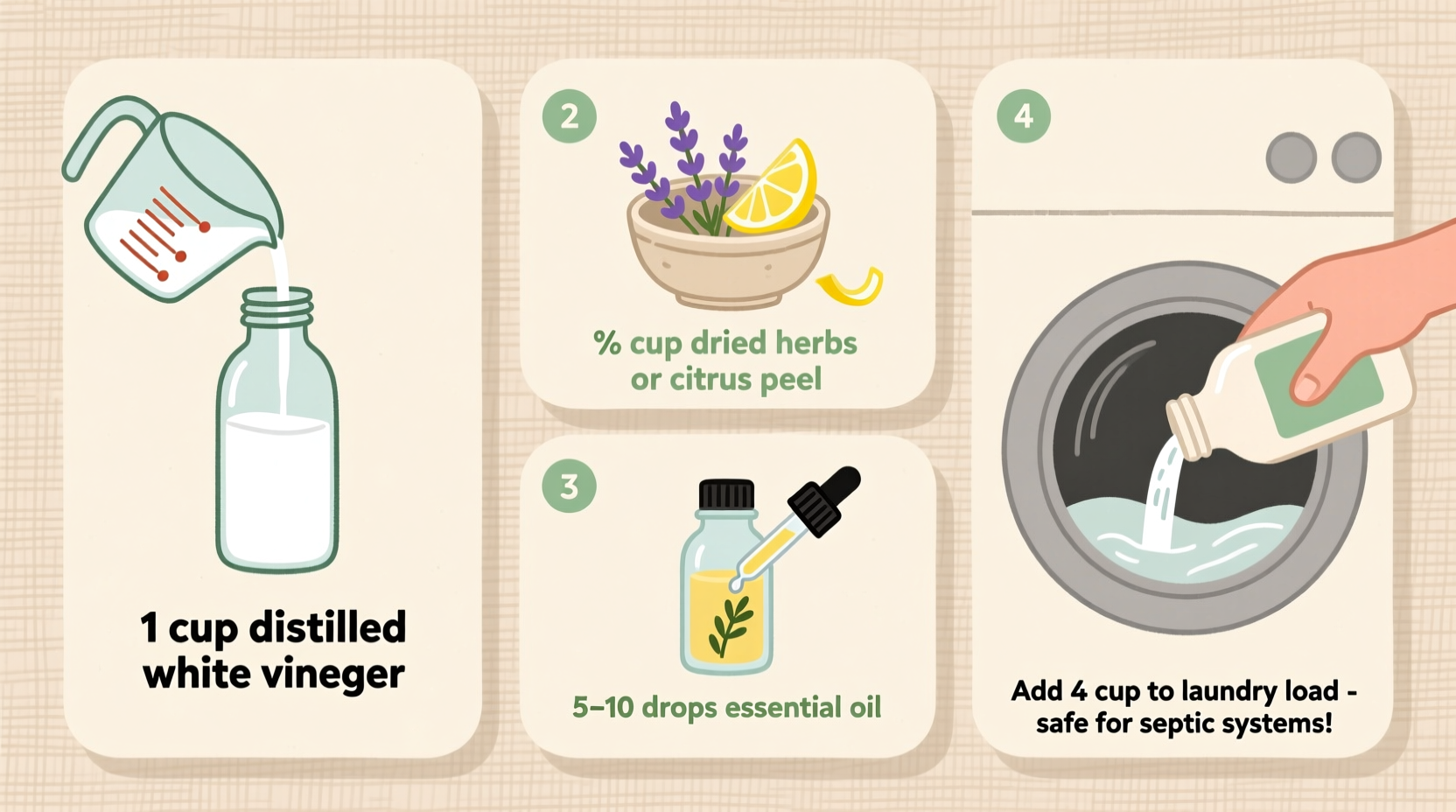
- Gather a clean 32-ounce glass bottle or BPA-free plastic container with a lid.
- Add 1 cup of distilled white vinegar.
- Mix in 1 cup of water to dilute and prevent over-acidification.
- Stir in ¼ cup of baking soda. It will fizz initially—this is normal as it reacts with the vinegar.
- Once the fizzing subsides, add 20–30 drops of your preferred essential oil (e.g., 15 drops lavender, 10 drops lemon).
- Seal the container and shake gently to combine.
- Label the bottle clearly and store in a cool, dark place.
Use ¼ to ½ cup per load, depending on size and softness preference. Pour into the fabric softener dispenser or a reusable softener ball if your machine doesn’t have a dispenser.
Safety Notes
Never mix vinegar with bleach or hydrogen peroxide—this creates harmful gases. Also, avoid using vinegar on delicate silks or elastane-rich fabrics unless diluted heavily, as prolonged exposure may weaken fibers.
Dryer Ball Method: A Residue-Free Alternative
For those seeking a completely residue-free option, wool dryer balls are highly effective. Unlike liquid softeners—even natural ones—dryer balls don’t leave any buildup on fabrics, preserving towel absorbency and athletic wear performance.
To use:
- Place 3–6 wool dryer balls in the dryer with your laundry.
- Add 5–10 drops of essential oil to each ball before starting the cycle for a light scent.
- Reapply oils every 3–5 uses as the fragrance fades.
They last for over 1,000 loads and reduce drying time by 20–30% by separating clothes and improving airflow. This translates to energy savings and less wear on your garments.
“I’ve used wool dryer balls for five years now. My towels are softer, dry faster, and I’ve eliminated my entire liquid softener habit.” — Mark Tran, Sustainable Living Advocate
Do’s and Don’ts of Homemade Fabric Softeners
| Do’s | Don’ts |
|---|---|
| Use high-quality essential oils labeled as 100% pure. | Use artificial fragrance oils—they may contain phthalates. |
| Shake liquid softener before each use to recombine ingredients. | Pour undiluted vinegar directly onto fabrics—it may cause discoloration. |
| Store in glass or recyclable containers to reduce plastic waste. | Mix vinegar with bleach or ammonia-based cleaners. |
| Test on a small fabric area first if using on delicate items. | Overuse essential oils—too much can irritate skin or stain fabrics. |
| Refresh wool dryer balls monthly with a hot wash and dry cycle. | Use fabric softener (even natural) on flame-resistant children’s sleepwear—it reduces fire protection. |
Tips for Maximizing Softness Without Chemicals
Natural softening isn’t just about additives—it starts with proper washing techniques. Consider these strategies to enhance results:
- Don’t Overload the Machine: Crowded drums restrict movement, leading to poor rinsing and stiff clothes.
- Rinse Twice: An extra rinse cycle removes more detergent residue, which contributes to scratchiness.
- Use Less Detergent: Excess soap isn’t rinsed away fully, leaving a film that makes fabrics feel rough.
- Air-Dry When Possible: Line-drying softens cotton naturally and reduces static.
- Rotate Wool Dryer Balls: Toss them in the dryer even without laundry once a month to refresh their fluffiness.
Real Example: Sarah’s Transition to Toxin-Free Laundry
Sarah, a mother of two from Portland, switched to natural laundry methods after her youngest developed eczema. Doctors suggested eliminating chemical irritants, so she began researching alternatives. She started with vinegar-only rinses but found the scent off-putting. After experimenting, she landed on a balanced mix: 1 cup vinegar, 1 cup water, ¼ cup baking soda, and 20 drops of lavender oil. She stores it in a repurposed glass jug and uses ⅓ cup per load.
She also invested in six wool dryer balls, applying orange and tea tree oil for freshness. Within three weeks, her daughter’s skin improved significantly. “I didn’t realize how much residue was building up on our clothes,” Sarah said. “Now everything feels softer, and I’m not worried about what’s touching my family’s skin.”
Frequently Asked Questions
Can I use this softener in HE (high-efficiency) washing machines?
Yes. The diluted vinegar and baking soda solution is safe for HE machines. Just avoid overfilling the dispenser and never pour thick or oily mixtures, which can clog lines.
Will vinegar damage my washing machine or fabrics?
No, when used properly, vinegar is safe for both machines and most fabrics. Its acidity helps clean the drum and hoses. However, avoid using it frequently on natural rubber parts or delicate silks. Cotton, linen, and synthetics handle it well.
Are essential oils safe for babies and sensitive skin?
Most are, but use caution. Stick to gentle oils like lavender or chamomile, and reduce the number of drops (5–10 per batch). For newborns or highly sensitive individuals, skip oils entirely and rely on vinegar and baking soda alone.
Final Checklist: Making Your Natural Fabric Softener Safely
- Choose a clean, labeled container for storage.
- Use distilled white vinegar and filtered or distilled water.
- Add baking soda slowly to prevent overflow from fizzing.
- Select skin-safe, 100% pure essential oils—if using.
- Shake well before each use.
- Store away from sunlight and out of reach of children.
- Test on a small garment area before full use.
- Pair with wool dryer balls for enhanced softness and efficiency.
- Avoid use on flame-resistant clothing or waterproof membranes.
- Dispose of old batches responsibly—down the drain with running water.
Conclusion: Take Control of What Touches Your Skin
Your laundry touches your body more than almost anything else you own. Making your own natural fabric softener is a simple, empowering step toward a healthier home. With just vinegar, baking soda, and optional essential oils, you can achieve soft, fresh-smelling clothes without exposing yourself or the planet to harmful chemicals. The process takes minutes, costs pennies per load, and aligns with a sustainable lifestyle.




 浙公网安备
33010002000092号
浙公网安备
33010002000092号 浙B2-20120091-4
Comments
No comments yet. Why don't you start the discussion?