
In a world saturated with synthetic skincare products, more people are turning to natural alternatives that align with their skin’s biology. Among the most versatile and effective DIY solutions is a homemade face mist—a lightweight, hydrating spritz that revitalizes the skin throughout the day without stripping moisture. Unlike many commercial mists that contain alcohol or artificial fragrances, a natural version made at home delivers hydration, soothes irritation, and supports the skin’s protective barrier. This guide walks through the science of hydration, ingredient selection, formulation techniques, and real-world application so you can craft a personalized face mist that truly works.
Why Natural Face Mists Work Better for Long-Term Skin Health
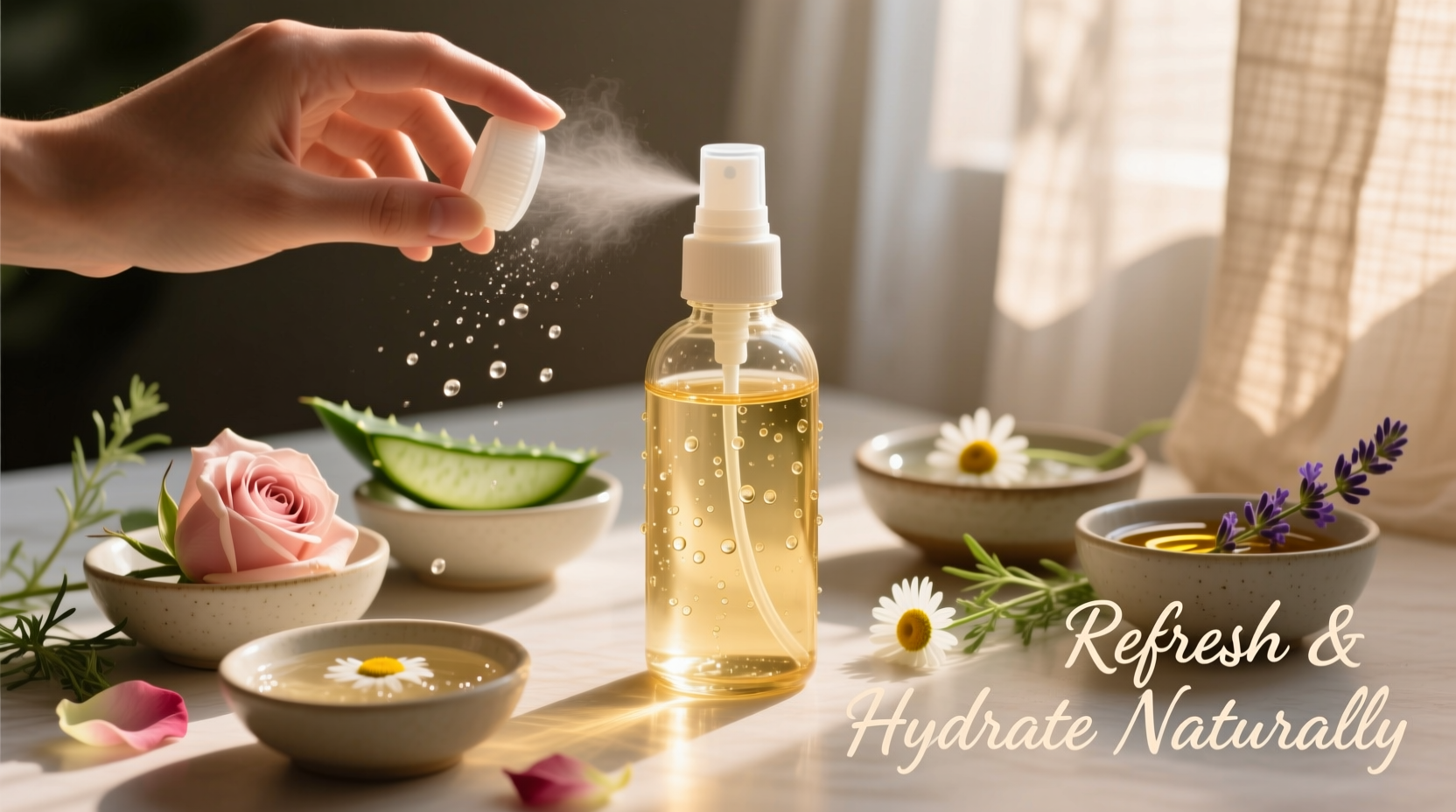
Most store-bought facial mists rely on denatured alcohol, propylene glycol, or synthetic preservatives to extend shelf life and create a “refreshing” sensation. While this may feel cooling initially, these ingredients often disrupt the skin’s natural lipid barrier, leading to increased transepidermal water loss (TEWL) and long-term dryness. In contrast, natural face mists use plant-based hydrosols, humectants, and emollients that attract and lock in moisture.
The key lies in understanding how skin stays hydrated. The stratum corneum—the outermost layer of the epidermis—relies on natural moisturizing factors (NMFs) like amino acids, urea, and lactic acid to retain water. A well-formulated natural mist replenishes these components while supporting pH balance and microbial harmony.
“Hydration isn’t just about adding water—it’s about creating an environment where the skin can hold onto it.” — Dr. Lena Patel, Integrative Dermatology Specialist
Choosing the Right Base: Hydrosols vs. Distilled Water
The foundation of any face mist is its liquid base. While distilled water is commonly used, it lacks active benefits. Hydrosols—also known as floral waters—are superior because they are byproducts of steam distillation of herbs, flowers, or leaves, retaining subtle therapeutic properties.
| Base Option | Benefits | Best For Skin Type |
|---|---|---|
| Rose Water | Anti-inflammatory, mildly astringent, balances pH | All types, especially sensitive or mature |
| Chamomile Hydrosol | Calm redness, reduces irritation | Sensitive, acne-prone, reactive |
| Lavender Hydrosol | Antibacterial, soothing, promotes healing | Oily, combination, blemish-prone |
| Witch Hazel (Alcohol-Free) | Tonifies pores, controls oil, antioxidant-rich | Oily, acne-prone (use diluted) |
| Distilled Water | Neutral, clean slate for custom blends | When combining multiple actives |
Avoid hydrosols preserved with alcohol, as they can be dehydrating. Always opt for organic, food-grade options from reputable suppliers.
Essential Additives for True Hydration and Protection
To move beyond simple spritzing, incorporate functional ingredients that enhance hydration, protect against environmental stressors, and support skin resilience.
- Glycerin (vegetable-derived): A powerful humectant that draws moisture into the skin. Use at 1–3% concentration to avoid stickiness.
- Aloe Vera Juice: Soothes inflammation, contains polysaccharides that stimulate collagen synthesis. Replace up to 50% of your base liquid with pure aloe juice.
- Niacinamide (Vitamin B3): Improves barrier function, reduces redness, and regulates sebum. Use water-soluble powder at 2–5%.
- Hyaluronic Acid (Low Molecular Weight): Penetrates deeper layers to plump skin. Dissolve a small pinch (0.1%) in warm water before adding to the mist.
- Green Tea Extract (or cooled strong brew): Rich in polyphenols that neutralize free radicals from UV exposure and pollution.
For added sensory pleasure and mild preservation, include a few drops of essential oils—but only if your skin tolerates them. Lavender, frankincense, and neroli are gentle choices. Avoid citrus oils if using during the day due to photosensitivity risks.
Step-by-Step Guide: Crafting Your Custom Face Mist
Creating your own face mist is simple, customizable, and cost-effective. Follow this detailed process to ensure safety, stability, and effectiveness.
- Sanitize Equipment: Wash a 4 oz (120 ml) glass spray bottle, funnel, and stirring rod with hot, soapy water. Rinse thoroughly and air-dry or wipe with 70% isopropyl alcohol.
- Select Your Base (¾ of total volume): Pour 90 ml of rose water or chamomile hydrosol into the bottle.
- Add Active Ingredients:
- 10 ml aloe vera juice
- ¼ tsp vegetable glycerin (approx. 1.2 ml)
- Pinch of hyaluronic acid (0.1g), pre-dissolved in 1 tsp warm distilled water
- ½ tsp green tea extract or 15 ml cooled brewed green tea
- Optional Enhancements: Add 3–5 drops of lavender essential oil or 1/8 tsp niacinamide powder (ensure it dissolves fully).
- Top Off and Mix: Fill the remainder with distilled water to reach 120 ml. Secure the sprayer and shake gently to combine.
- Label and Store: Write the date and ingredients on the bottle. Keep refrigerated and use within 2–3 weeks.
Real Example: Reviving Dry, Tired Skin During Travel
Sophie, a freelance photographer based in Portland, struggled with tight, flaky skin after long flights. She noticed her usual mist left her face feeling momentarily cool but increasingly parched. After switching to a DIY formula with rose water, aloe, and hyaluronic acid, she saw a noticeable difference within days.
“I started using my homemade mist every two hours during a flight to Japan,” she shared. “Not only did my skin stay calm and supple, but I didn’t need to reapply moisturizer until landing. It felt like my skin was actually drinking the mist instead of just getting wet.”
She now keeps two versions on hand—one with calming chamomile for inflamed mornings, and another with green tea and niacinamide for daytime protection against city pollution.
Preservation and Safety: How to Extend Shelf Life Naturally
Because natural face mists lack synthetic parabens or phenoxyethanol, they are more prone to microbial growth. However, smart formulation and storage can extend usability without compromising purity.
- Use distilled or boiled-and-cooled water to minimize contaminants.
- Always wash hands before handling ingredients.
- Store the mist in the refrigerator—cold temperatures slow bacterial growth.
- Limit batch size to 2–3 weeks’ supply.
- Consider adding natural preservatives like radish root ferment filtrate (Leucidal® Liquid SF) at 2–4%, which is broad-spectrum and biodegradable.
If your mist develops cloudiness, odor, or particles, discard it immediately. When in doubt, freshness trumps frugality.
“DIY skincare empowers people to know exactly what touches their skin—but it also demands responsibility. Clean technique is non-negotiable.” — Dr. Amara Singh, Holistic Skincare Formulator
Checklist: Building Your First Natural Face Mist
Before you begin, gather everything you need. This checklist ensures a smooth, sterile process.
- ✅ 4 oz amber or cobalt glass spray bottle with fine mist nozzle
- ✅ Funnel and measuring spoons or syringe
- ✅ 90 ml preferred hydrosol (e.g., rose or chamomile water)
- ✅ 10 ml aloe vera juice (preservative-free)
- ✅ ¼ tsp vegetable glycerin
- ✅ Pinch of hyaluronic acid (0.1g)
- ✅ 15 ml cooled green tea or extract
- ✅ Optional: 3–5 drops essential oil or 1/8 tsp niacinamide
- ✅ Distilled water to top off
- ✅ Label and permanent marker
- ✅ Refrigerator space for storage
Frequently Asked Questions
Can I use tap water instead of distilled?
No. Tap water contains minerals, chlorine, and microbes that can destabilize your formula and introduce bacteria. Always use distilled or sterilized water to ensure safety and clarity.
Will glycerin make my skin sticky?
Only if used in excess. At concentrations below 3%, glycerin absorbs moisture from the air and integrates smoothly into the skin. In humid environments, it performs best; in dry climates, follow misting with a moisturizer to seal hydration.
How often can I use the face mist each day?
You can safely use it 3–5 times daily. Ideal moments include after cleansing, before applying serum, during midday fatigue, or post-exposure to sun, wind, or air conditioning. Avoid over-spraying, as constant evaporation without occlusion can lead to dehydration.
Customizing for Your Skin Type
Your ideal mist should reflect your unique skin needs. Here’s how to tailor the formula:
- Dry Skin: Increase glycerin slightly (up to 3%), add 1 tsp of cucumber hydrosol for extra soothing, and include a drop of squalane oil (shake before use).
- Oily/Acne-Prone Skin: Use witch hazel (alcohol-free) as 50% of the base, add green tea extract, and include 2 drops of tea tree essential oil (diluted properly).
- Combination Skin: Stick to rose water base with balanced glycerin and a touch of niacinamide to regulate oil in the T-zone while hydrating cheeks.
- Mature Skin: Add frankincense essential oil (2–3 drops) and increase hyaluronic acid slightly for plumping. Pair with rosehip hydrosol for antioxidant support.
- Sensitive Skin: Use only chamomile or calendula hydrosol, omit essential oils, and include colloidal oat extract for barrier reinforcement.
Conclusion: Take Control of Your Skincare Ritual
Creating your own natural face mist is more than a DIY trend—it’s an act of self-care grounded in awareness and intention. By choosing whole, recognizable ingredients, you eliminate exposure to hidden irritants and build a routine that adapts to your skin’s changing needs. Whether you’re combating dry office air, soothing post-cleansing tightness, or simply craving a moment of refreshment, a well-crafted mist becomes a trusted ally.
The beauty of this practice lies in its simplicity and personalization. Start with one basic recipe, observe how your skin responds, and refine from there. Over time, you’ll develop a deep understanding of what your skin truly thrives on—something no mass-produced product can offer.




 浙公网安备
33010002000092号
浙公网安备
33010002000092号 浙B2-20120091-4
Comments
No comments yet. Why don't you start the discussion?