
Commercial hair treatments often come with long ingredient lists filled with preservatives, sulfates, and synthetic fragrances. Many of these additives can strip moisture, irritate the scalp, or cause long-term damage. The good news? You don’t need a specialty store or expensive products to nourish your hair. Your kitchen already holds powerful ingredients capable of deeply conditioning, strengthening, and revitalizing your strands. By creating your own natural hair mask from pantry staples, you gain full control over what touches your scalp and hair—ensuring purity, affordability, and effectiveness.
From honey’s humectant properties to coconut oil’s penetrating fatty acids, common household items have been used for generations across cultures to support healthy hair. This guide explores the science behind these ingredients, offers customizable recipes for different hair types, and provides step-by-step instructions to maximize results—all without leaving your kitchen.
The Science Behind Natural Hair Care
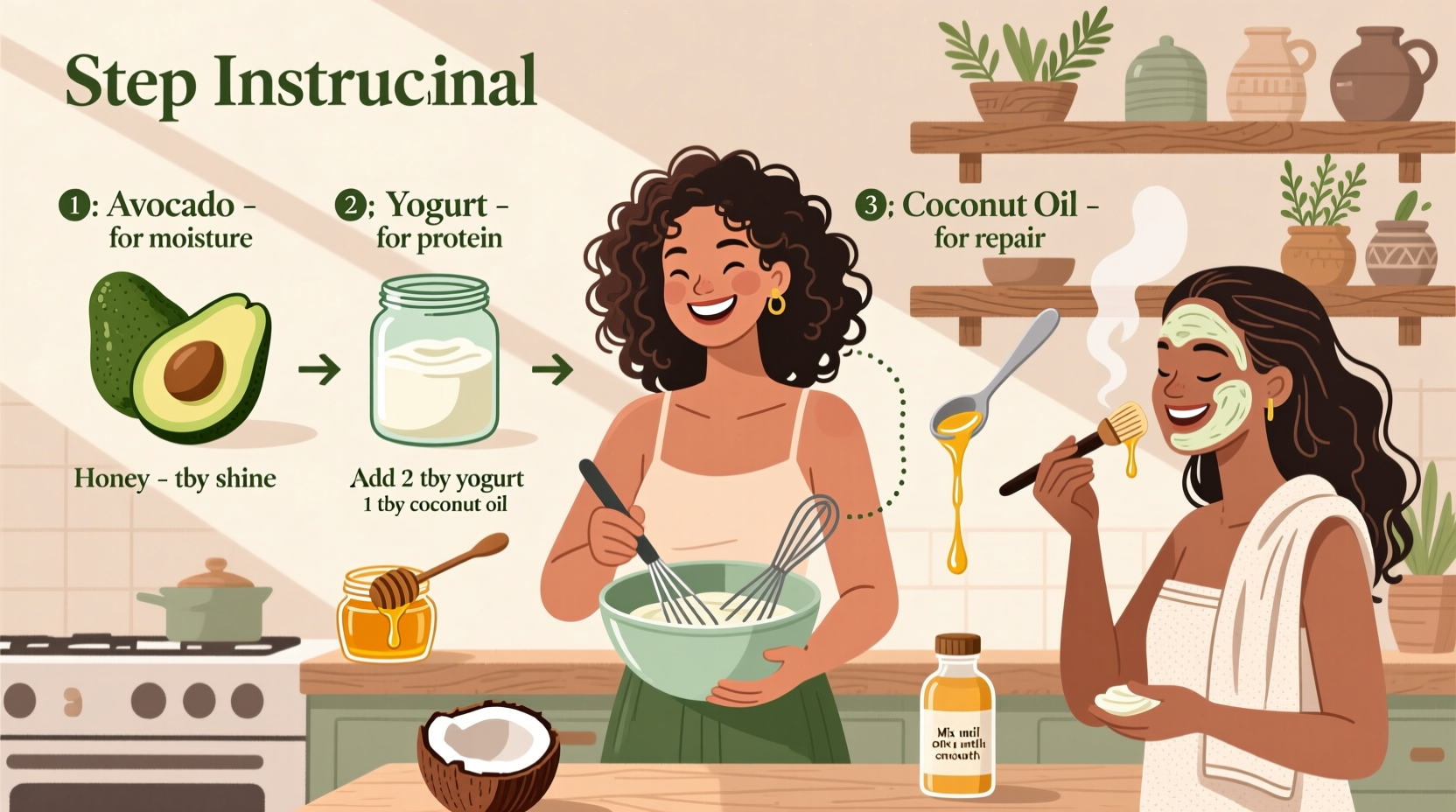
Natural ingredients work because they contain bioactive compounds that interact directly with hair structure. Unlike synthetic formulations that may sit on the surface, whole-food components can penetrate the cuticle, deliver nutrients, and improve hair resilience over time.
For example, egg yolks are rich in biotin and protein, both essential for keratin production—the primary structural component of hair. Honey acts as a natural humectant, drawing moisture into the hair shaft and sealing it in. Oils like olive and coconut are packed with fatty acids that coat and protect each strand, reducing breakage and frizz.
According to Dr. Lena Patel, a trichologist specializing in holistic hair wellness:
“Hair reflects overall health, and topical nutrition matters just as much as internal balance. When you apply natural oils and proteins directly to the scalp and hair, you’re supporting repair at the cellular level without exposing yourself to endocrine disruptors found in many commercial products.” — Dr. Lena Patel, Trichology Institute
This synergy between food-grade ingredients and hair biology makes DIY masks not only safe but highly effective when applied consistently.
Essential Pantry Staples and Their Benefits
Before diving into recipes, it helps to understand what each ingredient contributes. Below is a breakdown of commonly available items and their specific benefits for hair health.
| Ingredient | Hair Benefit | Best For |
|---|---|---|
| Coconut Oil | Penetrates hair shaft; prevents protein loss | Dry, damaged, curly, or coarse hair |
| Olive Oil | Mildly penetrative; adds shine and softness | All hair types, especially fine to medium textures |
| Honey | Humectant; locks in moisture; has antibacterial properties | Dry, frizzy, or dull hair |
| Egg (whole or yolk) | High in protein and biotin; strengthens hair | Weak, thinning, or brittle hair |
| Plain Yogurt | Contains lactic acid; gently exfoliates scalp | Oily scalp, dandruff, buildup |
| Banana | Rich in potassium and natural oils; smoothes cuticles | Frizzy, unmanageable hair |
| Aloe Vera Gel (from leaf or pure extract) | Soothes scalp; balances pH; reduces flaking | Itchy, irritated, or sensitive scalp |
| Apple Cider Vinegar (raw, unfiltered) | Cleanses; closes cuticles; removes residue | Product buildup, oily roots, dullness |
These ingredients are accessible, affordable, and free from artificial additives. When combined thoughtfully, they can be tailored to address specific concerns such as dryness, split ends, scalp irritation, or lack of volume.
Step-by-Step Guide to Making and Applying Your Mask
Creating an effective hair mask involves more than mixing ingredients—it requires proper technique, timing, and application methods to ensure maximum absorption.
- Assess your hair type and goal. Are you aiming to hydrate, strengthen, clarify, or soothe the scalp? Choose 2–4 complementary ingredients based on your needs.
- Gather tools: Mixing bowl, fork or whisk, measuring spoons, shower cap, old towel, and a wide-tooth comb.
- Prepare ingredients: Mash bananas thoroughly. Warm solid oils slightly (e.g., coconut) so they blend easily. Use room-temperature eggs to avoid cooking them with hot liquids.
- Mix until smooth: Combine ingredients in a bowl. Blend well to avoid clumps—especially important if using banana or egg.
- Apply to damp (not soaking wet) hair: Damp hair opens the cuticle slightly, allowing better nutrient absorption.
- Start at the scalp (if treating dandruff or buildup): Use fingertips to massage in circular motions. For dry ends, focus mid-length to tips.
- Work through with a wide-tooth comb: Distribute evenly and detangle gently.
- Cover with a shower cap: This traps heat and boosts penetration. Wrap a warm towel around it for deeper conditioning.
- Leave on for 20–45 minutes: Protein-rich masks (egg-based) should not exceed 30 minutes to prevent brittleness. Oil-heavy masks can stay longer.
- Rinse thoroughly: Use lukewarm water. Follow with a mild shampoo if needed—especially after oil or honey-based treatments.
- Style as usual: Avoid heat styling immediately after to let hair absorb full benefits.
Frequency depends on your hair condition. Once a week is ideal for damaged or dry hair; every two weeks suffices for maintenance.
Customizable Recipes for Different Hair Types
No single mask works universally. Tailor your formula based on texture, porosity, and concern. Here are four proven blends using only pantry ingredients.
1. Deep Hydration Mask (for Dry or Curly Hair)
- 3 tablespoons coconut oil (melted)
- 1 tablespoon raw honey
- 1 ripe banana (mashed smoothly)
Mix until creamy. Apply from mid-shaft to ends. Leave for 30 minutes under a warm towel. Rinse with gentle shampoo. This mask restores elasticity and reduces frizz thanks to banana’s emollient oils and honey’s moisture retention.
2. Strengthening Protein Boost (for Thin or Brittle Hair)
- 1 whole egg
- 2 tablespoons plain yogurt
- 1 tablespoon olive oil
Whisk egg first, then blend in other ingredients. Massage into scalp and lengths. Cover and wait 20–25 minutes. Rinse with cool water to avoid cooking the egg. Strengthens follicles and reduces shedding with high biotin and lactic acid support.
3. Clarifying Scalp Treatment (for Oily Roots or Dandruff)
- 2 tablespoons apple cider vinegar
- 2 tablespoons aloe vera gel
- 1 teaspoon honey
Mix and apply directly to the scalp using a dropper or fingers. Leave for 20 minutes before washing out. ACV removes residue and balances pH, while aloe soothes inflammation—ideal for flaky, itchy scalps.
4. Shine & Smoothness Elixir (for Dull or Frizzy Hair)
- 2 tablespoons olive oil
- 1 tablespoon honey
- Juice of half a lemon (optional, for blondes seeking brightness)
Warm mixture slightly. Apply from ears down. Avoid lemon if you have open cuts or sensitivity. Leave for 30 minutes. Rinse thoroughly. Leaves hair glossy and manageable without heaviness.
Real Example: Sarah’s Transition to Natural Hair Care
Sarah, a 34-year-old teacher from Portland, struggled with chronically dry, breaking hair after years of color treatments and heat styling. She noticed increased shedding and was frustrated by the cost of salon-grade masks that offered only temporary relief.
After researching natural alternatives, she began experimenting with a weekly coconut-oil-and-honey mask. Within three weeks, her hair felt softer and looked shinier. By week six, she reported less breakage during brushing and improved growth near the crown. “I didn’t think something so simple could make such a difference,” she said. “Now I make my mask on Sunday nights—it’s part of my self-care routine.”
Her success wasn’t accidental. Consistency, correct application, and choosing ingredients aligned with her hair’s needs led to real transformation. Like Sarah, anyone can achieve healthier hair through mindful, regular use of natural treatments.
Common Mistakes to Avoid
Even effective ingredients can backfire if misused. Be aware of these pitfalls:
- Overusing protein: Too much egg or yogurt can make hair stiff and prone to snapping. Limit protein masks to once every 7–10 days.
- Skipping the rinse: Residue from honey or oils can attract dirt. Always follow with a gentle cleanse if needed.
- Using hot water on egg: Hot water cooks egg into a stubborn film. Always rinse protein masks with cool or lukewarm water.
- Applying too much oil: Excess oil can clog follicles and weigh hair down. Start small and adjust based on texture.
- Leaving masks on overnight: While tempting, prolonged exposure—especially to acidic or protein-rich formulas—can weaken the hair shaft.
“Natural doesn’t always mean harmless. Balance and moderation are key—even with kitchen ingredients.” — Dr. Nadia Reyes, Holistic Dermatology Consultant
FAQ: Common Questions About DIY Hair Masks
Can I store leftover hair mask for later use?
Fresh is best. Masks containing fresh fruit, egg, or dairy should be used immediately and never stored. They spoil quickly and can grow bacteria. Dry ingredient mixes (like powdered oats and herbs) can be pre-blended and stored in jars for future use—just add liquid when ready.
Will coconut oil make my hair greasy?
It depends on your hair type. Fine or low-porosity hair may feel weighed down if too much is used. Try applying only to the ends or diluting with lighter oils like jojoba. For thick, curly, or high-porosity hair, coconut oil is excellent for preventing moisture loss.
How soon will I see results?
Most people notice improved softness and shine after 1–2 uses. Significant changes in strength, reduced shedding, or scalp health typically appear within 4–6 weeks of weekly treatments. Consistency matters more than intensity.
Final Checklist Before You Begin
Before making your first mask, run through this quick checklist:
- ✅ Identify your hair type and main concern
- ✅ Select 2–4 compatible ingredients from your pantry
- ✅ Perform a patch test for allergies
- ✅ Prepare tools: bowl, spoon, comb, shower cap
- ✅ Set aside 30–45 minutes for treatment
- ✅ Have a mild shampoo ready for rinsing (if needed)
- ✅ Commit to weekly or bi-weekly use for lasting results
Conclusion: Take Control of Your Hair Health Today
Your kitchen holds everything you need to transform your hair—without chemicals, waste, or high costs. Whether you're dealing with dryness, damage, or scalp issues, natural pantry staples offer safe, effective solutions backed by both tradition and science. The beauty of DIY hair care lies not just in the results, but in the empowerment of knowing exactly what you're putting on your body.
Start simple. Try one mask this week. Observe how your hair responds. Adjust ingredients as needed. Over time, you’ll develop an intuitive understanding of what works best for your unique texture and goals. Small, consistent actions lead to lasting change.




 浙公网安备
33010002000092号
浙公网安备
33010002000092号 浙B2-20120091-4
Comments
No comments yet. Why don't you start the discussion?