
Perfume is more than a fragrance—it’s an extension of identity, confidence, and memory. Yet few experiences are more frustrating than spritzing your favorite scent in the morning only to realize it’s vanished by midday. While some blame weak formulas, the real issue often lies in how the fragrance is applied and layered. With the right techniques, even lighter eau de toilettes can linger for hours. The secret? Strategic layering grounded in chemistry, skin science, and smart habits.
Fragrance longevity isn’t magic—it’s method. From priming your skin to selecting complementary products, every step influences how long your scent endures. This guide dives into proven layering strategies that amplify sillage (the trail of scent) and extend wear time without overwhelming your senses or those around you.
Understanding Fragrance Longevity: Why Perfumes Fade
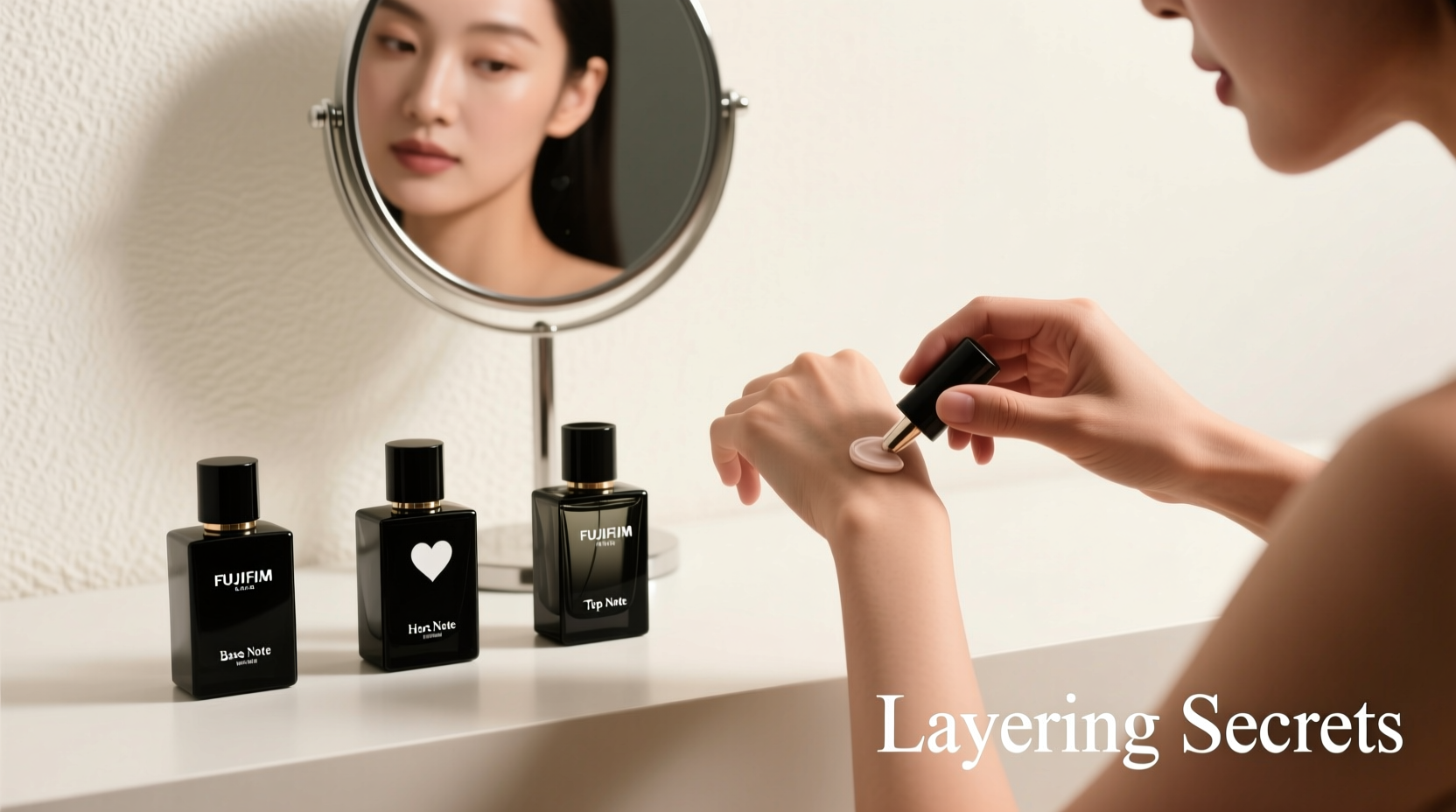
Before mastering layering, it helps to understand why perfumes fade. A fragrance’s lifespan depends on three key factors: concentration, skin chemistry, and environmental exposure.
Fragrance concentration determines how much aromatic compound (essential oils and aroma molecules) is suspended in alcohol. Generally:
- Eau de Parfum (EDP): 15–20% oil concentration – lasts 6–8 hours
- Eau de Toilette (EDT): 5–15% – lasts 3–5 hours
- Parfum/Extrait: 20–30% – lasts 8+ hours
- Eau Fraîche: 1–3% – lasts 1–2 hours
However, concentration alone doesn’t guarantee staying power. Skin pH, sebum levels, hydration, and even diet affect how notes evolve and evaporate. Dry skin absorbs fragrance faster but lacks the natural oils to hold scent molecules. Oily skin tends to retain fragrance longer due to its lipid-rich surface.
“Fragrance interacts with your skin like a fingerprint—no two people will experience the same scent identically.” — Dr. Anika Patel, Cosmetic Chemist and Scent Formulation Specialist
Humidity, temperature, and clothing fabric also play roles. Heat accelerates evaporation; dry air strips moisture and scent alike. Cotton absorbs fragrance well but may mute projection, while silk and wool can enhance diffusion.
The Art of Layering: Building a Scent Foundation
Layering is not about dousing yourself in multiple scents. It’s a deliberate process of building olfactory depth using coordinated products that work together to anchor and release fragrance over time. Done correctly, layering creates a dynamic scent journey that evolves throughout the day.
The goal is to create a “scent sandwich”: a base, middle, and top layer that work synergistically. Each layer serves a purpose:
- Base Layer: Hydrated skin or unscented balm to trap fragrance molecules.
- Middle Layer: A matching scented body product (lotion, oil) to amplify the core notes.
- Top Layer: The perfume itself, applied strategically for maximum diffusion.
Step-by-Step Layering Routine
Follow this sequence for optimal results:
- Shower and exfoliate to remove dead skin cells that can distort scent.
- Apply a light, unscented body oil or rich lotion immediately after bathing while skin is still damp. Focus on pulse points: wrists, neck, behind ears, inner elbows.
- Use a matching scented body lotion or cream if available. If your perfume line offers a coordinating balm, now is the time to use it.
- Wait 2–3 minutes for products to absorb before applying perfume. This prevents immediate alcohol evaporation and allows fragrance to bind to emollients.
- Spray perfume 6–8 inches from skin, targeting pulse points where warmth enhances diffusion.
- Avoid rubbing wrists together—this breaks down top notes and accelerates oxidation.
- Lightly mist hair or clothing (if safe for fabric) to create a secondary scent halo.
Choosing the Right Products for Layering
Not all layering products are created equal. The best ones complement your perfume chemically and texturally. Here’s what to look for:
| Product Type | Best For | Avoid If |
|---|---|---|
| Scented Body Lotion (same line as perfume) | Amplifying base notes and extending wear | Formula feels heavy or greasy |
| Unscented Hydrating Balm | Dry skin types needing moisture foundation | You’re sensitive to shea/cocoa butter |
| Fragrance Oil or Solid Perfume | Prolonged close-to-skin scent, travel-friendly | You prefer strong projection |
| Body Mist (lighter than EDT) | Refreshing midday boost | You need all-day staying power |
If your favorite perfume doesn’t come with supporting products, don’t force a mismatch. Instead, opt for an unscented moisturizer enriched with jojoba, argan, or sweet almond oil—these mimic skin’s natural lipids and help \"trap\" fragrance.
“Using a neutral oil-based base creates a microenvironment where volatile top notes don’t escape too quickly.” — Lena Moreau, Master Perfumer at Osmologue Studio
Advanced Tip: Scent Anchoring with Complementary Notes
For custom layering beyond branded sets, pair fragrances with similar base notes. For example:
- A vanilla-based perfume layers beautifully with a warm amber body oil.
- Floral scents benefit from a sheer musk lotion underneath.
- Woody or leathery perfumes gain depth when paired with a sandalwood-infused balm.
Avoid clashing families—layering a fresh citrus scent under a gourmand vanilla perfume can create olfactory confusion. Stick to harmonious accords unless intentionally experimenting.
Real-World Example: A Workday Scent Strategy
Consider Sarah, a project manager with back-to-back meetings from 8 a.m. to 6 p.m. She loves her floral-woody Eau de Toilette but noticed it faded by noon. After adjusting her routine, here’s what changed:
Morning: After showering, she applies a shea-butter-rich unscented body cream to arms, chest, and legs. Then, she uses a sample-sized matching body milk from the same fragrance brand. She waits three minutes before spraying her perfume on pulse points and lightly behind her knees.
Afternoon: At 3 p.m., she carries a rollerball of the same perfume’s parfum version. A quick roll on wrists and neck revives the scent without over-application.
Evening: Her clothes carry a soft trace of the fragrance, and colleagues comment on her “subtle but present” presence.
Result: Her EDT now performs like an EDP, lasting 7+ hours with minimal touch-up. The investment in a simple $12 body cream doubled her scent’s effective lifespan.
Avoiding Common Layering Mistakes
Even experienced fragrance lovers fall into traps that sabotage longevity. Watch out for these pitfalls:
- Over-applying: Too much perfume overwhelms the nose and leads to scent fatigue. Two to four sprays are usually sufficient.
- Mixing conflicting scents: Using a lavender hand cream under a patchouli perfume creates dissonance. Stick to neutral or complementary bases.
- Storing perfume improperly: Heat, sunlight, and humidity degrade fragrance. Keep bottles in a cool, dark drawer or cabinet.
- Rubbing wrists: Friction generates heat and breaks down delicate top notes like bergamot or aldehyde.
- Skipping skin prep: Applying perfume to dry skin is like planting seeds in cracked earth—nothing takes root.
Do’s and Don’ts Summary Table
| Do | Don't |
|---|---|
| Moisturize before applying perfume | Apply directly to dry skin |
| Use matching or neutral base products | Layer competing fragrance families |
| Store perfume away from bathrooms and windows | Leave bottles in humid or sunny areas |
| Reapply with rollerball or solid perfume | Respray heavily midday |
| Test layering combinations at home first | Experiment with new mixes before important events |
Frequently Asked Questions
Can I layer different perfumes together?
Yes, but cautiously. Start with one dominant fragrance and add a second with overlapping notes—like pairing a rose scent with one featuring saffron or oud. Apply the lighter scent first, then the stronger one. Test on a tissue before trying on skin to avoid unpleasant clashes.
Does drinking water really help my perfume last longer?
Indirectly, yes. Hydrated skin retains moisture and fragrance better. Dehydration leads to flaky, dry skin that absorbs and loses scent rapidly. Drinking adequate water supports skin barrier function, creating a better canvas for perfume.
Is it okay to spray perfume on clothes?
Generally, yes—but test first. Alcohol can stain delicate fabrics like silk or acetate, and strong dyes may react. Natural fibers like cotton and wool hold scent well. For safety, spray on outer layers or use a fabric-safe fragrance mist.
Final Checklist: Make Your Perfume Last All Day
Follow this checklist each morning for consistent, long-lasting fragrance performance:
- ✅ Exfoliate and shower to refresh skin
- ✅ Pat skin dry, leaving it slightly damp
- ✅ Apply unscented or matching body lotion/oil
- ✅ Wait 2–3 minutes for absorption
- ✅ Spray perfume on pulse points from 6–8 inches away
- ✅ Avoid rubbing wrists together
- ✅ Carry a rollerball or solid perfume for touch-ups
- ✅ Store your main bottle in a cool, dark place
Conclusion: Own Your Scent Journey
Long-lasting fragrance isn’t about buying the most expensive bottle or dousing yourself in scent. It’s about intentionality—preparing your skin, choosing compatible products, and applying with precision. When you master layering, you transform a fleeting impression into a lasting presence.
The right scent should follow you through the day like a quiet companion, revealing its depths gradually and leaving a memorable trace. Whether you’re navigating a busy office, attending a dinner, or simply enjoying a walk, your fragrance should reflect continuity and confidence.




 浙公网安备
33010002000092号
浙公网安备
33010002000092号 浙B2-20120091-4
Comments
No comments yet. Why don't you start the discussion?