
Perfume is more than a scent—it’s an extension of identity, confidence, and mood. Yet, few experiences are as frustrating as applying your favorite fragrance in the morning only to realize it’s vanished by midday. While many turn to spray touch-ups or stronger concentrations, there’s a subtler, more effective method: optimizing your skincare routine. The secret to long-lasting fragrance isn’t just in the bottle—it’s in the products you apply before it.
Your skin’s condition directly influences how fragrance behaves. Dry skin absorbs and dissipates scent molecules quickly, while well-hydrated, slightly oily skin acts as a natural diffuser, holding onto aroma for hours. By aligning your skincare with perfuming principles, you create a lasting foundation that enhances both scent longevity and complexity. This approach is sustainable, cost-effective, and deeply integrated into daily self-care—without requiring extra steps.
The Science Behind Scent Longevity
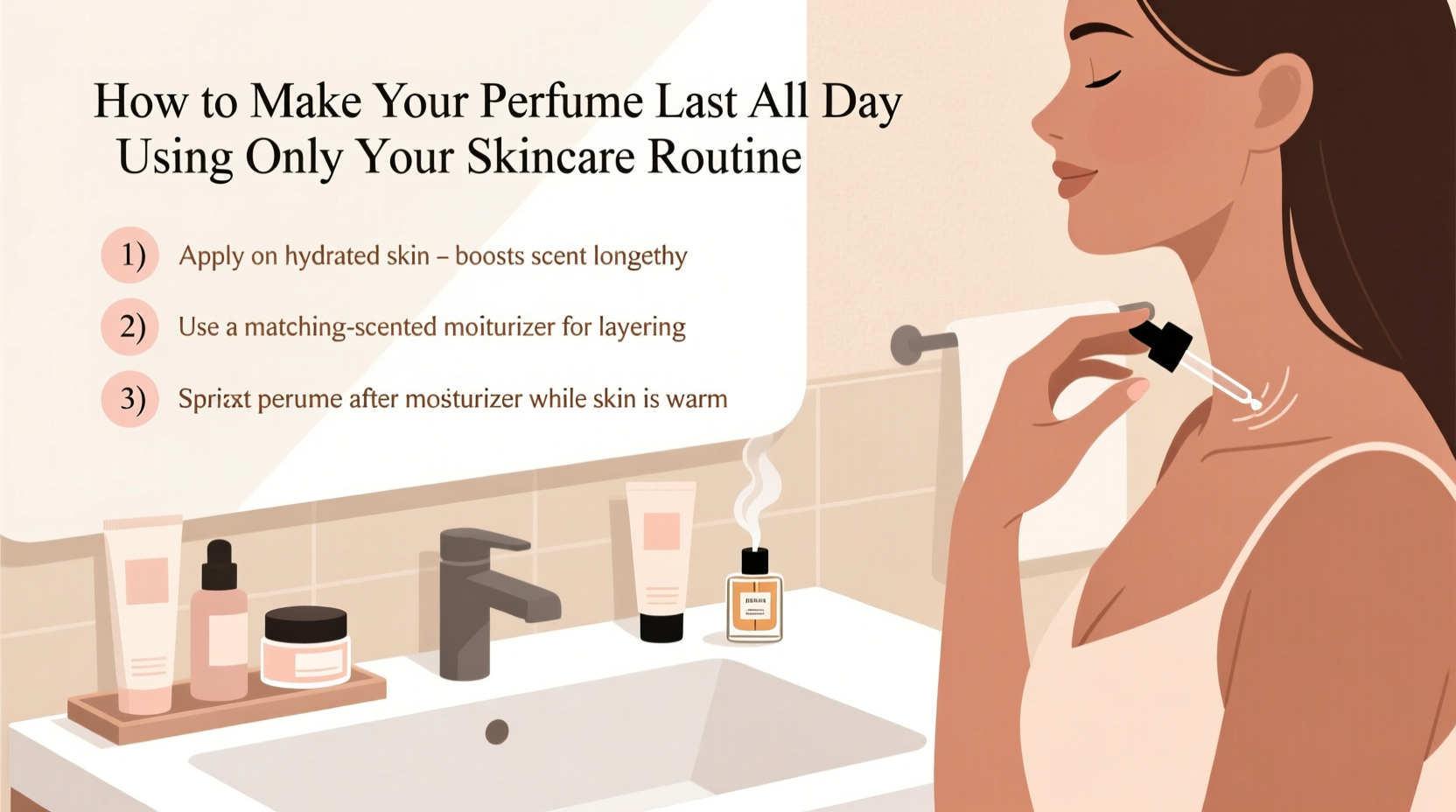
Fragrance doesn’t float independently on your skin; it interacts with your body chemistry and surface conditions. Perfumes are composed of volatile aromatic compounds suspended in alcohol. When applied, these compounds evaporate at different rates—top notes first, then heart, then base. The slower the evaporation, especially of base notes like vanilla, musk, or sandalwood, the longer the scent lingers.
Hydration plays a critical role. Moisturized skin has a smoother lipid barrier, reducing absorption and slowing alcohol evaporation. Oils and emollients act as carriers, bonding with fragrance molecules and releasing them gradually. Conversely, dehydrated skin pulls moisture—and scent—from the surface, leading to rapid dissipation.
Temperature also affects performance. Warmer skin increases volatility, which can amplify scent but shorten its lifespan. Cooler, stable zones like the inner wrists or behind the ears retain fragrance longer due to consistent temperature and lower exposure to air.
“Scent longevity starts with the skin’s ability to hold onto oils and moisture. A compromised barrier means your perfume won’t stay put.” — Dr. Lena Moreau, Cosmetic Chemist & Fragrance Formulation Specialist
Step-by-Step: Building a Fragrance-Friendly Skincare Routine
To maximize perfume retention, treat your skincare routine as a prelude to perfuming. Every step should support hydration, lipid balance, and pH stability. Here’s how to structure it:
- Cleanse gently in the morning
Avoid stripping cleansers that remove natural oils. Opt for cream-based or micellar formulas that cleanse without disrupting the skin’s acid mantle. Over-cleansing creates a dry canvas, which repels fragrance. - Apply hydrating toner or essence
Use an alcohol-free toner rich in humectants like glycerin, hyaluronic acid, or panthenol. These ingredients draw water into the skin, creating a damp base ideal for locking in scent. - Layer with a nourishing serum
Choose a lightweight facial or body serum containing squalane, ceramides, or niacinamide. These strengthen the skin barrier and improve oil retention, helping to anchor fragrance molecules. - Seal with a moisturizer
Apply a thicker cream or balm to pulse points before spraying perfume. Focus on wrists, neck, décolletage, and behind the ears. The occlusive layer slows evaporation and traps scent close to the skin. - Use unscented or complementary-scented products
Avoid heavily fragranced lotions that clash with your perfume. If you prefer scented skincare, choose one with similar notes (e.g., a vanilla body butter under a gourmand fragrance) to enhance harmony.
Optimal Product Pairings for Maximum Sillage
Not all moisturizers are created equal when it comes to scent retention. The texture, oil content, and formulation determine how well they interact with perfume. Below is a comparison of common skincare types and their effectiveness as fragrance bases:
| Product Type | Oil Content | Fragrance Retention | Best For |
|---|---|---|---|
| Light Lotion | Low | Moderate (3–5 hrs) | Daily wear, warm climates |
| Body Butter | High | Excellent (7–10 hrs) | Dry skin, cold weather, evening wear |
| Facial Oil | Very High | Exceptional (8+ hrs) | Neck, décolletage, sensitive skin |
| Gel Moisturizer | Low | Poor (2–3 hrs) | Oily skin, hot environments |
| Petroleum Jelly | Occlusive | Very Good (6–8 hrs) | Targeted application (wrists, elbows) |
For all-day endurance, prioritize occlusive-rich formulations. A body butter with shea or cocoa butter forms a protective film that traps scent. Facial oils—especially those based on jojoba or almond oil—are molecularly similar to human sebum, making them ideal carriers for fragrance.
Real-World Example: Transforming a Fading Fragrance
Sophie, a 34-year-old project manager, loved her floral-woody perfume but found it disappeared within two hours. She used a foaming body wash and light gel moisturizer, both lightly scented. After switching to a cream cleanser and unscented shea butter applied to damp skin, she noticed a dramatic change. Her perfume now lasted until dinner, with distinct phases—top notes in the office, heart notes during errands, base notes emerging in the evening.
She didn’t change her perfume or application method. The only difference was her skincare. By supporting her skin’s natural ability to retain oils, she turned a fleeting scent into an enduring signature.
Checklist: Your Skincare-to-Scent Optimization Plan
Follow this checklist daily to ensure your skincare is working for—not against—your fragrance:
- ✅ Use a non-stripping cleanser (cream, oil, or milk-based)
- ✅ Pat skin dry—don’t rub—to preserve surface moisture
- ✅ Apply hydrating toner or essence to pulse areas
- ✅ Layer a serum with barrier-supporting ingredients (ceramides, squalane)
- ✅ Massage in a rich, unscented moisturizer on wrists, neck, and chest
- ✅ Allow 1–2 minutes for products to absorb before applying perfume
- ✅ Reapply moisturizer at night to maintain long-term skin health
Avoid These Common Mistakes
Even with good intentions, certain habits sabotage scent longevity. Watch out for these pitfalls:
- Using alcohol-based toners before perfuming
These dry the skin and accelerate alcohol evaporation from your fragrance, shortening its life. - Applying perfume over heavily scented lotions
Competing aromas distort your fragrance profile. You might smell neither the lotion nor the perfume clearly. - Rubbing wrists together after spraying
This breaks down top notes and generates heat, causing faster evaporation. Instead, let the mist settle naturally. - Skipping moisturizer in summer
Hot weather increases sweating and oil production, but dehydration can still occur. Lightweight creams or oils prevent imbalance. - Storing skincare in extreme temperatures
Heat or cold alters product consistency. Separated or degraded moisturizers won’t form an effective barrier.
Frequently Asked Questions
Can I use body oil instead of perfume?
While body oils can be scented, they typically lack the complexity and projection of fine fragrance. However, layering a neutral body oil under your perfume enhances longevity. Some people blend a few drops of essential oil into carrier oil for a custom scent, but this won’t replicate the depth of a professionally formulated eau de parfum.
Does skin type affect how long perfume lasts?
Yes. Oily skin tends to hold fragrance longer because natural sebum binds to aromatic molecules. Dry skin absorbs scent quickly, reducing diffusion. Those with combination skin may notice variation across different body zones. Regardless of skin type, proper hydration through skincare can level the playing field.
Should I match my skincare scent to my perfume?
Only if intentional. Matching notes—like using a citrus serum under a citrus perfume—can amplify brightness. But mismatched scents (e.g., lavender lotion under a leathery fragrance) create olfactory confusion. When in doubt, opt for unscented skincare to let your perfume shine cleanly.
Expert Insight: The Role of Skin Health in Fragrance Performance
Modern perfumery assumes a baseline of healthy skin. But environmental stressors, aging, and lifestyle factors compromise that foundation. According to dermatologist Dr. Anika Patel, “We often treat scent as separate from skincare, but they’re physiologically linked. Inflammation, dehydration, and pH imbalances alter how fragrance is perceived—not just by others, but by the wearer.”
“The most luxurious perfume will underperform on compromised skin. Invest in barrier repair, and you’ll get more value from every spritz.” — Dr. Anika Patel, Board-Certified Dermatologist
This synergy means that improving skin quality doesn’t just benefit appearance—it enhances sensory experience. A consistent routine with gentle exfoliation (1–2 times weekly), antioxidant protection, and nightly repair supports both skin resilience and scent fidelity.
Conclusion: Make Your Routine Work for You
Long-lasting perfume isn’t about frequency of application—it’s about preparation. By refining your skincare regimen, you transform your body into a living canvas for fragrance. Hydration, occlusion, and compatibility are the pillars of endurance. You don’t need more perfume; you need better skin.
Start tonight. Replace your drying body wash with a creamy alternative. Swap that gel moisturizer for a richer formula. Notice how your favorite scent behaves differently—lingering longer, evolving more gracefully. Small shifts in skincare yield outsized results in scent performance.




 浙公网安备
33010002000092号
浙公网安备
33010002000092号 浙B2-20120091-4
Comments
No comments yet. Why don't you start the discussion?