
Fragrance is more than a scent—it’s an extension of identity, confidence, and memory. Yet, nothing is more frustrating than spritzing your favorite perfume in the morning only to realize by midday that it has vanished. While some believe long-lasting scent is purely about brand or price, the truth lies in technique, chemistry, and smart habits. With the right approach, even affordable perfumes can linger from sunrise to sunset. The key isn’t reapplication—it’s retention.
Perfume longevity depends on multiple factors: your skin type, the concentration of the fragrance, environmental conditions, and how you apply it. Understanding these elements unlocks the ability to stretch every note—top, heart, and base—throughout the day. Below are proven, expert-backed methods to help your scent endure without needing another spray.
1. Understand Your Skin Chemistry and Its Role in Scent Longevity
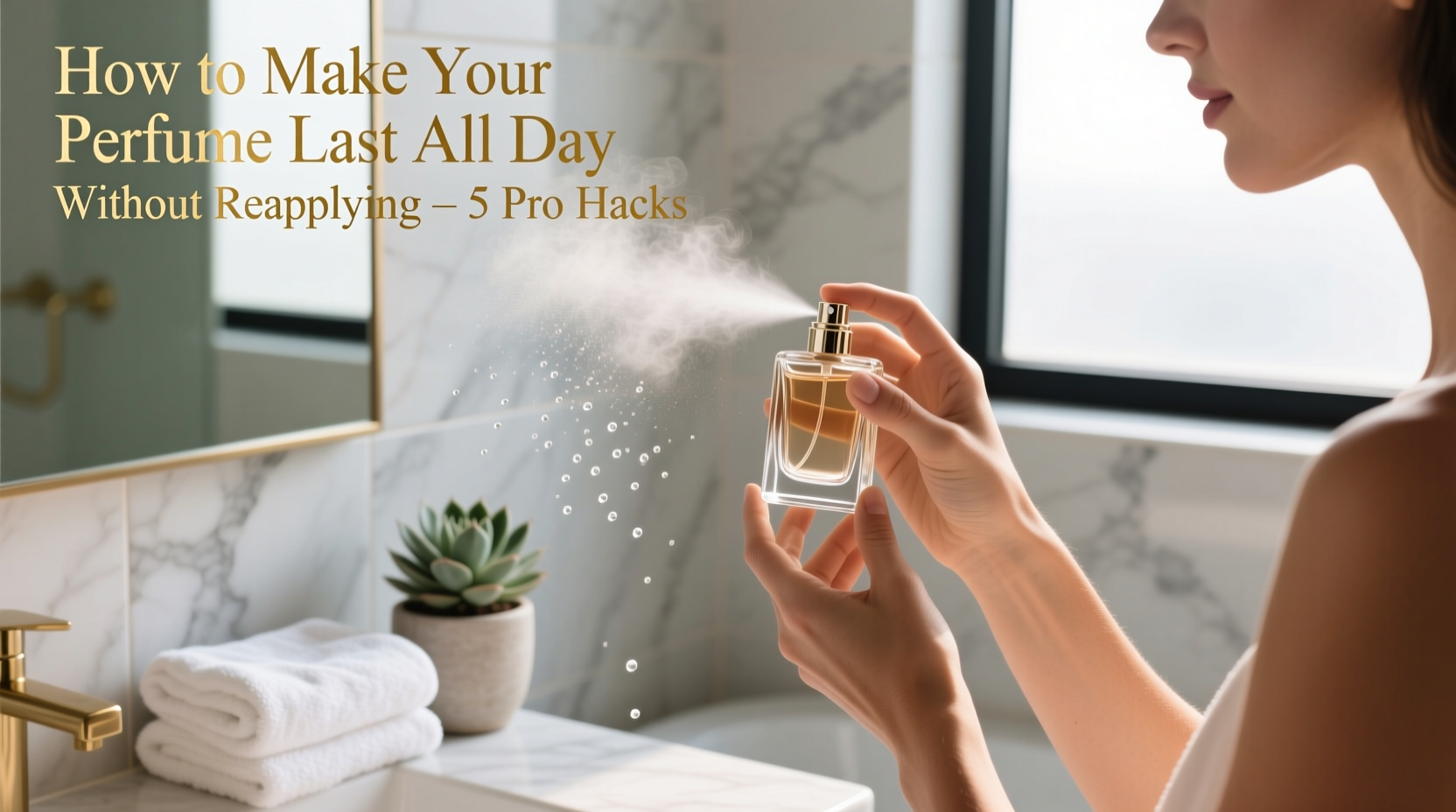
Your skin is not just a canvas for perfume—it actively interacts with fragrance molecules. Oily skin tends to hold onto scent longer because natural oils act as carriers for aromatic compounds. Dry skin, on the other hand, lacks this moisture barrier, causing fragrance to evaporate quickly.
Hydration is critical. Well-moisturized skin creates a stable base that slows down the evaporation of volatile top notes. Applying unscented lotion before perfume helps lock in the fragrance at the molecular level. Avoid heavily scented moisturizers, though—they can clash with your chosen scent and distort its original profile.
pH levels also influence how a fragrance develops. Two people wearing the same perfume may smell subtly different due to variations in skin acidity. If your skin tends to neutralize or mute fragrances, consider using a pH-balancing toner before applying scent.
2. Choose the Right Fragrance Concentration
Not all perfumes are created equal. The concentration of aromatic oils determines how long a scent lasts and how strong it projects. Here's a breakdown of common types:
| Type | Oil Concentration | Average Longevity | Best For |
|---|---|---|---|
| Eau de Cologne (EDC) | 2–5% | 1–2 hours | Casual daytime use, warm climates |
| Eau de Toilette (EDT) | 5–15% | 3–5 hours | Daily wear, office environments |
| Eau de Parfum (EDP) | 15–20% | 5–8 hours | Evening events, cooler weather |
| Parfum/Extrait | 20–30% | 8+ hours | Special occasions, long days |
If all-day wear is your goal, Eau de Parfum or Parfum concentrations are your best allies. They contain higher oil content, which evaporates slower and bonds more effectively with the skin. Though pricier, a little goes a long way—fewer sprays are needed, making them cost-effective over time.
“Fragrance longevity starts with formulation. Higher concentration doesn’t just mean stronger scent—it means deeper interaction with the skin’s surface.” — Dr. Lena Moretti, Cosmetic Chemist & Perfume Formulator
3. Strategic Application: Where and How You Spray Matters
Most people spray perfume in the air and walk through it or mist their clothes indiscriminately. While dramatic, this method wastes product and reduces longevity. To make your perfume last, target pulse points—areas where blood flow is close to the skin and generates gentle heat.
- Wrists: Classic spot, but avoid rubbing—this breaks down molecules.
- Neck (sides): Warm and often exposed, ideal for subtle projection.
- Behind ears: Heat-emitting area with minimal friction.
- Inner elbows: Less exposed to washing or wiping.
- Back of knees: Rising heat helps diffuse scent upward.
- Chest: Close to the nose for consistent perception.
Spraying on clothing can extend longevity since fabric absorbs and holds scent longer than skin. However, be cautious with delicate materials like silk or wool—alcohol in perfumes can cause staining or fiber degradation. Dark dyes may also react poorly. When in doubt, test on an inconspicuous seam first.
4. Layer Your Fragrance for Maximum Hold
Layering is one of the most effective—and underrated—techniques for extending perfume life. This involves using matching or complementary scented products from the same fragrance line: body wash, lotion, and finally, the perfume itself.
The principle is simple: each layer adds more aromatic molecules to your skin, creating a reservoir that releases scent gradually. Unscented lotions work, but matching ones amplify cohesion and depth. For example, using a vanilla-scented balm before spraying a gourmand perfume enhances the richness and duration of the sweet notes.
Don’t limit yourself to commercial sets. You can create custom layers using natural oils. A drop of sandalwood or musk essential oil on pulse points before applying perfume anchors lighter top notes and boosts sillage—the trail your scent leaves behind.
Step-by-Step Guide to Effective Fragrance Layering
- Shower with a matching or neutral-scented body wash. Avoid heavily fragranced soaps that compete with your perfume.
- Apply unscented or coordinating body lotion while skin is still damp. Focus on pulse points and areas where you plan to spray.
- Wait 2–3 minutes for the lotion to absorb. This prevents immediate dilution of the perfume.
- Spray perfume directly onto pulse points. Do not rub wrists together.
- Optional: Dab a small amount of petroleum jelly on pulse points before spraying. Creates a sticky base that traps fragrance.
This routine builds a “scent sandwich” that slowly unravels throughout the day, revealing new dimensions of the fragrance as it evolves.
5. Environmental and Lifestyle Factors That Affect Longevity
Even with perfect application, external conditions can shorten your perfume’s lifespan. High humidity can amplify scent but also accelerate its breakdown. Conversely, dry, heated indoor air—common in offices and during winter—can desiccate your skin and evaporate fragrance faster.
To counteract dryness:
- Use a hydrating facial mist during the day.
- Carry a travel-sized moisturizer to rehydrate skin (not the scent).
- Stay hydrated internally—drinking water improves skin moisture retention.
Physical activity increases body temperature and perspiration, which alters how fragrance develops. Sweat can mix with perfume, sometimes creating an unintended odor. In active lifestyles, opt for fresher, citrusy, or aquatic scents that blend better with natural body chemistry.
Mini Case Study: Sarah’s All-Day Scent Routine
Sarah, a project manager in Chicago, struggled with her perfume fading by 11 a.m., despite reapplying twice daily. She worked in a climate-controlled office but commuted via subway and walked 20 minutes each way. Her skin was dry, especially in winter.
After consulting a fragrance specialist, she adjusted her routine:
- Switched from Eau de Toilette to Eau de Parfum (a woody amber scent).
- Began using a thick, unscented body butter after her morning shower.
- Applied perfume only to moisturized pulse points—neck, chest, inner elbows.
- Stopped rubbing her wrists together.
- Stored her perfume in a bedroom drawer instead of the steamy bathroom.
Result: Her fragrance lasted until 7 p.m. without reapplication. Colleagues began commenting on her “signature scent,” and she felt more confident throughout the day.
Do’s and Don’ts of Long-Lasting Perfume
| Do | Don't |
|---|---|
| Moisturize before applying perfume | Rub your wrists together after spraying |
| Store perfume in a cool, dark place | Keep it in the bathroom or car |
| Use matching scented lotions or balms | Mix too many competing scents |
| Spray on pulse points and hair (lightly) | Spray directly on jewelry or delicate fabrics |
| Choose EDP or Parfum for all-day wear | Expect EDC to last more than 2 hours |
FAQ
Why does my perfume disappear so quickly?
Your skin type, the fragrance concentration, and application method all play roles. Dry skin evaporates scent faster. Using a low-concentration EDT in a dry environment will fade quickly. Always apply to moisturized skin and choose higher-oil formulations for endurance.
Can I make my current perfume last longer without buying new products?
Yes. Start by switching your application technique: moisturize first, target pulse points, avoid rubbing, and store properly. Even a small change—like applying petroleum jelly to pulse points before spraying—can significantly extend wear time.
Is it better to spray or dab perfume?
Spraying ensures even distribution and minimizes contact with hands, which can degrade the scent. Dabbing can be useful for concentrated application, but only if done gently. Never rub after either method.
Final Checklist: Make Your Perfume Last All Day
- ✔ Use Eau de Parfum or Parfum concentration
- ✔ Shower and moisturize with unscented or matching lotion
- ✔ Apply perfume within 3 minutes of moisturizing
- ✔ Target pulse points—neck, chest, inner elbows, behind ears
- ✔ Avoid rubbing your wrists together
- ✔ Store perfume in a cool, dark place away from humidity
- ✔ Consider layering with complementary scented products
- ✔ Reassess your environment and adjust for season or activity
Conclusion
Long-lasting fragrance isn’t magic—it’s method. By aligning your routine with your skin’s needs and the science of scent, you can enjoy your favorite perfume from morning meetings to evening plans without reaching for the bottle again. These hacks don’t require expensive tools or rare products; they rely on consistency, awareness, and small, intentional changes.




 浙公网安备
33010002000092号
浙公网安备
33010002000092号 浙B2-20120091-4
Comments
No comments yet. Why don't you start the discussion?