
Perfume is more than a scent—it's an extension of identity, a mood enhancer, and often the final touch in a polished routine. Yet, many people find their favorite fragrance fading within hours, leaving them reaching for reapplications or questioning their choices. While some blame the perfume itself, the truth is that longevity depends heavily on how it interacts with your skin chemistry and application habits. The good news? You don’t need synthetic sprays or expensive fixes. With simple, natural strategies rooted in dermatology and fragrance science, you can significantly extend your perfume’s staying power—naturally.
Understanding Why Perfume Fades Quickly
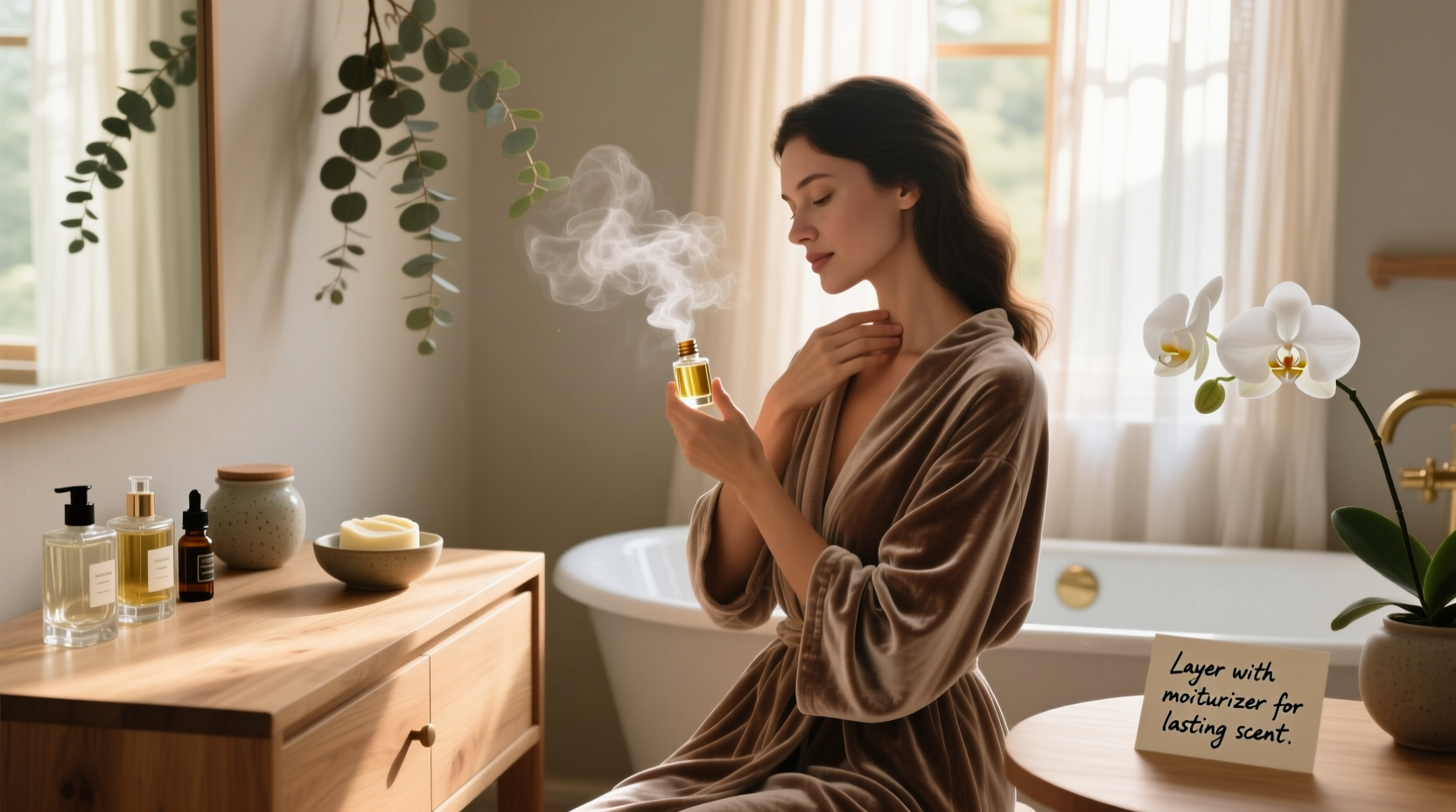
Before addressing solutions, it’s essential to understand why fragrances disappear from the skin. Perfume longevity isn’t just about the quality of the scent; it’s influenced by a combination of factors including skin type, pH levels, hydration, body temperature, and even diet.
Oily skin tends to hold onto fragrance longer because oils help trap aromatic molecules. Conversely, dry skin lacks this natural retention ability, causing scents to evaporate faster. Similarly, high skin pH (alkaline) can break down certain fragrance compounds, altering or weakening the scent profile. Environmental conditions like humidity and wind also play roles—dry air accelerates evaporation, while heat intensifies initial projection but may shorten overall wear time.
“Fragrance longevity starts with skin health. A well-moisturized, balanced epidermis acts like a canvas that holds scent much longer than dry, flaky skin.” — Dr. Lena Moreau, Cosmetic Chemist & Fragrance Formulation Specialist
Natural Methods to Enhance Perfume Longevity
You don’t need chemical-laden primers or alcohol-heavy sprays to make your perfume last. Instead, focus on creating an optimal environment on your skin where scent molecules can bind and slowly release over time.
1. Moisturize Before Applying Perfume
Dry skin is porous and absorbs fragrance quickly, often preventing it from diffusing into the air. By applying an unscented or complementary-scent moisturizer before spraying, you create a barrier that slows evaporation.
Use a natural, oil-based lotion or body butter containing ingredients like shea butter, cocoa butter, or jojoba oil. These not only hydrate but also provide lipids that bond with fragrance molecules.
2. Use a Matching Scented Lotion or Oil
If your perfume has a corresponding body lotion or oil, use it as a base layer. This technique, known as “scent layering,” builds a concentrated reservoir of aromatic compounds on the skin.
In the absence of a branded product, apply a few drops of a neutral carrier oil (like sweet almond or grapeseed oil) to pulse points before spraying. Oils are excellent at trapping volatile top notes and releasing them gradually.
3. Target Pulse Points Strategically
Pulse points—wrists, inner elbows, neck, behind ears, and décolletage—are warm areas with increased blood flow, which helps diffuse scent. However, rubbing wrists together after application breaks down delicate top notes and accelerates oxidation.
Instead, spray or dab gently and let the scent develop naturally. For extended wear, consider applying to hair (lightly misting ends) or clothing (especially natural fibers), where fragrance adheres longer without skin interference.
4. Hydrate from Within
Your internal hydration affects external scent retention. Dehydrated skin lacks plumpness and lipid integrity, making it less effective at holding fragrance. Drinking sufficient water daily improves skin texture and creates a better surface for scent adhesion.
Aim for 2–3 liters of water per day, depending on activity level and climate. Incorporating water-rich foods like cucumbers, oranges, and melons can further support dermal hydration.
5. Avoid Alcohol-Based Primers and Over-Cleansing
Many commercial “perfume primers” contain high concentrations of alcohol, which dries the skin and strips natural oils—counterproductive to long-lasting scent. Similarly, over-washing with harsh soaps alters skin pH and removes protective sebum.
Opt for gentle, pH-balanced cleansers and limit shower time to preserve natural moisture. If using a primer, choose one based on glycerin or aloe vera instead of ethanol.
Step-by-Step Guide to Natural Perfume Longevity
Follow this daily ritual to maximize your fragrance’s lifespan without artificial additives:
- Shower with a mild, fragrance-free soap to cleanse without stripping natural oils.
- Pat skin dry—do not rub—to retain surface moisture.
- Apply a thick, unscented body butter or oil to pulse zones and commonly sprayed areas.
- Wait 5–7 minutes for the moisturizer to absorb fully.
- Spray perfume 6–8 inches from skin, targeting 2–3 pulse points without rubbing.
- Mist hair lightly at the ends if desired, avoiding scalp contact.
- Reapply minimally—only once midday if needed, focusing on new areas like collar or scarf.
This sequence ensures your skin is primed to capture and slowly release fragrance, mimicking the performance of high-end niche perfumes without additional cost.
Do’s and Don’ts: Maximizing Natural Scent Retention
| Do’s | Don’ts |
|---|---|
| Moisturize with oil-based lotions before applying perfume | Apply perfume on dry, cracked skin |
| Store perfumes in cool, dark places away from sunlight | Keep bottles in humid bathrooms or near windows |
| Use matching scented products for layering | Mix strong, clashing fragrances on the same day |
| Hydrate internally with water and healthy fats | Consume excessive caffeine or alcohol, which dehydrate skin |
| Apply to natural fabrics like cotton or silk | Spray on synthetic materials that degrade fragrance |
Real-Life Example: How Sarah Doubled Her Perfume’s Wear Time
Sarah, a 34-year-old teacher from Portland, loved her citrus-floral eau de parfum but found it vanished by 11 a.m., despite reapplying twice daily. After switching to a minimalist skincare routine focused on hydration, she began applying raw shea butter to her arms and neck every morning before dressing.
She also replaced her floral hand soap with a glycerin-based bar and started drinking herbal teas throughout the day. Within a week, her perfume lasted until 4 p.m. without reapplication. “I didn’t change my perfume,” she said. “I changed how I treated my skin—and it made all the difference.”
Her experience underscores a critical point: longevity isn’t solely about the fragrance concentration; it’s about compatibility with your body’s ecosystem.
Expert Insight: The Science Behind Scent Adhesion
Fragrance chemists emphasize that molecular weight and polarity determine how long a note lingers on skin. Heavy base notes like vanilla, sandalwood, and musk naturally last longer because they evaporate slowly. Light top notes—citrus, bergamot, aldehydes—are volatile and fade quickly.
However, proper skin preparation can slow the loss of these fleeting aromas. According to Dr. Moreau, “Natural oils form a semi-occlusive film that traps lighter molecules, allowing them to escape gradually rather than all at once. It’s basic diffusion physics applied to beauty.”
“The most effective ‘fixative’ isn’t synthetic—it’s your own skin when properly conditioned.” — Dr. Lena Moreau
Checklist: Daily Routine for Long-Lasting Natural Perfume
- ✅ Drink at least 2 liters of water daily
- ✅ Use a non-drying, pH-balanced cleanser
- ✅ Apply oil-based moisturizer to pulse points before perfume
- ✅ Choose natural fabrics for clothing near sprayed areas
- ✅ Store perfume in a drawer or cabinet away from light and heat
- ✅ Avoid rubbing wrists after application
- ✅ Limit reapplication to once per day, if necessary
- ✅ Eat foods rich in healthy fats (avocado, nuts, olive oil) to support skin lipid production
Frequently Asked Questions
Does skin type really affect how long perfume lasts?
Yes. Oily skin retains fragrance longer due to its natural lipid content, which binds scent molecules. Dry skin absorbs perfume quickly and releases it faster. Very sensitive or eczema-prone skin may also alter scent due to higher pH or inflammation.
Can I use coconut oil as a perfume base?
Yes, but with caution. Coconut oil is highly comedogenic and may clog pores for some. It also has a mild scent that can interfere with delicate perfumes. If using, opt for refined (unscented) coconut oil and patch-test first.
Why does my perfume smell different on me than on someone else?
Everyone’s skin chemistry is unique. Factors like hormone levels, diet, medications, and microbiome influence how fragrance notes interact and evolve. What smells floral on one person might lean musky on another.
Conclusion: Make Your Scent Work With Your Body, Not Against It
Lasting fragrance isn’t about overpowering strength or constant reapplication. It’s about harmony between your perfume and your physiology. By nurturing your skin, choosing natural emollients, and applying with intention, you unlock the full potential of any scent—without synthetic shortcuts.
The most elegant perfumes were designed to unfold over time, revealing layers as they interact with warmth and movement. When your skin is prepared to support that journey, the result is a personal aura that lingers subtly, confidently, and authentically throughout the day.




 浙公网安备
33010002000092号
浙公网安备
33010002000092号 浙B2-20120091-4
Comments
No comments yet. Why don't you start the discussion?