
Perfume is more than a scent—it’s an extension of identity, confidence, and presence. Yet nothing is more frustrating than applying your favorite fragrance in the morning only to find it gone by midday. While high-end perfumes often boast longevity claims, even luxury scents can fade quickly if applied incorrectly or layered over unprepared skin. The good news? You don’t need expensive products or complicated rituals to extend your fragrance’s staying power. Dermatologists and skincare experts agree: simple, accessible drugstore solutions can dramatically improve how long your perfume lingers—without irritating your skin.
The key lies in understanding how fragrance interacts with your body chemistry and skin condition. Dry skin evaporates scent faster; oily skin retains it longer. But instead of relying on genetics, you can take control with smart, science-backed habits that are easy to integrate into your daily routine. From moisturizing before spraying to choosing the right alcohol-free layers, these dermatologist-approved tricks cost little and deliver real results.
Why Perfume Fades: The Science Behind Scent Longevity
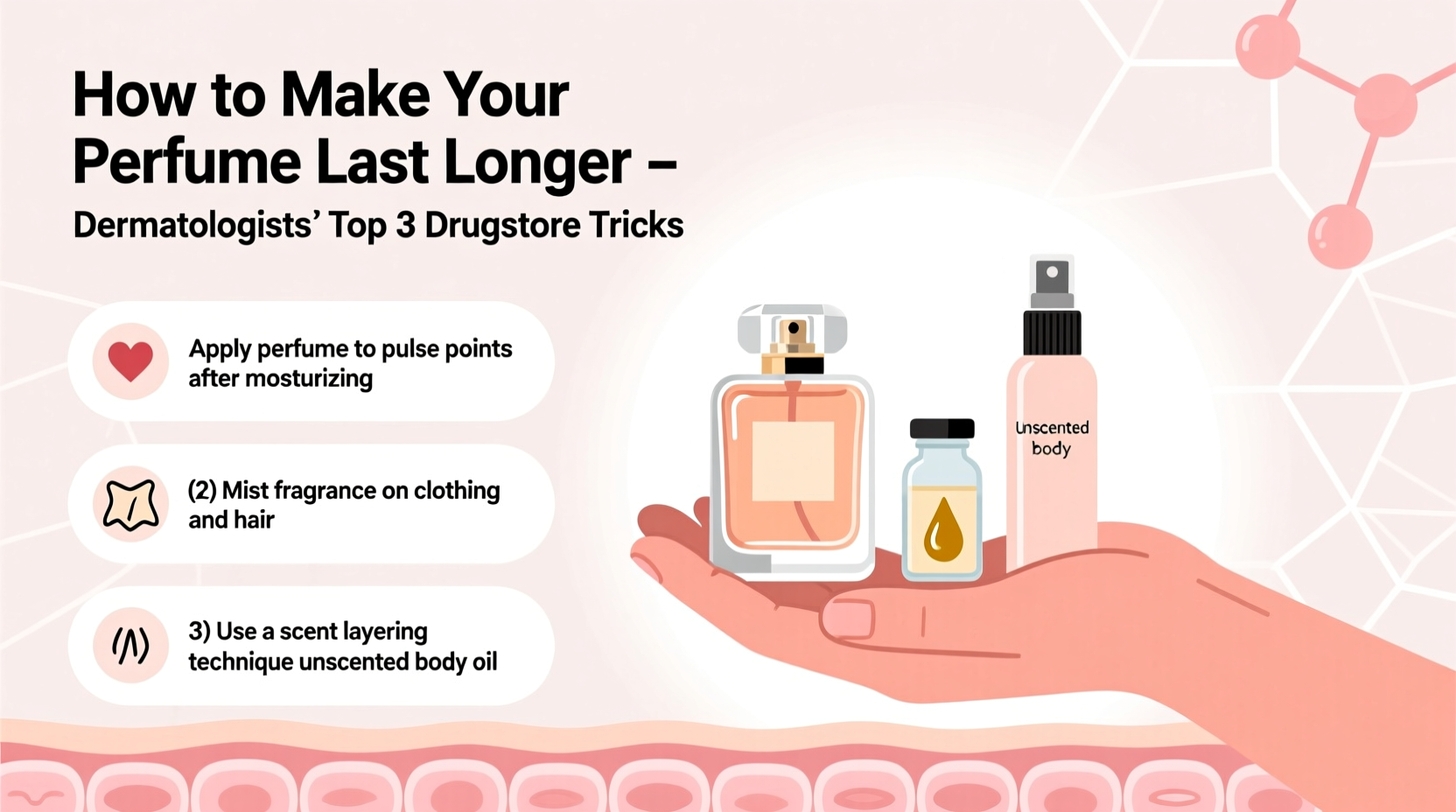
Fragrance longevity isn’t just about the quality of the perfume—it’s deeply tied to your skin’s hydration, pH balance, and temperature. Perfumes are composed of volatile aromatic compounds suspended in alcohol. When sprayed, the alcohol evaporates first, releasing the top notes. As time passes, middle (heart) and base notes emerge, creating the full olfactory experience. However, if your skin lacks moisture, this evaporation happens too rapidly, cutting short the scent journey.
Dermatologists emphasize that dry or damaged skin lacks the lipid barrier needed to trap fragrance molecules. In contrast, well-moisturized skin acts like a sponge, absorbing and slowly releasing the scent throughout the day. Additionally, areas with higher body heat—like wrists, neck, and behind the ears—naturally amplify fragrance diffusion. But without proper preparation, even these pulse points won’t hold scent effectively.
“Fragrance longevity starts with skin health. Hydrated, balanced skin retains scent significantly longer than dry or irritated skin.” — Dr. Lena Torres, Board-Certified Dermatologist
This means that the foundation of long-lasting perfume isn’t the bottle itself—it’s what you do *before* and *around* the spray.
Drugstore Moisturizers That Enhance Fragrance Retention
One of the most effective—and simplest—ways to make perfume last longer is layering it over a matching or neutral-scented moisturizer. Drugstore lotions rich in emollients like shea butter, glycerin, and ceramides create a sticky base that traps fragrance molecules and slows their release.
Look for thick, unscented, or lightly fragranced formulas. Heavy creams work better than lotions because they contain more oils and fewer water-based ingredients that evaporate quickly. Here are three dermatologist-recommended drugstore options:
| Product | Key Ingredients | Why It Works for Fragrance |
|---|---|---|
| CeraVe Moisturizing Cream | Ceramides, hyaluronic acid, MVE technology | Forms a long-lasting barrier that locks in both moisture and scent |
| Eucerin Advanced Repair Cream | Urea, ceramides, natural moisturizing factors | Urea gently exfoliates while retaining hydration for extended scent adhesion |
| Vanilla-scented Body Butter (e.g., Burt’s Bees or Palmer’s) | Shea butter, vitamin E, sweet almond oil | Provides a subtly sweet base that complements many perfumes without clashing |
Apply the moisturizer immediately after showering when your pores are open and skin is still slightly damp. This traps water and creates a plumping effect that further enhances fragrance retention. Wait 2–3 minutes for the cream to absorb slightly before spraying—this prevents dilution and ensures the scent adheres properly.
Step-by-Step: The Dermatologist-Approved Layering Routine
Creating a long-lasting scent experience is a process, not a single action. Follow this five-step routine every time you plan to wear perfume for maximum impact:
- Shower with a pH-balanced body wash. Avoid harsh soaps that strip natural oils. Opt for gentle, hydrating cleansers like Dove Sensitive Skin Beauty Bar or Cetaphil Restoring Wash.
- Pat skin dry—don’t rub. Towel-drying aggressively removes surface lipids. Gently patting preserves the skin’s natural moisture barrier.
- Apply a thick, fragrance-friendly moisturizer. Focus on pulse points: wrists, inner elbows, décolletage, and behind knees. These areas have higher blood flow and warmth, which naturally diffuse scent.
- Wait 2–3 minutes. Let the moisturizer set but not fully sink in. You want a slightly tacky surface for optimal adhesion.
- Spray perfume directly onto skin—not clothes. Hold the bottle 5–7 inches away and mist once per pulse point. Avoid rubbing wrists together, which breaks down fragrance molecules.
This method mimics the “fragrance layering” technique used in high-end perfumery, where matching eau de parfum is paired with a scented body oil or milk. By using affordable drugstore products, you achieve similar results without the premium price tag.
Common Mistakes That Kill Your Scent Fast
Even with the right products, certain habits sabotage fragrance longevity. Dermatologists frequently observe these missteps in patients who complain about weak scent performance:
- Applying perfume to dry skin – Without a moisturizing base, alcohol in the fragrance strips remaining moisture and accelerates evaporation.
- Rubbing wrists together after spraying – This friction generates heat and breaks down delicate top notes prematurely.
- Spraying on clothes instead of skin – Fabric doesn’t retain heat or emit scent effectively. Plus, alcohol can stain or degrade certain fibers.
- Storing perfume in the bathroom – Humidity and temperature fluctuations degrade fragrance compounds over time, weakening potency.
- Using heavily scented lotions that clash – Mixing conflicting notes (e.g., floral lotion with woody perfume) creates olfactory confusion and dulls both scents.
“Many people think they need a stronger perfume when really, they just need healthier skin. Fix the canvas, and the art lasts longer.” — Dr. Amara Lin, Cosmetic Dermatologist
Smart Storage: Protect Your Perfume’s Potency
Your perfume’s lifespan begins long before you apply it. Exposure to light, heat, and air degrades essential oils and alters scent composition. To preserve your fragrance’s integrity—and ensure each spray performs as intended—follow these storage guidelines:
- Keep bottles in their original boxes when not in use. Cardboard blocks UV rays that break down aromatic compounds.
- Store in a cool, dark place like a bedroom drawer or closet shelf. Avoid windowsills, car consoles, or steamy bathrooms.
- Keep caps tightly sealed. Oxygen exposure causes oxidation, which changes the scent profile over time.
- Never transfer perfume to rollerball containers unless they’re glass with tight seals. Plastic can react with alcohol and alter the fragrance.
If you own multiple perfumes, rotate them seasonally. Heat increases scent volatility, so lighter eau de toilettes perform better in summer, while richer parfums shine in winter. Proper storage ensures each bottle remains potent for 3–5 years—maximizing your investment.
Real-Life Example: How Sarah Doubled Her Perfume’s Longevity
Sarah, a 34-year-old teacher from Portland, Oregon, loved her go-to floral perfume but was frustrated it disappeared within two hours. She’d reapply multiple times a day, draining her bottle quickly. After consulting a dermatologist for dry skin concerns, she learned about the connection between hydration and scent retention.
She began applying CeraVe Moisturizing Cream after every shower, focusing on her wrists and neck. She stopped using a strong lavender body wash that clashed with her perfume and switched to a fragrance-free cleanser. She also moved her perfume bottle from her humid bathroom to a dresser drawer.
Within a week, Sarah noticed her perfume lasted until late afternoon—nearly double its previous wear time. Colleagues commented on her “signature scent,” and she no longer felt the need to carry a travel spray. The changes were minimal, cost under $15 total, and fit seamlessly into her routine.
Checklist: Make Your Perfume Last Longer—The Drugstore Way
Use this quick-reference checklist to implement dermatologist-approved tricks daily:
- ✅ Shower with a gentle, non-drying cleanser
- ✅ Pat skin dry instead of rubbing
- ✅ Apply a thick, unscented or complementary-scent moisturizer to pulse points
- ✅ Wait 2–3 minutes before spraying perfume
- ✅ Spray directly on skin from 5–7 inches away
- ✅ Avoid rubbing wrists together
- ✅ Store perfume in a cool, dark place away from humidity
- ✅ Replace old or exposed bottles every 3–5 years
Frequently Asked Questions
Can I use Vaseline or petroleum jelly as a perfume base?
While petroleum jelly creates a physical barrier that can slow evaporation, dermatologists caution against regular use on large areas. It’s occlusive, meaning it can trap sweat and bacteria, potentially clogging pores or causing irritation. For targeted use—like a tiny dab behind the ears—it may help, but moisturizers with ceramides and glycerin are safer and more effective overall.
Does drinking more water really make my perfume last longer?
Indirectly, yes. Well-hydrated skin has better elasticity and moisture retention, which supports fragrance adherence. While drinking water alone won’t make a dramatic difference overnight, consistent hydration improves skin health over time, creating a better canvas for scent. Pair internal hydration with topical moisturizing for best results.
Is it better to spray perfume on clothes or skin?
Skin is always better for longevity and scent development. Your body heat activates and evolves the fragrance throughout the day. Clothes absorb scent but don’t emit it dynamically. Additionally, alcohol in perfume can weaken fabric fibers and cause yellowing over time, especially on silk or delicate synthetics.
Final Thoughts: Long-Lasting Scent Starts with Smart Habits
Extending your perfume’s wear time doesn’t require luxury products or complex regimens. The most effective strategies are grounded in dermatology: hydrate your skin, protect your fragrance from environmental damage, and apply with intention. These drugstore-approved tricks are backed by science and trusted by skin experts for a reason—they work.
You don’t need to overhaul your routine. Start with one change: moisturize before spraying. Once that becomes habit, add another. Over time, these small steps compound into a noticeable difference—one where your favorite scent lingers longer, projects confidently, and stays true from morning to night.




 浙公网安备
33010002000092号
浙公网安备
33010002000092号 浙B2-20120091-4
Comments
No comments yet. Why don't you start the discussion?