
Fragrance is more than just a scent—it’s an extension of identity, mood, and memory. Yet few experiences are as disappointing as applying your favorite perfume in the morning only to find it has vanished by midday. The good news? Longevity isn’t left to chance. With thoughtful layering techniques and proper storage, you can significantly extend the life of your perfume on the skin and preserve its integrity over time.
Perfume longevity depends on several factors: the concentration of the fragrance (e.g., Eau de Parfum vs. Eau de Toilette), your skin chemistry, environmental conditions, and—critically—how you apply and store it. This guide dives into practical, science-backed methods to help your scent linger from dawn to dusk, without relying solely on reapplication.
Understanding Fragrance Longevity
Before exploring how to extend a perfume’s lifespan, it helps to understand why fragrances fade. A typical fragrance unfolds in three phases: top notes (initial impression), middle or heart notes (core character), and base notes (longest-lasting foundation). Lighter concentrations like Eau Fraîche or Eau de Toilette often emphasize top and heart notes, fading faster. In contrast, Parfum or Extrait formulations contain higher oil concentrations, resulting in deeper, longer-lasting scents.
Skin type also plays a role. Dry skin absorbs fragrance quickly, while oily skin retains scent molecules longer due to natural moisture. Similarly, humidity and temperature affect volatility—hot climates accelerate evaporation, while cooler air slows it down.
“Fragrance longevity starts long before application. How you prepare your skin and store your bottle determines up to 60% of its performance.” — Dr. Lena Moreau, Olfactory Scientist & Perfume Formulation Consultant
Layering Techniques for Extended Wear
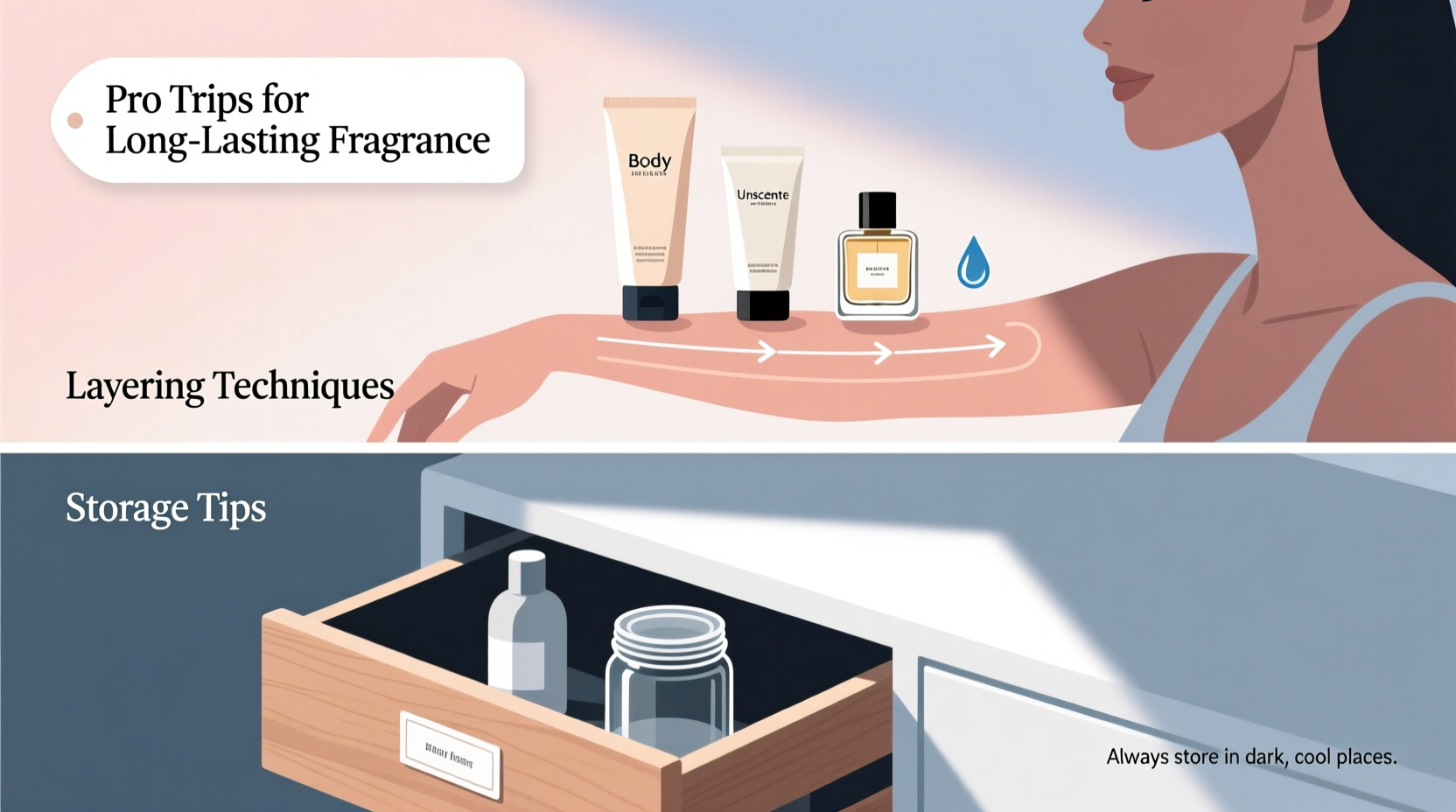
Layering is one of the most effective ways to anchor a fragrance and enhance its staying power. It involves building complementary products around your chosen scent to create a cohesive olfactory experience that evolves slowly throughout the day.
1. Start with a Scented Base
Begin with a moisturizer or body oil that matches your perfume’s fragrance family. Unscented lotions are common, but they do little to lock in fragrance. Instead, use a matching body lotion or balm from the same line as your perfume. These products typically contain the same aromatic compounds at lower concentrations, creating a “scent reservoir” on your skin.
2. Use Matching Shower Gel or Soap
Cleansing with a fragrance-matching gel primes your skin with subtle scent molecules. While these are lighter and won’t last all day, they contribute to the overall sillage (the trail of scent left behind) and support the layered effect.
3. Layer Different Concentrations Strategically
Combine multiple formats of the same scent: start with a solid perfume on pulse points, then mist with Eau de Parfum. Solid perfumes, made with waxy or oily bases, adhere closely to the skin and release fragrance slowly, acting as a slow-release capsule beneath the spray.
4. Mix Complementary Scents (Advanced Technique)
If your perfume line doesn’t offer supporting products, consider layering with compatible standalone fragrances. For example:
- A warm vanilla body oil under a floral oriental perfume adds depth and sweetness.
- A sandalwood-based balm enhances woody base notes in chypre or amber fragrances.
- A citrus-scented hand cream applied before a fresh cologne boosts brightness without clashing.
The key is harmony. Avoid contrasting families—don’t layer a gourmand dessert scent under a sharp green tea fragrance unless intentionally experimenting.
5. Reapply with Subtle Touch-Ups
Carry a travel-sized rollerball or solid perfume for touch-ups. Spraying directly onto clothes or hair prolongs scent but risks staining or altering the fragrance profile due to fabric interaction. A better method: lightly mist the air and walk through it to evenly distribute the scent.
Step-by-Step Guide to Effective Fragrance Layering
- Shower: Use a matching shower gel or a neutral cleanser if unavailable.
- Moisturize: Apply a fragrance-matching body cream or unscented oil to damp skin.
- Target Pulse Points: Dab a small amount of solid perfume on wrists, neck, and behind ears.
- Final Mist: Spray Eau de Parfum from 6–8 inches away, focusing on warm areas where blood flows close to the surface.
- Optional Boost: Lightly apply scented hair mist or fragrance-infused lip balm for added dimension.
- Midday Refresh: Reapply solid perfume or roll-on to pulse points—avoid over-spraying.
Proper Storage: Protecting Your Perfume’s Integrity
No matter how well you layer, improperly stored perfume will degrade prematurely. Light, heat, and oxygen are the three primary enemies of fragrance stability.
Exposure to UV rays breaks down aromatic compounds, leading to flat or sour notes. Heat accelerates oxidation, which alters the chemical balance of the scent. And repeated exposure to air—especially in partially used bottles—causes evaporation and deterioration of volatile top notes.
Best Practices for Perfume Storage
| Do’s | Don’ts |
|---|---|
| Store in a cool, dark place (e.g., drawer or closet) | Leave on bathroom countertops exposed to steam and light |
| Keep in original box to block light and stabilize temperature | Store near windows or in sunlit rooms |
| Ensure caps are tightly sealed after each use | Leave bottles open or loosely capped |
| Use smaller decants for travel; keep full bottles at home | Carry full bottles in clear bags in direct sunlight |
| Rotate stock—use older perfumes first | Forget about forgotten bottles for years |
For long-term preservation, some collectors store perfumes in refrigerators—particularly limited editions or vintage formulations. While not necessary for daily wear, this method can slow degradation in heat-prone environments. Just ensure bottles are sealed and brought to room temperature before use to avoid condensation inside the cap.
Real Example: Sarah’s All-Day Scent Routine
Sarah, a marketing executive based in Miami, struggled with her favorite jasmine perfume disappearing within two hours in the humid climate. She began layering: after her morning shower, she applied a coconut-oil-based body lotion infused with jasmine absolute. Then, she dabbed a solid jasmine perfume on her wrists and décolletage before finishing with two sprays of her Eau de Parfum.
She also switched from keeping her perfume on her bathroom vanity—where it was exposed to steam and sunlight—to storing it in a bedroom drawer inside its original box. Within a week, she noticed her fragrance lasted until 6 PM without reapplication. Colleagues even commented on her “signature scent,” something that hadn’t happened before.
Sarah now rotates her collection seasonally and uses a mini fridge in her dressing room for her five most prized bottles. “I treat my perfumes like skincare,” she says. “If I invest in them, I want them to perform.”
Checklist: Maximize Your Perfume’s Longevity
- ✅ Use a matching body lotion or oil before applying perfume
- ✅ Apply fragrance to moisturized skin, not dry
- ✅ Focus on pulse points: wrists, neck, behind ears, inner elbows
- ✅ Store perfume in a cool, dark place away from humidity
- ✅ Keep bottles in their original boxes when not in use
- ✅ Seal caps tightly after every use
- ✅ Carry a rollerball or solid perfume for touch-ups
- ✅ Avoid spraying directly onto clothing or hair frequently
- ✅ Rotate your collection to prevent stagnation
- ✅ Replace perfumes showing signs of discoloration or sour smell
Frequently Asked Questions
Does applying petroleum jelly before perfume really work?
Yes, but with caveats. A thin layer of Vaseline or unscented balm creates a barrier that slows evaporation, helping the scent cling to the skin. However, too much can trap heat and alter the fragrance’s diffusion. Use sparingly—only on pulse points—and avoid if you’re prone to clogged pores.
Can I mix different brands when layering?
You can, but proceed with caution. Stick to similar fragrance families—floral with floral, woody with oriental. Test combinations on a tissue first. Some high-end brands design their product lines specifically for layering (e.g., Diptyque, Byredo), making cross-product pairing easier and more predictable.
How long does unopened perfume last?
Unopened, properly stored perfume can last 3–5 years, sometimes longer. Once opened, expect 1–3 years depending on usage and storage conditions. Signs of expiration include color change (darkening), separation of liquid, or a sharp, vinegar-like odor.
Conclusion: Make Every Scent Last
Extending your perfume’s longevity isn’t about buying more—it’s about using what you have more wisely. Layering transforms a fleeting aroma into a lasting sensory experience, while proper storage ensures your investment remains vibrant over time. These practices don’t require expensive tools or complicated rituals; they simply ask for attention to detail and consistency.
Your fragrance should follow you through the day, not disappear after an hour. By preparing your skin, building scent layers, and protecting your bottles from damage, you take control of how your perfume performs. Whether you wear a signature scent daily or rotate through a curated collection, these techniques will elevate your experience and deepen your connection to the art of fragrance.




 浙公网安备
33010002000092号
浙公网安备
33010002000092号 浙B2-20120091-4
Comments
No comments yet. Why don't you start the discussion?