
Fragrance is more than a scent—it’s an extension of identity, mood, and memory. Yet few experiences are as disappointing as applying a beloved perfume in the morning only to find it has vanished by midday. While many turn to alcohol-heavy sprays or synthetic fixatives, there’s a gentler, more effective approach: natural perfume layering. By working with your body chemistry and using plant-based ingredients, you can dramatically extend the longevity of your fragrance while enhancing its complexity.
Natural layering isn’t about masking or overpowering. It’s a harmonious method that builds a scent profile from the skin outward, creating a personalized olfactory experience that evolves throughout the day. Unlike mass-market perfumes that rely on synthetic musks and aldehydes to cling to the skin, natural layering works with hydration, essential oils, and complementary aromatics to anchor fragrance molecules where they last longest.
The Science Behind Scent Longevity
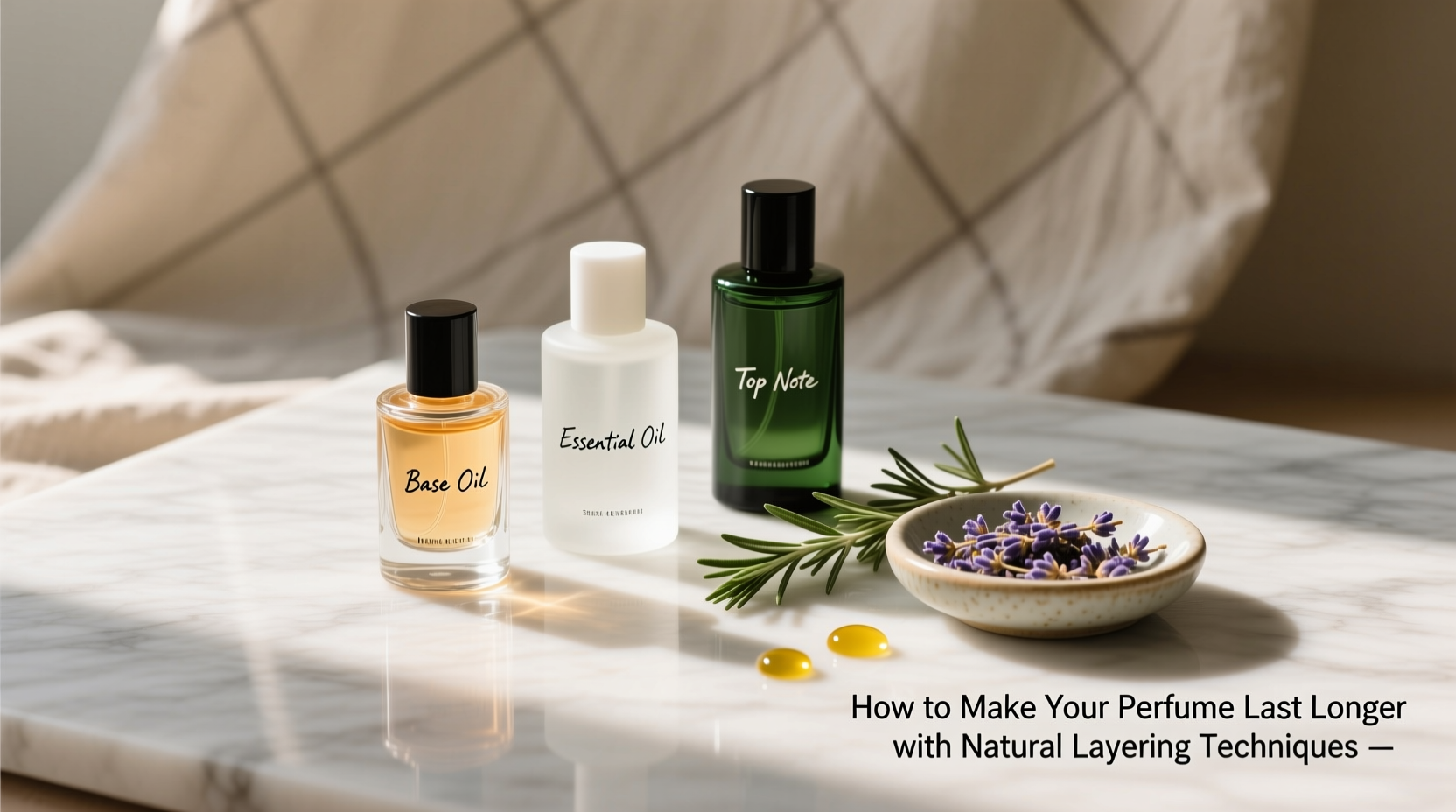
Perfume longevity depends on three key factors: skin type, fragrance composition, and application technique. Oily skin retains scent longer because lipids help trap aromatic molecules. Dry skin, on the other hand, allows fragrance to evaporate quickly. However, even those with dry skin can achieve lasting scent through strategic layering.
Fragrances are composed of top, middle (heart), and base notes. Top notes—like citrus or light florals—evaporate within 15–30 minutes. Heart notes emerge next, lasting 1–3 hours. Base notes—such as sandalwood, vanilla, or patchouli—are the longest-lasting, often persisting for 6+ hours. The goal of natural layering is to strengthen the base and heart notes so they don’t fade prematurely.
Traditional advice suggests moisturizing before spraying, but not all moisturizers are equal. A petroleum-based lotion may create a barrier that prevents fragrance absorption. In contrast, natural oils rich in fatty acids allow scent to bind to the skin and release slowly over time.
“Fragrance is volatile by nature. To make it last, you need to give it something to hold onto. Natural oils act like anchors for scent molecules.” — Dr. Lila Moreau, Aromachologist & Perfume Formulation Specialist
Natural Layering: A Step-by-Step Guide
Natural layering involves building a scent foundation using unfragranced or lightly scented products that support your chosen perfume. This process begins before you apply the first spray and continues throughout the day with mindful touch-ups.
- Hydrate the Skin: Start with a warm shower to open pores. Pat skin dry—do not rub—leaving a slight dampness. Hydrated skin holds scent better than dry skin.
- Apply a Natural Oil Base: Use a few drops of unscented jojoba, sweet almond, or fractionated coconut oil on pulse points. These oils mimic the skin’s sebum and create a sticky surface for fragrance molecules.
- Layer with a Matching Scented Balm or Cream: Choose a balm infused with essential oils that echo the base notes of your perfume. For example, if your perfume has vanilla and amber, use a balm with benzoin or tonka bean extract.
- Spray Perfume on Clothing and Hair: Natural fibers like cotton, wool, and silk absorb and retain fragrance longer than skin. Lightly mist the inside of your collar or scarf. Avoid spraying directly on light-colored silk or delicate fabrics.
- Carry a Roll-On Scent Booster: Make a portable roll-on with a carrier oil and 5–10 drops of your perfume’s dominant base note essential oil. Reapply to wrists or behind ears when needed.
Choosing the Right Natural Ingredients
Not all natural oils are created equal when it comes to scent retention. Some are excellent carriers; others evaporate too quickly or interfere with fragrance notes. Below is a comparison of common natural bases and their compatibility with perfume layering.
| Oil Type | Scent Retention | Absorption Speed | Best For |
|---|---|---|---|
| Jojoba Oil | Excellent | Medium | All skin types, especially dry or sensitive |
| Sweet Almond Oil | Very Good | Fast | Normal to dry skin, blends well with florals |
| Fractionated Coconut Oil | Excellent | Slow | Long-lasting layering, non-greasy finish |
| Olive Oil | Good | Slow | Rich moisture, but strong aroma may clash |
| Grapeseed Oil | Fair | Fast | Oily skin, but poor scent retention |
In addition to oils, consider using natural balms made with beeswax and shea butter. These create a semi-occlusive layer that slows evaporation. Look for balms infused with resins like frankincense, myrrh, or labdanum—ingredients historically used in perfumery for their fixative properties.
Real Example: Layering for an All-Day Scent Experience
Claire, a holistic esthetician based in Portland, wanted her favorite jasmine and sandalwood perfume to last through her 10-hour workday. She previously reapplied three times daily, which diluted the scent and irritated her skin. After switching to natural layering, here’s how her routine changed:
- Morning shower followed by application of warm jojoba oil on damp skin.
- She applied a handmade vanilla-beeswax balm to her wrists, neck, and décolletage.
- She sprayed her perfume directly onto her cashmere scarf and inner elbows.
- She carried a roll-on with sandalwood essential oil diluted in fractionated coconut oil.
The result? Her perfume lasted over 8 hours with no reapplication. Colleagues commented on how “soft” and “natural” the scent felt—never overpowering. Claire also noticed her skin was smoother and less reactive, likely due to the elimination of alcohol-heavy sprays.
Essential Oil Pairing Guide for Common Perfume Families
To maximize harmony and longevity, match your layering oils to the dominant notes in your perfume. Here’s a guide to pairing essential oils with popular fragrance profiles:
| Perfume Family | Base Notes | Recommended Layering Oils |
|---|---|---|
| Floral | Jasmine, rose, ylang-ylang | Geranium, palmarosa, rose absolute (diluted) |
| Oriental | Vanilla, amber, spices | Benzoin resin, cardamom, clove (trace amounts) |
| Woody | Sandalwood, cedar, vetiver | Vetiver, sandalwood, guaiac wood |
| Citrus | Lemon, bergamot, grapefruit | Patchouli, petitgrain, neroli |
| Fougère | Lavender, oakmoss, coumarin | Lavender, clary sage, oakmoss absolute |
When blending essential oils for layering, always dilute them properly. A safe concentration is 1–2% in a carrier oil (about 6–12 drops per ounce). Higher concentrations may cause sensitization or alter the original perfume’s balance.
Common Mistakes That Reduce Fragrance Longevity
Even with the best intentions, certain habits sabotage scent performance. Avoid these common pitfalls:
- Applying perfume to dry skin: Without moisture or oil, fragrance floats off the surface instead of bonding.
- Using alcohol-based lotions before spraying: Alcohol strips natural oils and speeds up evaporation.
- Storing perfume in direct sunlight or heat: Heat degrades essential oils and alters scent composition.
- Over-spraying: Too much fragrance overwhelms the nose and leads to olfactory fatigue, making you think it’s faded when it hasn’t.
- Ignoring fabric choices: Synthetic fibers repel scent, while natural fibers absorb and diffuse it gently.
DIY Natural Scent Extender Recipes
Create your own layering products at home using simple, high-quality ingredients. These recipes are cost-effective and customizable to your preferred scent profile.
1. Universal Scent-Enhancing Body Oil
- ¼ cup fractionated coconut oil
- 1 tbsp jojoba oil
- 8 drops patchouli essential oil (natural fixative)
- 6 drops vanilla oleoresin (for warmth)
Mix in a dark glass bottle. Apply to skin before perfume. Shelf life: 1 year.
2. Pulse Point Balm
- 2 tbsp beeswax pellets
- 3 tbsp sweet almond oil
- 1 tbsp shea butter
- 5 drops sandalwood essential oil
- 3 drops frankincense essential oil
Melt beeswax, oil, and shea butter in a double boiler. Remove from heat, stir in essential oils, and pour into tins. Solidifies in 20 minutes.
3. Roll-On Scent Touch-Up
- 10 ml roller bottle
- Fill with fractionated coconut oil
- Add 10–15 drops of a base note essential oil matching your perfume
Label clearly and carry in your bag. Reapply once midday for a subtle refresh.
“The art of lasting fragrance isn’t in volume—it’s in depth. Build from the base, and the scent will rise naturally.” — Rafael Torres, Master Perfumer, Grasse Institute of Perfumery
Frequently Asked Questions
Can I layer different perfumes together?
Yes, but do so intentionally. Layering two full perfumes can create olfactory chaos. Instead, pair one complete fragrance with a single-note essential oil roll-on that complements its base. For example, add a drop of vetiver to a floral scent for earthy depth.
Why does my perfume last longer on some days than others?
Your body chemistry changes daily based on diet, hormones, stress, and medications. Hydration levels also affect scent retention. On days when your perfume fades quickly, try increasing water intake and using a richer oil base.
Are natural methods as effective as synthetic fixatives?
In many cases, yes—and with fewer side effects. Synthetic musks can linger too long and pollute waterways. Natural fixatives like benzoin, myrrh, and ambrette seed provide longevity while being biodegradable and skin-friendly. They may require slightly more attention, but the result is a more nuanced, evolving scent.
Final Checklist: Your Natural Layering Routine
- Shower and pat skin damp
- Apply natural oil (jojoba, almond, or coconut) to pulse points
- Use a scented balm that echoes your perfume’s base notes
- Spray perfume on skin and natural-fiber clothing
- Carry a roll-on with a complementary essential oil
- Avoid rubbing wrists together
- Store perfumes in a cool, dark place
Make Your Scent Last—Naturally
Extending your perfume’s lifespan doesn’t require chemical additives or constant reapplication. With natural layering, you work with your body rather than against it, creating a scent experience that is both enduring and authentic. The techniques outlined here—hydration, oil anchoring, fabric diffusion, and intentional essential oil pairing—transform fleeting fragrances into lasting impressions.
Start with one change: perhaps switch to jojoba oil before your next spritz, or make a simple roll-on booster. Observe how your perfume behaves differently. Over time, refine your routine until your scent unfolds gradually, revealing its story hour by hour. Fragrance should be a journey, not a flash. When layered with care, it becomes a quiet signature—one that lingers long after you’ve left the room.




 浙公网安备
33010002000092号
浙公网安备
33010002000092号 浙B2-20120091-4
Comments
No comments yet. Why don't you start the discussion?