
Fragrance is one of the most personal and evocative forms of self-expression. A well-chosen scent can linger in memory long after a person has left the room. But when it comes to layering fragrances—combining multiple scents for a more complex, dynamic aroma—many people hesitate. The fear? Creating a discordant blend that overwhelms rather than enchants. Done poorly, layered perfumes can clash, confuse, or simply smell like too much. But done right, fragrance layering becomes an art form—an intimate alchemy that results in a truly unique olfactory signature.
The key lies not in random experimentation but in understanding scent families, concentration levels, and structural harmony. With the right approach, anyone can learn to layer fragrances with confidence and sophistication.
Understanding Fragrance Families and Compatibility
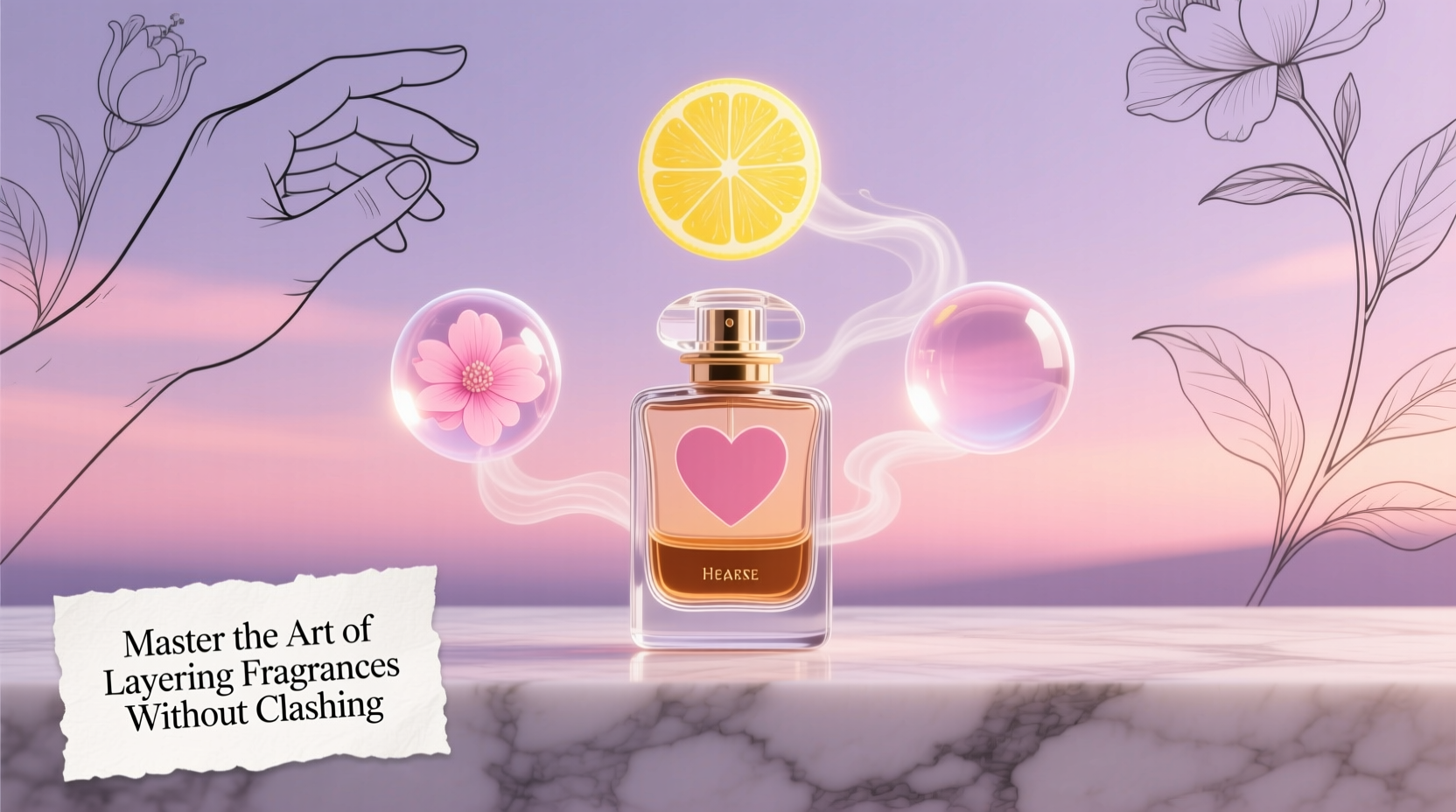
Before combining scents, it’s essential to understand how perfumes are categorized. Perfumers group fragrances into \"families\" based on their dominant notes and overall character. These include:
- Floral – rose, jasmine, peony, gardenia
- Oriental – vanilla, amber, patchouli, incense
- Fougère – lavender, oakmoss, coumarin (common in masculine scents)
- Citrus – bergamot, lemon, grapefruit, mandarin
- Woody – sandalwood, cedar, vetiver, guaiac wood
- Gourmand – caramel, chocolate, tonka bean, honey
- Aquatic/Fresh – ozonic, sea breeze, cucumber, melon
Successful layering often begins within compatible families. Pairing a citrus scent with a floral usually works better than combining citrus with heavy oriental resins. That said, contrast can be powerful—if balanced. For example, a bright citrus top note over a warm amber base creates a compelling tension that evolves beautifully on the skin.
The Structure of Scent: Top, Heart, and Base Notes
All perfumes unfold in three phases:
- Top Notes: The first impression—light, volatile, and fleeting (5–15 minutes).
- Heart (Middle) Notes: The core personality of the fragrance, emerging after the top fades (20–60 minutes).
- Base Notes: Deep, long-lasting foundation that lingers for hours (often 4+ hours).
When layering, consider how these layers interact. Applying a citrus-heavy top note over a woody base might create a disjointed experience if not timed or chosen carefully. Instead, think of building a narrative: what opens the story, what develops it, and what concludes it?
For instance, a fresh bergamot top layered over a sandalwood base mimics the natural evolution of many fine fragrances. This kind of intentional sequencing feels cohesive rather than chaotic.
Step-by-Step Guide to Layering Fragrances
Follow this timeline to build a harmonious layered scent:
- Step 1: Prep your skin – Moisturize with an unscented or lightly scented lotion. Dry skin absorbs fragrance unevenly and shortens its life.
- Step 2: Apply the base layer – Choose a richer, longer-lasting fragrance (preferably Eau de Parfum or Parfum). Focus on pulse points: wrists, neck, behind ears.
- Step 3: Wait 30–60 seconds – Allow the first scent to settle into the skin before adding the next.
- Step 4: Add the second fragrance – Use a lighter concentration (Eau de Toilette or cologne) or a complementary scent with shared notes.
- Step 5: Test and adjust – Sniff subtly. If the blend feels off, wait an hour—the dry-down may resolve any initial imbalance.
Do’s and Don’ts of Fragrance Layering
| Do | Don’t |
|---|---|
| Layer scents with overlapping notes (e.g., vanilla in both) | Mix two very strong, bold fragrances (e.g., oud + leather) |
| Use a matching body oil or unscented balm as a neutral base | Apply more than two fragrances at once |
| Test combinations on skin, not just the air | Layer across vastly different seasons (e.g., heavy winter scent with a summer aquatic) |
| Start subtle and increase intensity gradually | Ignore your environment—office settings require lighter blends |
Expert Insight: The Perfumer’s Perspective
To gain deeper insight, we consulted Isabelle Laurent, a Paris-based perfumer with over 15 years of experience in niche fragrance development:
“Layering isn’t about piling on scent—it’s about orchestration. Think like a composer. You wouldn’t play a violin and a drum solo at the same volume. One must support the other. In fragrance, balance is everything. I always recommend starting with a ‘scent anchor’—a base you love—and building around it with intention.” — Isabelle Laurent, Master Perfumer
Her advice underscores a crucial truth: layering should enhance, not overwhelm. A successful blend feels intentional, evolving naturally throughout the day.
Real Example: Building a Signature Morning Routine
Consider Sarah, a marketing executive who wanted a fresh yet sophisticated scent for her workday. She loved the crispness of her Jo Malone Grapefruit Cologne but found it faded too quickly. At the same time, she adored the warmth of Diptyque Tam Dao, a sandalwood-rich fragrance, but felt it was too heavy for daytime.
Instead of choosing one or the other, she began layering:
- After showering, she applied an unscented body lotion.
- She sprayed Tam Dao lightly on her inner arms and neck—just enough to act as a base.
- Five minutes later, she spritzed Grapefruit on her wrists and décolletage.
The result? A bright, uplifting opening that softened into a creamy, meditative sandalwood dry-down. Colleagues commented on her “expensive, calming” scent. By respecting concentration and timing, Sarah created a personalized fragrance journey that lasted eight hours.
Tools and Products Designed for Layering
Some brands design their lines specifically for layering. Notable examples include:
- Jo Malone London – Known for its “cocktail” philosophy, encouraging customers to combine colognes (e.g., Lime Basil & Mandarin with English Pear & Freesia).
- Byredo – Offers concentrated scents like Blanche and Gypsy Water that layer elegantly due to their clean, minimalist profiles.
- Le Labo – Their Santal 33 pairs surprisingly well with citrus-forward scents for a gender-neutral, modern twist.
Additionally, consider using:
- Scented body oils – Lighter than perfumes, they provide a subtle base.
- Unscented moisturizers – Extend longevity without interfering with your chosen fragrances.
- Roll-on minis – Ideal for testing combinations discreetly.
Checklist: Your Fragrance Layering Starter Kit
Before you begin, ensure you have the following:
- ✅ Two complementary fragrances (ideally from similar families)
- ✅ Unscented moisturizer or body oil
- ✅ Clean pulse points (no competing lotions or soaps)
- ✅ At least 30 minutes to observe scent evolution
- ✅ A journal to track successful pairings
- ✅ Patience—don’t rush the process
Common Questions About Fragrance Layering
Can I layer perfume with cologne?
Yes, but be mindful of concentration. Colognes (Eau de Cologne) are typically lighter (2–4% oil), while perfumes (Parfum) contain 15–30%. To avoid imbalance, apply the stronger scent first, then lightly mist the lighter one over it. For example, a sandalwood parfum base with a citrus cologne top works beautifully.
Why does my layered scent smell different on someone else?
Fragrance interacts uniquely with skin chemistry, diet, pH levels, and even hormones. What smells warm and spicy on you might read sweet and soft on another. Always test layering combinations on your own skin, not someone else’s.
How many times a day can I reapply layered fragrances?
Reapplication is fine, but limit it to once every 4–6 hours. Overuse can fatigue your nose and overwhelm those around you. If the scent fades, try reapplying only the top note for a refresh, rather than repeating the full layering process.
Conclusion: Craft Your Olfactory Identity
Mastering the art of layering fragrances is less about rules and more about intuition guided by knowledge. It invites creativity, self-awareness, and a deeper relationship with scent. When done thoughtfully, layering transforms fragrance from a simple accessory into a living, breathing extension of identity.
You don’t need dozens of bottles to begin. Start with two perfumes you already own, study their notes, and experiment with sequence and spacing. Pay attention to how the scent changes over time, how people respond, and how it makes you feel. Each combination is a step toward discovering a scent that is unmistakably yours.




 浙公网安备
33010002000092号
浙公网安备
33010002000092号 浙B2-20120091-4
Comments
No comments yet. Why don't you start the discussion?