
Creatine monohydrate is one of the most researched and effective supplements in sports nutrition. Backed by decades of clinical studies, it consistently enhances strength, power output, and muscle mass when used correctly. Yet, many people fail to see optimal results because they misunderstand how to dose, cycle, or combine it with other lifestyle factors. This guide cuts through the noise, offering a science-backed approach to using creatine monohydrate effectively—without loading phases if you don’t need them, with clear dosing timelines, and integrated with diet and training.
Understanding Creatine Monohydrate: What It Does and Why It Works
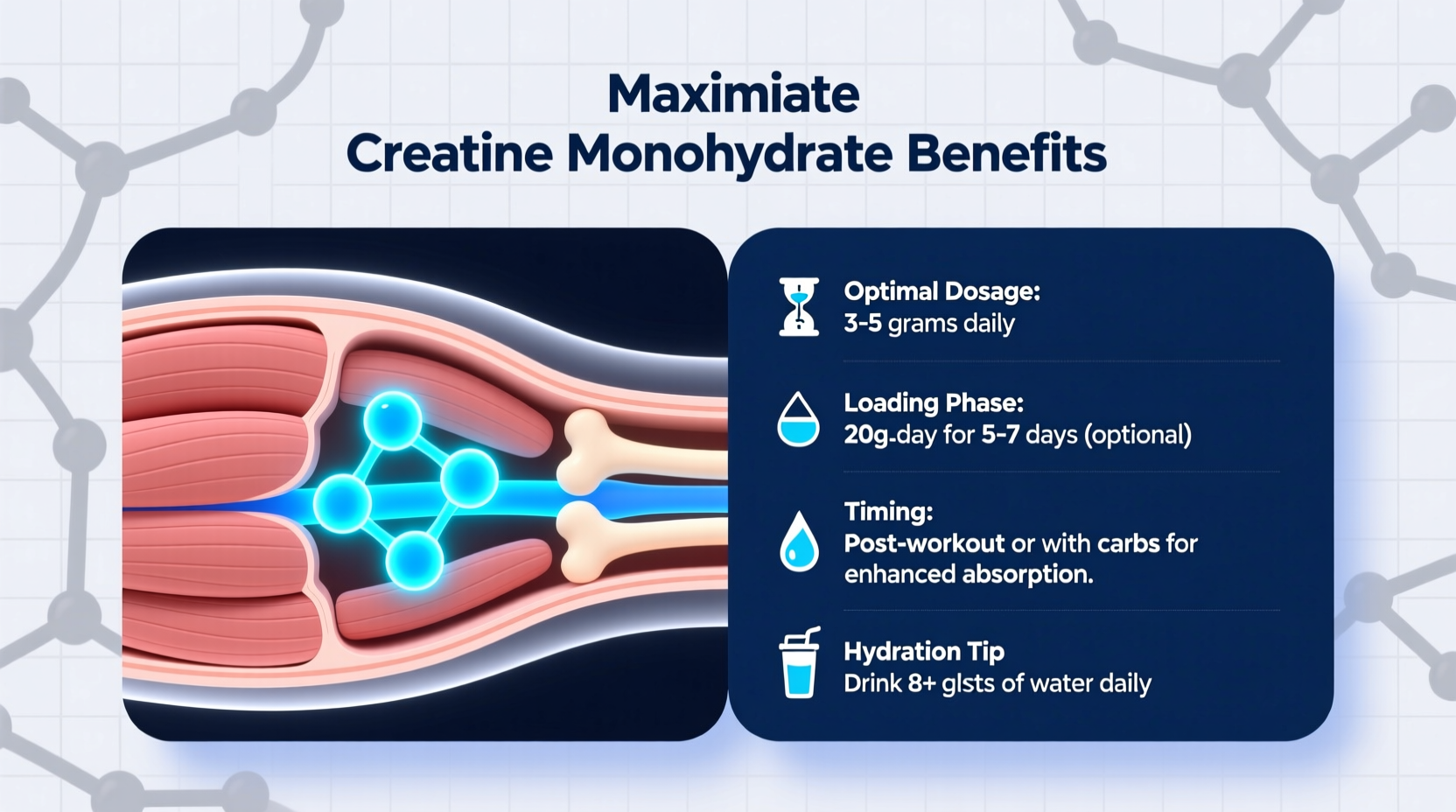
Creatine is a naturally occurring compound found primarily in muscle cells. It plays a critical role in energy production during short bursts of high-intensity activity—like weightlifting, sprinting, or jumping—by regenerating ATP (adenosine triphosphate), the primary energy currency of the cell.
When you supplement with creatine monohydrate, you increase your intramuscular creatine stores. This leads to improved work capacity, faster recovery between sets, and greater training volume over time—all key drivers of muscle growth and performance gains.
Unlike many supplements that promise results without evidence, creatine monohydrate has been validated across hundreds of peer-reviewed studies. According to the International Society of Sports Nutrition (ISSN):
“Creatine monohydrate is the most effective ergogenic nutritional supplement currently available to athletes in terms of increasing high-intensity exercise capacity and lean body mass.” — ISSN Position Stand on Creatine
Optimal Dosage: Loading vs. Maintenance Protocols
There are two main approaches to dosing creatine: the loading method and the slow-loading (maintenance-only) method. Both achieve full saturation of muscle creatine stores—but at different speeds.
Loading Phase (5–7 Days)
This method rapidly saturates muscles to deliver faster results:
- Dose: 20 grams per day, divided into 4 doses of 5 grams
- Duration: 5–7 days
- Followed by: 3–5 grams daily for maintenance
Maintenance-Only Approach (No Loading)
For those who prefer gradual buildup without potential digestive discomfort:
- Dose: 3–5 grams per day
- Time to saturation: ~28 days
The choice depends on your goals. Athletes preparing for competition may benefit from a loading phase to see effects within a week. Recreational lifters can skip loading and still reach full saturation within a month.
Timing and Absorption: When and How to Take Creatine
While early advice emphasized taking creatine “post-workout,” recent research suggests total daily intake matters more than exact timing. However, strategic timing can enhance absorption and consistency.
Insulin helps shuttle creatine into muscle cells. Consuming it with carbohydrates or protein increases insulin release, potentially improving uptake. For this reason, pairing creatine with a post-workout meal or shake is practical—even if not strictly necessary.
| Timing Strategy | Effectiveness | Best For |
|---|---|---|
| With post-workout shake (carbs + protein) | High – enhances uptake | Performance-focused users |
| With breakfast or lunch | Moderate – consistent intake | Daily routine maintainers |
| Pre-workout | Low – no acute effect | Habit-based users |
| Before bed | Moderate – steady levels | Non-exercisers or older adults |
The most important factor is consistency. Taking creatine at the same time every day ensures stable muscle saturation.
Who Benefits Most? Tailoring Use to Your Goals
Creatine isn’t just for bodybuilders. Different populations experience unique advantages based on their physiology and objectives.
Strength and Power Athletes
Weightlifters, sprinters, and football players benefit from increased phosphocreatine availability, allowing for more reps, heavier lifts, and shorter rest periods.
Endurance Athletes
Even endurance athletes gain value. While aerobic systems dominate long events, creatine improves repeated surges (e.g., cycling breakaways, final sprints) and off-season strength training adaptation.
Older Adults
Age-related muscle loss (sarcopenia) can be slowed with resistance training and creatine. Studies show older adults gain more lean mass and functional strength with creatine than training alone.
Vegans and Vegetarians
Since creatine is abundant in meat and fish, plant-based eaters typically have lower baseline creatine stores. Supplementation often produces more dramatic improvements in cognitive and physical performance in this group.
“Vegetarians showed a 20–25% greater increase in brain creatine after supplementation compared to omnivores.” — Rae et al., British Journal of Nutrition
Combining Creatine with Diet and Training: The Full Picture
Creatine doesn’t work in isolation. Its effectiveness multiplies when aligned with proper hydration, nutrition, and training intensity.
Hydration Is Non-Negotiable
Creatine pulls water into muscle cells. Without adequate fluid intake, cramping or dehydration risks increase. Aim for at least 3 liters of water per day when supplementing.
Nutrient Synergy
Certain nutrients enhance creatine’s action:
- Carbohydrates: Boost insulin-mediated uptake
- Protein: Supports muscle synthesis alongside creatine-induced volume
- Sodium: Helps retain fluid intracellularly
Training Stimulus Must Be Present
Creatine enhances performance—but only if you challenge your muscles. Progressive overload in resistance training is essential to capitalize on increased work capacity.
Step-by-Step Guide to Maximizing Benefits Over 30 Days
- Day 1–7 (Optional Loading): Take 5 grams, four times daily with meals or post-workout shake. Stay hydrated.
- Day 8–30: Switch to 5 grams once daily, ideally with a carbohydrate-containing meal.
- Week 1–4: Monitor workout performance—note changes in rep count, reduced fatigue, or faster recovery.
- Ongoing: Maintain 3–5 grams daily. No need to cycle off; long-term use is safe and effective.
- Every 3 Months: Reassess goals. Consider combining with beta-alanine or citrulline for advanced performance stacking.
Frequently Asked Questions
Do I need to cycle creatine?
No. There is no physiological need to cycle creatine. Long-term studies (up to 5 years) show no adverse effects and sustained benefits with continuous use.
Will creatine make me bloated or gain fat?
Creatine causes mild water retention in muscle tissue—not fat gain. The initial 1–3 lb increase on the scale is water, not adipose tissue. This contributes to fuller-looking muscles.
Can I take creatine on rest days?
Yes. Maintaining consistent blood and muscle levels requires daily intake, even on non-training days.
Checklist: Are You Getting the Most From Creatine?
- ✅ Taking 3–5 grams daily (or completing a 5-day load)
- ✅ Pairing with food (especially carbs/protein) for better uptake
- ✅ Drinking at least 3 liters of water per day
- ✅ Engaging in regular resistance or high-intensity training
- ✅ Tracking performance changes over 4 weeks
- ✅ Using pure creatine monohydrate (no unnecessary additives)
Real Example: How Sarah Improved Her Deadlift in 6 Weeks
Sarah, a 29-year-old CrossFit athlete, struggled to progress her deadlift despite consistent training. She started taking 5 grams of creatine monohydrate daily with her post-workout banana and whey shake. Within two weeks, she noticed she could complete all prescribed reps with less fatigue. By week six, she added 20 lbs to her 3-rep max. Her coach noted improved session density—more volume completed in less time. Sarah didn’t change her program; creatine simply amplified her ability to recover and perform.
Conclusion: Make Creatine Work for You—Consistently and Smartly
Creatine monohydrate is simple, safe, and remarkably effective—but only when used with intention. Whether you're an elite athlete or someone looking to age stronger, the principles remain the same: consistent daily dosing, adequate hydration, and pairing with meaningful physical effort. Forget the myths about cycling, bloating, or needing special timing. Focus instead on what the science confirms: small, daily actions compound into real strength, resilience, and performance over time.




 浙公网安备
33010002000092号
浙公网安备
33010002000092号 浙B2-20120091-4
Comments
No comments yet. Why don't you start the discussion?