
In a world where urban living means smaller footprints and higher rents, making the most of limited square footage isn’t just smart—it’s essential. The challenge isn’t merely about fitting everything into a compact space; it’s about doing so in a way that feels open, organized, and uncluttered. The key lies not in visible shelving or bulky furniture, but in invisible storage—solutions that blend seamlessly into your home, hiding clutter while optimizing every inch. These strategies don’t shout for attention; they work quietly behind the scenes, transforming cramped apartments into functional, serene environments.
Invisible storage is more than a design trend—it’s a mindset. It prioritizes intelligence over aesthetics alone, focusing on integration rather than addition. From under-floor compartments to disguised cabinetry, these techniques help you reclaim space without compromising on comfort or style. Whether you’re in a studio, a one-bedroom loft, or a converted brownstone unit, these hacks can dramatically improve how you live.
1. Reimagine Furniture: Dual-Purpose Pieces That Disappear Into Your Space
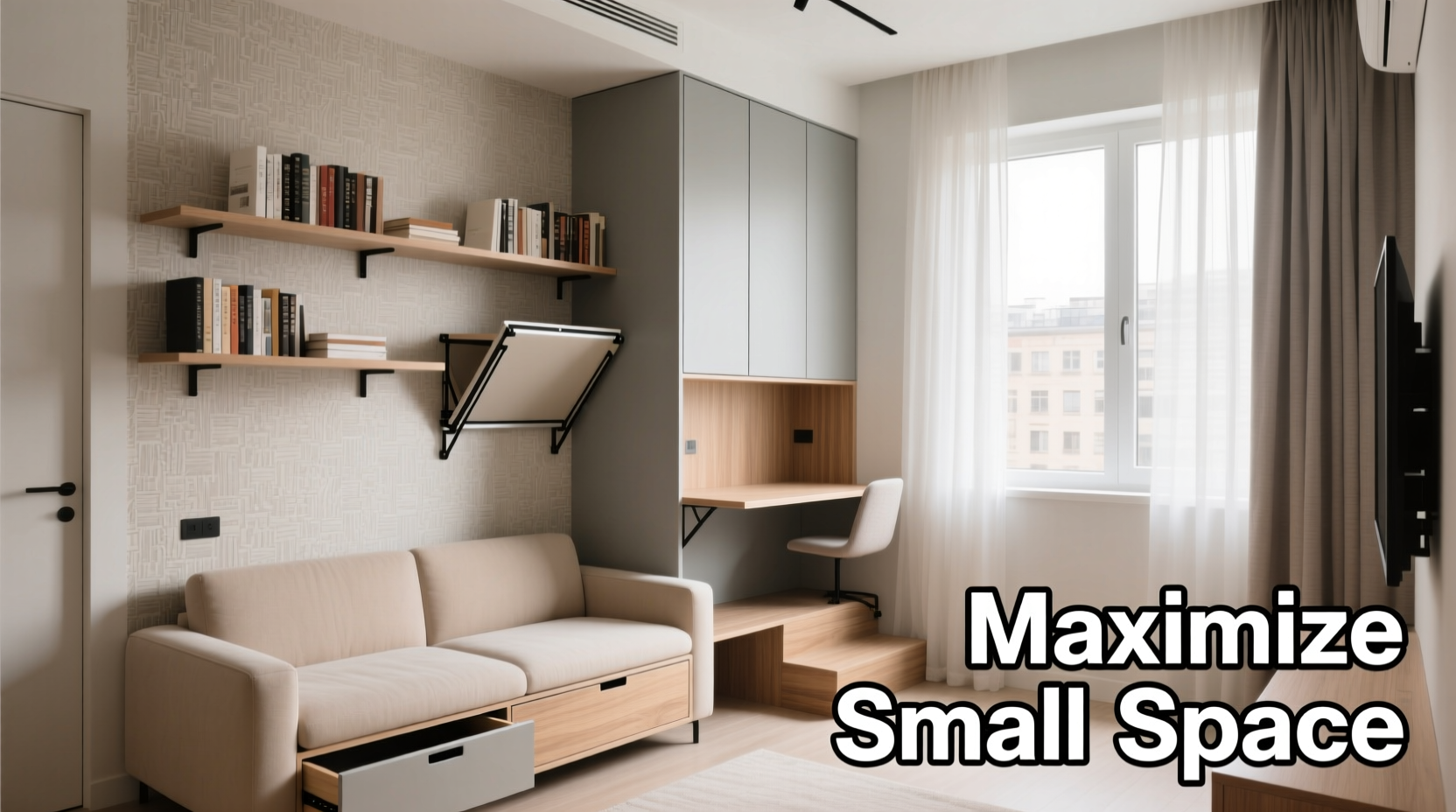
Furniture doesn’t have to be purely decorative or utilitarian—it can be both. The most effective invisible storage starts with rethinking what furniture does. Instead of choosing pieces based solely on appearance, consider their hidden capacity.
Beds with built-in drawers or hydraulic lift mechanisms offer deep storage for seasonal clothing, bedding, or luggage—all tucked safely beneath you as you sleep. Choose models with clean lines and neutral upholstery so they don’t dominate the room visually. Similarly, ottomans with hollow interiors double as seating and stashes for magazines, remotes, or even extra throw blankets.
Dining tables that expand only when needed keep the footprint minimal during daily use. Wall-mounted drop-leaf tables disappear against the wall when not in use, freeing up floor space. Pair them with nesting chairs stored in a closet or under the bed to maintain flexibility.
The goal is invisibility through integration. When furniture stores items without looking like a storage unit, clutter stays out of sight—and out of mind.
2. Exploit Vertical and Hidden Spaces Others Overlook
Floor space may be scarce, but vertical real estate is often underused. Invisible storage thrives in overlooked zones: above door frames, inside stair risers, behind mirrors, and within walls themselves.
Install shallow shelves above kitchen cabinets or bathroom doors. These areas are typically unused, yet perfect for storing infrequently used items like guest towels, spice jars, or decorative objects. Use matching containers to maintain a seamless look—no one will guess these are storage zones.
For those with access to structural modifications (or permission from landlords), consider recessed wall niches. A shallow cavity carved into a non-load-bearing wall can house books, toiletries, or charging stations. Finish it with drywall and paint to match the room, and it becomes an invisible ledge—functional yet undetectable.
“Maximizing small spaces isn’t about adding more—it’s about using what’s already there in smarter ways.” — Lena Torres, Urban Interior Designer & Author of *Compact Living*
Even radiators can be repurposed. Custom-fit platforms installed over heating units provide flat surfaces ideal for plants or baskets, effectively turning dead air into usable shelf space. Just ensure airflow isn’t obstructed to maintain efficiency.
Do’s and Don’ts of Hidden Space Utilization
| Do | Don't |
|---|---|
| Use tension rods under sinks to hang spray bottles or cleaning cloths | Block vents or plumbing access points |
| Install magnetic strips inside cabinet doors for spice tins or knives | Overload ceiling-mounted racks beyond weight limits |
| Add adhesive hooks inside closets or pantries for lightweight bags | Drill into walls without checking for pipes or wiring |
| Use under-shelf baskets on existing bookshelves for small items | Neglect moisture-prone areas like under sinks without protective lining |
3. Step-by-Step Guide: Audit and Implement Invisible Storage in One Weekend
You don’t need months to transform your apartment. With focused planning, you can significantly upgrade your storage capacity in just two days. Follow this timeline to assess, plan, and execute invisible solutions efficiently.
- Saturday Morning: Room-by-Room Audit (2–3 hours)
Walk through each space with a notebook. Identify pain points: Where do things pile up? What furniture feels bulky? Note unused vertical zones, awkward corners, and redundant items. - Saturday Afternoon: Declutter & Categorize (3 hours)
Remove anything broken, outdated, or unused. Sort remaining items into categories: clothes, kitchenware, documents, electronics, etc. This clarifies what needs storage and how much. - Sunday Morning: Shop Strategically (2 hours)
Purchase targeted organizers: under-bed bins, over-door hooks, stackable drawer dividers. Focus on items that exploit hidden spaces—not additional furniture. - Sunday Afternoon: Install & Integrate (3 hours)
Begin installing solutions. Start with high-impact areas: bed storage, kitchen door racks, closet organizers. Label containers discreetly if needed, but aim for uniformity so labels aren’t necessary.
By Monday morning, your apartment should feel noticeably more spacious—even if no major renovations were made.
4. Real-Life Example: Transforming a 450-Square-Foot Studio
Maria, a graphic designer in Brooklyn, lived in a 450-square-foot studio where her art supplies, wardrobe, and kitchen essentials constantly competed for space. Her initial layout included a full-sized bed, a dining table, and open shelving that quickly became chaotic.
She began by replacing her bed with a low-profile platform model featuring four deep drawers. She removed the dining table and installed a wall-mounted fold-down desk that doubles as a workspace and eating area. Inside her closet, she added a second hanging rod above the original one, creating space for folded sweaters on hangers—a trick that freed up dresser drawers.
Behind her bathroom mirror, she mounted a slim magnetic strip for tweezers, nail clippers, and bobby pins. Under the sink, a tension rod holds cleaning sprays in labeled cloth pouches, keeping them upright and accessible without visual clutter.
The result? A studio that now functions like a one-bedroom apartment. Guests comment on how “spacious” it feels—proof that invisible storage works best when it goes unnoticed.
5. Smart Materials and Systems for Seamless Integration
Invisible storage relies heavily on materials and hardware that support discretion. The right choices make organization feel effortless and integrated.
Soft-close hinges prevent loud cabinet slams and protect contents. Touch-latch mechanisms allow cabinets to open with a push, eliminating visible handles that break visual continuity. Frameless cabinetry maximizes interior space and creates a sleeker profile compared to traditional face-frame designs.
For renters, adhesive-backed organizers are game-changers. Brands now offer peel-and-stick spice racks, foldable drying racks for sinks, and rail systems that mount without drilling. These preserve lease agreements while delivering real utility.
Consider transparent or mirrored backs in cabinetry. They create depth and reflect light, making enclosed storage feel less oppressive. When combined with internal LED lighting, even deep cabinets become easy to navigate and visually lighter.
Essential Invisible Storage Checklist
- ✅ Replace bulky nightstands with wall-mounted shelves or floating cabinets
- ✅ Install under-bed storage with casters for easy access
- ✅ Add over-the-door organizers in closets and bathrooms
- ✅ Use drawer dividers to maximize internal furniture space
- ✅ Mount magnetic strips inside cabinet doors for metal tools or utensils
- ✅ Incorporate furniture with hidden compartments (e.g., coffee tables with lift tops)
- ✅ Utilize vertical space with tall, narrow cabinets that blend into corners
- ✅ Label containers subtly or use uniform bins for a clean aesthetic
FAQ: Common Questions About Invisible Apartment Storage
Can I add invisible storage in a rental?
Absolutely. Many solutions require no permanent changes: under-bed bins, over-door hooks, adhesive shelves, rolling carts, and freestanding units fit rental-friendly criteria. For deeper modifications, consult your landlord—some appreciate upgrades that enhance functionality.
How do I avoid making my space feel too closed-off?
Invisible storage should enhance openness, not hinder it. Stick to light-colored containers, mirrored finishes, and open-concept multi-use furniture. Avoid over-filling cabinets; leave breathing room to maintain visual calm.
What’s the most overlooked storage area in small apartments?
The space above kitchen cabinets. Often dusty and forgotten, it’s ideal for storing off-season decor, backup pantry items, or folded luggage. Use matching bins to keep it tidy and out of sight.
Conclusion: Make Space Work for You—Quietly
Living well in a small apartment doesn’t mean sacrificing comfort or style. It means designing smarter, leveraging every inch with intention. Invisible storage hacks are not about hiding your life away—they’re about organizing it so thoughtfully that clutter simply ceases to exist.
From under-bed drawers to recessed wall pockets, these solutions prove that the most powerful changes are often the ones you can’t see. They restore peace, reduce stress, and turn tight quarters into intentional homes. You don’t need more space—you need better use of the space you already have.




 浙公网安备
33010002000092号
浙公网安备
33010002000092号 浙B2-20120091-4
Comments
No comments yet. Why don't you start the discussion?